Blog

The case for a state-based marketplace

Former Speaker of the House Tip O’Neill made famous the phrase “all politics is local,” meaning electoral success is related directly to a politician’s understanding of and ability to address the local issues that matter most to constituents. The Commonwealth Fund applied this notion to health care in conclusions of a 2017 study of state year-over-year improvements in their rankings on the organization’s Scorecard on Local Health System Performance. This concluded that local knowledge of health care challenges and collaboration among local organizations to find solutions were major contributors to communities’ improvement on scorecard rankings.

One state-level decision that can boost responsiveness to local needs is whether to establish a state-based marketplace (SBM) for health insurance. Health insurance marketplaces are required in every state under the Affordable Care Act (ACA). Under the ACA, states were given a choice about whether to establish an SBM and receive some federal funding to do so or rely on the federally facilitated marketplace (FFM) to serve their residents. Marketplaces are designed to do two basic things: (1) enroll individuals and families who do not have access to Medicaid, Medicare, or employer-sponsored health insurance coverage in private coverage and (2) connect eligible individuals with financial assistance (premium tax credits and cost-sharing reductions) to reduce their cost of coverage. To date, 19 states have established SBMs and others continue to entertain the possibility of establishing one.

Why would states want to establish and operate a new agency of government to administer coverage for people who are receiving federal tax credits for their health insurance coverage? Surely this could create redundant and/or uncoordinated functions between states and the federal government and place an unwanted burden on capacity-strapped state governments. However, states that have established SBMs have not found this to be the case. Instead, in evaluating the FFM versus SBM decision, and in operating SBMs, states have found that SBMs offer distinct advantages over the FFM. These include:

  • Lower Costs: States have historically demonstrated that they can operate SBMs at a lower overall cost than they would pay in fees through the FFM which has led, in part, to the recent reductions to the Healthcare.gov user fee. States also directly benefit through their ability to retain marketplace revenue and spend it locally. Lastly, SBMs can claim federal financial participation for functions they perform supporting and facilitating Medicaid enrollment.
  • Better Service: States have an almost 60-year history of enrolling low-income individuals and families enroll in and stay enrolled in Medicaid. Many of these individuals cycle in and out of Medicaid eligibility due to changes in income. States can coordinate between SBMs and Medicaid to reduce gaps in coverage. They also can simplify eligibility and enrollment through SBMs that deliver a better customer experience through knowledge of their markets and residents and on the ground enrollment assistance and initiatives.
  • More Policy Influence: SBMs can be launchpads for access and affordability innovations not possible with the FFM. State innovations to date include public option plans, state-funded subsidies such as premium and cost-sharing wraparound support, basic health plans, undocumented immigrant coverage programs, and collaborative enrollment initiatives with Medicaid agencies, unemployment programs, and tax departments.

In addition to states, managed care organizations (MCOs), particularly local and regional MCOs, can also reap the benefits of an SBM:

  • Local Governance: With governance for an SBM taking place at the state level (versus the federal level), MCOs have the opportunity for more thorough engagement with state officials around operational and policy decisions and issues.
  • Aligned Market Expectations: MCOs participating in both the marketplace and Medicaid will benefit from a higher probability of aligned expectations and priorities across both markets with those expectations and priorities being uniformly set at the state level with an SBM.
  • Local Market Sensitivity: MCOs that operate and are rooted locally can count on market-specific dynamics being better reflected in decision-making with an SBM.

Establishing a SBM is not an easy or straightforward decision, but state policymakers and MCOs should consider the benefits that have accrued to other states and the role that SBMs can serve in addressing local health priorities.

If you have questions about how HMA can support your state or MCO related to SBMs, please contact our featured experts.
Zeroing in on Medicare Advantage policies set to transform the SNP landscape beginning in 2025

Regulatory policy changes finalized by CMS aim to increase the percentage of dual-eligible individuals enrolled in integrated plans 

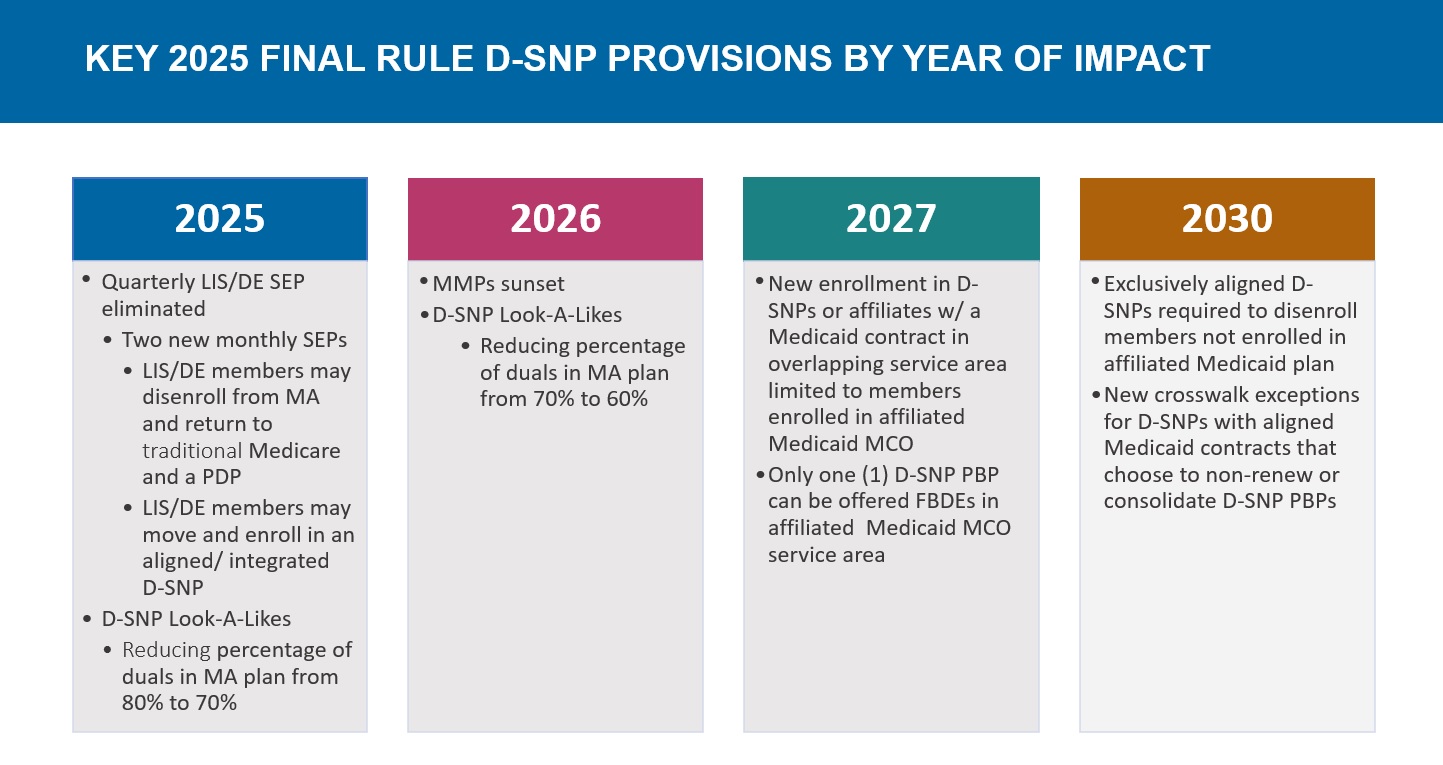
This week, our In Focus section delves into important and complex regulatory policy changes that affect coverage and services for the 12.9 million individuals who are dually enrolled in both Medicare and Medicaid. These policy changes—which were finalized as part of a broader final rule that the Centers for Medicare & Medicaid Services (CMS) released on April 4, 2023—are designed to increase the percentage of dually eligible people who are enrolled in integrated Medicare Advantage (MA) Dual Eligible Special Needs Plans (D-SNPs). The modifications will be phased in gradually, with certain provisions affecting D-SNPs starting in 2025. These adjustments forge a stronger connection between state-level policy and operational decisions, shaping the future landscape of D-SNPs. 

Overview 

Amid rapid growth of D-SNP plan offerings and increased enrollment of dually eligible individuals into D-SNPs, CMS has finalized an interconnected set of regulatory policy changes to increase enrollment in integrated plans while simplifying coverage and plan options for this population.   

By promoting enrollment in integrated plans, CMS seeks to improve the care experience and outcomes for dually eligible individuals, with the ultimate goal of making integrated plan enrollment the standard. Integrated D-SNP plans, which consolidate Medicare and Medicaid services under one managed care organization, offer uniform consumer protections (including unified grievance and appeals process), integrated plan materials, and more coordinated care. 

Key policy changes include:  

  • Replacing the current quarterly special enrollment period (SEP) with a monthly SEP for dually eligible and other low-income subsidy (LIS) individuals to enroll into a standalone prescription drug plan (PDP) 
  • Establishing a new integrated care SEP that will enable dually eligible individuals to choose an integrated D-SNP plan on a monthly basis 
  • Restricting enrollment in certain D-SNPs to individuals also enrolled in an affiliated Medicaid managed care organization (MCO) 
  • Limiting the number of D-SNPs an MA organization can offer in the same service area as an affiliated Medicaid MCO to reduce and simplify plan offerings for dually eligible individuals. 

What Issue is CMS Trying to Solve? 

CMS intends to make it easier for dually eligible people make enrollment decisions. Simplified plan options and more integrated care could prevent beneficiaries from inadvertently selecting plans that fail to provide the comprehensive Medicare and Medicaid benefits they need. 

This shift toward aligned enrollment could improve beneficiary experiences, enhance outcomes, and streamline administrative processes for CMS. The introduction of a monthly SEP specifically for dually eligible individuals enrolled in Medicaid managed care plans underscores CMS’s commitment to facilitating enrollment in affiliated D-SNP plans throughout the year. Health Management Associates (HMA) experts expect these changes to affect the sales cycle for dual eligibles and potentially increase member satisfaction, expand access to care, and improve overall health outcomes for this population. 

Timeline of Regulatory Changes 

Key 2025 Final rule D-SNP Provisions by Year of Impact

Considerations for Health Plans  

The impact on individual health plans hinges on state-specific approaches to dually eligible beneficiaries and D-SNPs, as well as each plan’s strategy for integrating Medicare and Medicaid services.  HMA experts identified the following key factors as essential for understanding and monitoring these interconnected dynamics:  

  • Does the state administer managed Medicaid, and if so, does it include the dually eligible population? 
  • Does the Medicare D-SNP (or an affiliated/ related company) hold a state Medicaid contract that covers dually eligible individuals?  
  • What is the state’s vision regarding duals and D-SNPs? 
  • Does the state require its Medicaid contractors to offer a D-SNP? 
  • Does the state currently or plan to restrict D-SNPs to their Medicaid contractors? 
  • Is the state moving toward an exclusively aligned enrollment model? 

What’s Next  

The changes in D-SNPs present opportunities and risks for beneficiaries, MA and Medicaid health plans, and states. Successful navigation of these changes requires proactive planning and anticipation of forthcoming federal and state regulations. Health plans operating within the D-SNP space must actively engage with state Medicaid agencies to understand and potentially help shape this evolving environment. For example, health plan strategies may include: 

  • Understanding the state’s priorities and its current and planned approach to integrated care for dually eligible individuals 
  • Participating in and/or advocating for stakeholder meetings with the state regarding dually eligible members and D-SNPs to ensure the opportunity to shape regulations 
  • Developing internal integration strategies that align product design, operations, quality, clinical, and member experience capabilities for D-SNPs and Medicaid 
  • Strategically planning actions, such as participating in Medicaid procurements, to achieve the plan’s objectives 

Connect with Us  

These regulatory changes significantly affect dually eligible beneficiaries, states, and both Medicare and Medicaid health plans. Though some changes may disrupt the duals’ market, others align state objectives with plan strategies. Ultimately, dually eligible individuals with full benefits will gain the most, experiencing improved opportunities to choose suitable plans, access necessary care, and achieve optimal health outcomes and well-being.  

For further insights into these upcoming changes, view the D-SNP Growth and Integration: Key Implications of the 2025 CMS Final Rule webinar, featuring our experts below. Join them and other experts at HMA’s Fall Conference to stay informed about the strategic directions plans and states are pursuing.

Unlocking Solutions in the Medicaid, Medicare, and Marketplace programs

HMA is hosting its 2024 Fall Conference October 7−9 in Chicago, IL. Unlocking Solutions in Medicaid, Medicare, and Marketplace Programs promises to enhance your ability to navigate and shape healthcare programs and systems, focusing on improving health and well-being. 

In a landscape dominated by endless video meetings, the HMA Fall Conference offers a refreshing change. Join us for an enriching experience featuring: 

  • Engagement with healthcare experts and thought leaders who are actively collaborating with stakeholders 
  • Participation in face-to-face discussions to exchange ideas and receive valuable feedback 
  • Opportunities to connect with peers who are committed to strengthening public programs and enhancing health outcomes 

Keynote Address and Sessions 

Darshak Sanghavi, MD, from the Advanced Research Projects Agency for Health (ARPA-H), will deliver the Keynote Address. He and other speakers will inspire attendees to explore innovative healthcare programs and their potential impacts on healthcare delivery, reimbursement, and health outcomes. 

The conference will feature a diverse array of speakers and participants, including C-suite executives from national, regional, and local health plans. Federal and state leaders joining panels will include: 

  • State Medicaid directors from New York, Iowa, New Mexico and Alabama  
  • State insurance commissioners  
  • Behavioral health agency officials 
  • State housing agencies 
  • Leaders from the US Interagency Council on Homelessness  

The conference will include a revamped pre-conference workshop on October 7, featuring hands-on exercises and interactive sessions led by HMA leaders. Sessions will include a value-based care contracting exercise, a value-based purchasing assessment discussion for providers, tips and tricks on navigating Medicaid section 1115 demonstrations, AI applications in healthcare, and more. 

View the agenda and event details, including speakers confirmed to date.

Registration 

Early bird registration is open until July 31. Don’t miss this opportunity to gain actionable knowledge, forge valuable connections, and discover fresh insights and best practices. Register now to secure your spot at the forefront of healthcare innovation. 

HMA’s Medicare team unites consultants from multiple HMA companies to assist clients in all aspects of Medicare

As HMA has grown, we have added significant breadth and depth to our Medicare team to better offer our clients comprehensive expertise on Medicare, Medicare Advantage, Dual-Eligibles, payment systems, pricing, and more. When looking for a partner to help navigate the complexities and changes of Medicare, our clients know that by engaging HMA experts they are engaging former CMS officials, former plan executives, payment system and coding experts, policy analysts, and many others. We draw on the resources of experts from our HMA companies to provide comprehensive and end-to-end solutions, including Wakely Consulting Group and Cirdan Health Systems and Consulting for actuarial services, and Leavitt Partners for political and policy engagement. Together we bring considerable expertise in all things Medicare and can leverage our more than 700 consulting colleagues across HMA.

Our world-class Medicare team partners with clients to meet their needs, address their challenges and improve their bottom line. We provide a variety of services such as:

  • Significant support for Medicare Advantage (MA) plans and stakeholders seeking to understand MA policy and operational issues including strategy, market assessment, models of care, evaluation, and audit support.
  • Support MA special needs plans (D-SNP, I-SNP, C-SNP, etc.) and programs for dual eligible beneficiaries.
  • Medicare regulatory, analytics and thought leadership consulting services for MA plans, providers, suppliers, value-based organizations, associations, and foundations.
  • Design, implementation, evaluation and analysis of Medicare value-based payment systems and policy issues.
  • Program of All-Inclusive Care for the Elderly (PACE) strategy and operations.
  • Strategic advice, policy development, and budgetary analysis for clients seeking assistance with Medicare reform efforts.
  • Medicare coverage and reimbursement for device, drug and biotechnology manufacturers and other stakeholders in the life sciences community.
  • Assistance for clients seeking to commercialize new technologies.
  • MA and fee-for-service claims analysis and actuarial services with support from actuaries within HMA plus actuaries from Wakely Consulting Group and Cirdan Health Systems and Consulting.
  • Consulting and federal policy analysis, including Congressional Budget Office (CBO) scoring and legislative policy development with our colleagues from Leavitt Partners.

In 2021, HMA acquired The Moran Company (TMC), which provides extensive expertise in the design, implementation, and evaluation of various healthcare payment systems, with a particular focus on the Medicare program. As we approach the 26th anniversary of TMC’s founding and the third anniversary of joining the HMA portfolio, we want to honor the history and contributions of The Moran Company and remember the late Donald Moran who founded TMC in July 1998. He spent almost 50 years in the health policy community, including many years in government service, serving as executive associate director for Budget and Legislation at the U.S. Office of Management and Budget during the Reagan Administration.

Many of our TMC colleagues worked with Moran for more than a decade, benefiting from his mentoring and exhaustive knowledge of the industry. Since joining, TMC consultants have worked closely with our HMA colleagues and the Medicare team in particular.

As of July 1, we are retiring the Moran brand and logo and fully integrating the company into HMA as part of the Medicare team. We may be dropping the Moran brand name, but not the approach and diligence for which TMC is well known. In particular, HMA will continue to use the same methodologies for Congressional Budget Office scores and Medicare data analyses that have characterized Moran’s work for more than 25 years.

View some of our recent work from our combined team:

Case Studies

Reports

Webinar

Ohio releases next generation MyCare Ohio program RFA

This week’s In Focus section delves into the Next Generation MyCare Ohio managed care program, spotlighting the request for applications (RFA) that the Ohio Department of Medicaid (ODM) released on May 31, 2024. The MyCare Ohio Program, which serves people who are dually eligible for both Medicaid and Medicare, is undergoing a substantial transformation. Transitioning from the financial alignment initiative (FAI) demonstration model used in 29 counties, it is evolving into a statewide, fully integrated dual eligible special needs plan (FIDE-SNP) model. This shift is more than procedural; it signifies a pivotal moment of transition to new federal D-SNP requirements.  

Background 

The MyCare Ohio Program launched in May 2014 as a Centers for Medicare & Medicaid Services (CMS) FAI demonstration. MyCare Ohio integrates Medicare and Medicaid benefits for dually eligible members enrolled in competitively selected MyCare Ohio managed care plans, providing one care coordinator and streamlined communication and services. It serves 150,000 individuals in 29 counties.  

CMS is sunsetting all FAI demonstration programs on December 31, 2025, prompting ODM to convert to the FIDE-SNP model.  

Next Generation RFA 

The MyCare Ohio Program will convert to the Next Generation MyCare Ohio Program in January 2026. ODM is modeling portions of the program after the state’s Next Generation Medicaid managed care program. The Next Generation MyCare Ohio Program initially will be implemented in the 29 currently participating counties and then expand statewide, covering a total of 250,000 eligible individuals. Medicaid managed care organizations (MCOs) that serve the program will need to become CMS-approved FIDE-SNPs. MCOs awarded a Next Generation MyCare Ohio contract will need to notify CMS of their intent to establish a statewide FIDE-SNP in Ohio by fall 2024 to begin operations in January 2026. 

ODM anticipates selecting up to four Next Generation MyCare Ohio MCOs to serve enrollees statewide, though a decision on the number of plans will be finalized as awards are made and based on what is most advantageous to the state.   

MCOs will need to develop a member-focused strategy with care coordination as a priority. MCOs will also increase focus on behavioral health coordination. According to ODM, goals for the Next Generation program include: 

  • Focusing on the individual 
  • Improving individual and population wellness and health outcomes 
  • Creating a personalized care experience 
  • Supporting providers in continuously improving care 
  • Improving care for people with complex needs to promote independence in the community 
  • Increasing program transparency and accountability 

Next Generation MyCare will advance these goals through a population health approach, designed to address inequities and disparities in care.  

The program will enroll dually eligible individuals ages 21 and older. This is a change from the current program, which enrolls dual eligibles who are 18 years old and older. The eligible age increase is being made to align with the Medicaid early and periodic screening, diagnostic, and treatment (EPSDT) benefit.  

The new program also will continue to offer all the same services available through Ohio’s home care, PASSPORT (long-term services and supports), and assisted living waivers. 

Evaluation 

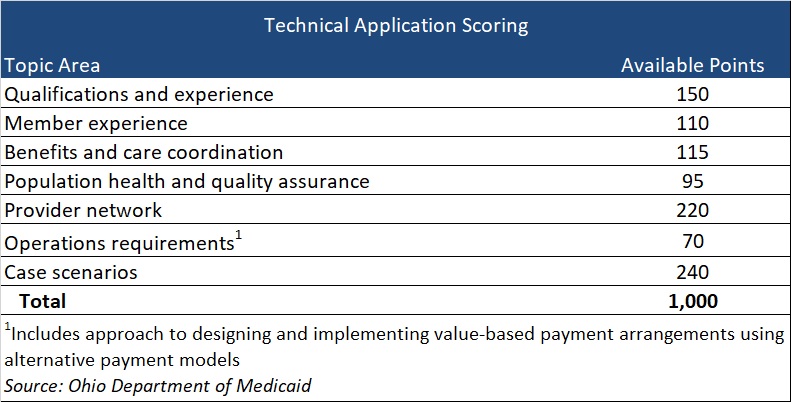
Applications initially will be reviewed to confirm the applicant meets the mandatory requirements. Applicants who meet the mandatory requirements will proceed to review and evaluation of responses to application questions that fall into seven topic areas, with a total of 1,000 available points (see Table 1).  Of note, if an applicant is not currently serving as either a Next Generation MCO or a MyCare Ohio MCO, the applicant will receive zero points for qualifications and experience. Organizations that have yet to participate in at least one of these programs should consider the effect on their total score.  

Table 1 

Technical Application Scoring

Current Market 

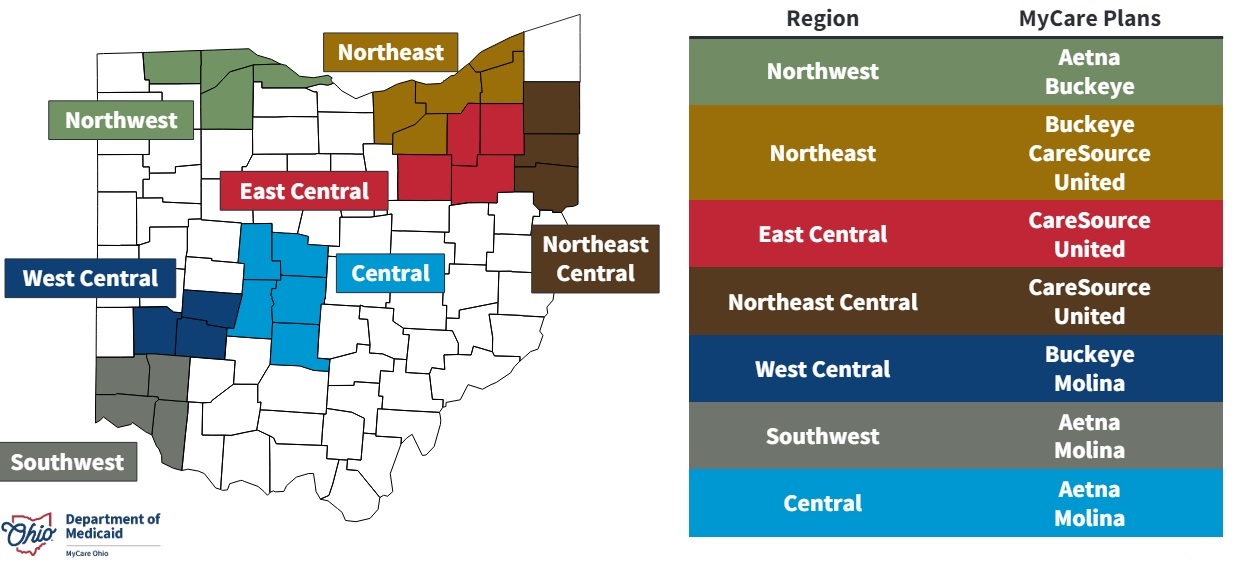
Five MCOs—CVS/Aetna, CareSource, Centene/Buckeye, Molina, and United—participate in the current MCOP, with two or three of them participating in each of the seven regions. 

MCOs by region

Timeline 

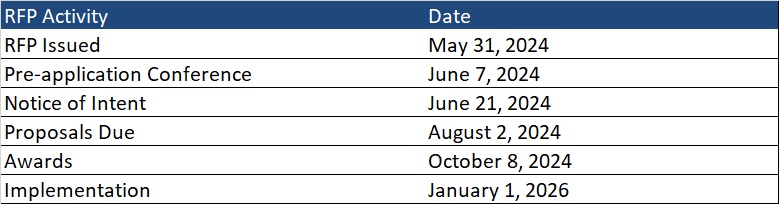
MCOs should submit a notice of intent to apply by June 21. Proposals are due August 2, and awards will be issued October 8. Implementation is scheduled for January 1, 2026.  

RFP Activity / Date

Link to RFP 

Connect With Us  

Ohio is one of several states transitioning from a FAI demonstration at the end of December 2025. Additionally, the 2025 Medicare Advantage Final Rule includes new policies affecting D-SNPs that could reshape the integrated care plan landscape in many states.  

Health Management Associates (HMA) will host a webinar on June 20, 2024 titled “D-SNP growth and integration: key implications of the 2025 CMS final rule” to review the current landscape and federal changes that will affect D-SNPs in 2025 and beyond. The session will feature an analysis of the new regulations and a discussion of the critical strategic and product impacts on Medicare organizations that offer D-SNPs or are considering offering D-SNPs. Attendees also will have the opportunity to engage with the panelists during a Q&A session. Watch the replay now.

Contact our experts below for details about the nationwide D-SNP rules and landscape.  

Federal healthcare quality initiatives: recent developments shaping the landscape

This week, our In Focus section considers the increasing emphasis on quality at all levels of our healthcare system, especially for work that affects federally funded health insurance programs.  

The Universal Foundation Measure Set  

The 2024 Centers for Medicare & Medicaid Services (CMS) Quality Conference, April 8−10, in Baltimore, MD, continued to highlight the harmonizing of quality measures across CMS programs and promotion of CMS’s universal foundation measures. These metrics capture quality across six domains for adults and four domains for children. By promoting and integrating these well-established measures across all CMS programs, end users can align priorities across programs and help to reduce burden on providers and health plans being assessed.   

Medicaid has long been a leader in incorporating the universal foundation measures, having used many of them in managed care contracts, health homes, and other arrangements that include a quality assessment component for the past 20 years. Earlier this year, many universal foundation measures, including those pertaining to behavioral health, became part of the mandatory core measure set that all states must report to CMS as required in the SUPPORT for Patients and Communities Act—comprehensive federal legislation that addresses the opioid epidemic. Mandatory reporting will allow Congress, the Medicaid and CHIP Payment and Access Commission (MACPAC), and other stakeholders to better understand the impact of federal investments on quality of care for Medicaid and CHIP enrollees. 

New Developments in Medicaid’s Approach to Quality  

Forward momentum is evident in other areas of healthcare quality as well. A significant federal milestone in quality of care was included in the Medicaid Managed Care Rule released in April 2024, which required states to design a quality rating system (QRS) and submit their methodology to CMS for approval. The QRS is intended to be user-friendly and help Medicaid members to pick a plan and monitor its quality performance. States will be able to use the QRS as a monitoring and oversight tool to compare plan performance. Not only will a QRS help improve Medicaid’s accountability to states, enrollees, and policymakers, but it also promotes transparency for all end users and the public. At present, Medicaid quality measures are reported by state rather than by plan. Plan performance in Medicaid is typically captured in a state’s external quality review organization (EQRO) annual report, which may impede the ability of most users to extract, compare, and digest information.   

Another federal initiative is the Medicaid Access Rule, also released in April 2024, to help state Medicaid programs move toward public reporting of quality and compliance measures in home and community-based services (HCBS). In 2022, CMS released more than 90 measures that could be used to assess quality of care in Medicaid HCBS waiver populations. Under the rule, CMS will identify a subset of HCBS quality measures in 2026 and the technical specifications for these measures will be made available publicly and updated as needed. Similar to the CMS Child and Adult Core Sets, states will have an opportunity to implement these measures and CMS can use those outcomes to create HCBS scorecards by state. 

Medicare Advantage Star Ratings Program 

Finally, CMS is incorporating the health equity index (HEI) into the Medicare Advantage Star Rating system. The HEI contributes to a plan’s potential bonus and helps level the playing field for plans that enroll and provide services to underrepresented or at-risk populations. The HEI will account for enrollees who are dually eligible for Medicare and Medicaid, individuals with disabilities, or members with a low-income subsidy (LIS). The HEI also assesses plan-level performance for these specialized populations. Allowing plans to earn a better bonus for delivering high-quality services to these populations helps to mitigate adverse selection and reward plans for care that may be resource intensive. 

What’s Next 

Accountability for quality is beginning to emerge in the form of value-based contracting, incentive payments, and other forms of reimbursement focused on reducing disparities and improving outcomes. Health plans, providers, state agencies, vendors and other interested stakeholders need to have a strategy for quality improvement that reflects evolving federal and state quality priorities, reporting systems, and improvement processes.  

HMA’s quality and accreditation team includes experts in the quality space from a variety of backgrounds, including National Committee for Quality Assurance (NCQA) surveyors, former HEDIS auditors, health plan and provider senior quality staff (vice presidents and chief quality officers), and former Medicare/Medicaid leaders. To learn more about implementing quality programs or to explore options for leveraging quality measures to maximize your organization’s value-based contracts, win requests for proposals, increase membership, and optimize member experience, contact our featured expert below.

Crosswalk of 400 recommendations on behavioral health workforce

The Center for Workforce Solutions (CWS) complied more than 400 recommendations for dealing with behavioral health workforce issues, from publicly available reports by federal and state policymakers, national associations, foundations and other partners and stakeholders. The summary of that report can be found below.

The CWS is a partnership between the National Council for Mental Wellbeing (National Council), Health Management Associates (HMA) and The College for Behavioral Health Leadership (CBHL). The CWS is invested in creating a national platform that supports cross-sector partners working at multiple levels of the system to execute solutions in concert to tackle complex recommendations and achieve meaningful impact. They want to elevate workforce solutions that exist and can scale as well as build the pathways for overcoming barriers to implementation.

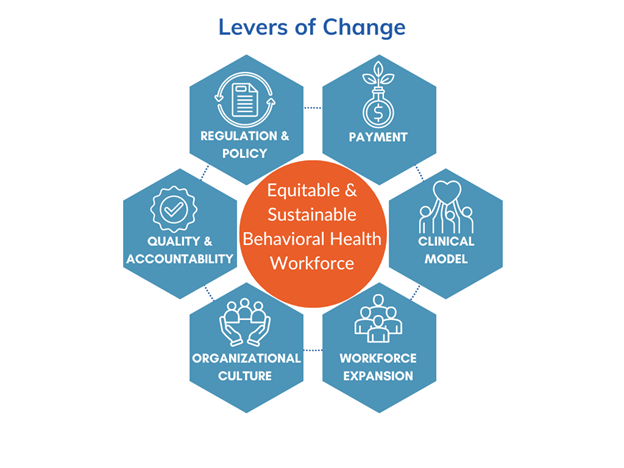
In an effort to understand what recommendations exist and what initiatives are suggested as solutions for the workforce crisis, the CWS reviewed recommendations and cross-walked them to the CWS levers of change as a way of building an actionable roadmap for addressing the behavioral health workforce crisis and to support cross-sector action towards creating a stronger, more equitable workforce.

Levers of Change

Learn more about HMA’s work with the CWS and on Collective Impact.

If you want to learn more about how HMA can help your organization with behavioral health workforce issues, contact our experts below.

Election-driven shifts in healthcare innovation 

Innovation is the source of progress, driving advancements across industries and shaping the way we live, work, and interact. However, the landscape of innovation is not static—it ebbs and flows, influenced by various factors including political leadership. This year’s presidential election may bring forth significant shifts in priorities, policies, and funding that directly impact innovation efforts like Center for Medicare & Medicaid Innovation (CMMI), state waivers and the Advanced Research Projects Agency for Health (ARPA-H). 

CMMI serves as a catalyst for testing innovative payment and service delivery models within Medicare, Medicaid, and the Children’s Health Insurance Program (CHIP). With a new administration comes the potential for shifts in CMMI’s focus and funding priorities. For instance, a president (or his/her appointees) can direct CMMI to design payment models, reimbursement structures that can lead to higher quality outcomes and more cost-effective healthcare delivery. The policy priorities and values that undergird a president’s healthcare agenda can shape the kinds of innovation that CMMI drives. Current CMMI initiatives have prioritized value-based care approaches linking payment to outcomes, improving equity of care across race, gender, and geography, and patient-centered care models designed to support particularly high cost, complex conditions; the priorities of the previous administration included focus on substance abuse disorders, kidney disease, and diabetes.  

CMS also grants waivers to states, such as Section 1115 waivers for Medicaid or 1332 waivers for insurance marketplaces, that offer flexibility to experiment with innovative healthcare solutions. The values and policy approaches of a new president will influence the degree of regulatory flexibility and the types of experimentation that will be approved. For example, several states have recently received approval on Medicaid waivers that encourage community-based approaches to whole person care, wrapping together healthcare coverage, benefits, delivery, with new support services that address upstream barriers to health. 

ARPA-H, a new unit within the National Institutes of Health focuses on investments in “break-through technologies and broadly applicable platforms, capabilities, resources, and solutions that have the potential to transform important areas of medicine and health for the benefit of all patients,” holds immense potential for driving breakthroughs in healthcare by funding innovation that “cannot readily be accomplished through traditional research or commercial activity.” The types of projects funded by ARPA-H could be directly impacted by the policy and budget priorities of whomever is president in 2025 and their interest in promoting collaboration between government, academia, and industry to address complex health challenges. A prime example of a potentially impacted area is the emphasis on cancer research by the Biden Administration. This focus may shift drastically with a change in leadership.  

For healthcare innovators looking to stay informed and adaptable amidst these potential policy changes, HMA has two opportunities of interest: The HMA Fall conference, and a DC Direct subscription.  On October 7-9, healthcare leaders and HMA experts will gather for the 2024 Fall Conference: Unlocking Solutions in Medicaid, Medicare and Marketplace, focused on innovation in public programs. Our keynote speaker Darshak Sanghavi, MD is, a foundational leader at ARPA-H tasked with developing health programs that challenge how we think about healthcare innovation inside and outside government. Conference registration is now open – register today.

Leavitt Partners (LP), an HMA Company, guides clients who need to more closely track federal policy and regulatory activity and know when and how to influence the process. DC Direct, an exclusive offering from LP, provides timely information and insights to elevate your knowledge from simply scratching the surface of understanding to becoming part of the fabric of change. 

Texas releases STAR Kids RFP

This week’s second In Focus reviews the Texas STAR Kids request for proposals (RFP), which the Texas Health and Human Services Commission released on May 10, 2024. The STAR Kids Medicaid managed care program provides coverage to children and youth ages 20 and younger with disabilities. Nine plans currently participate in the program, with contracts worth approximately $4 billion annually.  

STAR Kids Overview  

The STAR Kids program operates under the Texas Healthcare Transformation and Quality Improvement Program 1115 demonstration project. To be eligible, individuals must receive Supplemental Security Income (SSI) and SSI-related Medicaid, participate in the Medically Dependent Children Program (MDCP) Section 1915(c) waiver, live in a community-based intermediate care facility, or participate in an intellectual or developmental disability (I/DD) waiver program.  

Medicaid managed care organizations (MCOs) provide acute, behavioral, and long-term services and supports (LTSS) to children in the MDCP program and acute services only to children covered under the other home and community-based services/IDD waivers. 

RFP 

Texas plans to award contracts to at least two MCOs for each of the 13 service areas (SAs). Each MCO can be awarded up to six SAs.  

MCOs will need to describe reimbursement strategies that incentivize high-quality and cost-effective healthcare while controlling spending and reducing ineffective service utilization in their proposals.  

MCOs must demonstrate progress toward advancing alternative payment model (APM) initiatives within an APM performance framework. MCOs will need to provide a proposed APM and a means of tracking its effectiveness, including implementation of processes that support and incentivize providers to apply value-based care models and reward high performers. 

Evaluation 

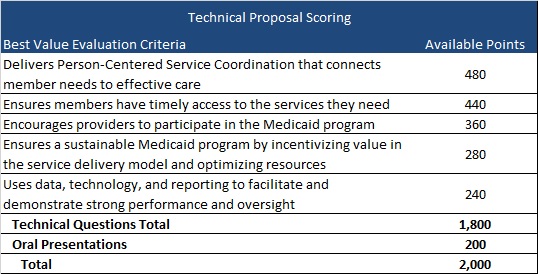
Technical questions in the proposals are divided into five broad categories, representing a total of 1,800 points. Plans can score up to 2,000 points, including oral presentations (see table below).  

Technical Proposal Scoring

Timeline 

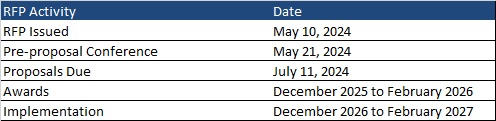
Proposals are due July 11, with awards expected to be made between December 2025 and February 2026. The contract start date is anticipated to begin between December 2026 and February 2027. Contracts will run for six years with three two-year renewal options. 

RFP Activity / Date

Current Market

Incumbents CVS/Aetna, Elevance/WellPoint, Blue Cross Blue Shield of Texas, Centene/Superior Health Plan, Community First Health Plan, Cook Children’s Health Plan, Driscoll Children’s Health Plan, Texas Children’s Health Plan, and UnitedHealthcare served 150,000 beneficiaries as of November 2023.

Plan / Enrollment / % Market Share

Connect With Us  

Texas has an active Medicaid procurement schedule, with key deadlines and additional developments expected in the coming months. HMA experts in Texas are monitoring these activities as the state works to reprocure all its Medicaid managed care contracts. These programs include the State of Texas Access Reform (STAR) and CHIP for traditional Medicaid members, STAR+PLUS for members who are aged and disabled, and STAR Kids for individuals younger than 20 years old with disabilities. 

Through HMA’s Information Services, subscribers gain access to detailed information about the Texas and other state RFP landscapes and procurement documents, as well as historical data about plan contracts, enrollment, and financials.  

For more information about HMA’s work in Texas and our HMAIS resources, contact our featured experts.

Minnesota’s initiative to build a stronger substance use disorder ecosystem

This week, our In Focus section spotlights Minnesota’s innovative efforts to develop a comprehensive ecosystem that addresses substance use disorder (SUD).  

Overview  

Like many states, Minnesota experienced a significant surge in overdose deaths between 2018 and 2021, magnifying disparities in health outcomes linked to SUD and fatalities. For example, in 2021, Native American Minnesotans were 10 times more likely to succumb to a drug overdose than their white counterparts. Similarly, Black Minnesotans faced over three times the risk of dying from a drug overdose compared with White Minnesotans.

How do you create a more effective SUD prevention and treatment system? By fostering collaboration among the people who are directly affected, service providers, advocates, policymakers, and payors so they can learn from one another, offer support, and collectively commit to advancing change. 

The Minnesota Department of Human Services (DHS) Behavioral Health Division has enlisted Health Management Associates, Inc. (HMA), to facilitate the Minnesota SUD Community of Practice (CoP), with the goal of creating a culturally responsive system of care. A CoP has three primary elements: 

  • A common identity, purpose, or value that encourages engagement and mutual exploration 
  • A community that establishes a culture of learning and willingness to share, ask, and listen 
  • The cultivation of practices where the community develops, shares, and maintains frameworks, tools, and ideas that are evidence-based and usedii 

HMA understands that a well-established CoP, supported by solid processes, tools, resources, and expertise, is essential to realize and sustain a strong CoP foundation for translating knowledge into action. 

Many states, including Minnesota, are using the American Society of Addiction Medicine (ASAM) criteria as the guidepost of their efforts to improve the addiction treatment system. To develop a road map on how to implement the ASAM Fourth Edition Levels of Care in Minnesota, HMA convened workgroups to collect firsthand information about services available in participants’ communities, whether they can deliver services at the ASAM level, and the barriers to providing this level of care.  

The Approach  

To authentically engage the community, HMA has partnered with three community advisors, each representing communities with the most significant disparities. The community advisors are integral to ensuring all CoP efforts incorporate a cultural lens that is responsive to the needs of communities facing health inequities. They do so by amplifying the voices and experiences of individuals in populations disproportionately affected by SUDs. In addition, the community advisors provide tailored facilitation, training, and resources within their respective CoPs to promote culturally specific and responsive practices. This approach seeks to increase treatment engagement and reduce disparities in treatment outcomes. 

HMA is working with the CoP to create a report on SUD treatment gaps, a strategic planning and implementation summary, an ASAM implementation road map, a community advocacy capacity-building report, and an overview of culturally specific and responsive models of care.  

Connect with Us  

HMA brings experience in helping to build systems of care and expertise in assisting states with assessing ASAM levels of care and developing strategies, plans, and training to bolster these efforts. HMA is committed to empowering individuals with lived experience and people underserved by existing systems to play key roles in shaping new systems aimed at fostering equitable care. 

The May 2024 edition of HMA’s Podcast, Vital Viewpoints, features a discussion with HMA Principal Debbi Witham about her insights on the ASAM levels and the impact on systems of care.  She shares her in-depth understanding of the complexities of SUD and underscores the crucial need for quality measures and sustainable healthcare funding while warning against investing in ineffective systems. Ms. Witham further emphasizes how states might correct course now to ensure equitable distribution of funding and offers insights into the essential steps for coordinating a community response that enhances outcomes.  

For more information about HMA’s work in Minnesota and similar projects in other states, contact our featured experts.

Ready to talk?