
States are preparing to implement the Medicaid work and community engagement requirements set forth in the Centers for Medicare & Medicaid Services (CMS) interim final rule issued on June 2, 2026. States are expected to implement the mandates by January 1, 2027, leaving Medicaid agencies, health plans, providers, and community partners with a compressed window to develop, test, and deploy new policies, systems, notices, and verification processes. As states develop their plans and final details continue to take shape, this article builds on ongoing Health Management Associates (HMA) analysis of how states are putting these policies into practice.
Two recent developments add to the complexity of implementing the Medicaid community engagement requirements. The first is the October 29, 2026, federal court decision on the interim final rule, which CMS plans to appeal. The second is a compliance checklist CMS shared with states to help them identify where they may need more time or support and to plan mitigations.
Together, the decision, the planned appeal, and the checklist raise new questions about implementation, process, and compliance, and the approaches will vary by state. In a situation this fluid, states and their partners will need to be innovative and diligent at each step between now and January 1, 2027, and beyond. In the remainder of this article, HMA experts discuss the court decision and what it means for Medicaid agencies and their partners, as well as the compliance considerations related to the checklist.
What the Court Decided About Medical Frailty in Medicaid Community Engagement Requirements
The One Big Beautiful Bill Act (P.L. 119-21), also known as the Working Families Tax Cut legislation, generally requires certain adults ages 19–64 in the Medicaid expansion group or certain section 1115 demonstrations to meet community engagement requirements unless they qualify for an exclusion or exception. Individuals can satisfy the requirement through 80 hours per month of work or community service, half-time enrollment in an educational program, or monthly income equivalent to 80 hours at the federal minimum wage. Medically frail individuals are excluded, and Congress specified five groups within that provision.
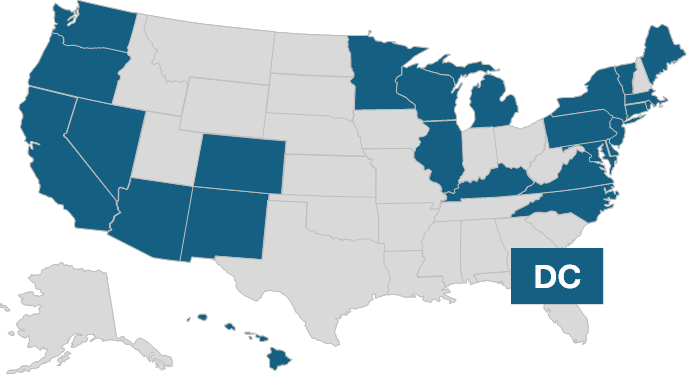
CMS’s June 2026 interim final rule required individuals to fall within one of those five categories and to show that a physical, mental, or behavioral health condition significantly impairs their ability to comply with community engagement requirements. Half the states (25) and the District of Columbia challenged the second requirement (see Figure 1).
The US District Court for the District of Massachusetts issued a decision on October 29, 2026, Commonwealth of Massachusetts, et al. v. Oz, et al., which stated that CMS lacks the authority to add a work-related functional test to the criteria Congress established. The court vacated the challenged language and prohibited CMS from applying the additional test to the plaintiff states.
Figure 1. State Plaintiffs in the Medicaid Medical Frailty Determination Lawsuit
Recognizing that the plaintiff states may need time to revise their medical frailty verification systems and processes, the court also gave them six months of protection from CMS penalties for implementation errors or delays, including those arising from medical frailty determinations.
What Stays the Same: Medicaid Work Requirement Timeline and Verification Rules
The decision does not invalidate the community engagement requirements, and the 80-hour standard and the January 1, 2027, timeline stand. States are unlikely to pause broader implementation, but some design and operational decisions may remain provisional.
The court also rejected the states’ challenges to two CMS verification policies: the 12-month limit on claims and encounter data used to verify medical frailty and, beginning January 1, 2028, the limit of self-attestation to once per continuous enrollment period. In 2027, however, states may accept self-attestation each time medical frailty status is determined or redetermined, which offers useful flexibility as they revise their processes.
Open Questions: What CMS’s Planned Appeal Means for Medicaid Community Engagement Implementation
On November 3, 2026, CMS Administrator Mehmet Oz, MD, said that CMS will appeal the decision, describing the definition of medical frailty as a fundamentally important question that could ultimately reach the Supreme Court. CMS is working on additional guidance that is expected in November. In the meantime, states must make interim choices on verification processes, notices, and systems logic that may later require revision.
The court removed the added test without saying the change applies only to the plaintiff states. However, the court order blocking CMS from using it, along with the six-month protection from penalties, covers only those states. CMS guidance will be critical to clarify how non-plaintiff states should apply the statutory categories and how plaintiff states should operate during the relief period. In light of the ongoing litigation, states will be making decisions without knowing how the appeal may affect the order, and impacts will vary by state and organization; hence, state-specific monitoring is essential.
What the Ruling Means for State Medicaid Agencies, Health Plans, and Providers
State Medicaid Agencies: Revise Medical Frailty Processes Without Pausing Implementation
With fewer than two months before the January 1, 2027, deadline states should identify and revise policy, system, and operational materials to incorporate the vacated functional test. Documenting interim decisions and legal assumptions will make later adjustments easier. Plaintiff states must also decide how to operationalize the six-month relief across adverse actions, verification timelines, notices, appeals, and federal reporting.
Medicaid Health Plans: Reassess Member Identification, Outreach, and Audit Readiness
Plans that built member identification strategies around the two-part test should reassess them and revisit their models to estimate how many additional members may fall within a statutory category. Auditable records of rule changes, member matches, and data limitations will support state oversight and program integrity reviews.
Providers and Community Organizations: Update Documentation and Support Members at Risk of Losing Coverage
Providers are likely to see changes in the information requested to establish medical frailty. Documentation may still be needed, particularly after a permitted self-attestation, to establish whether an individual falls within a statutory category. Providers and community-based organizations also are positioned to identify patients at risk of coverage loss and connect them to application assistance, appeals support, and continuity of care resources.
CMS Compliance Checklist: Mitigation Plans to Address Gaps in Medicaid Community Engagement Implementation
In October 2026, CMS shared “Proposed State Mitigation and Optional Strategies to Support Implementation of Community Engagement and Other Eligibility & Enrollment Provisions of the Working Families Tax Cut (WFTC) Legislation.” The checklist is intended to help states assess readiness and plan mitigations before January 1, 2027. States that do not expect to meet a community engagement requirement at launch can identify the gap, propose a mitigation, and set a timeline for reaching full compliance. CMS may approve each mitigation under an authority such as a state plan option or enforcement discretion, which allows states to avoid formal compliance action. States with approved plans provide quarterly updates on progress and emerging risks, and CMS plans to begin meeting with states about their plans in November.
The checklist focuses on the areas where implementation is most likely to be tested: updating applications and renewal forms in every format, connecting to the data sources needed for verification, checking for exclusions before assessing qualifying activities, reporting new data to CMS, and updating eligibility and hearing notices. It also covers outreach, notices of noncompliance, notification when exclusion status changes, and short-term hardship exceptions. Because community engagement adds to state workloads, CMS also anticipates asking for plans that outline the existing timeliness standards for applications, renewals, and fair hearings. Each state will need to determine which mitigation strategies best fit its systems and capacity.
Preparing for January 1: How HMA Supports Medicaid Community Engagement Implementation
HMA is helping Medicaid agencies, health plans, providers, and partners turn the decision and the checklist into practical next steps including:
- Assess impacts and safeguards. Inventory the policies, business rules, system logic, contracts, notices, and analytics that were already built to incorporate the second medical frailty test. States can then prioritize what must change before January 1, 2027, what interim procedures can cover, and where they need further guidance while reviewing adverse-action controls to reduce avoidable coverage loss.
- Estimate affected populations. Pair HMA’s by state, by year coverage, and enrollment models with medical frailty modeling based on published state methodologies to estimate affected populations and implications for enrollment, continuity of care, and operational workload.
- Monitor developments and supporting communications. Provide state-specific monitoring and scenario planning for CMS guidance, appeals, and further litigation, and develop clear communications for members, providers, plans, vendors, and legislators.
Contact HMA today to work with our policy, actuarial, operations, and communications experts on a defensible, well-documented implementation plan.
This article reflects information available as of November 4, 2026, and is not legal advice.