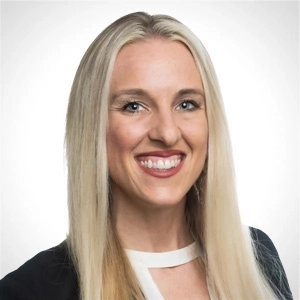
Kelsey Stevens
There are always opportunities in chaos and we're better off being optimistic than not, right? And I do see a lot of opportunity.
Jennifer Colamonico
You're listening to HMA'S Vital Viewpoints on Healthcare. Let's get started. Welcome to another episode of Vital Viewpoints, where we sit down with health care leaders to discuss the trends, challenges, and innovations shaping the industry's future. Joining me today is Kelsey Stephens, the chief executive officer of weekly, which is an HMO company and a nationally recognized health care actuarial and consulting firm.
With nearly 20 years of experience, Kelsey has built a reputation as a strategic leader, helping health plans providers and government agencies navigate complex financial, regulatory and operational challenges. As CEO, she is Leading Weekly's continued growth and innovation while helping clients adapt to an evolving health care landscape. Kelsey, thank you for joining me today.
Kelsey Stevens
Thank you. I'm excited to be here.
Jennifer Colamonico
Excellent. So as you, as you look in across the industry today, looking ahead toward 2027 and just a couple of months here, what are you paying attention to? What everybody talks about how we're sort of in this, moment of such rapid change. But what are you what are you paying attention to in particular, and what feels perhaps different today than it did a year or two ago?
Kelsey Stevens
Yeah. Great question. And I agree with you that change feels like the new normal, right? It's across all lines of business that we interact with. The change is just constant. So I think what feels most different is the conversation around growth for the last several years, the conversations about more. So how can we get more members or, you know, offer products in more markets or just have new products, new value based arrangements?
And now I'm hearing more and more growth is still very important. But increasingly our plans are asking the questions is this growth sustainable or do the economics actually work, or do we have the operating model in place to be able to sustain and support this growth? And one of the interesting things about my role is I get to hear what actuaries and our consultants are seeing across very different parts of the health care system.
And I get to spend time talking to clients and leaders across all aspects of the health care system. And the issues that they're facing are obviously different, whether we're talking Medicare Advantage or Medicaid or Marketplace. There are there are different specifics, but the theme that is underlying all of them is common. And, and they're experiencing really the same issues.
And so the old assumptions that we've relied on in the past are sort of aging out quickly. We can't just do things the way we did in the past. That maybe the population that we're serving looks very different or the cost of care looks different, or just the way organizations are being reimbursed is changing. Even consumer behavior is changing.
And so with all of that happening at the same time, that tolerance for being wrong as actuaries becomes lower. And so when I think about 2027, I'm thinking about just moving from a period focused on growth to a period focus more on what I would say is disciplined growth.
Jennifer Colamonico
So needing to get it right more often, of course, actuaries are kind of in the prediction business. So and also yet we have so much more data and information today. So when you think about that tolerance, for getting it that you think you said the tolerance for getting it wrong is smaller, right? So when you think about how do you get it right more often, what does that mean?
What are organizations needing to do differently?
Kelsey Stevens
Yeah, that's a really good question. And the real answer is we will never get it right. Right. So actuaries are wrong every single time. But it's understanding the wiggle room and understanding what alternative scenarios look like. Right. So if you if you get something wrong, you can in the past, you can just sort of make it up elsewhere.
Right. We got this assumption a little bit wrong, but this one we overshot in the other direction. And overall things look pretty good. But with all of the things moving at the same time, that we just talked about, you know, utilization is changing, acuity is changing. Reimbursement is changing all of those things. Pharmacy costs are high quality. Scores are changing.
When you miss, you know, 2 or 3 of those things, that becomes meaningful really quickly. Right. And so I think that's the story is, you know, health care, it's becoming less forgiving. That's probably how I would summarize it. And, you know, actuarial work becomes less about a single point forecast or this is the best estimate projection. And instead it's about helping leaders understand, okay, what are we assuming in this projection.
But what happens if we're wrong? What if it looks like a what if it looks like me? What if it looks like C and how would I react?
Jennifer Colamonico
So what do you need to do to be able to, to build those situations? Those A, B and C where are you kind of seeing this play out most clearly?
Kelsey Stevens
Yeah. I mean I think it's like any business, right. Even the business that I run, it's like thinking about what if let's, let's just assume we're going to miss 2 to 3 of those assumptions and let's model as such. Right. So if trend comes in plus or -2% from what we project, then what would happen and how would that change our decisions around, you know, care management or benefits or which regions we operate in or which products we, we maintain.
And so just really scenario modeling, and making sure that we have the right stakeholders in the room to be able to understand, you know, be aligned on the same page. This is what we're projecting. And if we nail it, this is what it means. But here are some alternative scenarios that we've prepared based on where we know there's uncertainty and change.
Right. And so just making sure that the clinicians, the actuaries, the finance folks, everybody, they're all sort of on the same page about what the future could look like and where there's uncertainty.
Jennifer Colamonico
Would you say that because we have so much more data available that there are certain inputs to your scenario building where you have more clarity? Meanwhile, you have kind of less clarity on some of these broader trends.
Kelsey Stevens
Yes and no. We have more data. We have advanced technology. All of that is really helpful. But the policy is changing so quickly and policy changes and, changing behavior. Right. So if I think about, you know, the ACA, for example, marketplace, what happens when subsidies go away? Well, remember, behavior changes and certain folks decide that this part, this coverage is no longer affordable with the rate increases that resulted.
And so they leave. And when they leave, they may have been the healthier members. And now the risk pool is of a higher acuity. And that's not what was priced for. And so being able to predict change based on evolving policy or, you know, what members are going to choose to do that's not sitting there in the data.
Right. It's just not. And so that's where expertise and judgment and scenario modeling becomes crucial really, just to make sure you're not kind of caught flat footed.
Jennifer Colamonico
It seems like this past year, of all the years I've been in and around health care, you know, we spend so much time talking about Medicare. And this past year we've talked so much about Medicaid and other topics, but what's what's happening in in Medicare and Medicare Advantage this year, in particular that, you know, that is perhaps giving, us pause in terms of how the trends are formulating and where we're headed.
Kelsey Stevens
Yeah. So Medicare Advantage is an easy example of all of this. So plans are dealing with high medical costs still post pandemic. There's been some curbing of those trends, but they're still high. They're navigating changes and risk adjustment every year. Star ratings changes and rules. You know, the measures themselves are changing. The rules around the program are changing.
There's been lawsuits that are impacting how folks are thinking about star rating impacts to their capitation rates. And, you know, just reimbursement is changing. In general, the growth rate was lower than we would expect. You know, based on history. And so all of this is just raising the question of is revenue. Yes, there there was year over year higher rates provided by CMS, but is it enough to keep pace with the cost of serving that population and more and more, the answer is, okay, we've got to be more strategic.
We've got to think more carefully about where are we growing and where are we adding value and where is perhaps our growth actually deteriorating value? Do we need to close down certain plans or certain markets or, you know, terminate particular provider relationships and lean into the areas where we are seeing success and sustainability? Lots of questions about which benefits actually add value.
And so, yeah, just more, more focus on margin ever before, just due to the combination of policy impacts we're seeing.
Jennifer Colamonico
I don't know if you can answer this. But that was exactly going to be my question. Kind of what which benefits are we seeing? You mentioned higher acuity. So I'm curious, you know, what do you feel like? Is the sense of kind of what's working and what's not working. Where do you see those trends perhaps shifting in how benefits are designed?
Kelsey Stevens
Yeah. So in Medicare Advantage particularly, I think there's, you know, the supplemental benefits or the non traditionally covered by Medicare benefits are the, the hot topic. And there became a point in recent history where it was all about competition and growth. And so what was flashy was what plans offered. But now there's real discipline around what benefits actually will improve access or improve adherence, or something that will be related to the outcomes for the member and the cost for the plan.
And then less focus on things that are just flashy or attractive to the members. You know, there are we call it the wild, wild West. There are all sorts of crazy benefits out there, and we're seeing retraction on some of those. It comes up in, in Medicaid and in ACA, even, even more, just due to Redetermination and Medicaid and the impact there of lower enrollment.
And then, you know, the lost subsidies in marketplace, both of those have resulted in lower and different populations. And those that remain tend to be those with higher need.
Jennifer Colamonico
We've been talking for a long time about value based care in, in various forms. And so, you know, as we think about narrowing, the scope as you've talked about, does it make you, you know, more or less optimistic about value based care and how organizations are able to take risk right now?
Kelsey Stevens
Yeah. Good question. Because the headwinds that plans are facing other Medicaid and the CEOs, you know, Ma plans, marketplace plans, those headwinds are passed right down to the providers that are taking risk from them. So in some ways, I would say it's scarier or harder for them to be successful. But at the same time, I'm still optimistic.
And I think the pressure in the system makes the case for value based care actually stronger. Because with health care costs being harder to manage, you know, aligning incentives around quality and the cost of care becomes even more important than it's ever been before. Almost. Because there's no choice, right? Like we have to align these things. We have to become more lean.
We have to become more efficient. And so those are the objectives of a successful value based arrangement. I would clarify my optimism or caveat my optimism by saying that taking risk and understanding risk are not the exact same thing. And so for an organization, an ACO or whatever we're talking about chooses to take downside risk. I think it's extremely important that they understand these things and the changes that are happening, what their benchmark will look like, what their attributed population will look like.
You know, how risk adjustment is changing and what can they really do about it. And I think that that part, the what can they really do about it is critical, right. You know, we can project actuarial models all day long, but if they don't have the clinical or operational ability to change the outcome, then the model isn't going to save them right?
Jennifer Colamonico
Right. Well, it's a clinical model. Right. And it does seem over time that there are the organizations that have done it and learned to do it well or more successful, but it's, you know, it's a bit of a, I don't know, learning curve, I guess, or data takes a bit to get there. But the as we've had couple conversations over the over the past few months, particularly around fraud, waste and abuse, it seems like the value based care conversation is coming up again in that context, right?
As there's crack down on perhaps different types of billing or coding that may raise flags, you know, is there more incentive? I don't know if you have any thoughts on that. Is there more incentive for more folks to move toward value based arrangements as a way to, perhaps address that as well as some of the outcome factors?
Kelsey Stevens
Yeah, I think so. Absolutely. Because, you know, if providers are truly accountable for outcomes, particularly total cost of care outcomes, then there would be no incentive to inflate costs or, you know, let fraud, waste or abuse continue, right? They would also be aligned with the incentive to get those things under control to produce the savings that they desire from the program.
So yeah, I think, again, aligning incentives is always a good thing so long as the risk is understood mutually. And, you know, there are mechanisms in place to actually make changes.
Jennifer Colamonico
Yeah. As long as they can do something differently when the data reveals. Yeah. The need to. Yeah. So how are you advising health executives right now as they're planning for 2027? What are you what are you telling them to do? The same or differently looking into next year.
Kelsey Stevens
May sound like a bit of a broken record, but really extra focus on the fact that unknown is greater than ever before. Change is greater than ever before and to be prepared for alternative scenarios. So we are really focused with our consultants so that they're focused with their client partners to make sure that scenario testing is happening. Right.
And so again, not one forecast but understand the credible scenarios. Don't be overconfident. Plan for what will happen if x, Y or Z don't turn out the way that you expect. I think that's number one. Another thing is, we're encouraging leaders to really get granular, to really understand their data at a detailed level because, you know, something may look positive on the outside, it may look like the margin situation is okay or the growth situation is okay.
But when you drill in by geography or by product or by member eligibility category, provider arrangement, whatever it is, you may see a very different story. That's sort of getting masked in aggregate. So really diving in, understanding those details, is important now more than ever before. And then I think, you know, just continuing to challenge growth.
Is growth really the right thing? Where are we adding value? Are we growing membership just to get more lives or, are we being, you know, very specific and intentional about how we're growing? And then maybe a bonus for us is just that concept that I alluded to earlier of making sure that all the right voices are at the table.
It's not it's not the time for isolation or working in silos. So just really making sure that clinical and actuarial and finance operations, etc., everybody are all aligned, you know, what could happen and what we would do about it. I think a lot of it is policy. Policy changes have impacts on the members that we're serving, or they have impacts on how members behave, whether they choose to stay enrolled or not.
And what that does is then change the risk pool. And that makes it harder for us to make predictions with certainty. And so I think the more you can get ahead of potential policy changes and what those might look like and, you know, have folks advising in that way, the more you'll be able to sort of put guardrails around that uncertainty.
Jennifer Colamonico
So you mentioned about wanting your clients to kind of get granular on the data. And, and obviously your work is very much about data and technical details, but, how do you do that with the C-suite audience, with the, you know, a CEO or somebody who doesn't live in the details? How are you able to kind of elevate those granular data details in a way that people can digest them and kind of keep engaged with them?
Kelsey Stevens
Yeah, that's something I'm passionate about. Because, you know, I think our profession is really good at complexity. And in general, health care is just very complex. Right. But being very technical, being very complex and knowing the details is not is not winning. Right. That doesn't help our client partners succeed. And so you know, we may have a very accurate analysis that's a 100 page spreadsheet or, you know, whatever the case may be.
But if, if the if the partner, the leader that we're talking to does not feel clear on what decision they need to make or what decisions they may be making, you know, sort of behind the scenes or you know, by default and what impact that could have on their business. Then I then I think we've failed. And so I think actuaries need to be very cognizant about sort of stepping back.
It's good to be in the weeds, but then step back and identify. Here's what really matters. Here's the possible changes that that are really credible. Like are very probable. And in those cases, you know, these are the decisions we need to make. So and I also think just helping folks understand the risk they're taking, is key.
So I think the short answer is, you know, be in the weeds, know the technical details, but be able to step back and say, what are the true swing factors here and what are our options? Right. And then making sure that that's clear, that's an executive summary. That's up front for, for folks so that they are, not making decisions unintentionally.
Jennifer Colamonico
Now, the consulting part of the actuarial consulting.
Kelsey Stevens
Yeah, yeah. And Chip.
Jennifer Colamonico
You know, would you say that your outlook is sort of optimistic for next year where, you know, where do you see obviously there's always opportunities in chaos. So you know, where are those bright spots perhaps.
Kelsey Stevens
Yeah I think you're right. There are always opportunities in chaos and we're better off being optimistic than not. Right. And I do see a lot of opportunity. Uncertainty is scary. But I think periods like this force organizations to kind of get more clear about where they're really creating value. They're forced to ask better questions. They're forced to better understand their data.
And like I mentioned earlier, things like, okay, where are our provider partnerships working really well or where could technology make us more efficient or what benefits really improve outcomes like by asking these good questions and by understanding data and their economics, I think organizations are able to make better strategic choices. So I see it as like the discipline really will enable organizations to make sure they're investing in the right things.
And I think that's an important, it's an important thing. So yeah, the opportunity I see is just that organizations will be forced to be more clear, on what makes them right, and what makes them great so that they can lean into that.
Jennifer Colamonico
If you had a magic wand, and, and you were able to wield it, just one magic wand, if you were to wield it in a way that would kind of support or transform the work that you do, how would you feel that?
Kelsey Stevens
Geez. Oh, man, that's a tough one. I think because there are so many competing constituents in the system, I don't know what my answer would be, but I think I would force clarity. I would I would force clarity and time so that we could make the decisions that impact members and outcomes. Most, and maybe, because I am a huge value believer, I would, I would force more universal adoption just so that, you know, organizations could be forced to align on the things that matter most for patients.
Jennifer Colamonico
That's definitely magic wand worthy.
Kelsey Stevens
Yeah.
Jennifer Colamonico
Any sort of parting thoughts if somebody is listening to this and, you know, looking into here we are in September, looking ahead into planning for next year.
Kelsey Stevens
You know, just encouragement. Like you said, there is optimism in all of this. So I wouldn't want anyone to leave, feeling like the message was panic because I don't think it's a time for panic. I think it's a time for precision. And, I think all organizations will become better. And, and those that are doing the right thing will rise, to the top.
So just encouragement to, remain positive and be intentional and do the right planning. And good luck. That's what I would leave it with.
Jennifer Colamonico
Yeah. Proper planning. There's probably, proper planning prevents I can't remember the rest of that, but there's probably a, a phrase out there, but that fits. That's great. No, and that's right. That's, that's the important work. If you plan for all of the possible outcomes, then you're prepared no matter what happens though.
Kelsey Stevens
Right? Yeah.
Jennifer Colamonico
That's great. Well thank you. Thank you for your time today. Appreciate the conversation and appreciate the work that you're doing.
Kelsey Stevens
Thank you.
Jennifer Colamonico
This episode of Vital Viewpoints on Healthcare is sponsored by HMA Information Services. HMAIS is a subscription based service that provides state level data on publicly sponsored programs like Medicaid from the latest managed care enrollment, market share, and financial performance data to up to date RFP calendars and state by state overviews, HMAS has all the information you'll need to power your initiative to success.
This podcast was produced by myself, Jennifer Colamonico along with Tiffany McKenzie in collaboration with our guests. The content is the property of Health Management Associate.