

Insights

HMA Insights: Your source for healthcare news, ideas and analysis.

HMA Insights – including our new podcast – puts the vast depth of HMA’s expertise at your fingertips, helping you stay informed about the latest healthcare trends and topics. Below, you can easily search based on your topic of interest to find useful information from our podcast, blogs, webinars, case studies, reports and more.

Show All | Podcast | Blogs | Webinars | Weekly Roundup | Videos | Case Studies | Reports | News | Spotlight

Filter by topic:

Receive timely expert insights on topics you care about.

Select Topics

68 Results found.

Biden administration encourages states to apply for Medicaid Reentry 1115 Demonstration for individuals in carceral settings

Read Blog

This week our In Focus section reviews guidance from the Centers for Medicare & Medicaid Services (CMS), released on April 17, 2023, encouraging states to apply for the new Medicaid Reentry Section 1115 Demonstration Opportunity. The demonstration is aimed at helping improve care for individuals in carceral settings prior to their release.

Background

The United States has approximately 1.9 million individuals incarcerated nationwide. Studies have shown higher rates of mental illness and physical health care needs in incarcerated populations compared to the general population, as well as associations between jail incarceration and increases in premature death rates from infectious diseases, chronic lower respiratory disease, drug use, and suicide.

CMS states that formerly incarcerated individuals with physical and mental health conditions and substance-use disorders (SUDs) typically have difficulty succeeding upon reentry due to obstacles present immediately at release, such as high rates of poverty and high risk of poor health outcomes. These individuals tend to face barriers in obtaining housing, education, employment, and health care access upon release. They often do not seek outpatient medical care and are at significantly increased risk for emergency department (ED) use and hospitalization.

Purpose and Goals

After collecting feedback from stakeholders, including managed care organizations, Medicaid beneficiaries, health care providers, the National Association of Medicaid Directors, and other representatives from local, state, and federal jail and prison systems, CMS designed the Reentry Section 1115 Demonstration Opportunity. The services covered under this demonstration opportunity should aim to improve access to community resources that address the health care and health-related social needs of the carceral population, with the aims of improving health outcomes, reducing emergency department visits, and inpatient hospital admissions for both physical and behavioral health issues once they are released and return to the community.

The purpose of this demonstration opportunity is to provide short-term Medicaid enrollment assistance and pre-release coverage for certain services to facilitate successful care transitions. The full goals, as quoted from CMS, are as follows:

  • “Increase coverage, continuity of coverage, and appropriate service uptake through assessment of eligibility and availability of coverage for benefits in carceral settings just prior to release
  • Improve access to services prior to release and improve transitions and continuity of care into the community upon release and during reentry
  • Improve coordination and communication between correctional systems, Medicaid systems, managed care plans, and community-based providers
  • Increase additional investments in health care and related services, aimed at improving the quality of care for beneficiaries in carceral settings and in the community to maximize successful reentry post-release
  • Improve connections between carceral settings and community services upon release to address physical health, behavioral health, and health-related social needs
  • Reduce all-cause deaths in the near-term post-release
  • Reduce number of ED visits and inpatient hospitalizations among recently incarcerated Medicaid beneficiaries through increased receipt of preventive and routine physical and behavioral health care”

CMS encourages states to engage with individuals who were formerly incarcerated when contemplating the design and implementation of their proposal. CMS also encourages states to design a broadly defined demonstration population that includes otherwise eligible, soon-to-be former incarcerated individuals. States have the flexibility to target population, such as individuals with specific conditions, but are encouraged to be mindful of undiagnosed conditions. States should have a plan to ensure incarcerated individuals will be enrolled in Medicaid upon their release, applying for Medicaid no later than 45 days before the day of release.

Reentry Section 1115 Demonstration Opportunity

To receive approval for the demonstration, the state proposal must include in the pre-release benefit backage:

  1. Case management to assess and address physical and behavioral health needs and health-related social needs;
  2. Medication-assisted treatment (MAT) services for all types of SUD as clinically appropriate, with accompanying counseling; and
  3. A 30-day supply of all prescription medications that have been prescribed for the beneficiary at the time of release, provided to the beneficiary immediately upon release from the correctional facility.

In addition to these three services states may include other important physical and behavioral health services to cover on a pre-release basis, such as family planning services and supplies, behavioral health or preventive services, including those provided by peer supporters/community health workers, or treatment for Hepatitis C. CMS is also open to states requesting Section 1115 expenditure authority to provide medical supplies, equipment, and appliances.

The Reentry Section 1115 Demonstration opportunity is not intended to shift current carceral health care costs to the Medicaid program. CMS will not approve state proposals to receive federal Medicaid matching funds for any existing carceral health care services funded with state or local dollars unless the state agrees to reinvest the total amount of new federal matching funds received into activities or initiatives that increase access to or improve the quality of health care services for individuals who are incarcerated.

CMS also expects states to refrain from including federal prisons as a setting in which demonstration-covered prerelease services are provided under the opportunity.

States with approved demonstrations will need to submit an implementation plan, a monitoring protocol, quarterly/annual monitoring reports, a mid-point assessment report, an evaluation design, and interim/summative evaluation reports.

California

California became the first state to receive approval for a Section 1115 waiver amendment earlier this year to provide limited Medicaid services to incarcerated individuals for up to 90 days immediately prior to release. The approval period runs through December 31, 2026, timed with the expiration of the CalAIM Medi-Cal waiver demonstration. California’s reentry demonstration initiative aims to provide health care interventions at earlier opportunities for incarcerated individuals to reduce acute services utilization and adverse health outcomes. The state anticipates it will increase coverage and continuity of coverage for eligible beneficiaries, improve care transitions for beneficiaries as they reenter the community, and reduce morbidity and mortality in the near-term post-release.

Pre-release services include comprehensive care management, physical and behavioral clinical consultation, lab and radiology, MAT, community health worker services, and medications and durable medical equipment. A care manager will be assigned to eligible individuals to establish a relationship, understand their health needs, coordinate vital services, and make a plan for community transition, including connecting the individual to a community-based care manager they can work with upon their release. Additionally, all counties implementing Medi-Cal application processes in jails and youth correctional facilities will “suspend” the Medicaid status while an individual is in jail or prison, so that it can be easily “turned on” when they enter the community.

On April 6, 2023, HMA held a webinar titled, “Medicaid authority and opportunity to build new programs for justice-involved individuals.” The webinar replay is now available. HMA will announce additional webinars on the topic.

Read the Press Release and Letter

Implementation of Medications for Opioid Use Disorder (MOUD) and Medication Assisted Treatment (MAT) Programs in County Justice Systems and State Departments of Correction

Download

CONTEXT: THE PROBLEM

A significant percentage of individuals in American jails and prisons have a substance use disorder (SUD), with those with opioid use disorder (OUD) at especially high risk of death due to overdose upon release from incarceration.1 At the same time, overdose deaths during incarceration continue to increase.2,3

Medications for opioid use disorder (MOUD) and medication assisted treatment (MAT) programs reduce in-jail overdose death by 50% and the risk of overdose death after release by 60%. MAT programs also redress substantial racial and ethnic health disparities4. Despite these proven benefits, most incarcerated Americans do not have access to this treatment. Barriers to MAT implementation include lack of resources such as money, trained staff, and leadership; stigma toward both SUD and MOUD; and limited system ability to support adaptive change.

KEY MODEL ELEMENTS AND PROMISING RESULTS

Health Management Associates (HMA), a national research and consulting firm focusing on publicly funded healthcare, developed a MAT implementation support model working with dozens of jails and prisons across the United States, rapidly scaling access to MOUD/MAT during incarceration. This implementation support model fosters both technical and adaptive change using a learning collaborative structure and adult-learning theory. The model also acknowledges the unique environment of each jail and prison and the challenges of providing healthcare services for a complex condition like OUD in a correctional setting. This model program is straightforward, documented, proven, and readily replicated.

The model provides participating jail and prisons teams with access to robust individualized technical assistance and coaching; peer-to-peer support and learning; training; and collaborative educational sessions. This approach recognizes that multidisciplinary teams inclusive of custody/security staff; medical personnel; behavioral health providers; and others must be convened and supported as a cohesive unit to effectively implement MOUD and MAT programs in jails, prisons, and the justice and addiction ecosystems. This ecosystem view incorporates the critical partners and pathways outside the jail and prison to support effective re-entry to the community following incarceration to support recovery. A change management and continuous quality improvement framework is foundational to the model.

In the California, Illinois and Michigan county jail team learning collaboratives, county teams receive implementation grants or stipends. Over the course of the projects these amounts have ranged from $15,000 to over $100,000 per county, which were included in the project budget from the funding source (State Opioid Response in CA and IL; state general funds in CA). Offering this “seed money” serves as an incentive to help counties engage in the learning collaborative. HMA has managed all aspects of these implementation grants/stipends.

Evaluation

Collection and analysis of data informs ongoing technical assistance and demonstrates the rapid scaling and positive impact of the program. In the state learning collaborative programs, deidentified data is collected from county jail teams and analyzed and compiled to reflect trends and progress in the implementation effort. Where HMA supports state departments of correction with MOUD and MAT implementation, HMA assists the prison system with identifying and using key data points to inform a continuous quality improvement process.

Funding

The MOUD and MAT county jail implementation model was initiated in 2018 in California’s MAT in Jails and Drug Courts program with demonstrated impact for expanding access to MAT in the state’s county jails. The project was funded with federal State Opioid Response dollars administered by the California Department of Health Care Services (DHCS) through September 2022. The California legislature approved state general funds to support continuation of the program from October 2022 through June 2025.

Illinois’ Department of Health Services Substance Use Prevention and Recovery (SUPR) sponsored implementation of that state’s learning collaborative beginning in 2021 with federal State Opioid Response Dollars. It is currently funded through June 2024 with plans to extend the learning collaborative under a new SOR funding cycle.

Michigan Department of Health and Human Services elected to implement the county jail learning collaborative in late 2023, funding it with state opioid settlement funds for continuation through November 2026.

HealthCare Access Maryland in support of the Maryland Governor’s Office of Crime Prevention, Youth, and Victim Services deployed this model for a limited three-month period with HMA to increase access to MOUD for incarcerated persons. The impetus for this project was the OUD Examinations and Treatment Act, which requires local jails/jurisdictions in Maryland to offer all forms of MOUD.

Michigan Department of Corrections has engaged HMA for years as its contracted third-party health care evaluator. HMA supported the DOC’s MAT implementation across multiple sites in the Michigan prison system with state general funds from 2020-2022.

HMA supported the Alaska Department of Corrections with widescale MAT implementation under a contract through state general funds 2022-2023.

RESULTS

HMA’s successful model incorporates strategies that overcome typical barriers to MOUD/MAT implementation in corrections settings.

  • In the California learning collaborative, HMA has engaged 41 county jails over four years resulting in 35,000 person-months5 of individuals on MAT with counties participating representing almost 90 percent of the state’s total population.
  • In the Illinois learning collaborative, HMA has engaged 28 counties over three years resulting in over 720 unique individuals receiving MAT in jails with participating counties representing 64 percent of the state’s population (Cook County is excluded because of an evolved MAT program prior to inception of Illinois’ county learning collaborative).

Figure 1. Running total of unique individuals who have received MAR in Jail in Illinois from inception of data collection from counties through December 2023. (MAR is medication assisted recovery – the term used for medication assisted treatment in Illinois.)
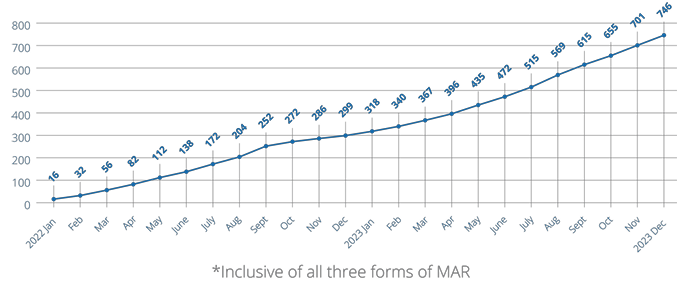
Figure 2. Running total of person-months individuals who have received MAT in jail in California participating jails from program inception through August 2022
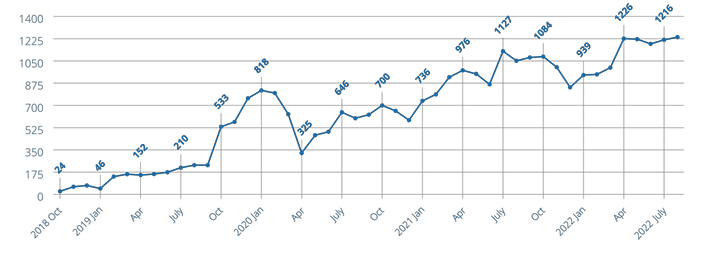
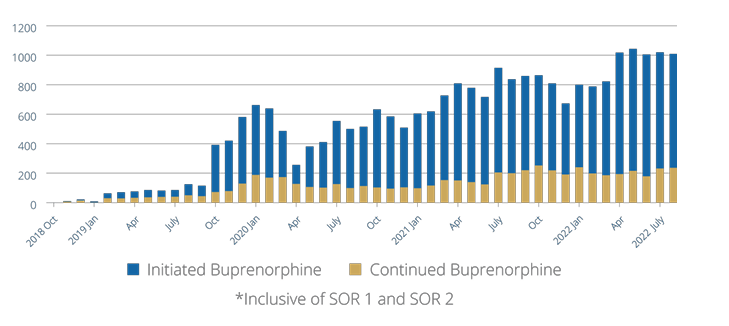
Figure 3. Running total of person-months individuals were initiated or continued on buprenorphine in California participating jails from program inception through August 2022
STRATEGY/APPROACH/INTERVENTIONS

HMA coaches and subject matter experts (SMEs) understand and respond to the unique regulatory oversight, policies, and procedures in jail and prison operations, requiring customized approaches to introduce and expand MOUD and MAT access. Both adaptive and technical change strategies are deployed to assist jails and prisons in changing their culture and operations to treat SUD like other chronic, treatable diseases. HMA coaches and SMEs stay deeply involved with implementation teams to initiate and support change over time.

County jail teams in the learning collaborative and DOC site teams are assigned an HMA coach who understands and supports their individualized operations, resource capacity, and goals. The coach convenes an in person-team meeting and initial facility walk-through to jump start the initiative and inform ongoing team implementation goals and activities. The coach assists the team in establishing and executing goals and action steps that align with the overarching goals of the learning collaborative or DOC system.

All county teams are regularly convened for collaborative learning sessions to support their implementation plan on an ongoing basis. These sessions include fundamental information on MAT/MOUD and related components of evidencebased SUD treatment in corrections settings. Coaches identify challenges and barriers at their sites and these themes inform sessions at additional learning collaborative convenings. These identified themes are also targeted with training and hands-on coaching support (e.g., biases against MAT among providers and custody staff; custody concerns about diversion of medications; payment mechanisms for the medications; and sufficient staff capacity to offer the treatment).

Critical elements of the change effort include:

  • Improved SUD screening, assessment, treatment options, and planning to include at least two forms of MAT are core themes and goals of the learning collaborative. This messaging and expectation accelerate implementation by “setting a bar” for teams’ efforts while providing them with individualized assistance to overcome challenges in meeting their goals.
  • Engagement across the treatment ecosystem including advisors from state associations of counties, sheriff departments, treatment providers, and the state prison system connects the counties with emerging policy and best practices from their professional peers.
  • Multidisciplinary teams: MAT in jails and drug courts requires an integrated approach inclusive of medical and behavioral health care staff, custody/security and other justice professionals, and county providers and leadership.

This implementation model drives rapid, systemic change that would likely not be possible with individual site efforts. Scaling is accelerated by the learning collaborative model in which barriers that are identified by multiple county or DOC site teams, such as regulations for methadone access to incarcerated individuals or practice of a healthcare vendor serving multiple sites, are addressed at the levels of state policy or corporate leadership and addressed in group learning opportunities.

Lessons Learned

  • The approach needs to be tailored to each jail and county – and for departments of correction, each DOC site – who have resources, concerns, and goals unique to them. For example, a DOC reception center will have different security and programming requirements and workflows than a general detention center. A rural county with an average daily population of 15 and intermittent nursing and provider access has different resources than a suburban jail with an average daily population of 500. The technical assistance must incorporate this understanding and meet each site where they are to be effective.
  • The aim – improved SUD treatment systemwide including transitions when individuals enter the corrections system and again at release – needs to be addressed as a countywide problem that needs a comprehensive ecosystem solution. Or, in the cases of departments of corrections, system and statewide perspective and strategies are required.
  • Implementation of MAT in jails should be sponsored by the sheriff, and key partners from probation, jail custody, jail healthcare, drug courts, local county drug treatment programs, and the county administrator’s office must be included in planning and implementation. Implementation of MAT in departments of corrections must be endorsed and actively supported by the highest levels of leadership in the system and at each prison location.
  • Do not underestimate the prevalence and impact of stigma. There is an ongoing need for broader education about substance use disorders and treatment including about MAT and MOUD. All stakeholders and those impacted by opioid use disorder need to understand that substance use disorder is a chronic brain-based disease and that MAT/MOUD is effective treatment – not use of a substance that is problematic, i.e. “MAT is just replacing a drug with another drug.”
  • It is important to build supportable, sustainable implementation plans. If teams are not given sufficient support and opportunity to evolve in their understanding and development of the implementation program they may fail. At the same time a sense of urgency is important because people are dying due to lack of access to needed treatment.

ABOUT HMA

HMA is a leading independent research and consulting firm with more than 500 consultants with expertise across all domains of publicly funded healthcare and human services. HMA has distinguished itself from other consulting companies with our decades-long tradition of hiring senior-level policymakers, healthcare system leaders, and other experts with hands-on experience.


1 National Institute on Drug Abuse; National Institutes of Health; U.S. Department of Health and Human Services.

2 https://bjs.ojp.gov/content/pub/pdf/mlj0018st.pdf

3 https://bjs.ojp.gov/content/pub/pdf/msfp0118st.pdf

4 https://www.ncbi.nlm.nih.gov/pmc/articles/PMC9640815/

5 “Person-months” is defined as the number of persons receiving MAT (any of the three forms of MOUD) in the reporting month, per jail, aggregated.


Health Management Associates Acquires Crestline Advisors

Read News

Jay Rosen, founder, president, and co-chairman of Health Management Associates (HMA), today announced the firm’s acquisition of Crestline Advisors, an Arizona based healthcare consulting firm.

Founded in 2013, Crestline Advisors supports health plans, provider organizations, and state agencies with an array of services designed to help them navigate the changing healthcare landscape. The company’s team of independent consultants has an extensive track record of developing successful RFP responses, provider networks, and business development strategies to fuel client success.

“Crestline Advisors brings an impressive mix of expertise and relentless client focus – that delivers results – to HMA,” Rosen said. “Their ability to consistently develop winning proposal responses for Medicaid managed care organizations (MCO) complements our extensive MCO supports as we continue to expand the ways in which we serve our clients.”

In addition to Crestline’s proposal response development and MCO network management and operations support services, the company also assists clients with regulatory and contract compliance, accreditation, and strategic planning for business development.

“Crestline has demonstrated a commitment to supporting health plans, providers, and states to improve healthcare for Medicaid beneficiaries,” said Crestline CEO Susan Dess. “We firmly believe that as part of the HMA family of companies we will bring even more success to our clients and drive continued growth and development in Medicaid healthcare delivery.”

Dess and Tim Mechlinski will continue to lead Crestline Advisors, an HMA Company, as managing directors. Terms of the transaction were not disclosed.

About HMA

Founded in 1985, HMA is an independent, national research and consulting firm specializing in publicly funded healthcare and human services policy, programs, financing, and evaluation. Clients include government, public and private providers, health systems, health plans, community-based organizations, institutional investors, foundations, and associations. With offices in more than 20 locations across the country and over 500 multidisciplinary consultants coast to coast, HMA’s expertise, services, and team are always within client reach. Learn more about HMA at healthmanagement.com, or on LinkedIn and Twitter.

About Crestline Advisors

Established in 2013, Crestline Advisors, LLC is a consulting company designed to support the needs of health plans, provider organizations, and state agencies. Crestline specializes in helping large and small organizations operate successfully and grow despite the constant operational, financial, and political challenges they face. Crestline uses its current understanding of industry drivers to strategize with our clients so they can respond timely and effectively to small, large, or enormous market-place changes. Learn more about Crestline Advisors at crestlineadvisors.com.

Medicaid authority to build programs for justice-involved individuals

Read Blog

On January 26, the Centers for Medicare & Medicaid Services (CMS) approved California’s (CA) section 1115 request to cover targeted healthcare services for incarcerated individuals 90 days before release. This historical partial rollback of the Medicaid Inmate Exclusion Policy empowers the CA Department of Health Care Services (DHCS) to collaborate with state agencies, counties, health plans and community-based organizations to create coordinated community reentry services focused on persons transitioning from incarceration to community that provide physical and behavioral healthcare services.

Fourteen states have pending section 1115 demonstration requests to provide specific healthcare services for justice-involved individuals. CMS has indicated it will be issuing guidance on the coverage parameters for healthcare services for individuals transitioning from carceral settings.  These efforts allow states, counties, and cities to build coordinated systems of healthcare care to support reentry.  Building such systems requires infrastructure development and enhancement, stakeholder engagement, strategic planning, and project and change management across justice partners, health plans, and community-based organizations. 

Implementing the services will involve an in-depth understanding of the fundamental healthcare needs of justice-involved individuals, carceral setting healthcare delivery and reentry (transition to the community), and how to operationalize necessary changes to meet program requirements.  Additionally, change management, critical stakeholder coordination, infrastructure, and technology development, enhancement, guidance on data-sharing agreements, and health plan involvement will need to be created or adapted to meet the CMS 1115 requirements.  Administrators of carceral settings and correctional healthcare providers must coordinate services with community-based organizations and health plans to implement timely, cost-effective, and quality healthcare services to individuals leaving carceral facilities.

States, payors, correctional administrators, and healthcare providers will benefit from understanding the 1115 requirements to stand up this initiative, recommendations to facilitate the 1115 application process, how it intersects with healthcare delivery within a carceral setting and during reentry, and practical strategies for planning and operationalizing the effective delivery and coordination of healthcare services that meet program requirements. 

On Thursday, April 6, 2023, HMA held a webinar to help states and other stakeholders understand the section 1115 parameters and provide insight to states, local government, correctional health settings, and providers on how to best plan for implementing such services.

Key experts covered the following topics:

  • Deep Dive into California’s section 1115 approval and lessons learned from the California application process?
  • Operationalizing In Reach and Re-entry Programming for Justice-Involved Individuals
    • Understanding the complex needs of justice-involved individuals.
    • What investments must states make to implement Medicaid-eligible services for justice-involved individuals?
    • What role can technology and digital health play in supplementing direct care?
  • The Role of Payers in new Services for Justice-Involved Individuals

See below for our HMA featured speakers.

HMA consultants bring unparalleled expertise in Medicaid policy, correctional health and a deep understanding of the unique needs of this population. We have the operational knowledge and experience with technology and digital health solutions, as well as the needed data and analytic capacity to collect the correct data to drive improvements in equity and access to care.

WATCH THE WEBINAR REPLAY

Webinar replay: Medicaid authority and opportunity to build new programs for justice-involved individuals

Watch Now

This webinar was held on April 6, 2023.

This webinar was designed to help states and other stakeholders understand the section 1115 parameters and that will provide insight to states, local government, carceral care settings and providers on how to best plan for implementing such services.

Why this is important:

On January 26, the Centers for Medicare & Medicaid Services (CMS) approved California’s (CA) section 1115 request to cover targeted healthcare services for incarcerated individuals 90 days before release. This historical partial rollback of the Medicaid Inmate Exclusion Policy empowers the CA Department of Health Care Services (DHCS) to collaborate with state agencies, counties, and community-based organizations to create coordinated community reentry services focused on persons transitioning from incarceration to community that provide physical and behavioral healthcare services.

Fourteen states have pending section 1115 demonstration requests:

These requests include specific healthcare services for justice-involved individuals. CMS has indicated it will be issuing guidance on the coverage parameters for healthcare services for individuals transitioning from carceral settings.  These efforts allow states, counties, and cities to build coordinated systems of healthcare care to support reentry.  Building such systems requires infrastructure development and enhancement, stakeholder engagement, strategic planning, and project and change management across justice partners, health plans, and community-based organizations.

Additional resources:

California first to receive federal approval for justice-involved reentry demonstration initiative

Read Blog

This week, our In Focus section reviews the California amendment to the Section 1115 Waiver Demonstration titled, “California Advancing and Innovating Medi-Cal (CalAIM),” approved by the Centers for Medicare & Medicaid Services (CMS) on January 26, 2023. The amendment will provide targeted Medi-Cal services to individuals in state prisons, county jails, and youth correctional facilities for up to 90 days prior to release. This marks the first time in the nation that Medicaid will pay for a limited set of health care services provided to justice-involved individuals before they are released. The approval is effective through the end of the CalAIM demonstration, ending December 31, 2026, unless extended or amended.

The justice-involved initiative is part of the broader CalAIM demonstration, approved December 29, 2021. For more information on CalAIM, please see HMA’s write up from March 2021.

Background

California was one of the first of 11 states – Arizona, California, Kentucky, Massachusetts, Montana, New Jersey, New York, Oregon, Utah, Vermont, and Washington – to propose a demonstration to provide Medicaid-covered healthcare services to justice-involved populations before release. CMS plans to issue guidance on the Reentry Demonstration Opportunity to support community reentry and improvement in care transitions for individuals up to 30 days prior to their scheduled release.

California’s reentry demonstration initiative aims to address the needs of incarcerated beneficiaries as they near the end of their incarceration and reenter the community by improving connections and coordination between the correctional, health care, and social service systems. Currently, Medi-Cal services are only available after release from incarceration.

In California, more than one million adults and youth enter or are released from prisons and jails annually, with at least 80 percent eligible for Medi-Cal. The justice-involved individuals are disproportionately people of color, compared to the state population. Formerly incarcerated individuals are also more likely to experience poor health outcomes and face disproportionately higher rates of physical and behavioral health diagnoses. These individuals are at higher risk for injury and death as a result of violence, overdose, and suicide compared to people who have never been incarcerated.

Demonstration

California will be required to submit for CMS approval a Reentry Initiative Implementation Plan and Reinvestment Plan documenting how the state will operationalize coverage and provision of pre-release services and how existing state funding for carceral health services will continue to support access to necessary care and achievement of positive health outcomes for the justice-involved population.

The goals of the demonstration are to:

  • Increase coverage, continuity of coverage, and appropriate service uptake through assessment of eligibility and availability of coverage for benefits in carceral settings just prior to release;
  • Improve access to services prior to release and improve transitions and continuity of care into the community upon release;
  • Improve coordination and communication between correctional systems, Medicaid and CHIP systems, managed care plans, and community-based providers;
  • Increase additional investments in health care and related services, aimed at improving the quality of care for beneficiaries in carceral settings and in the community to maximize successful reentry post-release;
  • Improve connections between carceral settings and community services upon release to address physical health, behavioral health, and health-related social needs;
  • Provide intervention for certain behavioral health conditions and using stabilizing medications like long-acting injectable anti-psychotics and medications for addiction treatment for SUDs, with the goal of reducing decompensation, suicide-related deaths, overdoses, and overdose-related deaths in the near-term post-release; and
  • Reduce post-release acute care utilizations such as emergency department (ED) visits and inpatient hospitalizations and all-cause deaths among recently incarcerated Medicaid beneficiaries and individuals otherwise eligible for CHIP if not for their incarceration status through robust pre-release identification, stabilization, and management of certain serious physical and behavioral health conditions that may respond to ambulatory care and treatment (e.g., diabetes, heart failure, hypertension, schizophrenia, SUDs) as well as increased receipt of preventive and routine physical and behavioral health care.”

Eligible individuals under the demonstration will be assigned a care manager while they are incarcerated, as well as a community-based care manager upon their release. Pre-release services will be anchored in comprehensive care management and include physical and behavioral clinical consultation, lab and radiology, Medication Assisted Treatment (MAT), community health worker services, and medications and durable medical equipment. These services will be available for up to 90 days immediately prior to the individual’s expected release date. California expects that it will be able to reduce decompensation, suicide-related death, overdose, and overdose-related deaths in the near-term post-release.

As a condition of approval of this demonstration amendment, CMS is also requiring California to make pre-release outreach, along with eligibility and enrollment support, available to all individuals incarcerated in the facilities in which the demonstration is functioning. Effective January 1, 2023, state statute directs all counties implementing Medi-Cal application processes in county jails and youth correctional facilities to “suspend” their status while an individual is in jail or prison, and easily “turn on” when they enter the community so they can access essential health care services upon release.

The demonstration is expected to begin in April 2024. Correctional facilities can choose their launch date within 24 months of the go-live date and will be subject to a readiness review process before they can launch.

Additional Requirements

Under the amendment, CMS approved the state’s Designated State Health Program (DSHP) financing plan. Under this DSHP, California will receive federal matching funds to support the Providing Access and Transforming Health (PATH) program. As a condition of receiving this funding and as part of the approval, CMS requires California to increase and sustain Medicaid fee-for-service provider payment rates and Medicaid managed care payment rates for obstetrics, primary care, and behavioral health services. According to the U.S. Department of Health and Human Services (HHS), “in obstetrics alone, this represents the potential for $60 million to be invested in the health of pregnant and postpartum women by increasing access to providers and therein improving health outcomes for pregnant women.” The rate increase will close the gap between Medicaid and Medicare rates by at least 2 percentage points, should the state’s average Medicaid to Medicare provider rate ratio be below 80 percent in any of these categories.

Under this amendment, CMS is also updating the budget neutrality methodology for two previously approved community supports, short-term post-hospitalization services and recuperative care, that address health-related social needs.

Link to Waiver Amendment

Health Management Associates acquires Lovell Communications and establishes Nashville office

Read News

Jay Rosen, founder, president, and co-chairman of Health Management Associates (HMA), today announced the firm’s acquisition of Lovell Communications, a leading strategic communications and change management firm that exclusively serves the healthcare industry.


Founded in 1988 and based in Nashville, Tenn., award-winning Lovell Communications provides communication solutions and strategies for healthcare organizations across the country. Lovell has helped clients of all size manage crises, navigate change, maximize brand potential, and grow business. Services include creation of corporate communication programs, marketing and media strategies, transaction support, and helping clients navigate complex operational, reputational and regulatory issues.


“Lovell’s strategists have an impressive track record of helping healthcare clients overcome challenges and seize opportunities,” Rosen said. “They are a natural addition to our company as we open a Nashville office and continue to expand the depth and breadth of services we offer our clients and partners.”


Lovell CEO Rosemary Plorin will continue to lead the firm, which will operate as Lovell Communications, an HMA Company. In addition to serving integrated health systems, hospitals and providers across the country, Lovell’s clients include healthcare suppliers, consultants, associations and innovators throughout the industry.


“As the pace of transformation in healthcare continuously increases, the need for effective, strategic communications has never been greater,” Plorin said. “We are honored to offer our expertise in support of HMA’s clients and look forward to what we will accomplish together as we pursue a shared commitment to making healthcare more accessible, equitable and effective.”


HMA’s new Nashville office is co-located with the Lovell office in the Westpark Building at 3212 West End Ave.


About HMA


Founded in 1985, HMA is an independent, national research and consulting firm specializing in publicly funded healthcare and human services policy, programs, financing, and evaluation. Clients include government, public and private providers, health systems, health plans, community-based organizations, institutional investors, foundations, and associations. With offices in more than 20 locations across the country and over 500 multidisciplinary consultants coast to coast, HMA’s expertise, services, and team are always within client reach.


About Lovell Communications


For 35 years Lovell Communications has served as strategic counsel and trusted partner to health care providers and suppliers across the country. Publicly traded companies, not-for-profit systems, early stage and mature companies draw upon the firm’s vast communications expertise to support them through phases – or just moments – when it is crucial to persuade audiences or influence decision makers. Learn more about Lovell, or on Twitter, Facebook or the company blog.


HMA

Lovell Communications

2022 Yearly Roundup: a year of successful partnerships

Read Blog

The holiday season is grounded in gratitude. At HMA, we are grateful for successful partnerships that have fueled change to improve lives.

We are proud to be trusted advisors to our clients and partners. Their success is our success. In 2022 our clients and partners made significant strides tackling the biggest healthcare challenges, seizing opportunities for growth and innovation, and shaping the healthcare landscape in a way that improves the health and wellness of individuals and communities.

Reforming Colorado’s Behavioral Health System

HMA partnered with the Colorado Department of Human Services to support the planning and implementation of a new Behavioral Health Administration (BHA). HMA provided technical research and extensive stakeholder engagement, drafted models for forming and implementing the BHA, employed an extensive change management approach, and created a detailed implementation plan with ongoing support. Today the BHA is a cabinet member-led agency that collaborates across agencies and sectors to drive a comprehensive and coordinated strategic approach to behavioral health.

From Bid to Trusted Advisor

Wakely Consulting Group, an HMA Company, was engaged to support the launch of a Medicare Advantage (MA) joint venture partnership between a health plan and a provider system. Wakely was responsible for preparing and certifying MA and Medicare Part D (PD) bids, a highly complex, exacting, and iterative effort. The Wakely team quickly became a trusted advisor and go-to resource for the joint venture decision makers. The joint venture has driven significant market growth over its initial years, fueled by a competitive benefit package determined by the client product team.

Laying the Foundation for Modernizing Indiana’s Public Health System

In 2021 Indiana Governor Eric Holcomb appointed a 15-member commission to assess Indiana’s public health system and make recommendations for improvements. The Indiana Department of Health (IDOH) engaged HMA to provide extensive project management and support for six workstreams. HMA prepared a draft report summarizing public input as well as research findings and recommendations. The commission’s final report will form the basis of proposed 2023 legislation, including proposals to substantially increase public health service and funding across the state.

Multiple Clients Accepted into ACO REACH Model

In early 2022 HMA and Wakely Consulting Group, an HMA Company, assisted multiple clients with their applications to participate in the new CMS ACO REACH model. The purpose of this model is to improve quality of care for Medicare beneficiaries through better care coordination and increased engagement between providers and patients including those who are underserved. The team tailored their support depending on each client’s needs. The application selection process was highly competitive. Of the 271 applications received, CMS accepted just under 50 percent. Notably, nine out of the 10 organizations HMA and Wakely supported were accepted into the model.

Pipeline Research and Policy Recommendations to Address New Innovative Therapies

HMA, and subsidiaries The Moran Company and Leavitt Partners, were selected by a large pharmaceutical manufacturer to analyze the current pipeline of innovative therapies, examine reimbursement policies to assess long-term compatibility with the adoption of innovative therapies and novel delivery mechanisms, and make policy recommendations to address any challenges identified through the process. The project equipped the client with a holistic understanding of future potential impacts and actions to address challenges in a detailed pipeline analysis of innovative therapies.

Early bird registration discount expires July 11 for HMA conference on the future of publicly sponsored healthcare, October 10-11 in Chicago

Read Blog

Be sure to register for HMA’s 2022 Conference by Monday, July 11, to get the special early bird rate of $1,695 per person. After July 11, the rate is $1,895.

Nearly 40 industry speakers, including health plan executives, state Medicaid directors, and providers, are confirmed for HMA’s The New Normal: How Medicaid, Medicare, and Other Publicly Sponsored Programs Are Shaping the Future of Healthcare in a Time of Crisis conference, October 10-11, at the Fairmont Chicago, Millennium Park.

In addition to keynote sessions featuring some of the nation’s top Medicaid and Medicaid executives, attendees can choose from multiple breakout and plenary sessions on behavioral health, dual eligibles, healthcare investing, technology-enabled integrated care, social determinants of health, eligibility redeterminations, staffing, senior care, and more.

There will also be a Pre-Conference Workshop on The Future of Payment Reform: Delivering Value, Managing Risk in Medicare and Medicaid, on Sunday, October 9.

Visit our website for complete details. Group rates and sponsorships are available. The last HMA conference attracted 500 attendees.

State Medicaid Speakers to Date (In alphabetical order)

  • Cristen Bates, Interim Medicaid Director, CO Department of Healthcare Policy & Financing
  • Jacey Cooper, Medicaid Director, Chief Deputy Director, California Department of Health Care Services
  • Kody Kinsley, Secretary, North Carolina Department of Health and Human Services
  • Allison Matters Taylor, Medicaid Director, Indiana
  • Dave Richard, Deputy Secretary, North Carolina Medicaid
  • Debra Sanchez-Torres, Senior Advisor, Centers for Disease Control and Prevention
  • Jami Snyder, Director, Arizona Health Care Cost Containment System
  • Amanda Van Vleet, Associate Director, Innovation, NC Medicaid Strategy Office, North Carolina Department of Health & Human Services

Medicaid Managed Care Speakers to Date (In alphabetical order)

  • John Barger, National VP, Dual Eligible and Medicaid Programs, Humana, Inc.
  • Michael Brodsky, MD, Medical Director, Behavioral Health and Social Services, L.A. Care Health Plan
  • Aimee Dailey, President, Medicaid, Anthem, Inc.
  • Rebecca Engelman, EVP, Medicaid Markets, AmeriHealth Caritas
  • Brent Layton, President, COO, Centene Corporation
  • Andrew Martin, National Director of Business Development (Housing+Health), UnitedHealth Group
  • Kelly Munson, President, Aetna Medicaid
  • Thomas Rim, VP, Product Development, AmeriHealth Caritas
  • Timothy Spilker, CEO, UnitedHealthcare Community & State
  • Courtnay Thompson, Market President, Select Health of SC, an AmeriHealth Caritas Company
  • Ghita Worcester, SVP, Public Affairs & Chief Marketing Officer, UCare
  • Mary Zavala, Director, Enhanced Care Management, L.A. Care Health Plan

Provider Speakers to Date (In alphabetical order)

  • Daniel Elliott, MD, Medical Director, Christiana Care Quality Partners, eBrightHealth ACO, ChristianaCare Health System
  • Taylor Nichols, Director of Social Services, Los Angeles Christian Health Centers
  • Abby Riddle, President, Florida Complete Care; SVP, Medicare Operations, Independent Living Systems
  • David Rogers, President, Independent Living Systems
  • Mark Sasvary, Chief Clinical Officer, CBHS, IPA, LLC
  • Jim Sinkoff, Deputy Executive Officer, CFO, SunRiver Health
  • Tim Skeen, Senior Corporate VP, CIO, Sentara Healthcare
  • Efrain Talamantes, SVP & COO, Health Services, AltaMed Health Services Corporation

Featured Speakers to Date (In alphabetical order)

  • Drew Altman, President and CEO, Kaiser Family Foundation
  • Cindy Cota, Director of Managed Medicaid Growth and Innovation, Volunteers of America
  • Jesse Hunter, Operating Partner, Welsh, Carson, Anderson & Stowe
  • Bryant Hutson, VP, Business Development, MedArrive
  • Martin Lupinetti, President, CEO, HealthShare Exchange (HSX)
  • Todd Rogow, President, CEO, Healthix
  • Joshua Traylor, Senior Director, Health Care Transformation Task Force
  • James Whittenburg, CEO, TenderHeart Health Outcomes
  • Shannon Wilson, VP, Population Health & Health Equity, Priority Health; Executive Director, Total Health Care Foundation
Ready to talk?