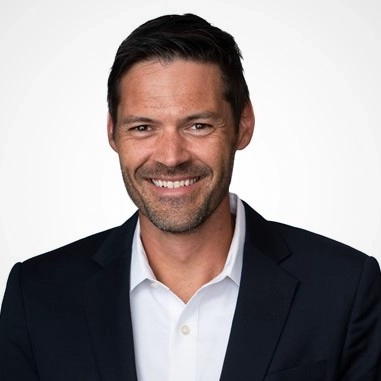
Jennifer Colamonico
Welcome to Vital Viewpoints on Healthcare. The podcast where we explore the ideas and innovations shaping the future of our nation's health care system. Today's guest is Eric Marshall, a principal at Leavitt Partners, based in Washington, DC. Eric advises complex health care coalitions on health policy and provides consulting services to drug and device companies. He's an industry specialist in domestic and international supply chain security, health care compliance, and the regulation of drugs, devices and diagnostics.
Before joining Leavitt Partners, Eric practiced law, where he counseled health care and life sciences clients on regulatory and compliance matters. Thanks for being with us today. Eric, welcome.
Eric Marshall
Thanks.
Jennifer Colamonico
We are sitting here in a moment, October of 2025, where we're in a government shutdown. So it's a particularly acute moment to talk about disagreement and division. But certainly as government and policymaking happens, we reach many points of disagreement or opportunities to find agreement. So I'd love to just hear more about the, your role in policy alliances, how you sort of have evolved to where you are today.
Eric Marshall
Yeah, I think we we've really found over the last ten, 15 years, and we're on the early edge of this, this idea that, the historical way of moving federal policy forward, you know, gather your troops in your sector and build the loudest voice, build the deepest relationships, and go make your ask. Just wasn't going to get through.
As we move into a much more polarized environment politically and a much more interconnected ecosystem in the health care environment, the the issues today are too contentious, too complex, and really too multifaceted for that model to really, really work. And so 15 years ago, and when Governor Leavitt finished up his time as government, he really recognized the power of alliances, the power of bringing people who were experiencing the same challenge, maybe in different ways, and maybe impacted by it in different ways.
But seeing that common challenge and saying, you know what? Let's get those diverse stakeholders rather than having them fight it out 1 to 1. Who can win? Get them around the same table and think about that kind of third way, of consensus and bring that forward as a constructive solution. And so we really built on that work that that he did in his book, Finding Allies, Building Alliances, coming out of government, and even putting that into practice.
And we were really on the early edge of firms here in DC to think about policy development and advocacy in that way. And we've seen that progress, you know, over the last decade. But I think it becomes more and more, important and relevant, as you say, as we get into an increasingly polarized environment where it's hard for either side to cut through and win without building that broad base of support and cutting through Partizan politics.
And as we exist in this much more interconnected ecosystem of health care and health care stakeholders.
Jennifer Colamonico
Right? When we talk about divides, you know, we easily think Partizan and certainly those exist. But right, those divides can also be by sector. Right. The hospitals and health insurers, you know, oftentimes are seen as on opposite sides of the table. But you've often brought them to the same side of the table or around the table to, you know, to convene around really specific and important solutions.
So what do you see as kind of a key to success? What are the perhaps unseen drivers of success? And in making sure that an alliance can get to a recommendation or can get to consensus around a solution?
Eric Marshall
There's really, I think, three pillars of our alliance model that that is unique, that's proven successful. First is your pointing out that multi-sector, multi-stakeholder component. I often say there's a lot of organizations in town that operate as kind of single sector alliances, and you get ten people who agree on an issue, ten hospitals, ten payers, ten manufacturers, ten people who agree on an issue to come together and speak with the power of ten, right.
That that's a very common model. Our model is much more get ten people who disagree on the issue right? Get the payers and the providers and the manufacturers all around the table on their common problem. Build consensus. And now your table of ten speaks with the power of 30, right? That's really the force multiplier that we've tapped into and think is unique.
So that's one pillar. The second pillar is always consensus oriented. You know when you get into a voting structure and a majority rule, people just retrench to their camps. And there's our founder often talks about this magic moment of consensus, that point where people say, you know what, I can't just fight this out. I got to put down my sword.
And instead of fighting for a while, they're fighting for me. I've got to set A and B aside and say, what is that pathway? See that we can all, succeed under. Right? Letting go kind of where we are and thinking forward to what can be in that that consensus model of building policy is the second real pillar of our work.
And then the third is just a we are always out to move health care forward and make health care better for the country. So, you know, we are not the, kill this bill. Stop that idea. Kind of a coalition. We've never run that really never will. It is always where those difficult issues that need to be solved, and people just haven't done the hard work of digging in to solve them in this kind of a way that we can dig in and bring solutions forward.
And we've seen real appetite for that, you know, in Congress, in the administration. I remember I first got pulled into this space, I was a lawyer to, at a law firm, as you said, and we had a consulting arm and, guy with the consulting arm said companies said, hey, can you come work on this alliance with us?
We're getting close to passing legislation. We've lost some folks. I need another body. Can you come jump in? I said, yeah, this sounds interesting. Sure. He said, okay, be here on Tuesday. Here's your 70 pages of the bill that you're responsible for. Jump in. And my, my, my conception at that point for, for federal policymaking was the classic, you know, Schoolhouse Rock of that of how you pass a bill, right?
And you realize these are policy today, especially is so complex that the ability for incredibly busy Hill staff, administration staff to work through all the technical complexities and the various stakeholder interest and constituencies around it, is incredibly difficult. And so when you can do that pre-work for them and bring them a policy and say, hey, we've aligned the stakeholders, we've gotten the voices oriented around this, there's consensus behind this in it solves a problem for you.
It just creates a much stronger environment to actually be able to get some of the solutions done.
Jennifer Colamonico
That's always the most interesting thing to me. I think about the work that you guys do is, it's not really about the headlines. It's not about the end result, you know, making health care affordable or accessible. It's the, you know, understanding the nuances and the, the, you know, where things get stuck in the system. It's often sort of unglamorous.
It's it might be seen as technical or intricate, but it's the stuff that unlocks the larger benefit. And so, you know, they often are, I think, you know, policy issues that most people wouldn't even necessarily know about or think about, but you guys are thinking about it because you're getting to like the where did things get stuck in the system?
Can you talk about maybe some, some wins that you've had? You know, what things are you personally most proud of, in terms of alliances that have, you know, unlocked progress in ways that maybe, maybe were not? We wouldn't have thought that that was the way to go.
Eric Marshall
Yeah. You know, there's a handful, so it's tough to probably, pick a favorite. But you're right. And there's this kind of policy side of it, right? Where often this is multiple years, often even, like getting into the technical and building the policy and building the consensus. And building the stakeholder support. And then there's the political kind of execution side.
Right now, you've got to take that policy and actually move it into practice and move it through a congressional process, an administrative process, business implementation, whatever it might be, to actually put that into action. Right. And that's where you start to see more of the give and take. And, how do you make some of those calls where you're willing to give and how do you get it there?
You know, there have been several that that I've been part of, you know, our first big kind of cornerstone piece of legislation that we moved was a drug supply chain security legislation that I was referencing, kind of getting pulled into at the 11th hour. It's really support the traceability of pharmaceuticals through the supply chain. You know, we've got a couple of, of recent kind of wins and big pieces of progress.
You know, the, the IRA and the Medicare drug pricing negotiation program really put some barriers up to continued innovation and investment in the rare disease space. And so making sure that we protect rare disease innovation, the Orphan Cures Act was a big effort that that we really worked on and was part of, of HR1 earlier this year.
So that was a big win for the rare disease community, where we were able to bring together that patient community at the manufacturer voice to move that forward. We continue to make a lot of really good progress. On 340 B it's an issue that's highly contentious, as I'm sure everybody knows, for many years we wouldn't even touch it.
As consultants, because it was just too contentious. We were afraid to take a side. And it kind of hit that magic moment where people said, you know what? This idea of fighting about what it is only going to get so far. We got to flip the thinking and say, what can it be? What should it be in the future?
If you want a little bit deeper kind of rundown of one that I was heavily involved in, that, you know, is interesting because we never actually got it quite across the finish line. But I think we changed the national conversation for how you think about it is diagnostic test regulation. To your point, the thing that's not on everybody's radar and their willingness and ability to go super deep and technical to figure out the policy.
There's this construct where FDA regulates traditionally manufactured, in vitro diagnostic tests, have a large in vitro diagnostic manufacturer, makes a test, sells it out to labs to be used. That's FDA regulated. They go through often years and tens or hundreds of millions of dollars investment to get through an FDA regulatory process and bring that to market. If that exact same test is developed within a laboratory, a reference laboratory where the samples are sent to them.
Right. So often the sample will be sent to the reference lab, and it's just run within that lab. It doesn't fall under FDA's, jurisdiction historically. And so this creates this kind of double playing field and double standard for the exact same diagnostic test. At the end of the day, the patient doesn't care which one they're getting.
And so is it been a point of contention, litigation, strong philosophical debate for two decades. And finally, there is enough kind of building pressure and momentum and an FDA willingness to move into the the LGT lab developed test space that we are able to bring those manufacturers and reference labs together to say, what's the new scheme and develop a entirely new regulatory construct for diagnostic tests and end up kind of coming forward is is what's known as the valid act.
There've been a couple of different iterations of it in Congress. As I said, it's interesting going on that for me to call a success because we it's not actually over the finish line, but that willingness to dig in is, has shifted. Really the, the starting point for the national conversation around how those tests should be regulated.
Jennifer Colamonico
Seems like a theme is, there are a couple, maybe a couple of themes and areas where you could look to form alliances. One is, you know, misaligned incentives, right? Where just and that maybe flows from or is related to kind of regulatory structures where something is defined one way and then years later, somebody else defined something in a slightly different way or a different component.
And then people are operating with two sets of rules. I can imagine there's a whole lot of areas in health care that one could find, places for alliance work. What do you think are the kind of, the secret ingredients that bring people to the table? You know, there's, again, no shortage of things that you could work together to fix, but what problems seem to rise to the top in terms of candidates for alliances?
Eric Marshall
Ultimately, the main first thing that we always talk about is you've got to have common patent. So, all the different stakeholders have to be experiencing enough pain to get them to be willing to kind of set down their individual perspective and come to the table to build consensus. And so often that means it takes a little while.
People actually have to experience that pain and challenge and maybe try to solve it on their own for a little while, and fail before they kind of recognize, look, I can't go this alone. I've got to find a table where I can actually think through and build consensus in another way. So, that certainly is one piece of it.
Another is just that willingness to kind of move to that, that place of consensus. Right. Sometimes you have stakeholders who either think they are actually are, the 800 pound gorilla, right, that the feels like or may have some ability to move themselves. That's often not the organization that comes to the table and says, let's find the compromise.
Let's find the consensus. Right. So that that recognition that you need to be part of this, this broader table.
Jennifer Colamonico
You mentioned, Governor Leavitt and obviously a lot of this stems from, the book that he originally wrote. And he's played a role in a lot of these, alliances. You know, do you think that, and I think you talk about the role of the convener, convener of stature, he's so well known in health care as being, just, you know, a great convener, a great, mediator, if you will.
Somebody just told me a story recently at our May conference about a role that he played on, on Medicaid reform back in the day before this recent Medicaid reform. And really just bringing people together to get something done. So how much do you think the success is kind of a, legacy of him and his, you know, character, versus kind of the role of somebody who's been an executive and been a leader and kind of a known, a known quantity to convene people together.
Eric Marshall
Yeah, I definitely think it's both that that role of the convener is really important. And you, you know, you talk about his incredible ability to do that. I think we found, you know, with a decade of experience, 30 of us together can kind of now do with what he individually could do then. Right. I think that just speaks to his abilities as convener.
But that role is really important, and it's one that we often try to kind of support and take on. And sometimes wewe need to bring in that that outside expert and true convener. Yeah. These are really it's really hard to get an alliance, a collaborative going because it's not obvious to people that they've hit that point where they can't succeed on their own and that they can do better as part of a table.
Right? So that that ability to bring people together, if somebody like that, if somebody like Governor Leavitt is setting the table, there's real viability to this and in real momentum to that ability to keep people together. Right there are plenty of times through this process where there's going to be tension and there's going to be arguments, right? And I mean, we've had members walk and come back.
We've had meetings where we've had to put different sectors into different rooms, like a these are contentious, strong debates that have very real, serious impacts with people's businesses and organizations. And so that ability to keep people together in such a big piece of that is just the trust and integrity of that convener. Right? That that recognition that they are independent, they are not taking sides or predetermined an outcome.
They're going to be the honest broker that's going to help move everybody to the right place and not have an interest in moving it in one place or the other. And so, you know, that's we've really tried to build on that. And I think that's the role that the convener plays, and also the role that our Leavitt partners team plays it not just keeping the trains moving, but being that honest, independent broker in the middle.
They can help work through that. Like as you said, really mediation process to get there.
Jennifer Colamonico
Yeah. I'm also thinking you know, you said it takes time, right? It does. It's not something that happens quickly. So I'm into I mean, I'm assuming that there have been alliances that have, stretched across presidential administrations. So how do you pivot in that instance? When, you know, regulatory some priorities may shift. Midway and what you thought you were working toward may all of a sudden be very different. How we navigated that.
Eric Marshall
Yeah. You know, the there's got to be flexibility. And you're right. We've certainly seen that happen, more than once. And, you know, part of it, as I said, is going to you've got this the policy development side of it. How do you actually get to consensus around what the policy should be? And then how do you actually go deploy that?
Right. And I think that's where having a lot of tools in the toolkit for how you deploy that is important, because which one makes sense is going to depend on the political environment. And so sometimes the right answer is, you know, legislation. But it is harder and harder. And it's always been hard and it's harder and harder now, to go that route and get federal legislation done.
And so sometimes that is the right avenue. But sometimes it's, it's administrative change. And sometimes we've seen great success too, just in kind of building the operational consensus in building the business case for why to go do it, how to develop in India standards or accelerate the use of standards to deploy it in the operational side too.
And so I think having all of those different kind of tools in the toolkit for how to take the policy and put it into action is really important as you change political environments, as you said.
Jennifer Colamonico
So you talked about, you know, legislation in difficult environments. Again, we're sitting here as we record this in October of 2025. But, you know, looking ahead to 2026, as you're thinking about the, you know, myriad of unresolved policy issues, what do you see as opportunities in kind of the short term, where alliances are either coming together or could come together, to tackle, you know, the some of the, the big or little challenges that are ahead of us right now.
Eric Marshall
You know, I think there are still opportunities, right? And that's always, you know, one thing that I think, you know, folks kind of outside the Beltway don't always appreciate is just, when you see in the national media the level of, division and partisanship how much work does continue to happen, across the aisle, particular at the staff level around some of these more meaningful, impactful, but less, headline grabbing kind of issues.
So I think there's some good work to be done. As I mentioned, I think we we remain optimistic that, you know, our 340 be working table has set a table of drug manufacturers and hospitals in a way that, you know, we've not seen those industries come together around 340 V in the past. As I said to say, not what's the right approach to the current program.
But where should the program be? How do you, make it sustainable and effective? But also, controlled in the right way. And so, I think that's a place where certainly there's a lot of momentum, on the political side. And I think we're really well positioned, to help support on the policy side, you, you know, I think there's been a lot of activity in a bipartisan way for many years.
But increasingly over the last several months, the whole set of interrelated issues around on shoring and reshoring and drug manufacturing, the security aspects and risks of reliance on foreign sources for APIs and starting materials and pharmaceuticals, the implications for that in the pricing and drug shortage environment, the implications of that from an American leadership in innovation. There's been, a couple of recent bipartisan reports from a Senate commission and then now from, the Ada, Committee on Aging as well.
And so I think there's a lot of opportunity in that space. And we've seen the political will there as well. And so that's another area that I think, holds a lot of promise. And we continue to see a lot of activity in the rural health space as well. It'll be interesting to see how that continues to evolve with the fund out there now.
But, Rural Health, I think is an area that early in the year, at least, we're seeing a lot of bipartisan interest for continued, work in policy development there. And then even as you get be on the legislative side, I think, you know, we've also shown a lot of power in these alliances and coalitions to move not just, again, at the legislative or regulatory level, but at the business level as well, particularly in the digital health space.
This move towards interoperability with all the encouragement and nudge from the policy environment. But we've had a lot of continued progress and seeing improved interoperability in the health care space, including some work that were just kicking off around interoperability of the dental community with the medical community as they become increasingly important parts of the medical landscape.
How do they plug into an increasingly electronic and interoperable world as well?
Jennifer Colamonico
That's really interesting. I always wonder why those two worlds are so disconnected. I know there's a reason, but it's good to know that people are thinking about how to connect them.
So, you know, given the experiences that you've had and the accomplishments and probably some failures along the way. Right. I'm sure not everything has worked. If, you know, we always like to ask the question, if you had a magic wand and you could wield it in a way that could, you know, let's just say improve the ability to, build alliances, to find allies, to go back to the book.
How would you wield that magic wand to really kind of, promote, more success in, in coming together to resolve problems?
Eric Marshall
Yeah. I think I would probably just use it to give people a deeper insight to what this collaborative process can look like and the the power of coming together and being willing to kind of sit down the sword and pick up the mantle of consensus development. Right, as you were mentioning. Right. A lot of this stuff isn't in the headlines.
It's, a long term slog of working through the technical detail to get there. And that ability for people to see that, hey, we actually can find some common ground. And I may not win every battle, but I think I can, you know, get an outcome of the law that works for my organization in my sector and may work for the other sectors as well, because continuing to to kind of go it alone and fight it from one side, it's just in this environment and going to continue to create churn year after year, in that willingness to kind of say, hey, let's try a new way, come to the table, and look for a point of consensus I think can really help people solve problems that I think they're really struggling to solve in this, this environment.
Jennifer Colamonico
That's well said. And then, certainly to, apply that to specific policy challenges. But I mean, you could also apply that to society in general right now. So, as people, have become so entrenched, I think are increasingly starting to maybe, perhaps this pendulum is starting to swing back a little bit into finding areas of, of consensus and agreement.
And that's a, that's a hopeful message. So I appreciate your time today. Thanks for sharing the work, and the successes that you've had. And we really appreciate it, learning more about it. And, thanks.
Eric Marshall
Absolutely. Thanks for having me.
Jennifer Colamonico
This episode of Vital Viewpoints on Healthcare is sponsored by Information Services. HMAIS is a subscription based service that provides state level data on publicly sponsored programs like Medicaid, from the latest managed care enrollment, market share, and financial performance data to up to date of calendars and state by state overviews. HMAIS has all the information you'll need to power your initiatives to success.
This podcast was produced by myself, Jennifer Colamonico along with Tiffany McKenzie in collaboration with our guests. The content is the property of Health Management Associates.