Blog

MESC 2026 Highlights: Medicaid Modernization, AI, Eligibility, and Program Integrity

Key Insights from the 2026 MESC Conference and What They Mean for Your Organization 

State Medicaid agencies and partner organizations are facing one of the most consequential periods of operational change in more than a decade. Those challenges were a central focus of the 2026 Medicaid Enterprise Systems Conference (MESC), August 17-20, 2026, in Portland, OR, where state, federal, and industry leaders discussed how technology, data, and operational modernization are becoming essential tools for implementing policy change. 

During the conference, leaders of Health Management Associates (HMA) and HealthTech Solutions, an HMA company, reinforced a consistent theme: We have moved beyond the era when Medicaid enterprise systems modernization simply meant replacing aging technology. Instead, states are building the infrastructure needed to manage continuous policy evolution, support more sophisticated program integrity efforts, adapt to changing eligibility requirements, and provide the financial and operational visibility necessary to navigate an increasingly complex Medicaid environment. That direction is also reflected in recent Medicaid Enterprise Systems IT Standards Request for Information that the Centers for Medicare & Medicaid Services (CMS) issued to gather stakeholder input on how to advance a more standardized, interoperable, and cost-effective MES ecosystem. 

What We Learned at MESC 

Modernization Is Becoming an Ongoing Operating Capability 

Medicaid modernization is moving beyond the replacement of legacy systems. States are building the capabilities needed to manage continuous change. That work includes stronger governance through better data and more disciplined implementation practices; clearer ownership for decisions, risks, dependencies, and outcomes; and the development of cross-functional teams. Policy, operations, technology, finance, communications, and program leadership must work together from the beginning. 

What it means for states and partners
Modernization programs need a clear operating model that defines decision rights, measures of success, implementation responsibilities, and long-term support. Partners should help build state capability instead of focusing only on system delivery. 

Modularity Now Means Managing the Connections Between Systems 

Modularity can give states more flexibility, support specialized solutions, and reduce dependence on one large platform. Modularity, however, also creates more connections and business relationships that must be managed. A modular environment involves multiple vendors, systems, interfaces, data flows, release schedules, and support models. Because difficulties can arise when these elements are disconnected, MESC sessions emphasized the need for enterprise integration and coordination. States must manage testing, release planning, architecture, data contracts, vendor handoffs, and incident resolution. 

What it means for states and partners
Modularity requires more than modular procurement. States need an enterprise layer that manages the relationships between components. Partners should understand how their work affects the broader Medicaid ecosystem. 

Federal Requirements Are Shaping the Modernization Agenda 

CMS and other federal requirements continue to influence state priorities. Certification remains important, along with federal reporting, data quality, security, interoperability, and program integrity. The conference also reflected growing pressure to prevent fraud, waste, and abuse earlier in the Medicaid life cycle. States are strengthening provider enrollment, referral intake, payment controls, analytics, and audit preparation. These efforts move program integrity closer to the front door. The goal is to identify risk before it becomes a payment error or an investigation. 

What it means for states and partners
Compliance and program integrity should be part of solution design from the beginning. States and partners should build evidence, controls, testing, and monitoring into normal operations. These activities should not be postponed until certification or an audit is approaching. 

Eligibility Changes Require New Data and Operational Models 

Changes to Medicaid eligibility are creating new demands for states. Workforce and community engagement requirements are one example. States may also need enhanced verification, new exemption processes, shorter response timelines, and stronger outreach. 

These changes extend beyond eligibility systems. They shape how states communicate with members, support contact centers and caseworkers, manage appeals, connect data sources, and help people understand what they need to do to maintain coverage. MESC sessions underscored the value of listening to stakeholders and explored how health information exchange data and other sources could support exemption decisions and reduce preventable coverage loss. 

What this means for states and partners
Eligibility modernization must connect policy to daily operations. States need reliable data and clear workflows. They also need ways to explain changes and track outreach. Partners can translate policy into decision logic, test cases, notices, training, and operational procedures. 

AI Means Governed Support for Real Medicaid Work 

AI was a major topic of discussion at MESC. The strongest examples involved practical work rather than general experimentation. States are exploring AI for policy questions, quality assurance, document review, contact center support, knowledge management, and program integrity. These use cases can reduce administrative burden and help staff manage complex workloads. Conference speakers clarified that AI is no substitute for reliable governance structures. States need reliable content, security controls, privacy protections, human review, workforce training, and performance monitoring. 

What this means for states and partners
AI adoption should begin with a specific business problem. States should define who is accountable for the outcome and how the tool will be monitored. Partners can support use case selection, governance, procurement, testing, implementation, and workforce adoption. 

How HMA Can Help 

MESC 2026 reinforced the argument that Medicaid modernization is no longer a discrete technology project. States and their partners are responding to federal requirements, modular system complexity, eligibility changes, AI adoption, and heightened program integrity expectations at the same time. 

HMA and HealthTech Solutions help organizations turn that complexity into an actionable modernization strategy. Our teams bring together Medicaid policy expertise, operational experience, technology strategy, procurement support, compliance knowledge, and implementation discipline so clients can make better decisions and execute with confidence. 

We support organizations in assessing current systems and capability gaps, prioritizing technology investments, translating policy into operational and technical requirements, managing vendor selection and procurement, strengthening compliance and program integrity, and adopting AI in ways that are effectively governed, practical, and aligned with Medicaid business needs. 

Contact HMA experts to get your questions answered. 
Federal and State Medicaid Leaders and VA Assistant Secretary to Discuss Public Healthcare Transformation at HMA Conference

Health Management Associates (HMA) is pleased to announce that Caprice Knapp, PhD, Principal Deputy for the Center for Medicaid & CHIP Services, will participate in two sessions at HMA’s US Healthcare 2026: Signals, Signs & Flashing Lights conference, October 5-7, 2026. in New Orleans, LA. As states, plans, providers, and community partners prepare for a new era in Medicaid and other public healthcare programs, these conversations will focus on practical solutions, implementation realities, and the partnerships needed to move from policy change to sustainable results. 

State Medicaid and CHIP Strategies for Applied Behavior Analysis and Autism Services 

As the prevalence of autism has increased, state investments in Applied Behavior Analysis (ABA) and related services have grown substantially. This preconference session will examine federal guidance and state strategies for supporting appropriate, high-quality care for children with autism while helping programs strengthen oversight, access, and service delivery. 

Medicaid Policy Changes and Their Ripple Effects Across Healthcare 

Changes in Medicaid policy and financing will not stay confined to Medicaid. Coverage churn across Medicaid, the Affordable Care Act (ACA) Marketplace, and employer-sponsored insurance can reshape risk pools, influence plan participation, increase provider financial exposure, and leave more people uninsured. This session will bring federal and state leaders together to discuss how Medicaid agencies and their partners are responding, where collaboration is most needed, and what strategies will be needed to navigate the next phase of public healthcare transformation. 

The following current and former Medicaid directors will join Dr. Knapp: 

  • Ann Jensen, Administrator, Nevada Medicaid Nevada Health Authority 
  • Cheryl J. Roberts, JD, Senior Advisor; Former Medicaid Director, Virginia Department of Medical Assistance Services 
  • Ryan Schwarz, MD, MBA, Medicaid Director & Assistant Secretary for MassHealth, Massachusetts Executive Office of Health & Human Services 
  • Scott Partika, Director, Ohio Department of Medicaid 

VA Community Care and NextGen Healthcare Innovation for Veterans 

As the nation’s largest integrated health system serving military veterans, the VA is working with health plans, providers, health systems, technology firms, and other innovators to bring effective solutions from across the healthcare marketplace to people who have served our nation. Approximately 42 percent of the healthcare services that veterans receive today is delivered through the contracted Community Care program, and that share is expected to grow. Assistant Secretary Richard F. Topping will discuss the VA’s vision for the future of Community Care, the critical role industry partners will play, and how the VA intends to learn from the field, adopt proven practices, leverage emerging technologies, and foster innovation that improves access, quality, and outcomes for veterans.

As Medicaid, VA Community Care, and other public healthcare programs enter a period of significant change, HMA’s conference will focus on the partnerships, operational strategies, and solutions needed to move from policy to implementation.

Register today to join leaders working through the decisions that will shape the next phase of public healthcare. 

Early Bird Pricing Ends August 7 for HMA’s National Conference: US Healthcare 2026: Signals, Signs & Flashing Lights

The agenda is now live for US Healthcare 2026: Signals, Signs & Flashing Lights, the Health Management Associates (HMA) national conference, October 5-7, 2026, in New Orleans, LA. Healthcare leaders will join peers, policymakers, innovators, and industry experts to discuss the most significant trends in healthcare, including historic policy and financing changes in Medicaid, program integrity, artificial intelligence (AI), behavioral health transformation, affordability challenges, and emerging care delivery models. 

Early bird registration pricing ends August 7!

New This Year: Two Exclusive Preconference Sessions 

HMA is offering two special preconference sessions that combine our expert-led learning with valuable networking opportunities.  

Attendees will deepen their understanding of, and gain insights into, the federal policy landscape heading into the mid-term elections. This interactive session led by Leavitt Partners, an HMA company, will help attendees understand what’s coming next from Washington, DC, and explore the strategic implications for health plans, providers, state agencies, and healthcare investors. 

A preconference session, AI in Healthcare: Moving from Experimentation to Execution, will lead attendees through practical applications of AI across healthcare operations, clinical workflows, analytics, consumer engagement, and administrative efficiency. Discussion will center on topics such as governance, implementation, and risk considerations. Attendees will have the opportunity to learn from peers, share experiences, and build connections in a collegial setting before the main conference begins. 

Key Topics Shaping the Healthcare Agenda 

The 2026 agenda is intentionally reflective of the issues facing leaders who work in strategy, operations, growth, policy, innovation, quality, and community impact across healthcare sectors.  

Highlights include sessions on: 

  • The future of Medicaid financing, delivery system transformation, and state innovation 
  • Fraud, waste, abuse, and program integrity priorities across federal and state programs 
  • AI applications that are reshaping healthcare operations, care delivery, and decision-making 
  • Rural Health Transformation Programs (RHTPs) and strategies for sustainable community investment 
  • Behavioral health policy and delivery trends, including the evolving crisis care continuum 
  • Applied behavior analysis (ABA) therapy at the intersection of behavioral health, access, and oversight 
  • Life sciences innovation and its impact on payers, providers, and patients 
  • Coverage transitions, affordability challenges, and changing market dynamics 
  • Emerging opportunities for collaboration across healthcare, social services, and community-based care 

Attendees also will have opportunities to engage in HMA’s popular Coffee Conversations, during which participants can join facilitated discussions on timely topics and exchange ideas.  

Review the full agenda, secure your hotel accommodations, and take advantage of early bird savings before August 7, 2026.

Connecting the Dots: What CMS’s Proposed Rule on Provider Taxes Rule Could Mean for States, Marketplaces, and Health Insurers

The Centers for Medicare & Medicaid Services (CMS) issued a proposed rule on July 21, 2026, to implement Section 71115 of the 2025 budget reconciliation act, P.L. 119-21, the Working Families Tax Cut (WFTCA). The proposal calls for introducing significant changes to how states finance Medicaid through healthcare-related taxes.  

Though much of the attention has focused on the proposed rule’s implications for Medicaid provider taxes, it also raises important questions for State-Based Marketplaces (SBMs), Section 1332 reinsurance programs, health insurers, and state budget officials. The comment period closes September 12, 2026, giving states and stakeholders a limited window to assess the proposal and provide feedback to CMS. 

To better understand the potential implications, Andrea Maresca spoke with Mary Goddeeris, Principal at Health Management Associates (HMA) and Medicaid financing expert; Lina Rashid, Principal at HMA and federal healthcare and Marketplace policy expert; and Zach Sherman, Managing Director for Coverage Policy and Program Design at HMA, and a national expert on ACA Marketplaces and state coverage programs.  

Q: What is CMS proposing in this rule, and why is it generating attention among state policymakers and healthcare leaders? 

Mary Goddeeris: At its core, the proposal implements Section 71115 of WFTCA, which significantly changes the federal rules governing Medicaid provider taxes. Historically, states could satisfy the federal indirect hold harmless test by using a generally applicable 6 percent threshold. The new law replaces that standard with more restrictive state- and provider-specific thresholds. For many provider taxes in Medicaid expansion states, allowable thresholds will phase down beginning in fiscal year 2028 and fall to 3.5 percent by 2032. The proposed rule implements those statutory changes.  

The statutory change has attracted a lot of attention because provider taxes are one of the primary tools states use to finance Medicaid programs. Any changes to those financing mechanisms can have a ripple effect on state budgets, provider payments, managed care financing, supplemental payment programs, and long-term Medicaid strategy. State officials and healthcare leaders are all evaluating the potential fiscal and operational implications. 

Q: The proposal is framed as a Medicaid financing rule. Why are stakeholders outside Medicaid also paying attention? 

Lina Rashid: One reason is that CMS proposes creating a new permissible provider tax class called “services of health insurers.” CMS indicates this class could include issuers offering individual market coverage, group market coverage, catastrophic plans, short-term limited duration insurance, and certain excepted benefit products (dental and vision only policies), among others. Managed care organizations would generally remain under an existing provider class. 

The proposal raises questions because many states already use insurer assessments to fund activities outside Medicaid. These assessments may support State-Based Marketplaces (SBMs), Section 1332 reinsurance programs, or other state affordability initiatives. The proposed rule seems to make these assessments subject to the same provider tax framework and hold harmless restrictions that would be applied to Medicaid financing rules. 

The proposal does not clearly answer how broadly CMS intends to interpret these provisions, especially in the cases of taxes that have no direct connection to Medicaid financing. Under a strict framework, it is possible that many states may not meet CMS’s standard, and that they may face financial consequences with respect to the Medicaid program, SBMs, or other initiatives.  

Q: How could the proposed rule affect ACA Marketplaces and Section 1332 reinsurance programs? 

Zach Sherman: The immediate challenge is the uncertainty with this proposed rule. Many SBMs and reinsurance programs rely on assessments imposed on commercial health insurers. Currently, those assessments generally support Marketplace operations, affordability programs, or reinsurance initiatives rather than Medicaid. 

CMS writes that healthcare-related taxes imposed on the new insurer class would be subject to the same hold harmless framework established in Section 71115. The proposal does not, however, clearly state whether insurer assessments used for non-Medicaid purposes would be included. Clarity on this issue is critical because many states depend on these assessments to sustain Marketplace infrastructure and affordability initiatives. 

States that already operate SBMs, states considering transition to an SBM, and states supporting reinsurance programs through insurer assessments will want to evaluate how the proposal could affect existing funding models and future flexibility, alongside impacts to Medicaid funding.

Q: For the newly established health insurer permissible class, is the applicable threshold determined by aggregating all taxes imposed on entities within the class, for example including assessments on individual market issuers and catastrophic plans, or is the threshold applied separately to distinct entities within the class? 

Rashid: If individual market issuers and catastrophic plans are both included in the same new permissible class (“services of health insurers”), then they would be aggregated across the class to measure if it meets CMS’s threshold, not separately. It would be the combined impact of individual market issuers and catastrophic plans revenue generated from the taxes imposed divided by the applicable revenue base for the health insurer class.    

Q: What are the most significant questions states should be considering right now? 

Goddeeris: States first need to understand their exposure under the Medicaid provisions themselves. Many states rely heavily on provider taxes to support Medicaid financing. They should be analyzing existing tax structures, estimating future fiscal impacts, and understanding how the phased-down thresholds could affect funding sources over time. 

State officials should also consider how this proposal intersects with other major Medicaid policy and budget pressures. States are conducting eligibility redeterminations, implementing new federal requirements, evaluating managed care financing approaches, and managing broader budget constraints. This proposed rule could become another important factor in long-term Medicaid financing decisions and potential driver for significant policy and programmatic changes. 

Q: Where should healthcare stakeholders focus their attention while the regulation is pending?  

Sherman: Stakeholders should start by assessing whether they could be directly or indirectly affected. States, Marketplaces, health plans, providers, and trade associations may all have different perspectives on implementation questions that remain unresolved. 

Rashid: Organizations also should focus on identifying areas where they need additional clarification. In our review, some of the most significant questions involve the scope of the insurer class, how CMS will measure the allowable threshold within each class, the applicability of the rule and hold harmless requirements to non-Medicaid assessments, and how CMS intends to interpret statutory language. Those are all issues stakeholders may want to address in their comments. 

How HMA Can Help 

Although CMS’s proposal focuses on implementing Medicaid financing reforms enacted by Congress, the effect may extend beyond Medicaid to include insurer assessments, Marketplace funding, reinsurance programs, and state affordability initiatives. Until CMS provides clarification, states and insurers will likely continue evaluating potential operational, fiscal, and policy implications. 

HMA Medicaid financing, federal policy, actuarial, and Marketplace experts are helping states, health plans, provider organizations, and other stakeholders evaluate the proposed rule, assess potential impacts, and develop comment strategies.  

HMA and its companies, including Wakely and Leavitt Partners, can support strategic planning, design and implementation of SBMs, Medicaid and Marketplace policy development and regulatory compliance, actuarial analysis, data development and reporting. Connect with us to learn how we can help your organization navigate the federal and state policy changes. Access additional insights from the ACA Marketplace team.

CY 2027 OPPS Proposed Rule Signals Major Changes for 340B Hospitals, Site-Neutral Payments, and Digital Health

The Centers for Medicare & Medicaid Services (CMS) released the Calendar Year (CY) 2027 Medicare Hospital Outpatient Prospective Payment System (OPPS) and Ambulatory Surgical Centers (ASC) proposed rule (CMS-1850-P), July 2, outlining policies that would take effect, if finalized, January 1, 2027. Although the proposed rule includes annual payment updates, it also offers insights into the agency’s broader policy agenda. 

CMS continues to advance several long-term priorities, including site-neutral payment reform, elimination of the inpatient only list to migrate services to lower-cost settings, and efforts to align reimbursement more closely with acquisition costs for pharmaceuticals purchased through the 340B Drug Pricing Program. CMS is refining its policies that encountered operational or legal challenges, most notably in the case of its 340B payment proposals. 

The rule also signals how CMS is preparing Medicare for the next generation of healthcare delivery. As software-based therapies, artificial intelligence, and other health technology become increasingly integrated into care delivery, the agency is laying the groundwork for payment policies that reflect evolving care models and emerging medical innovation.   

This article highlights five proposals that may have significant financial, operational, and strategic implications across the healthcare system.  

Highlights of Key Changes in the OPPS Proposed Rule 

1. CMS Intends to Cut to Reimbursement for Drugs Acquired Under the 340B Program 

Based on findings from a survey of hospital acquisition costs, CMS proposes reducing reimbursement for drugs acquired through the 340B Drug Pricing Program from Average Sales Price (ASP) plus 6 percent to ASP minus 33.4 percent beginning in CY 2027. CMS estimates the policy could reduce Medicare fee-for-service (FFS) drug spending by $4.55 billion in its first year, which would be redistributed to non-drug service payments under OPPS’s budget neutrality rules. 

The proposal would similarly reduce payment rates for 340B drugs paid under alternative methodologies, including those reimbursed using Wholesale Acquisition Cost (WAC). Vaccines, pass-through drugs, and certain non-opioid pain management products would remain exempt, as would Children’s Hospitals, Sole Community Hospitals, and PPS-exempt cancer hospitals. 

CMS also proposes applying the policy to 340B drugs administered in non-excepted off-campus provider-based departments while leaving reimbursement for non-340B drugs unchanged. 

Health Management Associates (HMA) Analysis: CMS is effectively continuing a policy discussion that has been ongoing for nearly a decade. Although prior litigation altered the agency’s approach, the proposal demonstrates CMS’s continued interest in aligning Medicare reimbursement more closely with acquisition costs for 340B drugs. The financial implications will vary significantly across hospitals depending on their reliance on 340B savings. At the same time, providers with limited 340B exposure may benefit from the budget-neutral redistribution of savings elsewhere in the OPPS payment system. 

2. Because of the 340B Payment Cuts, Hospitals Will See an Increase in the Conversion Factor Used to Set Payments for Most Non-Drug Items and Services  

CMS proposes an overall 2.4 percent payment increase in OPPS payments for CY 2027, but payment levels will vary under the rule based on major policy changes. The proposed 340B payment reduction, for instance, would trigger an 8.44 percent increase in the conversion factor for non-drug services. CMS is also proposing a conversion factor reduction of 3 percent intended to recover increased payments hospitals received for non-drug items and services as a result of CMS’s remedy related to prior 340B reimbursement cuts.i 

HMA Analysis: The proposed payment updates illustrate how interconnected Medicare payment policies have become. Organizations should look beyond the headline increase and evaluate how individual provisions interact. The proposed reduction in 340B reimbursement serves as a budget-neutral offset that increases the OPPS conversion factor, creating winners and losers across provider categories. Separately, the proposal would accelerate the pace and magnitude of legal-remedy-related rate reductions originating from the termination of an earlier iteration of the 340B payment reduction policy. Understanding this redistribution effect will be critical for forecasting organization-specific financial effects. 

3. More Proceduresare Moving to the Outpatient Setting 

CMS proposes removing 638 procedures from the Medicare Inpatient Only (IPO) list in CY 2027, representing nearly half of the remaining procedures designated as such. The proposed removals focus on less complex services across several clinical areas, including digestive, endocrine, respiratory, urinary, maternity, and other procedural categories. 

HMA Analysis: This proposal continues CMS’s long-term strategy of shifting appropriate services to outpatient settings. As the IPO list continues to shrink, hospitals will have greater flexibility to conduct procedures in the outpatient setting than in the past. At the same time, hospitals billing for certain previously IPO-listed services in inpatient settings could encounter greater scrutiny and pressure to migrate towards outpatient sites. Because many commercial coverage policies and utilization management approaches have historically relied on Medicare’s IPO framework, the proposal may accelerate broader market movement toward outpatient care, creating operational, capacity, and revenue implications for providers. 

4. Site-Neutral Payment Reform Remains a Long-Term CMS Priority

CMS proposes extending site-neutral payment policies to imaging services without contrast provided in excepted off-campus provider-based departments (PBDs). The agency notes substantial growth in the utilization and spending associated with these services over the past decade and views the proposal as a continuation of broader efforts to reduce payment differentials across sites of care. This proposal follows CMS’s recent expansion of site-neutral payment policies for drug administration services. 

HMA Analysis: The proposal reinforces that site-neutral payment reform remains a priority for CMS. Although the immediate policy targets imaging services without contrast, stakeholders should view the proposal within the context of a broader and continuing effort to reduce payment differentials between hospital outpatient departments and physician office settings. Hospitals with significant outpatient imaging capacity—particularly in off-campus PBDs—should evaluate the potential financial impact and consider how future site-neutral policies could affect other service lines. Hospitals should also anticipate incremental additions to this framework in the future, as CMS continues to scrutinize site-of-care allocations for services.  

5. A Future Framework for AI and Digital Health is in the Works, While Maintaining Existing Policies in the Short Term  

Recognizing the growing role of software and AI-enabled technologies in healthcare delivery, CMS proposes using CY 2027 as a bridge year while it develops a longer-term payment approach for technologies categorized as Software as a Medical Service (SaMS). Under the proposal, technologies currently assigned to New Technology Ambulatory Payment Classifications (NT-APCs) would generally maintain their payment assignments during CY 2027. 

HMA Analysis: Although the proposal preserves near-term payment stability, it may be one of the most consequential signals in the rule for manufacturers, digital health companies, investors, and providers adopting new technologies. CMS is exploring how software-based interventions, AI-enabled tools, and algorithm-driven services generate value and how that value should be reflected in Medicare payment policy. Future reimbursement methodologies will likely place greater emphasis on demonstrated clinical outcomes, efficiency gains, and measurable impacts on healthcare utilization. Organizations developing or deploying these technologies should view CY 2027 as an opportunity to prepare for a more mature reimbursement framework in the years ahead and to engage with CMS on preferred policy approaches. 

Looking Ahead 

The CY 2027 OPPS proposed rule provides insight into the direction of Medicare reimbursement policy, changes in Hospital Conditions of Participation (CoP) for obstetrical services, and planned revisions to the exceptions to the “four walls” requirement under the Medicaid clinic benefit for Indian Health Services/Tribal clinics, behavioral health clinics, and clinics located in rural areas. For hospitals, health systems, manufacturers, life sciences companies, digital health organizations, and investors, now is the time to assess potential impacts and evaluate strategic responses before policies are finalized. Comments on the proposed rule are due August 31, 2026. 

HMA is helping organizations understand the financial, operational, and market implications of the proposed rule through: 

  • Customized financial impact modeling 
  • 340B reimbursement and redistribution analyses 
  • Site-neutral payment impact analyses 
  • Clinical service line and specialty-specific analyses 
  • Medicare and Medicaid policy scenario planning and forecasting 
  • Regulatory comment strategy development 

As CMS continues to pull the thread on several long-term policy priorities, organizations that begin planning now will be better positioned to navigate the changes ahead. Contact HMA’s Medicare experts to discuss how these proposals may affect your organization and explore potential strategic responses before the final rule is released.

CMS Proposes Modest Hospital Payment Updates and Signals Expanded Use of Mandatory Value-Based Models

On April 10, 2026, the Centers for Medicare & Medicaid Services (CMS) released the proposed rule for the Fiscal Year 2027 Hospital Inpatient Prospective Payment System (IPPS) and Long-Term Care Hospital Prospective Payment System (LTCH PPS). The proposal combines a modest net increase in hospital payments with policy signals around quality reporting and mandatory episode-based payment models—most notably a proposed nationwide expansion of the Comprehensive Care for Joint Replacement (CJR) model. 

These proposed updates underscore CMS’s continued emphasis on value-based purchasing, episode accountability, and alignment across quality programs. In addition, CMS resurfaces ongoing debates with hospital stakeholders about the adequacy of Medicare payment updates amid rising costs and coverage disruptions. 

This article reviews several key provisions in the FY 2027 proposed rule. 

Hospital Payment Updates: Headline Increase Masks Net Impact 

Under the proposed rule, CMS would increase base IPPS and LTCH PPS payment rates by 2.4 percent in FY 2027. However, after accounting for proposed reductions to uncompensated care payments for disproportionate share hospitals (DSH) and changes in outlier payments for extraordinarily high-cost cases, CMS estimates the effective payment increase would be closer to 1.2 percent. 

In aggregate, CMS projects the proposed update would translate to approximately $1.4 billion in additional payments to acute care hospitals next year. Hospital industry groups—including the American Hospital Association (AHA) and the Federation of American Hospitals (FAH)—have pushed back, arguing that the proposed update does not sufficiently reflect medical inflation, workforce pressures, or anticipated growth in the uninsured population. 

These concerns reflect a long-standing dynamic in annual hospital payment rules: CMS seeking to balance statutory updates and budget neutrality constraints against the hospital industry’s concern that Medicare payments are lagging behind underlying costs. 

Quality Reporting and Program Alignment 

The proposed rule would also make notable updates to the Hospital Inpatient Quality Reporting (IQR) Program. CMS proposes adding three new quality measures to be phased in during 2029 and 2030, while modifying eight existing measures to include Medicare Advantage patients. CMS also proposes shortening the performance period for certain measures from three years to two—a change designed to accelerate feedback and better align measures across programs. 

These changes continue CMS’s broader effort to harmonize quality measurement across Medicare payment and value-based programs, reduce reporting lag, and incorporate a more comprehensive view of patient populations. 

Updates to Mandatory TEAM Model 

CMS also proposes several updates to the Transforming Episode Accountability Model (TEAM), the mandatory episode-based payment model finalized last year. Key proposals include: 

  • Expanding the list of MS-DRGs included in the spinal fusion episode 
  • Aligning TEAM quality measurement performance periods with the IQR Program 
  • Making targeted technical refinements to payment methodology 

In addition, CMS is seeking stakeholder feedback on whether ambulatory surgery centers (ASCs) should participate in TEAM and whether participation should be voluntary for physician-owned hospitals, signaling potential future expansion or recalibration of the model. 

Proposed Expansion of Joint Replacement Bundles 

CMS proposes to expand the existing Comprehensive Care for Joint Replacement Expanded (CJR-X) Model nationwide beginning October 1, 2027. The agency also plans to make participation mandatory for most IPPS hospitals. 

CMS tested the original CJR model in 34 metropolitan areas between 2016 and 2024, generating improved patient outcomes and net Medicare savings, according to agency evaluations. CJR-X would become the fifth Center for Medicare and Medicaid Innovation model to meet the statutory criteria for nationwide expansion. 

Under CJR-X, hospitals performing lower extremity joint replacements would be accountable for the cost and quality of care for the initial procedure and most related spending during the subsequent 90 days. Although the overall structure mirrors the original CJR model, CMS proposes several important updates: 

  • Expansion of episodes to include ankle replacements, in addition to hip and knee procedures 
  • Adoption of a more robust risk adjustment methodology with significantly more variables, aligning closely with the TEAM model 
  • Introduction of a 5 percent stop-loss policy for hospitals that serve higher proportions of dually eligible beneficiaries and certain smaller hospitals 

Participation would be mandatory for most IPPS hospitals, with exceptions for hospitals already participating in TEAM, which includes a lower extremity joint replacement episode; Maryland hospitals operating under global budgets; and hospitals not paid under both IPPS and the Outpatient Prospective Payment System, such as Critical Access Hospitals. 

Why It Matters 

The 2027 IPPS and LTCH PPS proposed rule reinforces several clear policy signals: 

  • Pressure on hospital margins is likely to persist, as payment updates continue to trail hospital-reported cost growth. 
  • Mandatory episode-based models remain central to CMS’s value-based strategy, with CJR-X representing a significant escalation in scope and scale. 
  • Program alignment and MA inclusion are accelerating, with implications for hospital data systems, care coordination strategies, and reporting infrastructure. 

Hospitals and health systems will need to assess not only the near-term financial impact of the proposed payment updates, but also their readiness to accept expanded episode accountability and meet evolving quality measurement requirements. 

Comments on the proposed rule will shape final decisions regarding payment levels, quality program changes, and the scope of mandatory participation in CJR-X. Stakeholders will be watching closely to see whether CMS moderates its approach to mandatory models or doubles down on episode-based accountability as a cornerstone of Medicare payment reform. 

In parallel, CMS has released several other proposed payment rules this month, including those that would affect skilled nursing facilities, hospice providers, inpatient rehabilitation facilities, and inpatient psychiatric facilities. For these entities, CMS generally proposes payment updates of approximately 2.4 percent and 2.3 percent for inpatient psychiatric facilities. As part of its broader program integrity focus, CMS also has proposed new transparency measures for hospice providers; this follows recent enforcement actions related to fraudulent enrollment. 

Connect with Us 

Health Management Associates, Inc. (HMA), monitors federal regulatory and legislative developments in the inpatient setting and assesses the impact on hospitals, life science companies, and other stakeholders. Our experts interpret and model hospital payment policies and assist clients in developing CMS comment letters and long-term strategic plans. Our team replicates CMS payment methodologies and model alternative policies using the most recent Medicare fee-for-service and Medicare Advantage (100%) claims data. We also support clients with DRG reassignment requests, New Technology Add-on Payment (NTAP) applications, and analyses of Innovation Center alternative payment models. 

For more information about the proposed policies, contact one of our Medicare experts. 

Medicaid Managed Care Enrollment: Q4 2025 Trends and Early Signals Ahead of New Eligibility Policies

This week Health Management Associates (HMA), draws on its database of monthly Medicaid managed care enrollment to present its latest quarterly analysis, offering a snapshot of enrollment trends across 37 states. 

The analysis comes at a critical time. As states prepare for Medicaid eligibility policy changes that take effect in 2027—including more frequent eligibility determinations and expanded work and community engagement requirements—current enrollment trends provide an early signal of how policy decisions and administrative practices are already influencing coverage levels. 

The HMA Information Services (HMAIS) analysis shows that Medicaid managed care accounted for 85.6 percent of total Medicaid enrollment in December 2025. This analysis, available to HMAIS subscribers, uses data from nearly 300 health plans in 41 states. The report provides by-plan enrollment plus corporate ownership, program inclusion, and for-profit versus not-for-profit status, with breakout tabs for publicly traded plans. 

Key Insights from Q4 2025 Data 

The 37 states included in this review have released monthly Medicaid managed care enrollment data through public websites or in response to a public records request from HMA. The report includes the most recent data obtained and illustrates the effect of state-level choices around eligibility and administration. Key findings include: 

  • As of December 2025, Medicaid managed care enrollment across the 37 states declined by 2.2 million members year over year, falling to 62.5 million—a 3.4 percent decrease. 
  • Of the 37 states, eight—Colorado, Delaware, Mississippi, Missouri, New Jersey, North Carolina, North Dakota, and Oregon—did not experience year-over-year managed care enrollment declines, and instead showed flat enrollment or modest gains. With the exception of Mississippi, these are all Medicaid expansion states. 
  • Arizona and Indiana experienced double-digit percentage declines. Notably, Indiana began requiring enrollees to actively respond to renewal mailers, which aligns with enrollment declines that began in March 2025. 
  • Among the expansion states in the analysis, enrollment declined by 1.7 million (-3.3%) to 50.8 million. The seven non-expansion states experienced a similar decline (-3.6%), bringing enrollment to 11.7 million enrollees. 

Data Considerations. The data have some important limitations. States report enrollment figures at different points during the month, with some data reflecting beginning of the month totals and others capturing end of the month enrollment. In addition, some state datasets encompass all Medicaid programs offering managed care plans, whereas others reflect only a subset of the managed Medicaid population. As a result, the findings should be viewed as indicative of broader trends rather than a comprehensive state-by-state comparison.  

Market Share and Plan Dynamics 

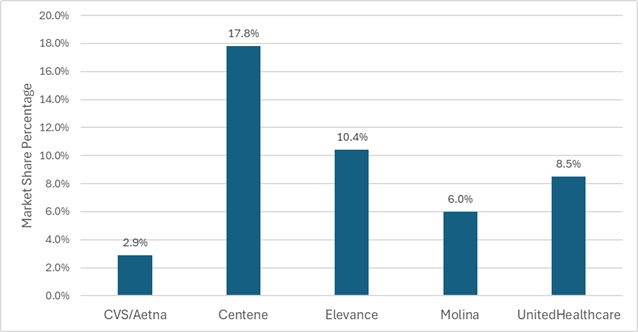
Using our data repository for 300 health plans across 41 states, HMAIS analyzes corporate ownership, program participation, and tax status among Medicaid managed care plans. As of December 2025, Centene maintained the largest share of the national Medicaid managed care market at 17.8 percent, followed by Elevance (10.4%), United (8.5%), and Molina (6.0%) (see Figure 1). These figures highlight continued concentration among large national plans, even as overall enrollment declines. 

Figure 1. National Medicaid Managed Care Market Share by Number of Beneficiaries for a Sample of Publicly Traded Plans, December 2025  

Medicaid managed care market share percentage

What to Watch  

Enrollment trends observed in the fourth quarter (Q4) of 2025 and continuing into 2026 indicate increasing state attention to eligibility policy and program integrity. State legislative activity, budget pressures, and federal regulatory developments are prompting many states to assess and strengthen certain aspects of their programs related to eligibility, particularly as they prepare to implement redetermination and work and community engagement requirements. 

Several states are already moving toward implementation. Nebraska is scheduled to launch Medicaid work requirements on May 1, 2026, while Montana plans to begin implementation on July 1, 2026. With additional federal guidance still emerging, most other states are working toward compliance ahead of January 2027 deadlines. In expansion states, policymakers retain authority to tighten administrative processes, alter optional benefits, or adjust provider payment levels—actions that may materially affect enrollment. 

These developments underscore why Medicaid managed care enrollment trends deserve close attention. Declines in enrollment are often an early indicator of broader system impacts, including rising uncompensated care for providers, shifts in payer mix, and increased financial pressure on safety‑net systems. For managed care organizations, even modest enrollment changes can mask more significant shifts in risk profiles, geographic concentration, or service needs. 

Connect with Us  

HMA is home to experts who know the Medicaid managed care landscape and how it is evolving. HMAIS’s Medicaid enrollment data, financials, procurement tracking, and a robust library of public documents equips stakeholders with timely, actionable intelligence. 

For more information about the HMAIS subscription, contact Andrea Maresca and Alona Nenko.  

HMA Resource Provides Key Insights about the Evolving Medicare-Medicaid Integration Landscape

People who are dually eligible for Medicare and Medicaid remain a central focus for policymakers and healthcare organizations, given their complex care needs, disproportionate share of spending, and the long-standing challenge of coordinating coverage across two programs. One of the primary vehicles for advancing integration has been Dual Eligible Special Needs Plans (D-SNPs), which continue to play an increasingly prominent role as federal and state policymakers encourage tighter Medicare-Medicaid alignment.

As states play a more active role in shaping enrollment rules, Medicaid contracting, and procurement strategies, the duals market is becoming more structured and more explicitly guided by state policy decisions. Health Management Associates (HMA’s) 2026 Duals Integration Environmental Inventory, examines how this shift shapes the integration landscape in 2026. This comprehensive inventory is based on a review of the 2026 market, insights from states, and other publicly available resources.

This article examines key trends from HMA’s 2026 inventory and addresses federal policy changes scheduled to take effect for 2027, which contribute to this dynamic environment.

What to Expect in 2026

As the landscape for duals integration evolves, the central question has shifted from whether D-SNPs operate in a state to the more consequential question of how states are using Medicaid policy levers (i.e., enrollment rules, procurement, contracting, and managed care structures) to drive tighter alignment between Medicare and Medicaid. 

At the federal level, recent Medicare Advantage and Part D rulemaking is reinforcing that movement. The Contract Year 2025 Medicare Advantage and Part D Final Rule finalized the second phase-down of the D-SNP look-alike threshold to 60 percent for 2026 and established 2027 rules that limit enrollment in certain D-SNPs to members of an affiliated Medicaid managed care organization. The rule also limits the number of D-SNP benefit packages that can be offered alongside an affiliated Medicaid managed care organization. More recently, the Contract Year 2026 Medicare Advantage and Part D Final Rule requires certain D-SNPs to use integrated member ID cards and integrated health risk assessments beginning in 2027. 

Together these rules signal a continued federal emphasis on linking D-SNP enrollment and operations more closely to Medicaid coverage and delivery systems, with states playing a greater role in determining how alignment is achieved. 

What the 2026 Inventory Shows

HMA’s 2026 Duals Integration Environmental Inventory shows how these policy signals are translating into state action. More specifically: 

  • Statewide exclusively aligned enrollment appears in 16 states in the 2026 inventory, up from nine in 2025. 
  • Applicable Integrated Plans (AIPs) are present in 22 states, up from 14, and default enrollment is in place in 21 states, up from 16. 
  • The inventory also captures 6,084,997 total D-SNP enrollees, including 1,975,250 in Highly Integrated SNPs (HIDE) and 743,683 in Fully Integrated SNPs (FIDE-SNPs). 

Those changes are already visible in state markets: 

  • Illinois, Massachusetts, Ohio, and Rhode Island entered 2026 with a greater FIDE-SNP presence tied to legacy Medicare-Medicaid Plan transitions. 
  • Michigan launched MI Coordinated Health as a HIDE-SNP in selected regions in 2026, with statewide expansion planned for 2027. 
  • Delaware also stands out: Although it already had AIPs in the 2025 inventory, it adds statewide exclusively aligned enrollment in 2026 and shows both HIDE-SNPs and coordination-only D-SNPs. 

A Resource to Track State Market Direction

HMA’s 2026 Duals Integration Environmental Inventory, available to HMA Information Services (HMAIS) subscribers, includes a state-by-state view of the Medicaid policy, contracting, and program structures shaping duals integration and D-SNP markets. In addition to enrollment trends, the inventory documents the integration model each state is pursuing, whether long-term services and supports or behavioral health are included in managed care, and how procurement and contract decisions may inform future market activity. 

HMA experts work with clients to apply this information and deepen their understanding of state integration approaches, inform assessments of their market readiness and alignment opportunities, and develop strategies that support more effective Medicare-Medicaid integration. 

Looking Ahead

Notably, HMA’s inventory reflects a point in time understanding of where an individual state is today and what is known at this time about their next steps and plans. However, we expect changes in many states as they seek guidance from the Centers for Medicare & Medicaid Services and the D-SNP community to implement required changes and adopt new regulatory provisions that support state goals and priorities. 

The 2026 inventory suggests that more states are using formal alignment tools, that more enrollment is concentrated in integrated products, and that more markets are being shaped by the interaction between Medicaid structure, procurement, and D-SNP strategy. 

Connect with Us 

For organizations seeking to understand where the market is headed, the Duals Integration Inventory offers a clear view of how state policy and market structure are evolving and where tighter Medicare-Medicaid alignment is taking hold. 

Contact Holly Michaels Fisher and Julie Faulhaber to discuss your organization’s questions and needs regarding an integration strategy and market analysis. For information about the HMAIS subscription, access to the Duals Environmental Inventory contact Andrea Maresca and Gabby Palmieri. 

CMS’s LEAD Model: A New Phase for Accountable Care and Application Considerations

The Long‑term Enhanced Accountable Care Organization (LEAD) Model represents the next major step in the Centers for Medicare & Medicaid Services (CMS) accountable care strategy and reinforces a federal commitment to value-based participation in Traditional Medicare. Announced as the successor to ACO REACH, LEAD is a voluntary, nationwide, 10‑year model that will operate from 2027 to 2036, making it the longest-running accountable care organization (ACO) model the Center for Medicare and Medicaid Innovation has tested.

Momentum around the LEAD ACO model has accelerated since CMS’s recent release of the Request for Applications (RFA), which formally moves LEAD from policy design to implementation. The RFA requires prospective participants to evaluate program design choices, financial implications, and operational readiness on a compressed timeline. Notably, CMS has indicated that additional opportunities to express interest will follow for organizations that are not prepared to apply for participation in the initial cohort.

This article explains key design elements of the LEAD model and identifies considerations for organizations assessing whether and when to pursue participation in LEAD.

Core Design Evolutions of the LEAD Model

While LEAD builds on many of the elements from ACO REACH, its design reflects how the Innovation Center intends to address challenges with previous ACO models, such as the Medicare Shared Savings Program (MSSP). At its core, LEAD seeks to establish a pathway to long‑term engagement in value-based care that creates an attractive option for all types of providers, including ACOs with a history of engaging in value-based care and providers that have yet to meaningfully participate.

LEAD introduces a set of targeted design changes intended to improve predictability, alignment accuracy, and long‑term participation in accountable care—most notably through revised benchmarking, updated beneficiary alignment, and expanded flexibility for engaging specialists and high‑needs populations.

1. Revising Benchmarking Policies to Support Predictability and Success

  • LEAD provides a major win for ACOs seeking long-term predictability by setting a long-term benchmark that will not rebase for the entirety of the 10-year model. In MSSP, many ACOs eventually face the “ratchet effect” in which benchmarks erode after rebasing to reflect the ACO’s more recent spending patterns. It can create a significant hurdle for ACOs that have already successfully reduced spending, as their own prior success lowers their benchmark. By not rebasing for the entirety of the model period, LEAD provides an attractive alternative to the MSSP, which rebases every five years.
  • LEAD will also support historically successful ACOs by transitioning to a fully regional rate book by the end of the model period. As a result, benchmarks will be set based on overall spending in the region where an ACO operates rather than an ACO’s historical spending. While ACO REACH also used a regional rate book to inform some ACO benchmarks, LEAD goes further by seeking to transition all ACOs to a benchmark based fully on a regional rate book while also adding protections for higher-spending ACOs by transitioning regions at different timelines to ensure that newer ACOs have the opportunity to implement the kinds of care delivery changes that lead to lower spending before they are subject to penalties.
  • Other notable changes to benchmarking include a variety of ACO-specific adjustments and the addition of an administrative component to benchmarking. ACOs will be eligible to receive a boost to their benchmarks with either a regional efficiency adjustment for ACOs with lower spending or a prior savings adjustment for ACOs with a demonstrated history of achieving savings. LEAD also introduces an administratively set component to benchmarking—the Accountable Care Prospective Trend—which already is used in the MSSP, though LEAD adds a new guardrail policy to promote predictability.

2. Improving Accuracy in Beneficiary Alignment

  • LEAD’s new “hybrid” alignment option increases accuracy and responsiveness. Monthly additions of voluntarily aligned beneficiaries and mid-year recognition of new participant taxpayer identification numbers (TINs) adopted after the start of the performance year (PY) allow alignment to better reflect real-time care relationships, averting lag and operational friction.

3. Adding Support for High-Needs Beneficiaries

  • LEAD expands support for beneficiaries with complex needs through a universal High Needs category and recalibrated risk adjustment. By moving away from ACO REACH’s population‑exclusive model, LEAD lowers barriers for organizations that serve a disproportionate share of high‑needs and dually eligible populations. In addition, CMS will test Medicare‑Medicaid alignment in two states, and help states develop arrangements supporting the provision of value-based care between ACOs and state Medicaid agencies or managed care organizations.

4. Promoting Deeper Engagement with Specialists

  • LEAD increases flexibility for engaging specialists in value‑based arrangements. New Non‑Primary Care Capitation options and episode-based risk arrangements (CMS‑Administered Risk Arrangements (CARAs)), allow ACOs to share risk with specialists without Total Care Capitation, reducing operational complexity while expanding accountability beyond primary care.

5. Advancing Technology Adoption and Innovation

  • LEAD introduces structured pathways to promote technology adoption. Planned Artificial Intelligence (AI)‑inferred risk adjustment will be phased in following successful testing and validation, while the Tech Enabler Initiative and Rapid Cycle Innovation Program seek to reduce administrative burden and accelerate evidence generation—particularly for smaller or resource‑constrained ACOs.

Next Steps

The Innovation Center is operating on an accelerated timeline for the initial LEAD cohort. Prospective ACOs have fewer than 50 days to digest a detailed Request for Applications and model potential performance. Applications are due May 17, 2026. ACOs that participated in ACO REACH in PY 2026 will be well-positioned, as many of the provisions in LEAD will be familiar, and the agency is permitting this group of ACOs to submit an abbreviated application for participation.

For organizations not ready to apply for the first cohort, CMS will release a standardized Letter of Interest form by April 17, 2026, to gauge interest in future application rounds. In this context, organizations considering LEAD participation should be assessing not only near‑term application readiness, but also longer‑term strategic alignment with the model’s 10‑year commitment, risk structure, and operational requirements. Key considerations include benchmarking predictability, readiness to manage regional benchmarks, capacity to engage specialists and high‑needs beneficiaries, technology capabilities, and alignment with broader value‑based care strategies across Medicare and Medicaid.

Connect with Us

Health Management Associates (HMA), supports organizations across the LEAD decision continuum, including those pursuing immediate application and those preparing for future cohorts. HMA can help organizations:

  • Interpret LEAD’s policy and financial design relative to existing ACO and MSSP participation
  • Model performance scenarios under alternative benchmark, alignment, and risk configurations
  • Assess operational readiness across care management, contracting, analytics, and compliance
  • Develop application strategies and supporting materials, including responses to the LEAD RFA
  • Choose to defer application on steps that preserve future optionality

As CMS advances LEAD under an ambitious timeline, early analysis and disciplined decision‑making will be critical for organizations seeking to align participation with their long‑term value‑based care strategies.

For questions contact Amy Bassano and Rebecca Nielsen.

Connecting the Dots: Medicaid Community Engagement Requirements and State Readiness for 2027

Our March 19, 2026, Connecting the Dots analysis described the federal requirements and the operational questions states and partners will need to answer to effectively implement Medicaid work and community engagement requirements. Since then, federal officials have advanced their forthcoming regulation to the final stage of review and intend to meet the statutory requirement to release interim final guidance by June 2026. In addition, many states have taken early steps to communicate upcoming changes and begin planning for system, policy, and partner readiness.

While state sessions are clearly grabbing a lot of energy, timing of pulling together many of the moving parts is becoming a concern as states undergo one of the most fundamental operational challenges to the Medicaid program since its inception. This article synthesizes emerging approaches and identifies practical opportunities to refine strategies and strengthen readiness while minimizing burden for enrollees and state Medicaid agencies.

Early Actions in States Preparing to Implement Work and Community Engagement Requirements

1. States Are Launching Websites that Highlight Coming Changes

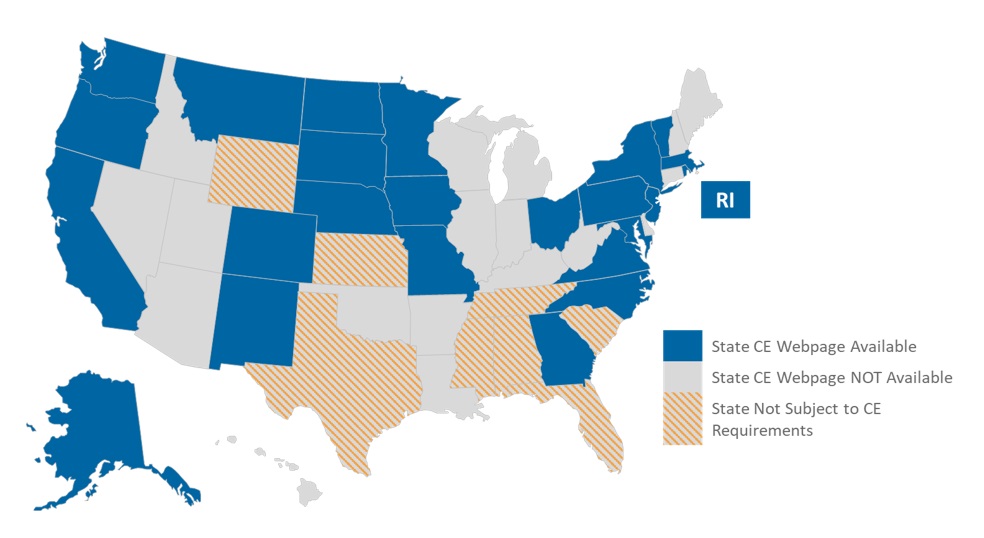
As of April 2026, more than half of US states that are subject to the Medicaid work and community engagement requirement had posted web page content describing forthcoming changes associated with the 2025 budget reconciliation act (P.L. 119-12, OBBBA). Some websites provide high-level descriptions of key provisions (e.g., qualifying beneficiary ages, qualifying activities, and exemptions), while others include more detailed information reflecting state-specific policy decisions, educational messages, and suggested steps that beneficiaries, providers, managed care plans (MCPs), and community-based stakeholders can take now (see Figure 1).

Figure 1. States with a Community Engagement Web Page

States with community engagement

For example, Ohio’s website describes the requirements for, and provides examples of, acceptable documentation Medicaid members may use to demonstrate compliance or eligibility for an exemption. Ohio also offers a “Communications Partner Packet” that contains frequently asked questions (FAQs) and draft outreach materials to support stakeholder communications and increase awareness. The communications tools include a one-page flyer, a rack card, and potential social media posts to raise awareness of the changes, with some use of QR codes to enhance quick access to key websites like the beneficiary self-service portal.

2. States are Beginning to Make and Communicate Preliminary Policy Decisions

States must make a range of policy decisions, including the penalty start date, the number of required months of compliance for both the initial application and subsequent renewals, the potential adoption of short-term hardship exceptions, and how exceptions are defined and operationalized. While most states anticipate compliance beginning January 1, 2027, in alignment with OBBBA, Nebraska and Montana have announced plans to begin implementation in 2026, and their websites reflect additional policy details to support accelerated timelines.

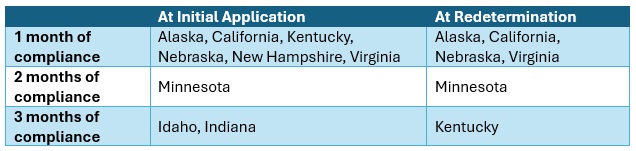
A handful of states, including Arkansas and Ohio, also are communicating ahead of OBBBA’s timeline to promote awareness and engagement before the work and community engagement requirement becomes effective. Table 1 summarizes examples of the current state planning[1] around the number of required months of compliance for the initial application and renewals.

Table 1. Sample Number of Months in Compliance

Table with two columns

States also are taking different approaches to exemptions and short-term exceptions. Although many exemptions and exceptions are defined in statute, the interpretation of “medically frail” remains an area in which states have significant flexibility, with implications for how many individuals are exempt. Many states have experiences with establishing definitions of medically frail. For example, states that offer an adult benefit package that differs from the state plan benefit package must allow medically frail adults to opt in to the state plan. At least 12 states already make medically frail determinations, and these existing policies and processes may inform approaches for work and community engagement requirements.

One of those states—Nevada—has posted a proposed definition of medically frail with a request for public comment, including a sample list of qualifying medical conditions. Although such lists can provide clarity, they also underscore the importance of a clear and straightforward exemption request process to support appropriate determinations, including for individuals with conditions that are omitted from a specified list.

3. States Are Securing Additional Support to Address Administrative Challenges

The new eligibility criteria, coupled with more frequent eligibility checks, are placing substantial new demands on Medicaid agencies, eligibility systems, and personnel. In response, states are considering or actively pursuing a range of approaches to strengthen administrative capacity. Examples include:

  • Hiring new state eligibility and enrollment workers: Indiana and Montana
  • Funding system enhancements and improvements: Alaska and New Jersey
  • Hiring outreach and engagement contractors: Arizona and Arkansas

States are also proposing to take a more coordinated, cross-agency approach that uses other state agencies and programs as data sources and referral pathways to help beneficiaries meet their work and community engagement requirements. A variety of states are looking to leverage data from their Supplemental Nutrition Assistance Program (SNAP) program to facilitate compliance checks, and Kentucky has proposed receiving data from a variety of sources (e.g., Department of Revenue, Department of Corrections, Unemployment Insurance, Vital Statistics, and others) to more automatically identify eligibility and exemption changes.

States like Hawaii, Montana, and Nebraska have highlighted their labor departments to connect people to job and community service resources. Virginia’s work and community engagement website directs the public to a series of different programs based on whether they are interested in employment, volunteer, or education resources. Minnesota also has introduced legislation proposing collaboration between the commissioner and county agencies to link beneficiaries to other critical services like job training, childcare, and transportation.

Shrinking federal contributions and constraints on Medicaid revenue strategies—such as limits on provider taxes—are prompting states to rethink how Medicaid agencies operate within existing budgets. Limited federal funding to support administrative needs elevates the importance of efficiency, coordination, and automation.

What States Might Do to Chart a Better Path Forward

A robust pre-implementation plan is critical to successful work and community engagement implementation. A well-documented plan helps states fully document the variety of moving parts across policy, systems, and partners, clarify milestones and decision points, and define what readiness looks like in practice.

Key components of a pre-implementation plan may include:

  • Signing agreements and contracts to support infrastructure. Pre-implementation planning should ensure that appropriate support from third-party vendors and sister agencies is secured to optimize flexibilities and manage the requirements. Examples may include maintenance of effort (MOE) agreements, memoranda of understanding (MOU), contract updates, and requests for proposals (RFP) as appropriate. States may need to use expedited contracting vehicles when available and maximize existing vendor arrangements. Agreements should address data governance, privacy, and cost allocation issues to support smooth operational integration and reduce downstream friction.
  • Quantifying and automating exemptions. Systems and reporting should be updated to identify, notify, and manage cases for expansion adults who are likely exempt. Leveraging additional resources and data matching may help states identify common exempt populations, such as caretakers with dependents under age 14, disabled veterans, and pregnant women without requiring additional verification. Understanding the demographics of the remaining nonexempt population may also be useful in outreach, education, and links to supports.
  • Preparing for readiness review, including system readiness, coverage transition, and churn management. Pre-implementation plans should prioritize robust system testing, staff training, and timely updates to required documentation (e.g., state plan amendments, policy and member manuals, notices, and reviewing and approving MCP communications). Building in clear transition supports for individuals who may lose coverage or transition to other coverage options can improve continuity of coverage, reduce uninsurance and uncompensated care, and limit administrative burden following implementation.
  • MCP contracts. Most enrollees subject to work and community engagement requirements are enrolled in Medicaid MCPs. States will need to describe enhanced roles and responsibilities in both the MCP contracts as well as the rates. Clear contract expectations can support transparency and mutual accountability across partners.
  • Test communications with the target audiences to ensure understanding and appropriate action. Awareness of the new work and community engagement requirement was one of the biggest challenges Arkansas faced when it launched its program in 2018. Beneficiaries also struggled to understand whether the requirement applied to them and what they needed to do to comply. States must build communications plans and messaging to clearly address these issues to reduce the number of beneficiaries losing coverage simply because they did not understand the new requirements.

Connect with Us

Health Management Associates (HMA) Medicaid experts assist Medicaid and state policymakers with the following:

  • Strategic positioning
  • Policy-to-operations design
  • Cross-agency governance and partner alignment
  • Information systems impact assessment, change planning, testing strategies and readiness metrics
  • Scenario planning and beneficiary impact analysis
  • Communications and operational playbooks
  • Program integrity, reporting, and audit support

HMA Medicaid experts can also assist MCPs, providers, and community-based organizations with:

  • Risk assessments (e.g., enrollment, utilization, and spending impacts)
  • State-specific policy and operational insights and trends
  • Communications, outreach, and engagement strategies and content
  • Member retention strategies
  • Grassroots workforce development and community engagement strategies

For questions, contact HMA contributors to this article Lora Saunders, Matt Powers, Andrea Maresca, and Amber Swartzell.

[1] Some of these policies are in pending legislation and, therefore, are subject to change.

Ready to talk?