
Weekly Roundup -
November 4, 2026

Smart. Strategic. Essential.
Unmatched Healthcare Insights from HMA,
Leavitt Partners & Wakely.
Featured:

Webinar Replay – Political Checkpoint 2026: Straight Talk on Election Results for Healthcare Leaders
ACCESS WEBINAR
How Can Healthcare Leaders Plan for What They Cannot Predict?
LISTEN NOW


Trending: In Focus
Medicaid Work Requirements: What the Court Ruling and CMS's Appeal Mean for Your January 1 Implementation Plan
States are preparing to implement the Medicaid work and community engagement requirements set forth in the Centers for Medicare & Medicaid Services (CMS) interim final rule issued on June 2, 2026. States are expected to implement the mandates by January 1, 2027, leaving Medicaid agencies, health plans, providers, and community partners with a compressed window to develop, test, and deploy new policies, systems, notices, and verification processes. As states develop their plans and final details continue to take shape, this article builds on ongoing Health Management Associates (HMA) analysis of how states are putting these policies into practice.
Two recent developments add to the complexity of implementing the Medicaid community engagement requirements. The first is the October 29, 2026, federal court decision on the interim final rule, which CMS plans to appeal. The second is a compliance checklist CMS shared with states to help them identify where they may need more time or support and to plan mitigations.
Together, the decision, the planned appeal, and the checklist raise new questions about implementation, process, and compliance, and the approaches will vary by state. In a situation this fluid, states and their partners will need to be innovative and diligent at each step between now and January 1, 2027, and beyond. In the remainder of this article, HMA experts discuss the court decision and what it means for Medicaid agencies and their partners, as well as the compliance considerations related to the checklist.
What the Court Decided About Medical Frailty in Medicaid Community Engagement Requirements
The One Big Beautiful Bill Act (P.L. 119-21), also known as the Working Families Tax Cut legislation, generally requires certain adults ages 19–64 in the Medicaid expansion group or certain section 1115 demonstrations to meet community engagement requirements unless they qualify for an exclusion or exception. Individuals can satisfy the requirement through 80 hours per month of work or community service, half-time enrollment in an educational program, or monthly income equivalent to 80 hours at the federal minimum wage. Medically frail individuals are excluded, and Congress specified five groups within that provision.
CMS’s June 2026 interim final rule required individuals to fall within one of those five categories and to show that a physical, mental, or behavioral health condition significantly impairs their ability to comply with community engagement requirements. Half the states (25) and the District of Columbia challenged the second requirement (see Figure 1).
The US District Court for the District of Massachusetts issued a decision on October 29, 2026, Commonwealth of Massachusetts, et al. v. Oz, et al., which stated that CMS lacks the authority to add a work-related functional test to the criteria Congress established. The court vacated the challenged language and prohibited CMS from applying the additional test to the plaintiff states.
Figure 1. State Plaintiffs in the Medicaid Medical Frailty Determination Lawsuit
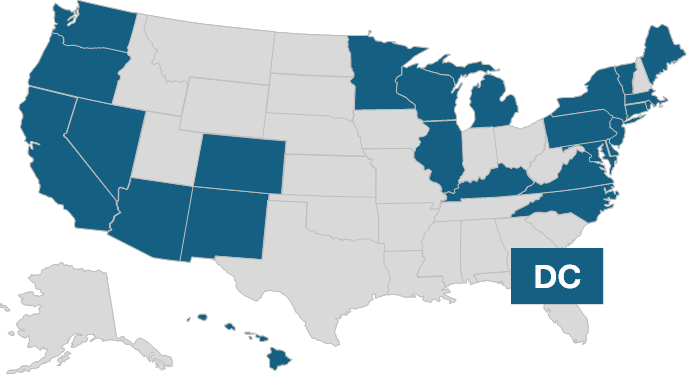
Recognizing that the plaintiff states may need time to revise their medical frailty verification systems and processes, the court also gave them six months of protection from CMS penalties for implementation errors or delays, including those arising from medical frailty determinations.
What Stays the Same: Medicaid Work Requirement Timeline and Verification Rules
The decision does not invalidate the community engagement requirements, and the 80-hour standard and the January 1, 2027, timeline stand. States are unlikely to pause broader implementation, but some design and operational decisions may remain provisional.
The court also rejected the states’ challenges to two CMS verification policies: the 12-month limit on claims and encounter data used to verify medical frailty and, beginning January 1, 2028, the limit of self-attestation to once per continuous enrollment period. In 2027, however, states may accept self-attestation each time medical frailty status is determined or redetermined, which offers useful flexibility as they revise their processes.
Open Questions: What CMS’s Planned Appeal Means for Medicaid Community Engagement Implementation
On November 3, 2026, CMS Administrator Mehmet Oz, MD, said that CMS will appeal the decision, describing the definition of medical frailty as a fundamentally important question that could ultimately reach the Supreme Court. CMS is working on additional guidance that is expected in November. In the meantime, states must make interim choices on verification processes, notices, and systems logic that may later require revision.
The court removed the added test without saying the change applies only to the plaintiff states. However, the court order blocking CMS from using it, along with the six-month protection from penalties, covers only those states. CMS guidance will be critical to clarify how non-plaintiff states should apply the statutory categories and how plaintiff states should operate during the relief period. In light of the ongoing litigation, states will be making decisions without knowing how the appeal may affect the order, and impacts will vary by state and organization; hence, state-specific monitoring is essential.
What the Ruling Means for State Medicaid Agencies, Health Plans, and Providers
State Medicaid Agencies: Revise Medical Frailty Processes Without Pausing Implementation
With fewer than two months before the January 1, 2027, deadline states should identify and revise policy, system, and operational materials to incorporate the vacated functional test. Documenting interim decisions and legal assumptions will make later adjustments easier. Plaintiff states must also decide how to operationalize the six-month relief across adverse actions, verification timelines, notices, appeals, and federal reporting.
Medicaid Health Plans: Reassess Member Identification, Outreach, and Audit Readiness
Plans that built member identification strategies around the two-part test should reassess them and revisit their models to estimate how many additional members may fall within a statutory category. Auditable records of rule changes, member matches, and data limitations will support state oversight and program integrity reviews.
Providers and Community Organizations: Update Documentation and Support Members at Risk of Losing Coverage
Providers are likely to see changes in the information requested to establish medical frailty. Documentation may still be needed, particularly after a permitted self-attestation, to establish whether an individual falls within a statutory category. Providers and community-based organizations also are positioned to identify patients at risk of coverage loss and connect them to application assistance, appeals support, and continuity of care resources.
CMS Compliance Checklist: Mitigation Plans to Address Gaps in Medicaid Community Engagement Implementation
In October 2026, CMS shared “Proposed State Mitigation and Optional Strategies to Support Implementation of Community Engagement and Other Eligibility & Enrollment Provisions of the Working Families Tax Cut (WFTC) Legislation.” The checklist is intended to help states assess readiness and plan mitigations before January 1, 2027. States that do not expect to meet a community engagement requirement at launch can identify the gap, propose a mitigation, and set a timeline for reaching full compliance. CMS may approve each mitigation under an authority such as a state plan option or enforcement discretion, which allows states to avoid formal compliance action. States with approved plans provide quarterly updates on progress and emerging risks, and CMS plans to begin meeting with states about their plans in November.
The checklist focuses on the areas where implementation is most likely to be tested: updating applications and renewal forms in every format, connecting to the data sources needed for verification, checking for exclusions before assessing qualifying activities, reporting new data to CMS, and updating eligibility and hearing notices. It also covers outreach, notices of noncompliance, notification when exclusion status changes, and short-term hardship exceptions. Because community engagement adds to state workloads, CMS also anticipates asking for plans that outline the existing timeliness standards for applications, renewals, and fair hearings. Each state will need to determine which mitigation strategies best fit its systems and capacity.
Preparing for January 1: How HMA Supports Medicaid Community Engagement Implementation
HMA is helping Medicaid agencies, health plans, providers, and partners turn the decision and the checklist into practical next steps including:
- Assess impacts and safeguards. Inventory the policies, business rules, system logic, contracts, notices, and analytics that were already built to incorporate the second medical frailty test. States can then prioritize what must change before January 1, 2027, what interim procedures can cover, and where they need further guidance while reviewing adverse-action controls to reduce avoidable coverage loss.
- Estimate affected populations. Pair HMA’s by state, by year coverage, and enrollment models with medical frailty modeling based on published state methodologies to estimate affected populations and implications for enrollment, continuity of care, and operational workload.
- Monitor developments and supporting communications. Provide state-specific monitoring and scenario planning for CMS guidance, appeals, and further litigation, and develop clear communications for members, providers, plans, vendors, and legislators.
Contact HMA today to work with our policy, actuarial, operations, and communications experts on a defensible, well-documented implementation plan.
This article reflects information available as of November 4, 2026, and is not legal advice.
Election Results Are In: What a Shift in Congress and New Governors Mean for Medicaid and Healthcare Policy
The votes are counted, and Washington looks different. With congressional control shifting and new governors headed to state houses, the health policy agenda is up for renegotiation.
Join HMA and Leavitt Partners experts on November 10 for a clear-eyed look at what the results mean, and how they change your organization’s strategy. We’ll cut through the noise with non-partisan analysis of the key congressional and state races, leadership changes, and what they signal for Medicaid and broader health policy. They will look at what the 2026 results mean for the federal agenda, how new governors may reshape state priorities, and which developments are most likely to define the Medicaid landscape in 2027. Register to hear what has changed and how it bears on your organization’s strategy.

Federal Policy News
Fueled By Leavitt Partners Weekly Health Intelligence
Midterms Set the Stage for Congress’s Next Moves on Leadership, Funding, and Healthcare
The 2026 midterms reshaped Congress, with Democrats securing majorities in both chambers. Affordability was a leading concern for voters, putting healthcare costs among the issues likely to shape the next Congress’s agenda. Democrats are expected to pursue priorities including restoring enhanced ACA premium tax credits, expanding Medicare drug pricing reforms, and revisiting provisions of the 2025 reconciliation law.
How much of that agenda advances will depend in part on negotiations with President Trump, who has threatened to veto some legislation while expressing interest in working with congressional Democrats. Drug pricing, insurer oversight, and Medicare Advantage payment reform may offer opportunities for bipartisan agreement. Meanwhile, organizations should watch for increased congressional oversight, new committee leadership, and decisions about federal funding. The FY 2027 continuing resolution expires December 11, creating an early test for lawmakers.
Join the Political Checkpoint webinar on November 10, for more in-depth insights on the election results and their implications for healthcare policy.
Benchmark Silver Premiums Rise 13% as ACA Open Enrollment Begins
On November 1, the Open Enrollment period for ACA Marketplace officially began and will run through January 15. A recent KFF analysis of HealthCare.gov, state rate review websites, state plan finder tools, and state provided data shows a 13 percent increase in Benchmark Silver Premiums. In a CMS Fact Sheet, the Administration notes that this Open Enrollment, more than 75 percent of Healthcare.gov users will continue to have access to premiums at or below $50 and enrollees who receive premium tax credits will have access to a plan with nearly 90 percent of the premium subsidized. Several recent policy changes will impact the OEP this year, including provisions from the FY 2025 budget reconciliation law to restrict premium tax credits for certain immigrants and to make catastrophic and bronze plans eligible for HSAs. The Administration estimates that in 2027, eligible enrollees will have access to an average of 35 different HSA-eligible plans.
CDC Seeks Nominees for Immunization Advisory Committee
On October 30, Centers for Disease Control and Prevention (CDC) published a notice in the Federal Register seeking nominations for membership on the Advisory Committee on Immunization Practices (ACIP). The ACIP appointments in 2025, as well as the subsequent changes to the childhood immunization schedule, are the subject of ongoing litigation. In March, the District Court of Massachusetts stayed the committee appointments, as well as revisions made to the childhood immunization schedule. HHS appealed the ruling, which is being reviewed by the First Circuit Court of Appeals. The solicitation of nominations notes that “ACIP consists of up to 19 experts that collectively represent a balanced range of scientific, clinical, and public health expertise relevant to the Committee’s mission, including person(s) knowledgeable about consumer perspectives and/or social and community aspects of immunization programs.” CDC will review candidates and provide a slate of nominees to the HHS Secretary, who will make the final selections. Members may serve terms of up to four years and are appointed as Special Government Employees, subject to financial disclosure requirements. Nominations are due December 31, 2026, and the deadline could indicate that HHS intends to appoint new members and hold meetings early in 2027.
FDA Begins Three-Phase Review of Infant Formula Nutrient Requirements
On October 29, the Trump Administration announced two actions on infant formula standards as part of President Trump’s Operation Stork Speed and the broader Make America Healthy Again (MAHA) initiative. As part of the announcement, the US Food and Drug Administration (FDA) released a proposed rule that would update infant formula nutrient requirements for iodine, manganese, vitamin A, and vitamin D, and reaffirm existing requirements for chloride, potassium, selenium, and sodium. This rule is the first of three planned proposed rules aiming to modernize infant formula standards. FDA plans to conduct its review and release the proposed rules in three phases to allow the agency to receive public comment during each phase. Comments on the first proposed rule are due March 2, 2027. Alongside the proposed rule, FDA also released new chemical contaminant testing data on infant formula. The data found that most infant formula samples tested had low or nondetectable levels of chemical contaminants. This data can be accessed and explored through FDA’s new Infant Formula Testing Webpage and Infant Formula Chemical Contaminants Dashboard.
Ready to talk about your organization's challenges?
Schedule a Consultation
State Policy News
Colorado Governor Proposes SFY 2028 Budget with $600 Million in Medicaid Cuts
Colorado Governor Jared Polis released on November 2, 2026, his proposed budget for state fiscal year 2028 with $600 million total in Medicaid cuts. Approximately $300 million of those cuts would eliminate adult dental coverage, in-home physical therapy, some funding for pediatric hospitals, and Cover All Coloradans, which extends Medicaid coverage to undocumented immigrant children and pregnant women. It would also reduce payments to teaching hospitals and reinstate prior authorization for behavioral health. The other $300 million calls for unspecified cuts and would be identified later. Notably, Colorado elected a new governor to be inaugurated January 12, who could have different budgetary priorities.
Michigan to Transition Adult Medicaid Dental Benefits to Healthy Kids Dental Contract in 2027
The Michigan Department of Health and Human Services (MDHHS) announced on October 30, 2026, that effective January 1, 2027, adult dental benefits for Medicaid managed care enrollees will transition from Medicaid managed care organizations to the Healthy Kids Dental (HKD) contract administered by Delta Dental of Michigan. Existing prior authorizations must be honored for 90 days following the switch. Beneficiaries may also request up to six months of continuity of care for ongoing treatment when disruption could cause serious harm. Dental providers not participating in Delta Dental’s network may enroll, while patients of nonparticipating providers will be reassigned to in-network providers beginning January 1, 2027. MDHHS will issue additional policy guidance and notify affected beneficiaries before the transition.
Oklahoma Receives Federal Approval for SUD/SMI Section 1115 Demonstration Extension
The Centers for Medicare & Medicaid Services announced on October 29, 2026, that it has approved a five-year extension of Oklahoma’s Institutions for Mental Diseases (IMD) for individuals with Serious Mental Illness (SMI)/Substance Use Disorder (SUD) Section 1115 Demonstration. The renewal allows the state to continue covering Medicaid services for SMI/SUD populations within IMDs, and terminates the authority to cover Qualified Residential Treatment Programs (QRTPs) for beneficiaries under age 21 because the state has no QRTP programs. The renewal is effective January 1, 2027, through December 30, 2031.
Oregon Launches State-Based Health Insurance Marketplace for 2027 Coverage
The Oregon Health Authority (OHA) announced that Oregon officially launched Explore Health, its new state-based health insurance marketplace, on November 1, 2026, replacing the federally facilitated HealthCare.gov platform for the 2027 plan year. The marketplace allows residents to compare health and dental plans, determine eligibility for federal financial assistance, and enroll in coverage through a state-operated platform. Existing HealthCare.gov enrollees will be transferred to Explore Health but must activate their accounts, review their information, and select coverage for 2027. The transition gives Oregon greater control over enrollment technology, consumer assistance, and coordination with state health programs. Open enrollment runs through January 15, 2027, with a December 31 deadline for coverage beginning January 1.

Private Market News
Fueled By Wakely Consulting Group
Senate Democrats Press Insurers on Role in 760,000 ACA Coverage Terminations
On October 26, a group of Senate Democrats led by Sens. Ron Wyden and Bernie Sanders sent letters to 10 of the largest ACA Marketplace insurers, questioning their role in CMS’s termination of coverage for 760,000 enrollees. The senators allege the terminations bypassed established mid-year eligibility procedures, pointing to insurer outreach asking enrollees to verify Social Security numbers and the lists of nonresponders sent to CMS before the agency updated its guidance on October 1. Insurers have been asked to respond by November 6 with details on how they coordinated with CMS and made eligibility decisions, and if the allegations are substantiated, they could raise questions about insurers’ incentives to cooperate with the administration’s anti-fraud efforts.
Providence, Compassus Complete Final Phase of Oregon Home-Based Care Joint Venture
On November 2, not-for-profit health system Providence and home-based care provider Compassus announced the completion of the final phase of their joint venture for home health, hospice, and community-based palliative care services in Oregon. The joint venture will operate as Providence at Home with Compassus, with Compassus managing 17 Oregon programs: nine home health, six hospice, and two palliative care. With Oregon added, the partnership now spans five states (Alaska, California, Oregon, Texas, and Washington), building on its initial 2025 launch. The organizations report that specialized tools are reducing administrative burden on caregivers and that hospice visits in the last days of life have increased across joint venture markets.
Read the Wakely Wire

Our Insights
Fueled By Experts Across Our HMA Companies
Health Management Associates
2026 North Carolina State of Reform Health Policy Conference
On November 10 in Raleigh, policymakers, state officials, health plans, providers, and community leaders will come together to discuss the issues shaping North Carolina healthcare, including Medicaid, behavioral health, primary care transformation, and integrated care for people dually eligible for Medicare and Medicaid. Speakers include Caprice Knapp, PhD, Principal Deputy Director of the Center for Medicaid & CHIP Services.
2026 Illinois State of Reform Health Policy Conference
On November 17 in Chicago, Illinois healthcare leaders and policymakers will examine the evolving federal landscape and its effects on the state, with sessions on Medicaid work requirements, behavioral and maternal health, health-related social needs, prior authorization reform, and the healthcare workforce.
2026 Colorado State of Reform Health Policy Conference
On December 3 in Denver, State of Reform will convene Colorado policymakers, agency leaders, payers, providers, and community organizations for a one-day conversation on the state’s most pressing healthcare and health policy issues.
Wakely
2026 Individual Market Enrollment and Risk Pool Considerations
New Wakely analysis of January–July 2026 data shows a 15.7% year-over-year decline in ACA individual market enrollment alongside a 6.9% increase in normalized relative risk, suggesting healthier members may be leaving at a higher rate. The analysis also identifies meaningful differences between State-Based and Federally Facilitated Marketplaces, as well as variation by metal level and state.
Could CHOICE Reshape the Individual ACA Market?
New Wakely modeling examines how CHOICE, formerly known as ICHRA, could reshape individual ACA enrollment, morbidity, and the small group market. The analysis finds that adoption could vary significantly by geography, with modeled individual-market enrollment gains of approximately 2.4 to 7.6 percent in South Carolina, little change in Iowa, and more limited opportunity in Tennessee because of premium differences. The paper also highlights how vendor fees, plan design, network breadth, tax treatment, and employee preferences could influence employer adoption and future market pricing.
Leavitt Partners
Modernizing ACO Quality Reporting with HL7® FHIR®
This new Leavitt Partners report, Supporting Real-Time Quality Insights through HL7® FHIR®, recommends that CMS allow qualified ACOs to use standards-based HL7 Fast Healthcare Interoperability Resources (FHIR) infrastructure for Medicare quality reporting. While CMS is already moving toward this approach, the report identifies the regulatory changes needed to make this architecture possible without requiring it.

RFP Calendar
RFP Calendar
| Date | State/Program | Event | Beneficiaries |
|---|---|---|---|
| Date: Summer 2026 | State/Program: Illinois Foster Care | Event: RFP Release | Beneficiaries: 33,000 |
| Date: July 28, 2026 (Delayed) | State/Program: Nevada Children's Specialty | Event: Awards | Beneficiaries: NA |
| Date: November 9, 2026 | State/Program: Indiana | Event: RFP Release | Beneficiaries: 1,400,000 |
| Date: January 1, 2027 | State/Program: Illinois | Event: Implementation | Beneficiaries: 2,400,000 |
| Date: January 1, 2027 | State/Program: Nevada CO D-SNP | Event: Implementation | Beneficiaries: 88,000 |
| Date: January 1, 2027 | State/Program: Wisconsin LTC GSR 3 | Event: Implementation | Beneficiaries: 56,000 (all GSR) |
| Date: January 1, 2027 | State/Program: Illinois Tailored Care Management Program | Event: Implementation | Beneficiaries: 22,400 |
| Date: July 2027 | State/Program: Indiana | Event: Awards | Beneficiaries: 1,400,000 |
| Date: July 1, 2027 | State/Program: Nevada Children's Specialty | Event: Implementation | Beneficiaries: NA |
| Date: Fall 2027 | State/Program: Oregon | Event: RFP Release | Beneficiaries: 1,200,000 |
| Date: January 1, 2028 | State/Program: Wisconsin LTC GSR 4,6 | Event: Implementation | Beneficiaries: 56,000 (all GSR) |
| Date: 2028 | State/Program: North Carolina | Event: RFP Release | Beneficiaries: 2,200,000 |
| Date: 2029 | State/Program: California | Event: RFP Release | Beneficiaries: NA |
| Date: January 1, 2029 | State/Program: Indiana | Event: Implementation | Beneficiaries: 1,400,000 |