Blog

CMS releases Medicaid LTSS expenditures report for FY 2020

This week, our In Focus section summarizes the Medicaid Long-Term Services and Supports (LTSS) Annual Expenditures Report, which the Centers for Medicare & Medicaid Services (CMS) released on October 17, 2023. The report includes detailed information about Medicaid LTSS expenditures for federal fiscal year (FY) 2020, which runs from October 1, 2019, through September 30, 2020. During this time, LTSS spending grew 20 percent to $199.4 billion from the previous year.

Medicaid LTSS Expenditures

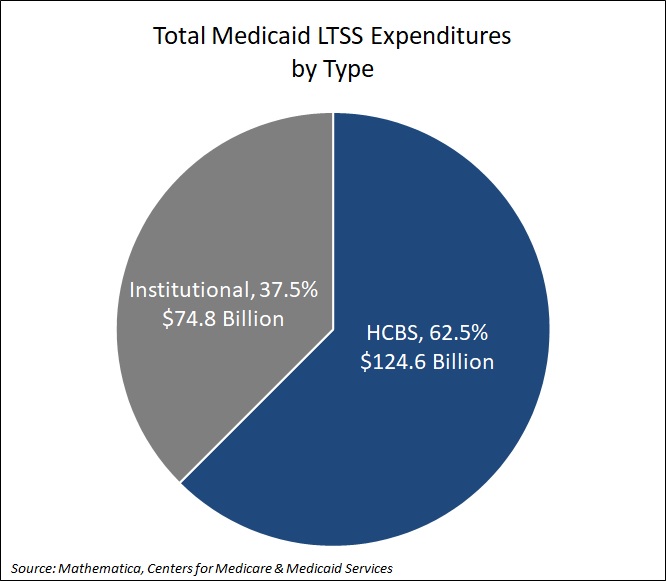
Medicaid LTSS expenditures cover home and community-based services (HCBS), which includes personal care and home health, as well as institutional care, which includes services provided in nursing facilities, intermediate care facilities (ICF) for individuals with intellectual or developmental disabilities (IDD), and mental health facilities. HCBS accounted for 62.5 percent ($124.6 billion) of LTSS expenditures. The remaining 37.5 percent, or $74.8 billion, was directed toward institutional care (see Figure 1).

Figure 1. Medicaid LTSS Expenditures by Type
Total Medicaid LTSS Expenditures by Type

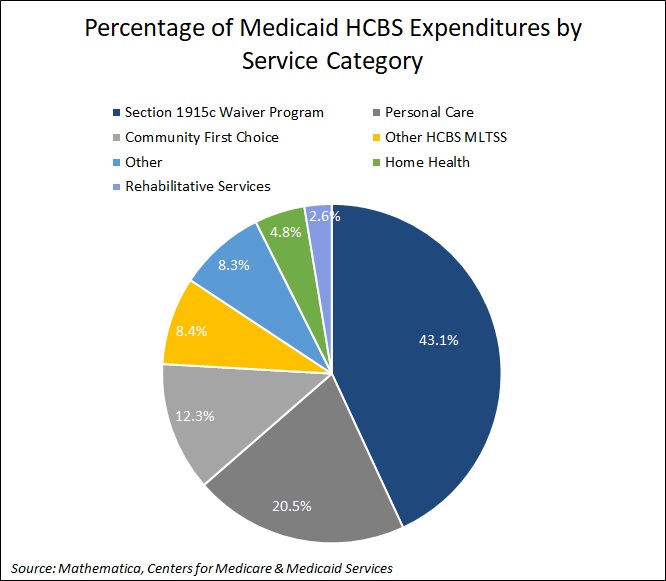
In addition, Section 1915c waiver program spending accounted for 43.1 percent of HCBS expenditures, followed by personal care at 20.5 percent. See Figure 2 for additional breakouts.

Figure 2. Percentage of Medicaid HCBS Expenditures by Service Category
Percentage of Medicaid HCHS Expenditures by Service Category

Nursing facilities accounted for the largest percentage (78.2 percent) of institutional care spending. See Figure 3 for additional breakouts.

Figure 3. Percentage of Medicaid Institutional Expenditures by Service Category
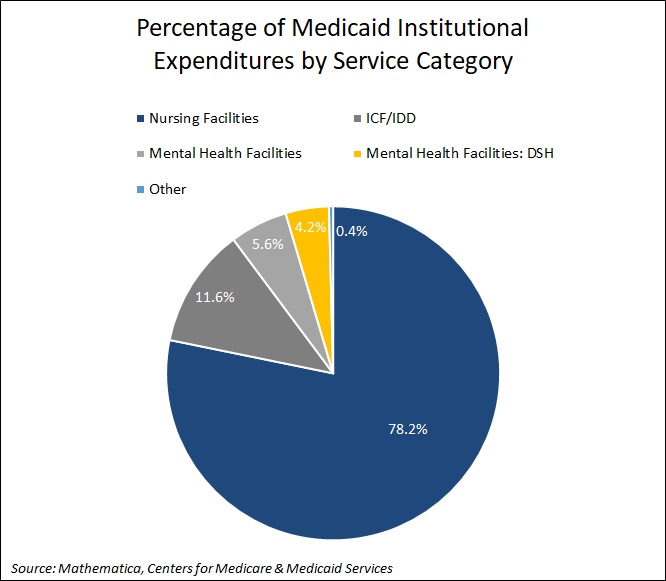
Percentage of Medicaid Institutional Expenditures by Service Category

Medicaid LTSS spending accounted for 33.5 percent of total Medicaid spending in FY 2020. States with the highest LTSS as a percentage of total Medicaid spending were North Dakota at 54.9 percent, Wyoming at 54 percent, Kansas at 51.2 percent, Minnesota at 49.6 percent, and Nebraska at 45.2 percent. Texas and Virginia did not report spending for Medicaid LTSS programs, which comprise a substantial share of total LTSS expenditures in those two states (see Table 1).

Table 1. Medicaid LTSS Expenditures by State
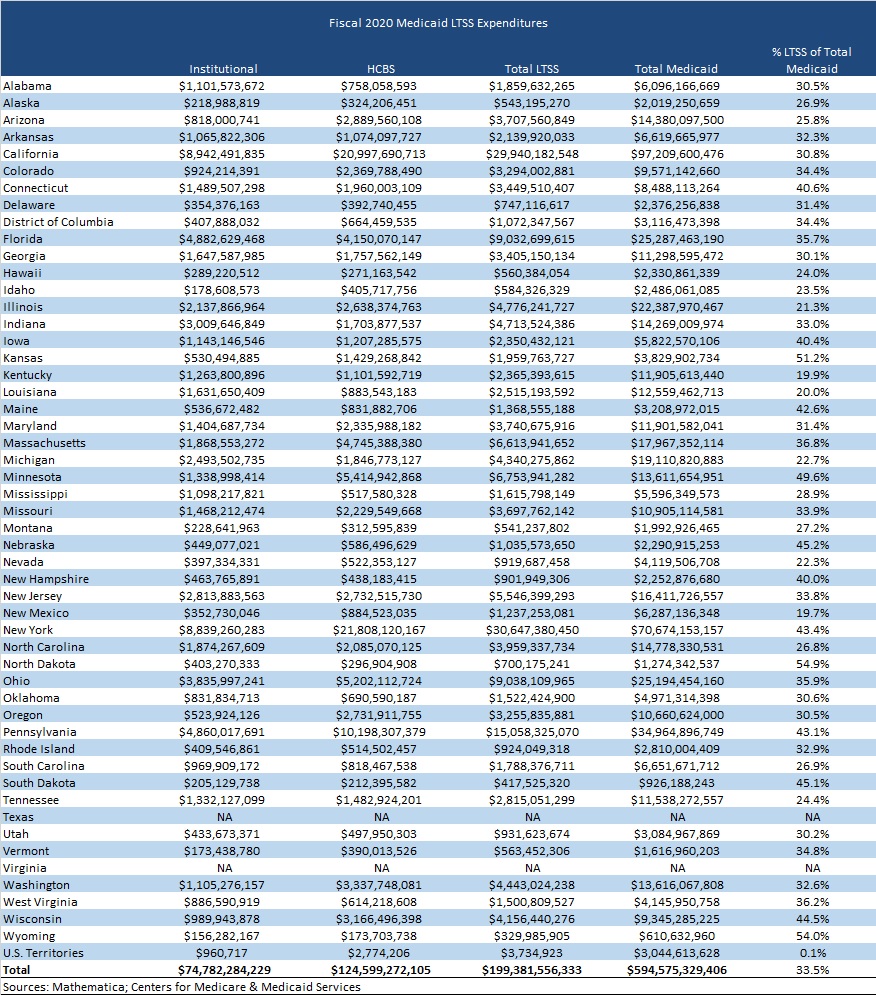
Fiscal 2020 Medicaid LTSS Expenditures

LTSS spending per resident also varied from state to state. On average, states spent $679 Medicaid LTSS dollars per state resident in FY 2020. Utah had the lowest Medicaid LTSS expenditures per state resident at $284, whereas the District of Columbia had the highest at $1,554 per resident.

Medicaid MLTSS Expenditures

Medicaid managed long-term services and supports (MLTSS) spending totaled $57 billion in FY 2020. HCBS accounted for $35.7 billion and institutional care accounted for $21.3 billion. As more states adopted and extended their Medicaid managed care programs, MLTSS spending grew 750 percent from FY 2008.

In FY 2020, 25 states had operational MLTSS programs. Of these, nine were Financial Alignment Initiative (FAI) capitated model demonstrations for dual eligible members. New York, Pennsylvania, Florida, and California accounted for 58 percent of total MLTSS spending nationally, with New York representing 23 percent of total national MLTSS expenditures. Three states—Idaho, Texas, and Virginia—did not report MLTSS spending (see Figure 4).

Figure 4. States with MLTSS programs, FY 2020
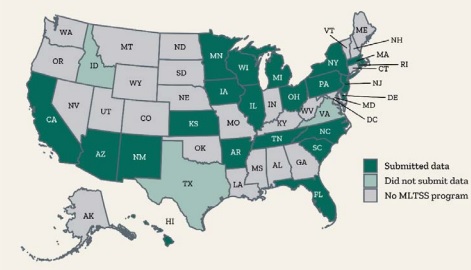
MTLSS data by state
Source: Mathematica

Iowa had the highest share of MLTSS expenditures as a percentage of total Medicaid LTSS expenses in FY 2020 at 95 percent. Arizona and Kansas followed at 94 percent and Hawaii at 74 percent. The national average was 29 percent. At the lowest end were South Carolina at 4 percent and Rhode Island at 12 percent, both of which are fee-for-service states. Michigan followed at 14 percent.

Contributing Factors to LTSS Expenditures

The COVID-19 public health emergency, which includes the first six months of the pandemic that started in March 2020, had a major effect on LTSS expenditures in FY 2020. Many residents in long term care facilities are covered by Medicaid and disproportionately experienced the most COVID-19 deaths. States began to implement various policies to address the impact of COVID-19 among Medicaid LTSS users. This includes modifying utilization limits for covered services and increasing payment rates for certain institutional services and HCBS.

As mentioned earlier, Texas and Virginia did not report Medicaid LTSS expenditures, which undercut the national total. Other factors that affect the reliability of Medicaid LTSS data include changes in state MLTSS expenditure reporting methods, and changes in state Medicaid LTSS policies and programs.

Link to Report

Note: CMS hired Mathematica to conduct the research, which used CMS-64 Medicaid expenditure report data, state-reported MLTSS data, Money Follows the Person (MFP) worksheets for proposed budgets, CMS 372 data on section 1915(c) waiver program population groups, and U.S. Census data to compile the report
Cut to the Point: A Summary of 2024 Star Rating Cut Point Changes

This week, our In Focus section highlights a white paper that Wakely, a Health Management Associates company, released in October 2023, “Cut to the Point: A Summary of 2024 Star Rating Cut Point Changes”. The paper reviews 2024 Medicare Star Rating data, including the Star Rating Technical Notes, which the Centers for Medicare & Medicaid Services (CMS) released October 13, 2023.

The data summarizes how Medicare Advantage Organizations (MAOs) performed on various quality measures during the 2022 measurement year and serves as an indication of changing Medicare Advantage spending in 2025 as a result of changes in Medicare Advantage Prescription Drug (MA-PD) Overall Star Ratings. The publication of the 2024 Star Rating Technical Notes provided an opportunity for Wakely to analyze measure-level cut point changes. This paper looks at the latest cut point changes to determine how the Tukey Outlier Deletion methodology and changes in the overall quality performance have affected Star Rating cut points.

Link to White Paper

Wakely will also host a webinar, Stars and Strikes: 2024 Star Ratings and the Impact of Tukey, at 2:30 pm ET on November 14, 2023. The webinar will cover the recently released 2024 Star Ratings, including an analysis of the expected impact on 2025 Medicare payments. Attendees should expect to hear discussions about the latest program changes and resulting impact on the contract-level star ratings, including implementation of the Tukey outlier deletion methodology. In addition, Wakely colleagues will cover the upcoming changes to the Star Rating program and discuss their potential impact on Medicare Advantage Organizations.

For questions, please contact our Wakely experts below.

Florida releases procurement for statewide Medicaid prepaid dental program

This week, our In Focus section reviews the Florida Statewide Medicaid Prepaid Dental Program invitation to negotiate (ITN) released October 6, 2023, by the Florida Agency for Health Care Administration (AHCA). Contracts will serve 4.4 million Statewide Medicaid Managed Care (SMMC) members.

Background

The Florida Statewide Medicaid Prepaid Dental Program is a full-risk capitated dental program, which began rolling out by groups of regions in December 2018. The incumbent statewide Medicaid dental plans are DentaQuest, Liberty, and MCNA Dental.

Florida also is reprocuring its traditional managed medical assistance (MMA) program and managed long-term care program under SMMC. Awards for Medicaid managed care organizations (MCOs) are expected in February 2024.

ITN

Florida intends to award contracts to at least two plans. One of AHCA’s goals is to contract with plans that will support the HOPE Florida: Pathways to Prosperity initiative, which focuses on community collaboration between the private sector, faith-based community, not-for-profits, and government entities to break down traditional community silos. Through this program, AHCA seeks to:

  • Improve oral health outcomes by implementing a quality continuum
  • Enable personalized oral healthcare, particularly for people with special needs
  • Strengthen the network of dental providers
  • Integrate medical and dental care

In addition to the services currently provided, dental plans will cover authorized hospital outpatient and ambulatory surgery center (ASC) services as part of the new contracts. Plans will cover ancillary medical services provided secondarily to dental care in an ASC or outpatient hospital setting when medically necessary.

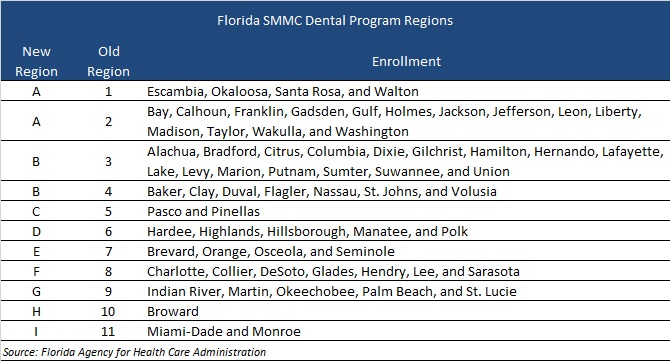
Dental plans will continue to operate statewide across all regions. Capitation rates for Medicaid and dually eligible members, however, are set regionally. Rates for medically necessary procedures are set at a statewide level. The new contracts will consolidate the 11 regions into nine as shown in the table below.

Florida SMMC Dental Program Regions

Timeline

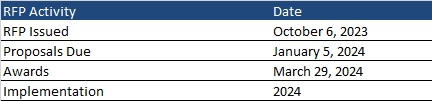
Responses are due January 5, 2024, and notification of intent to award is anticipated to be released on March 29, 2024. Contracts will run from the execution date in 2024 through 2030.

RFP Activity / Date

Evaluation

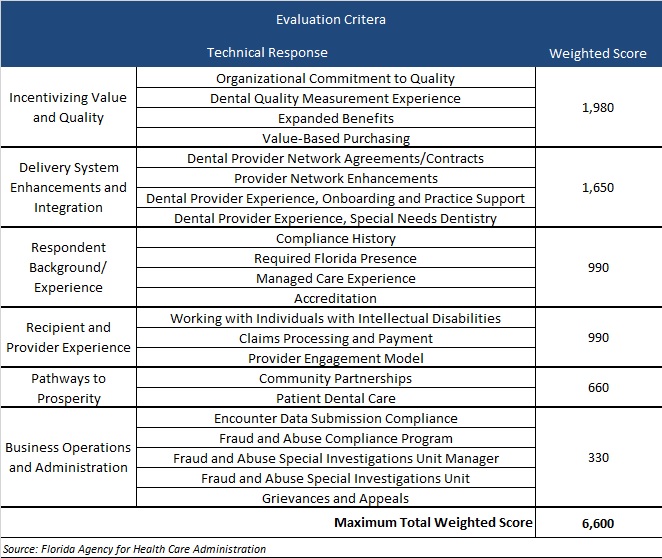
Technical proposals will be scored using a total weighted score of 6,600, as shown in the table below.

Evaluation Criteria

Link to RFP

Kansas releases KanCare, CHIP Medicaid managed care RFP

This week, our In Focus section reviews the KanCare Medicaid capitated managed care request for proposals (RFP), released October 2, 2023, by the Kansas Department of Health and Environment and Department for Aging and Disability Services. The program covers approximately 520,000 beneficiaries and is worth $4.1 billion. New contracts would begin January 2025.

KanCare Background

KanCare is the state’s Medicaid managed care program, covering both traditional Medicaid and Children’s Health Insurance Program (CHIP) members. In all, KanCare covers approximately 320,000 children, 79,000 parents and pregnant women, 59,000 individuals with disabilities, and 54,000 individuals ages 65 and older.

Managed care organizations (MCOs) provide statewide integrated physical health, behavioral health, and long-term services and supports. Covered services include nursing facility care and home and community-based services, as well as Medicaid-funded inpatient and outpatient mental health and substance use disorder services and seven Section 1915(c) HCBS waiver programs.

Kansas is not currently an expansion state. While the governor’s 2024 budget plan called for Medicaid expansion, lawmakers rejected the proposal during the last legislative session.

In 2022, the state legislature delayed the procurement until 2023 to ensure that it occurred after the gubernatorial election and extended current MCO contracts through 2024.

RFP

Kansas expects to select three MCOs. The RFP includes a renewed focus on integrated, whole-person care, workforce retention, and accountability measures for the MCOs. The state lists the main goals for the KanCare procurement as:

  • Improve member experience and satisfaction
  • Improve health outcomes by providing integrated, holistic care with a focus on the impacts of social determinants of health
  • Reduce healthcare disparities
  • Expand provider network and direct care workforce capacity and skill sets
  • Improve provider experience and encourage provider participation in Medicaid
  • Increase the use of cost-effective strategies to improve health outcomes and the service delivery system
  • Leverage data to promote continuous quality improvement

Timeline

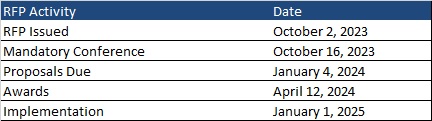
A mandatory pre-bid conference will take place on October 16, 2023. Proposals are due January 4, 2024, with awards expected April 12, 2024. Contracts will be effective January 1, 2025, through December 31, 2027, with up to two one-year renewal options. Following is the timeline leading up to implementation.

RFP Activity / Date

Current Market

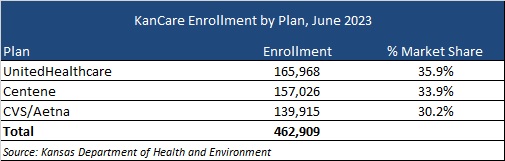
Incumbents are Centene, CVS/Aetna, and UnitedHealthcare. A breakdown of market share by enrollment as of June 2023 can be seen in the table below. Other insurers have already cited their interest in bidding for the new contracts.

KanCare Enrollment by Plan

Link to RFP

Impact of a federal government shutdown on healthcare programs and services

HMA is releasing an agency-by-agency analysis of the impacts on several key healthcare programs and services in the event of the potential federal government shutdown in the coming days. As of September 27, 2023, the U.S. Congress has not approved any of the twelve appropriations bills for FY 2024 or a continuing resolution (CR) that would maintain federal funding at the FY 2023 level for a specified period of time into FY 2024 while Congress continues negotiating. If the shutdown is not averted before the deadline, look for a LinkedIn live at 10am Monday, October 2 to discuss the ramifications on the U.S. healthcare system. Go to the HMA LinkedIn page to watch.

Resources for Medicaid 1115 Waivers: creating new programs for justice-involved individuals

HMA created a comprehensive series of webinars discussing the potential for using 1115 demonstrations to expand and improve healthcare services for the justice-involved population. Replays of the webinars and other justice-involved healthcare resources are now available.

What’s next for 1115 Waivers in your organization?

If your organization or state agency is ready to create new initiatives to improve carceral healthcare delivery and facilitate smoother transitions back into communities, HMA can help. Our consultants bring unparalleled expertise in Medicaid policy and correctional health as well as a deep understanding of the unique needs of this population. We have the operational knowledge and experience with technology and digital health solutions – and the ability to collect and analyze the right data to drive meaningful improvements in equity and access to care.

If you have questions or want to discuss options, please contact any of the speakers from the series:

  • Linda Follenweider, Managing Director, Justice Involved Services
  • Tonya Moore, Senior Consultant
  • Margaret Tatar, Managing Principal
  • John Volpe, Principal
  • Julie White, Principal 
  • Michael DuBose, Principal
  • Rich VandenHeuvel, Principal
  • Bren Manaugh, Principal
  • Caitlin Thomas-Henkel, Principal
  • Jon Rubin, Principal

Register today for HMA’s 6th annual conference on Trends in Publicly Sponsored Healthcare, Oct. 30-31 in Chicago. The event will feature the session, Medicaid and Individuals in Carceral Settings: Improving Coordination, Managing Transitions. Register for the conference.

CMS AHEAD model offers flexible framework for state-led total cost of care initiatives

This week, our In Focus section reviews the new States Advancing All-Payer Health Equity Approaches and Development (AHEAD) Model, which the Centers for Medicare & Medicaid Services (CMS) Center for Medicaid and Medicare Innovation (the Innovation Center) announced on September 5, 2023. AHEAD is the third major model that the Innovation Center has introduced to its payment portfolio since July, clearly signaling that CMS has transitioned from conducting its internal review to laying the groundwork for action on approaches that will be tested over the next decade.

CMS views this model as the next iteration of earlier total cost of care (TCOC) models that were designed and tested in three states—Maryland, Vermont, and Pennsylvania. The AHEAD model includes several important updates based on its experience with these earlier models. For example, the AHEAD model is designed to be scalable in multiple states. Although it most certainly will be adapted to state-specific markets, landscapes, and provider needs, CMS intends to apply a consistent framework across participating states.

Additionally, though Medicare has been involved in formulating some state-level total cost of care initiatives, the AHEAD model promises specific investments in primary care and enhanced member engagement to support all-payer movement toward patient-centered care.

AHEAD Model Parameters

The goal of the AHEAD Model is to improve population health and health equity in states that apply and that CMS selects for participation. CMS plans to select up to eight pilot states, each eligible to receive up to $12 million to support statewide implementation over a six-year period. States will be accountable for constraining overall growth in healthcare expenditures. Requirements centered on health equity mirror other CMS policies and are integrated throughout the model.

The model focuses heavily on strengthening primary care. The primary care AHEAD component includes Medicare reimbursement for care management, a commitment to align with ongoing Medicaid transformation efforts, and expectations for primary care practices to achieve certain goals on quality measures.

The investments in primary care are paired with global budgets for hospitals. Participating hospitals will receive a fixed payment that will include both Medicare fee-for-service and Medicaid. States will need to ensure participation among other payers, including at least the state employee health plan, Marketplace Qualified Health Plans, or other commercial payers in the state or sub-state region. Other payers will have the option to pay participating hospitals based on a global budget.

All-Payer Health Equity Approaches and Developments (AHEAD)

Source: https://www.cms.gov/files/document/ahead-infographic.pdf

The model will be in operation 2024−2034, and three cohorts will be to accommodate variation in readiness among participating states and providers. The first cohort pre-implementation period is scheduled to begin in summer 2024, and the performance period is scheduled to begin as soon as January 2026. CMS expects to release additional details in fall 2023.

AHEAD Opportunities and Considerations

The AHEAD Model will need significant gubernatorial leadership and possibly from state legislators, depending upon the particular state’s related healthcare laws, and the model does provide flexibility for interested states and relevant stakeholders to develop programs that are adaptable to their needs.

Health Management Associates (HMA) experts have identified the following list of policies and considerations that states; hospitals, health systems, and provider organizations; other payers, including employers; and other stakeholders will need to bear in mind when determining whether to participate in the program.

  • States will need to describe their partners and provide an assessment of their readiness to implement the AHEAD model. CMS will expect states to address whether they have legislation in place related to primary care investment and/or cost growth. Potential participating states should be able to describe their vision for population health improvement and primary care transformation, a proposed strategy for hospital and primary care provider recruitment, a plan for Medicaid and multi-payer alignment, and their current population health and health equity activities. Interested states will need early input from hospitals and health systems, providers, and other payers to define, develop, and implement a model that accommodates their healthcare landscape.
  • States will develop a Medicaid hospital global budget methodology that must have CMS approval. Medicaid hospital global budgets must be implemented in the first performance year. CMS will develop a standardized Medicare fee-for-service (FFS) hospital global budget methodology, that also accommodates critical access hospitals (CAHs).
  • CMS will set the parameters for quality measurement, but states will have significant flexibility to establish the metrics that will be applied for accountability and bonus purposes. CMS will use the current CMS hospital quality programs as the basis for determining eligibility for a health equity improvement bonus. CAHs will have a similar opportunity. States will work with CMS to set quality measures for participating primary care practices.
  • The model requires a statewide health equity plan. Additionally, participating hospitals will need to create their own health equity plans in alignment with statewide priorities and activities.
  • Participating states will need to generate savings. CMS will identify state-specific factors to determine the level of expected savings. All-payer cost growth targets include Medicare FFS, Medicare Advantage, Medicaid, commercial, state employee health plans, and marketplace-qualified health plans. States will also be responsible for performance on all-payer and Medicare FFS primary care investment targets.

The HMA team will continue to evaluate the AHEAD model as more information becomes available. We also can answer questions about the Innovation Center’s other recently announced models and the linkages with new Medicare and Medicaid regulations. For more information, contact our experts below.

Value-Based Payment (VBP) – Is your organization ready?

Utilization of value-based payment (VBP) strategies continues to expand, with states and health plans recognizing the benefits of rewarding outcomes over volume. This includes population based VBP initiatives intended to address disparities. Health Management Associates (HMA) is at the center of these initiatives, supporting payers with development and implementation, as well as supporting providers through the transition from a traditional FFS model to maximizing reimbursement through effective care delivery, supported by the necessary administrative infrastructure and resources. As our clients in health care communities move forward with alternative payment models, we have developed tools and strategies to achieve the essential milestones to successful implementation.

Milestone 1: Provider Readiness Assessment

Successful planning for the transition to VBP begins with an understanding of where your organization is starting from, informing the targeted milestones associated with each providers’ unique strengths and challenges.

Understanding that success under VBP models requires adjustment of both clinical and administrative practices, HMA has created an assessment tool that considers the programmatic, financial, and technology resources necessary for VBP implementation. In addition to the ability to leverage these resources, organizations must have the capacity for VBP components such as cost reporting, revenue cycle management, and real time risk monitoring through the collection and analysis of data.  

VBP planning

“With VBP on the horizon for our organization, HMA helped us to determine our readiness and to devise a strategy to remediate gaps in operations in order to be successful with the new payment model.”

– Tamara Player, CEO; Polara Health, AZ

Milestone 2: Strategy Development and Change Management

A change in reimbursement methodology requires organizational realignment of administrative and programmatic approaches. Assessing and supporting staff through these changes is a key milestone for success. Activities in which HMA have supported our clients include:

Creating leadership and governance buy-in

Preparing the Board and Staff for VBP

Aligning mission and vision with payment models and accountability metrics

Project Management, including development and monitoring of implementation plans

Cross functional team support

Milestone 3: Data Collection and Reporting Capabilities

The ability to collect and report meaningful outcomes is at the core of successful engagement in VBP. Following an assessment of current capabilities, HMA has supported provider organizations in maximizing electronic health record and other data system capabilities to capture data essential for reimbursement, as well as increasing analytic capabilities that are essential for monitoring outcomes to ensure programs can pivot when data indicates outcome achievement may be at risk. Activities include:

Technology and Data Enterprise configuration to support analytics and reporting

Creating real-time access to data

Benchmarking current outcomes against proposed VBP metrics

Alignment of current framework to payer metrics

Creation of internal clinical leadership infrastructure to support proactive monitoring and action in response to data

Milestone 4: Business Office and Finance

All aspects of an organization’s financing can be impacted by transitions in payment methodology, including cash flow, impacting cash on hand for capital and other expenses. Anticipating these changes and adjusting accordingly are key to readiness for VBP and importantly, mitigating risk during the transition. HMA can assist with:

Assessing organizational ability to accept risk

Developing a risk corridor based on organizational readiness

Negotiating alternative payment arrangements with payers

Milestone 5: Clinical Programmatic Approaches under VBP

VBP arrangements provide opportunities for organizations to move closer to the goal of achieving outcomes for their clients, rather than productivity targets and units of service. This includes incorporating approaches that could not receive reimbursement under an FFS model. With this flexibility comes the opportunity to review and adapt clinical approaches and programming, including population specific strategies. HMA is ready to support these efforts through:

Workforce analysis

Re/design of clinical workflows  

Implementation of measurement-based care

Optimization of clinical templates within the EHR to support data collection and reporting

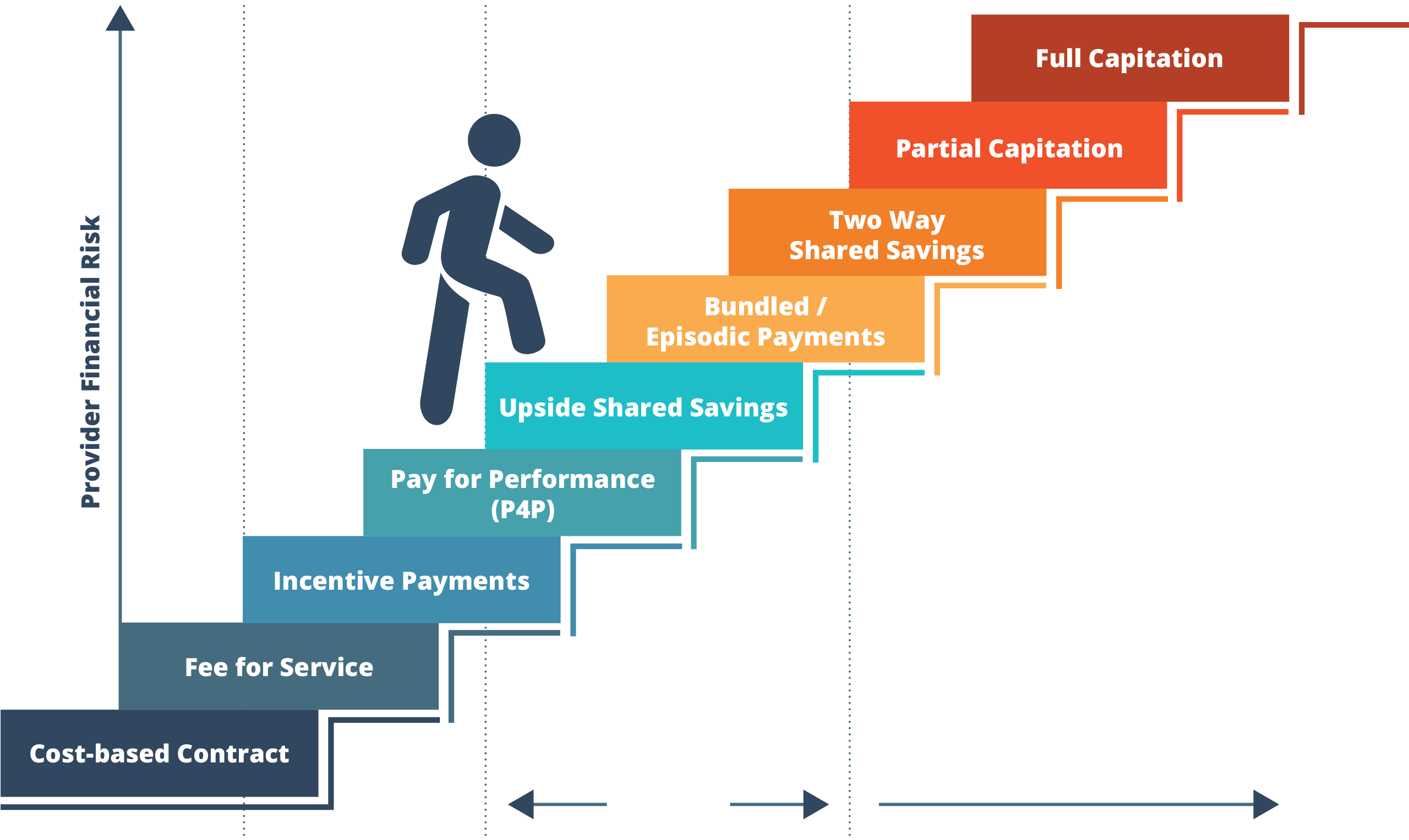
Understanding the opportunities of value-based payment across the continuum of payment models

Provider Financial Risk

While these activities may seem overwhelming, HMA is ready to support your organization to receive reimbursement based on meaningful improvement for your clients through technical assistance and training on each of the core elements outlined above.

New Hampshire releases Medicaid managed care RFP

This week, our In Focus section reviews the New Hampshire Medicaid Care Management (MCM) request for proposals (RFP), which the state’s Department of Health and Human Services released on September 8, 2023. The new contracts will be worth approximately $1.1 billion and will provide full-risk, fully capitated Medicaid managed care services to approximately 190,000 beneficiaries. Implementation will begin September 2024.

MCM Program

The MCM program covers traditional Medicaid, the Children’s Health Insurance Program (CHIP), and the state’s adult Medicaid expansion Granite Advantage Health Care Program. MCM provides integrated acute care, behavioral health, and pharmacy services. Managed long-term services and supports are not included in the program.

Incumbents are AmeriHealth Caritas, Boston Medical Center/WellSense, and Centene/New Hampshire Healthy Families.

RFP

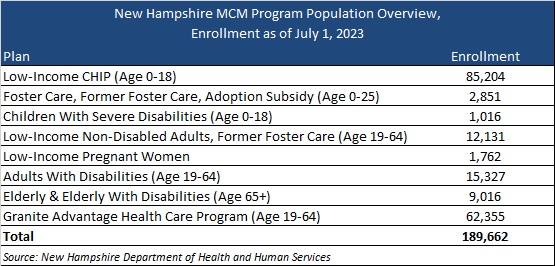
New Hampshire will award contracts to three Medicaid managed care organizations (MCOs). MCOs will cover the populations outlined in Table 1.

Table 1. New Hampshire MCM Program Enrollment as of July 1

New Hampshire MCM Program Population Overview

The state outlines several key areas of focus within the RFP, including introducing a primary care and preventive services model of care—an approach centered on patient-provider relationships and provider-delivered care coordination. The RFP also will have a greater emphasis on priority populations, such as individuals with inpatient admissions for behavioral health diagnoses; children in the child welfare system; babies with low weight or neonatal abstinence syndrome; and people who are incarcerated and eligible for the Community Reentry demonstration program, pending approval from the Centers for Medicare & Medicaid Services.

Timeline

Mandatory letters of intent are due September 18, 2023, and a mandatory conference will take place September 21. Proposals are due October 30, 2023. An award date has yet to be announced, but the state contract discussions with selected MCOs will occur November 20−December 11, 2023. Contracts will run from September 1, 2024, through August 31, 2029.

Evaluation

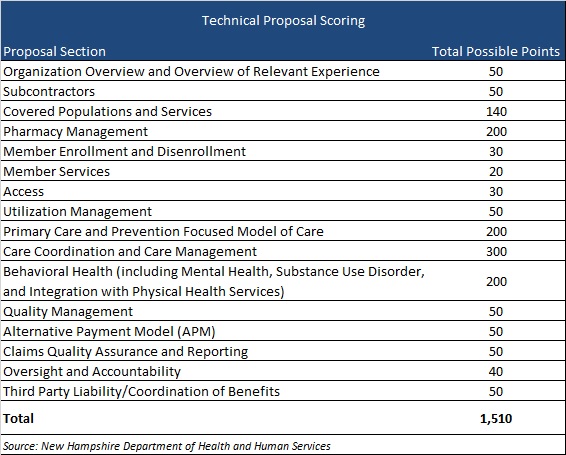
MCOs will be scored on their ability to meet a possible 2,160 points. The technical proposal comprises a possible 1,510 points, as shown in Table 2.

Table 2. Technical Proposal Scoring

Technical Proposal Scoring

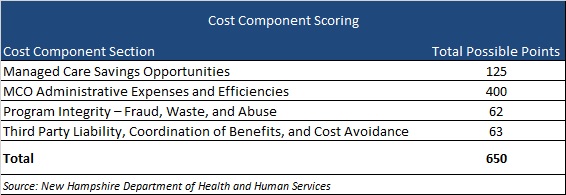
The cost component sections will make up 650 points, as shown in Table 3.

Table 3. Cost Component Scoring

Cost Component Scoring

Link to RFP

Virginia releases Cardinal Care Medicaid managed care RFP

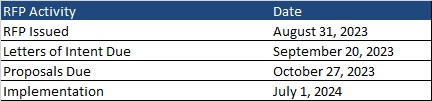
This week, our In Focus section reviews the request for proposals (RFP) for the Virginia Cardinal Care Medicaid managed care program, released by the Department of Medical Assistance Services (DMAS) on August 31, 2023. The RFP includes a new foster care specialty plan. Implementation is scheduled to begin July 1, 2024.

Cardinal Care

Cardinal Care launched in January 2023 as a rebranding of the state’s Medicaid program and Children’s Health Insurance Program—Family Access to Medical Insurance Security Plan (FAMIS). Cardinal Care Managed Care (CCMC) will combine the state’s existing Medallion 4.0 managed care program for traditional Medicaid and the Commonwealth Coordinated Care Plus (CCC Plus) managed long-term services and supports (MLTSS) program to serve 1.9 million Medicaid managed care members.

RFP

The state will award statewide fully capitated, risk-based contracts to a maximum of five health plans. A separate foster care specialty plan contract will also be awarded to one of the winners. If none of the plans win the separate foster care specialty program, all plans awarded a CCMC contract will be required to cover all services.

Selected plans will provide acute care, behavioral health, and MLTSS services to all Virginians who are eligible for Medicaid, including children, adults, and pregnant women in low-income households; children and adults with disabilities; low-income older adults; and individuals receiving LTSS, including dual-eligible populations. The foster care plan will cover children in foster care, individuals younger than 26 years old who were formerly in foster care, and children eligible for adoption assistance.

The RFP contains several targeted focus areas and changes to the managed care program. For example, it emphasizes improvements to the state’s behavioral health care system and improved health outcomes through a focus on health-related social needs such as housing stability and food insecurity for CCMC members.

Contracted plans will be required to operate a dual-eligible special needs plan (DSNP) in Virginia.

Market

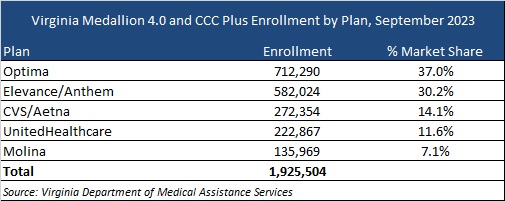
CVS/Aetna, Elevance/Anthem, Sentara/Optima Health, Molina, and UnitedHealthcare are the current incumbents. Effective with the new RFP, DMAS intends to reassign most CCMC members as part of an enrollment process. At present, Optima holds the largest market share of enrollment at 37 percent, followed by Anthem at 30 percent.

Virginia Medallion 4.0 and CCC Plus Enrollment by Plan

Timeline

Letters of intent are due by September 20 and proposals are due on October 27. As previously mentioned, new contracts will begin July 1, 2024. Contracts will have a six-year initial term, with two two-year renewal options. Award dates have not been announced.

RFP Activity / Date

Evaluation

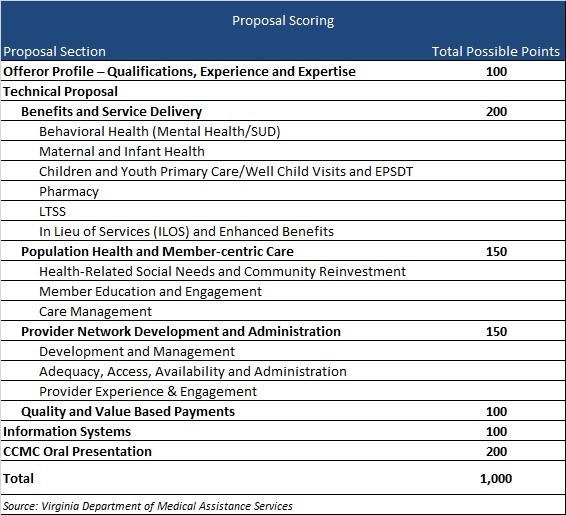
Plans will be awarded up to 1,000 points during the evaluation process based on the categories shown below.

Proposal Scoring

Link to RFP

Ready to talk?