Blog

CMS takes major step forward in Medicare drug price negotiation program

This week’s In Focus centers on the U.S. Department of Health and Human Services (HHS) August 29, 2023, announcement of the first 10 prescription medications that will be subject to price negotiation for Medicare coverage. This week, Health Management Association (HMA) experts offer their perspective on what this change means and what to expect next.

Background

Medicare was granted the authority to negotiate prescription drug prices through the Inflation Reduction Act (IRA), which the president signed into law on August 16, 2022. HHS, acting through the Centers for Medicare & Medicaid Services (CMS), will lead negotiations and enter into agreements with manufacturers for these products, negotiating a maximum fair price (MFP) for each selected drug in the Medicare program. HHS is required to negotiate on a certain number of drugs each year: 10 drugs in 2026, 15 drugs in 2027 and 2028, and 20 drugs in 2029 and subsequent years. Up to 60 drugs could be negotiated by 2029. Manufacturers that are noncompliant will face an excise tax that could far exceed the cost of drugs sold over time and civil monetary penalties.

Medicare Drug Negotiations: The Latest Development

Since passage of the IRA, CMS has been working to establish the regulatory infrastructure and policies to support implementation of Medicare’s new drug price negotiation authority on an expedited timeline. Guidance on the approach the agency will take in negotiating MFPs, along with other provisions of the act, has been issued.

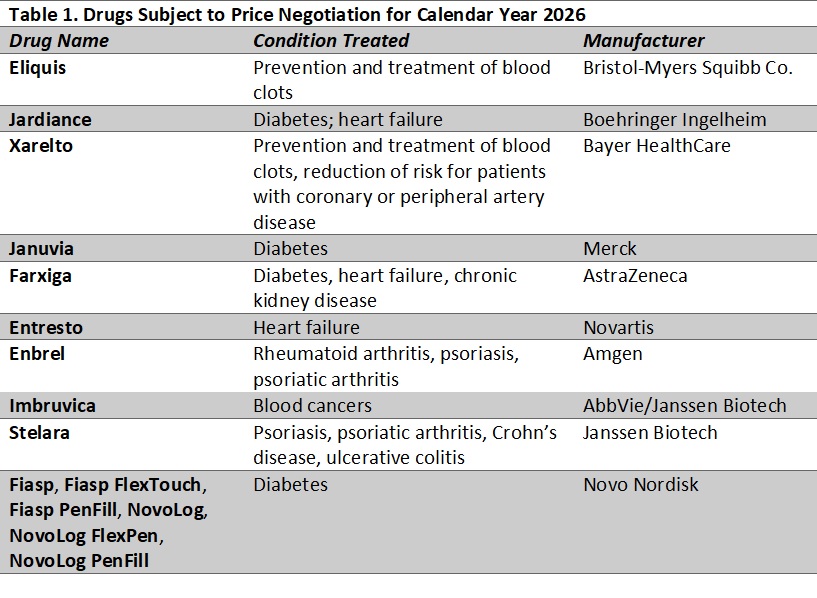
With this week’s action, CMS will begin the first round of negotiations. Table 1 lists the drugs CMS has identified for the first round of negotiations. Products selected for negotiation (with prices effective in 2026) are medications that represent the highest spending in the Part D drug benefit, excluding products with generic or biosimilar competition as well as certain orphan drugs and other products that qualify for a small biotechnology exemption.

Alongside CMS’s announcement, HHS’s Office of the Assistant Secretary for Planning and Evaluation (ASPE) released its analysis of prescription drug use and out-of-pocket spending for each of the 10 drugs for all Part D enrollees and separately by whether an enrollee receives the low-income subsidy (LIS). The report also examines demographic information about enrollees who use the selected products.

Drugs subject to price negotiation for calendar year 2026

Takeaways

The products selected were largely in line with initial modeling that Moran Company analysts and others performed, but with some surprises. Variation from earlier projections could be expected for a number of reasons, including:

  • The June 2022−May 2023 data CMS used were not generally available to outside analysts, and it is clear that several products had spending increases (whether because of volume or price increases) relative to prior years that moved them up the list.
  • Some higher spending products have seen generic or biosimilar competitors launch, making them ineligible for selection for negotiation.
    • For the top 30 products identified in previous dashboard data, at least 10 have evidence of generic or biosimilar competition.
  • CMS’s decision to treat multiple products together for purposes of negotiations also affected the products included on the list.
  • For a few other products, it is still unclear how CMS decisions were made.

What to Expect Next

The drug negotiation policy is highly controversial and is the subject of litigation that could delay the process. If litigation does not affect the timeline for implementation, manufacturers of selected drugs have until October 1 to agree to negotiate and provide initial information to CMS. If a manufacturer opts out of the negotiations, the company must pay either an excise tax or withdraw all its products from the Medicare and Medicaid programs. CMS and participating companies will then meet to discuss manufacturer submissions, and CMS will receive information from other stakeholders. Several listening sessions will take place.

CMS will make initial price offers by February 1, 2024. After a counteroffer process, negotiations may continue into the summer of 2024, but final determinations will be made by August 1, 2024. CMS plans to publish any agreed-upon negotiated prices for the selected drugs by September 1, 2024. Those prices take effect starting January 1, 2026.

In addition to the short-term impact on prices for specific drugs, several questions about the potential effects of the policy are worth monitoring over the long-term:

  • How will research and development of new products and trends in the type of products prioritized change as a result of these policies?
  • How will the policies affect pricing for competitor products and the launch prices of products in the future?
  • Beyond the Medicare population, for whom the prices are directly applicable, how will MFPs affect negotiations on costs and supplemental rebates for other payers. including state Medicaid programs, state employee programs, drug purchasing pools, and commercial insurers?
  • Will negotiations affect the design of standalone Prescription Drug Plans (PDPs) and Medicare Advantage PDPs.

The IRA included several other changes to the Medicare program, which we discussed in a previous In Focus.

CMS rolls out new initiatives: key updates to watch this fall

In this week’s In Focus, we continue our review of Medicare developments from this summer and look ahead at Centers for Medicare & Medicaid Services (CMS) activities to watch for this fall.

CMS ACO Strategy Update

In a July 31, 2023, Health Affairs Forefront blog, CMS leaders outlined the agency’s plan to further accelerate the growth and accessibility of accountable care organizations (ACOs), especially for beneficiaries in rural and underserved areas. The article signals the agency’s continued commitment to increasing participation in ACOs and future policy and model initiatives that CMS could undertake to achieve those goals.

In particular, the CMS Innovation Center is considering testing models and features to support Medicare Shared Savings Program (MSSP) ACOs in increasing investments in primary care. This initiative might include piloting ACO-based primary care models that provide prospective payments in an effort to reduce reliance on fee-for-service (FFS), support innovations in care delivery, and increase access to advanced primary care in underserved communities.

CMS leaders point to a second component of its ACO strategy in the calendar year (CY) 2024 proposed Medicare Physician Fee Schedule (PFS) rule. The proposed PFS includes technical updates to the Advance Investment Payment (AIP), which provides financial support for providers who participate in the MSSP. The proposed PFS rule also includes several opportunities for the public to inform CMS’s ongoing ACO work, including considerations for adding higher-risk participation options in the MSSP, ways to better support collaboration between ACOs and community-based organizations to meet health-related social needs, and other initiatives. HMA discussed the PFS changes in an earlier In Focus.

CMS also announced refinements to the ACO Realizing Equity, Access, and Community Health (REACH) Model on August 18. The agency’s three goals in making these changes are to:

  • Increase predictability for model participants (e.g., policies to change certain beneficiary alignment requirements and refinements to eligibility criteria for high-need ACOs
  • Protect against inappropriate risk score growth (e.g., revisions to the risk-adjustment methodology)
  • Advance health equity (e.g., revisions and expansions to the health equity benchmark adjustment)

These topics are of importance to CMS across its model portfolio and are, in part, based on experience the agency has gained in running the ACO REACH model. Below is a summary of several key policy changes that will take effect in 2024. The entire list can be found on the CMS website.

Finally, CMS released the request for applications (RFA) for the Innovation Center’s Making Care Primary (MCP) model previously announced in June. This voluntary model is scheduled to begin in June 2024 and run for 10.5 years. It will have three participation tracks that build upon previous Innovation Center primary care initiatives.

The MCP model is designed to improve care for beneficiaries by supporting the delivery of advanced primary care services. This framework provides a pathway for primary care clinicians who have varying levels of experience with value-based care to gradually adopt prospective, population-based payments while building the infrastructure to improve behavioral health and specialty integration and drive more equitable access to care. CMS is working with Medicaid agencies in eight states—Colorado, North Carolina, New Jersey, New Mexico, New York, Minnesota, Massachusetts, and Washington—to engage in full care transformation across payers, with plans to engage private payers in the coming months.

The RFA provides additional details about the model’s payment, care delivery, quality, and other policies. The application period opens September 4, 2023, and closes November 30, 2023. CMS plans to select participants in winter 2024. Onboarding for participants will take place April−July 2024.

The HMA team continues to review the RFA and is available to assist clients in determining whether this model may be a good fit as well as with assistance in submitting the application.

What to Watch

Comments on the Medicare CY payment rules (home health, end stage renal disease, physician, and outpatient hospital) are due in early fall. CMS will review the comments on each of the proposals and finalize each rule by November 1. Some stakeholders, such as physicians and home health suppliers, may seek congressional action to mitigate payment cuts that CMS has proposed.

In addition, CMS is expected to continue implementing the drug pricing related provisions of the Inflation Reduction Act (IRA). The agency already has released several guidance documents about the process. The list of the first 10 drugs to be negotiated is due to be published September 1, 2023, and manufacturers of selected drugs will have one month to sign agreements to participate in negotiations and provide information for CMS’s consideration in the negotiation process.

The HMA team will continue to evaluate Innovation Center opportunities, CMS payment regulations, and IRA implementation. If you have questions about these topics, contact our experts below.

Arizona releases Medicaid ALTCS-EPD Program RFP

This week, our In Focus section reviews the Arizona Long Term Care System (ALTCS) Elderly and Physically Disabled (EPD) Program request for proposals (RFP), which the Arizona Health Care Cost Containment System (AHCCCS) released on August 1, 2023. The ALTCS-EPD program covers 26,000 individuals, representing approximately 38 percent of the ALTCS managed care population. The remaining ALTCS members are covered under a state-run model through the Department of Economic Security, Division of Developmental Disabilities (DES/DDD) health plans, which provide long-term care (LTC) to individuals with intellectual/developmental disabilities. Contracts for ALTCS-EPD are worth approximately $1.6 billion and will take effect October 1, 2024.

Background

ALTCS is one of the oldest Medicaid managed long-term services and supports (MLTSS) programs in the country, providing integrated physical health, behavioral health, and LTSS to individuals who are 65 years of age or older or who have a disability and require nursing facility level care. Beneficiaries may live in assisted living facilities or receive in-home services. The ALTCS-EPD program covers nearly all Arizonans who are dually eligible for Medicaid and Medicare statewide. Winning managed care organizations (MCOs) also will be required to implement companion Medicare Advantage Fully Integrated D-SNPs (FIDE SNPs) effective January 1, 2025.

Market

Members receive coverage through Banner-University Family Care, Mercy Care Plan, and UnitedHealthcare, depending on their geographic service area (GSA). MCOs will bid on all three GSAs and indicate their order of preference to be awarded. AHCCCS will not award the South GSA only or the North GSA only. At present, in the South region, Mercy Care Plan serves Pima County only. Under the new RFP, AHCCCS will not make an award specific to Pima County; rather the MCO will serve all seven counties within the South GSA.

North, Central, South

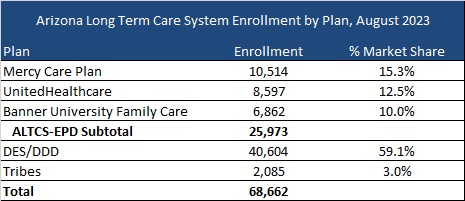
Together, the plans cover 25,973 individuals (see below).

AZ LTC system enrollment

(United and Mercy administer DDD plans.)

Timeline

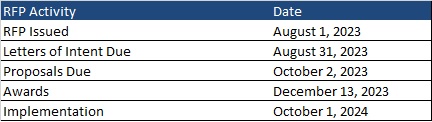
Intent to bid forms are due by August 31. Proposals are due October 2, and awards are expected to be announced December 13. As noted previously, implementation is scheduled to begin October 1, 2024.

RFP Activity / Date

RFP Link

CMS finalizes 2024 hospital inpatient rule with mixed reimbursement changes

This week, our In Focus section continues analysis and insights from Health Management Associates (HMA) and its affiliate The Moran Company on recent Medicare payment and policy developments. Today, we review the policy changes that the Centers for Medicare & Medicaid Services (CMS) released August 1, 2023, for the fiscal year (FY) 2024 Medicare Hospital Inpatient Prospective Payment System (IPPS) and Long-Term Acute Care Hospital (LTCH) final rule (CMS-1788-F).

This year’s IPPS final rule includes several important policy changes that will alter hospital margins and change administrative procedures beginning October 1, 2023. More specifically, the IPPS rule increases payments to hospitals, enhances the wage index policy for rural hospitals, reduces Medicare disproportionate share payments, and modifies the New Technology Add-on Payment (NTAP) program.

Key provisions of the FY 2024 Hospital IPPS and LTCH Final Rule

We highlight four policies that will significantly affect Medicare beneficiaries, hospitals, health systems, payers, and manufacturers:

  1. The annual inpatient payment update
  2. Medicare disproportionate share hospital (DSH) payments
  3. Hospital wage index adjustments
  4. NTAP policy changes

Hospital market basket update and the inpatient standardized amount

CMS’s Medicare 2024 IPPS final rule will increase payments to acute care hospitals by an estimated $2.2 billion from 2023. The primary driver of this increase is CMS’s 3.1 percent increase in the annual update to inpatient operating payment rates. The update is the sum of the hospital market basket update of 3.3 percent and a statutorily required 0.2 percentage point reduction for productivity growth.

HMA/Moran analysis: Between the time CMS released the 2024 proposed IPPS rule and the final rule, the inpatient payment update for 2024 increased to 3.1 percent from 2.8 percent. This spike occurred because of the effects of an increase in estimated inflation on the cost of a standard basket of hospital goods (hospital market basket) throughout 2022 and 2023. Although economy-wide inflation slowed in mid-2023, inflation was higher in late 2022 and early 2023—the period in which the market basket is measured for the final rule.

For beneficiaries, increasing payment rates eventually will lead to a higher Medicare inpatient deductible and greater out-of-pocket costs for many other services. For hospitals and healthcare systems, payers, and manufacturers, a payment increase of 3.1 percent falls below economy-wide inflation (5−6 percent in recent months).

Despite the publicized 3.1 percent payment update for 2024, after factoring in various policy adjustments the actual change between 2023 and 2024 to inpatient payments per case will be roughly 2 percent. The primary reason per-case payments will increase only 2 percent is a budget-neutrality adjustment that CMS finalized for 2024 to account for hospital wage index reclassifications. This adjustment will reduce payments to all hospitals by more than 1 percent to neutralize the added program spending associated with payments to hospitals that choose to reclassify into higher paying wage index areas. The final rule states, “[T]he geographic reclassification budget neutrality adjustment is significantly larger than in prior years.”

Medicare Disproportionate Share Hospital Payments

CMS finalized two Medicare disproportionate share hospital (DSH)-related policies for 2024. First, DSH payments and Medicare uncompensated care payments combined will decrease in FY 2024 by approximately $957 million. Second, CMS finalized its proposal to limit the number of patient days included in the Medicare DSH calculation to only those days when the patient’s Medicaid Section 1115 Demonstration health insurance covers inpatient hospital services or the patient’s premium assistance program covers 100 percent of the premium cost for patients who buy health insurance that covers inpatient hospital services, if the patient is ineligible for Medicare Part A.

HMA/Moran analysis: CMS’s $957 million reduction in DSH and uncompensated care payments stems from the agency’s estimate of the percentage of individuals without insurance in the United States. Between the 2024 proposed and final rules, CMS estimates the percentage of individuals without insurance will decline from 9.3 percent to 7.7 percent in 2023 and from 9.2 percent to 8.5 percent in 2024. As a result, the pool of uncompensated care dollars available to hospitals for 2024 was reduced from roughly $6.7 billion to $5.9 billion.

CMS’s estimated decline in the rate of uninsured beneficiaries is somewhat surprising given the common projection that Medicaid enrollment will drop following the end of Medicaid’s COVID-19 related continuous coverage policy. However, HMA/Moran colleagues believe state-level Medicaid enrollment changes will vary in the year ahead. Consequently, hospitals located in states where levels of Medicaid enrollment are sustained will benefit from CMS’s uninsured rate estimates and hospitals in states where Medicaid enrollment drops will not.

With regard to the Section 1115 demonstration related DSH policy, hospitals located in states that have not expanded Medicaid under the Accountable Care Act and instead rely on Section 1115 Demonstrations to expand health coverage, are likely to receive lower DSH payments. In addition to the Medicare DSH payment adjustments, reductions in the Medicaid DSH program are scheduled to begin October 1, 2023. The $8 billion reduction in FY 2024 is the first time CMS has planned to make cuts in the program.

Hospital Wage Index Adjustments

CMS finalized two wage index policies for FY 2024. First, CMS will extend the low-wage index hospital policy, which boosts the wage index of hospitals in geographic areas with low wages relative to other areas. Second, CMS finalized a policy to begin including labor data from urban hospitals that choose to reclassify as providers in rural areas to maximize their payment into the calculation of rural wage index areas.

HMA/Moran analysis: These two wage index policies for FY 2024 will increase payment to rural hospitals. Under the first policy, hospitals with wage indexes below 0.8667 (the 25th percentile across all hospitals) will automatically receive an increase in their wage index and therefore their payment rates for inpatient cases. Under the second policy, the inclusion of labor data for geographically urban hospitals that choose to reclassify into rural wage index areas within the calculation of state-level rural wage indexes and the state-level rural floor will increase payments to rural hospitals in many states. The overall impact of both proposed wage index policy changes for FY 2024 will be an increase in inpatient payment rates for rural hospitals.

New Technology Add-On Payments (NTAP)

Citing the increased number of applications for NTAP over the past several years and noting the need for CMS staff to have time to review and analyze the applications, CMS finalized two changes to the NTAP application requirements. First, CMS will require that all applicants have a complete and active U.S. Food and Drug Administration (FDA) market authorization request in place at the time of NTAP application submission, if not already FDA approved. The FDA’s acceptance letter will serve as proof of a full and complete application. In addition, CMS proposes to move the FDA approval deadline from July 1 to May 1, beginning with applications for FY 2025.

HMA/Moran analysis: The stated aim of these CMS policy changes is to “increase transparency, facilitate public input, and improve the review process.” As a result of these modifications, products will need to be on the market longer before the NTAP payment begins, and fewer products will be eligible for the three full years of NTAP payments. Taken together, hospitals will have a shorter NTAP payment window for most products. The further tightening of FDA application and approval requirements runs counter to the efforts of various stakeholders to establish more flexible or additional NTAP application windows.

HMA and The Moran Company collaborate to monitor legislative and regulatory developments in the inpatient hospital space and assess the impact of inpatient policy changes on the hospital sector. HMA’s Medicare experts interpret and model inpatient policy proposals and use these analyses to help clients develop their strategic plans and their comments on proposed regulations. Moran replicates the methodologies CMS uses in setting hospital payments and models alternative payment policies to help support stakeholder comment letters and strategies. Moran also assists clients with modeling diagnosis-related group reassignment requests and to support innovative NTAP applications.

For more information or questions about the policies described above, contact our experts below.

CMS plans to enhance incentives for Medicare providers in accountable care arrangements

This week, our In Focus section is the second in a summer series of analysis and insights from Health Management Associates (HMA) on recent Medicare payment and policy developments. This week we dig deeper into the potential changes to the Medicare Shared Savings Program (MSSP) that were included in the 2024 Medicare Physician Fee Schedule proposed rule released earlier this month. Specifically, we highlight the impact these modifications could have on financial and operational decisions across the healthcare industry.

The proposed rule builds on the changes CMS finalized last year with the goal of increasing participation in the MSSP. The recommended changes are designed to appeal to more clinicians who treat a high proportion of underserved individuals. CMS estimates that the proposal will increase participation in MSSP by 10−20 percent. These changes are technical in nature and include:

  • Expanding the physician lookback window for beneficiary assignment (also known as the pre-step) for primary care service to 24 months from 12 months
  • Adding a third step to the claims-based beneficiary assignment methodology to recognize the role of nurse practitioners (NPs), physician assistants (PAs), and clinical nurse specialists (CNSs) in delivering primary care services
  • Modifying the definition of “assignable beneficiary” to reflect the changes above

The overall impact of these modifications, which augment the existing methodology, is to increase the number of beneficiaries assigned to accountable care organizations (ACOs) under MSSP. More assignable beneficiaries could mean:

  • More ACOs will meet minimum beneficiary requirements.
  • Changes in assignable population may affect the hierarchical condition category (HCC) risk scores for the national assignable population, as well as the factors used to normalize risk scores and other risk adjustments.
  • Changes in population distribution within regions that result in adjustments to ACO market share, benchmark trends, and update factors.

For ACOs participating in multiple programs, expanded assignment rules for MSSP, combined with the MSSP superseding other programs in assignment, may have downstream effects on programs in terms of assignment and performance.

Following is a more detailed explanation of the proposed changes.

24-Month Lookback for Primary Care Services

Extending the lookback for primary care services with a physician to 24 months from 12 will allow providers to capture additional primary care services codes related to the COVID-19 public health emergency (PHE) for benchmark and performance years. If the assignment window for a benchmark or performance year includes any month(s) during the PHE, then the additional primary care services codes must apply to all months in that window.

Three-Step Assignment Process

CMS plans to update its current two-step claims-based beneficiary assignment process to a three-step process, which would be effective for performance years beginning January 1, 2025. The proposed third step only would apply to beneficiaries who do not meet the pre-step requirement contingent upon whether they received at least one primary care service during the expanded window for assignment from an ACO-participating primary care or specialist physician or received at least one primary care service from a non-physician ACO healthcare professional during the 12-month assignment window.

Assignable Beneficiary Definition

The proposed rule includes updates to the definition of an assignable beneficiary to reflect the expanded 24-month lookback window for assignment and the new third step of a primary care service within the 12-month assignment window from a non-physician ACO professional (i.e., NP, PA, CNS).

The table below compares the current and proposed assignment processes.

Comparison of the Two- and Three-Step Processes

StepCurrent Two-Step Beneficiary Assignment ProcessProposed Three-Step Beneficiary Assignment Process
Pre-Step Requirement  to Identify Assignable BeneficiaryCMS identifies beneficiaries who received at least one primary care service from a primary care physician or a physician with a primary specialty designation participating in an ACO in the 12-month lookback window. CMS determines whether these individuals are eligible for assignment to an ACO.CMS identifies beneficiaries who received at least one primary care service from a primary care physician or a physician with a primary specialty designation participating in an ACO in the 24-month lookback window.
Step 1 Determine if beneficiaries received the plurality of their primary care services from primary care physicians, NPs, PAs, and CNSs in the participating ACO.No change
Step 2If not assigned in Step 1, determine whether beneficiaries received the plurality of primary care services from specialists in the participating ACO.No change
Step 3Not applicableFor beneficiaries not assigned through Steps 1 and 2:·         Determine if beneficiary received at least one primary care service with a non-physician ACO professional (e.g., NP, PA, or CNS) in the ACO during the applicable 12-month assignment window; AND·         Confirm beneficiary received at least one primary care service with a primary care physician or specialist who is an ACO professional in the ACO and who is a primary care physician or a non-physician ACO professional (i.e., NP, PA, CNS) during the applicable 12- month expanded window for assignment.

Financial Considerations

The proposed rule outlines that the expenditure lookback will remain 12 months. With a 24-month primary care service window and a 12-month expenditure lookback, ACO revenues could change. As a result, minimum savings rates could drop and the per-member per-month amount might change. In addition, the extended lookback could affect the regional average risk-adjusted spending, expenditure thresholds, and more.

Enhanced MSSP Track

CMS is seeking comment on a new track in MSSP with a higher level of risk and potential reward (e.g., somewhere between 80−100 percent). The purpose of the new MSSP track is to encourage ACOs that would not have otherwise participated in MSSP because of limitations on upside rewards. Higher potential rewards may also incentivize ACOs to develop new strategies, focus on specialty care integration, and reduce healthcare fragmentation to achieve savings.

CMS is seeking comment on the following:

  • Policy/model design elements that could be implemented so that CMS could offer a higher risk track without increasing program expenditures
  • Approaches to protect ACOs that serve high-risk beneficiaries from expenditure outliers and reduce incentives for ACOs to avoid high-risk beneficiaries
  • The impact that higher risk sharing could have on care delivery redesign, specialty integration, and ACO investment in healthcare providers and practices

The HMA Medicare and value-based care experts will continue to analyze these proposals alongside other policy and reimbursement changes that affect Medicare providers. We have the depth and breadth of expertise to assist with tailored analysis, to model policy impacts, and to support clients that intend to draft comment letters on this proposed rule. For more information or questions about these policies and other changes in the 2024 Medicare physician fee schedule proposed rule, contact our experts below.

Medicare’s 2024 proposed payment rules: opportunities and policy changes for physicians and hospitals

This week’s In Focus section is the first in a summer series of analysis and insights from Health Management Associates (HMA) on recent Medicare payment and policy developments. Our series kicks off with a big-picture take on the slew of regulations the Centers for Medicare & Medicaid Services (CMS) has released over the past two weeks. In future posts, we will dig deeper into several of the planned changes to highlight their potential impact on financial and operational decisions across the healthcare industry.

In July, CMS published three significant proposed Medicare rules for calendar year (CY) 2024: the Physician Fee Schedule (PFS) Proposed Rule, which includes proposed changes to the Medicare Shared Savings Program (MSSP); a proposed remedy to 340B-acquired drug payment policy for CY 2018−2022; and the Hospital Outpatient Prospective Payment System and Ambulatory Surgical Center Payment System (OPPS-ASC) Proposed Rule. Comments on these proposals are due to CMS in early September.

HMA’s experts note several trends across these three Medicare payment regulations:

  • Health equity remains a significant focus of CMS and the Biden Administration.
  • The agency is expanding its coverage of behavioral health services under Medicare and enhancing payment and access for these services.
  • The long-term focus of CMS continues to be the transition toward value-based care.
  • Medicare is incrementally moving toward supporting care that is delivered where and how Medicare beneficiaries prefer, for example moving away from reimbursing largely for face-to-face services and supporting reimbursement for telehealth services in more situations.
  • CMS is creating pathways for reimbursement for a broader range of clinicians and caregivers who are addressing Medicare beneficiaries’ care needs.
  • CMS continues its efforts to improve hospital price transparency with policies aimed at encouraging providers to publicly report data.

Medicare policy experts at HMA and is affiliate, The Moran Company, summarize details on these regulations below. These colleagues work collaboratively to monitor legislative and regulatory developments in the physician, 340B, and outpatient and ASC policy arenas and to assess the impact of changes in these reimbursement systems. HMA’s Medicare experts interpret and model policy proposals and use these analyses to assist clients in developing their strategic plans and comment on proposed regulations. Moran annually replicates the methodologies CMS uses to set payments and recommends alternative payment policies to help support its clients’ comments on various rules and to help clients understand the impact of specific policies. In addition, HMA’s other partner companies, including Wakely and Leavitt Partners, are monitoring these issues from their unique perspectives.

For more information or questions about the policies described below, please contact Amy Bassano ([email protected]), Zach Gaumer ([email protected]), Andrea Maresca ([email protected]), Kevin Kirby ([email protected]), or Rachel Kramer ([email protected]).

Medicare Physician Fee Schedule Proposed Rule (CY 2024)

The Medicare PFS establishes payments and policies for physicians and other healthcare professionals. By statute, PFS payment rates will decline by 1.25 percent from CY 2023 to 2024. However, when coupled with budget neutrality adjustments for other policy changes, the proposed PFS conversion factor will decline by 3.34 percent. The impact of this reduction will vary by physician specialty.

Behavioral Health Services: CMS implements provisions in the Consolidated Appropriations Act (CAA), 2023, which would allow Medicare coverage and payment for the services of marriage and family therapists (MFTs) and mental health counselors (MHCs). CMS proposes to classify addiction counselors who meet certain requirements as MHCs. The rule outlines how these practitioners can enroll in Medicare and bill for services starting January 1, 2024. CMS is establishing new codes and payment for psychotherapy for crisis services and proposed refinements to Health and Behavior Assessment/Intervention codes to allow additional practitioners to bill for these services and to increase the valuations of timed behavioral health services. CMS seeks comment on ways to expand access to behavioral health services. CMS specifically is looking for information on digital therapies, remote physiologic monitoring, and remote therapeutic monitoring services.

Evaluation and Management (E/M) Office Visit Services: CMS proposed to implement separate payment for an add-on billing code to account for the additional resources associated with primary care or ongoing care related to a patient’s single serious or complex chronic condition. This complexity-based add-on code may be reported with all office and outpatient (O/O) and evaluation and management (E/M) visit level codes, and CMS estimates it will be reported for 38 percent of all O/O E/M visits initially. This estimate contributes to a significant portion of the relative value unit (RVU) budget-neutrality adjustment applied to the conversion factor. CMS also requests comments on evaluating E/M services more regularly and comprehensively including ways to improve data collection and methodologies to establish more timely improvements and accurate payments for E/M and other services.

Telehealth: CMS proposes several additions to the list of covered telehealth services and implements the various telehealth provisions included in CAA 2023, such as allowing the patient’s home to serve as an originating site. This provision would expand the scope of permitted telehealth providers and allow rural health clinics and federally qualified health centers (FQHCs) to provide telehealth services until December 31, 2024. In addition, CMS proposes opportunities for teaching physicians and medical residents to continue to use telehealth services to meet the supervision requirements via telehealth.

Caregiver Training Services: CMS proposed a new payment for practitioners who train caregivers to implement a treatment plan and support patients with diseases like dementia.

Payment for Community Health Integration, Social Determinants of Health (SDOH) Risk Assessment, and Principal Illness Navigation Provided by Social Workers, Community Health Workers, Care Navigators, and Peer Support Specialists: CMS is establishing opportunities for these services to be paid separately and account for the specific resources necessary to provide these services.

Dental Services: Although Medicare generally is prohibited from paying for dental services, CMS proposed to pay for certain dental services related to the treatment of head and neck cancers and when linked to other covered services used to treat cancer.

Discarded Drugs: The proposed rule continues the implementation process for a statutory requirement that drug and biological manufacturers refund amounts paid for discarded single-use prescription drug vials. CMS provides the list of products for which refunds would have been due in 2021, and the number of products included is expected to increase over time.

340B and Outpatient Offset Proposed Rule

In the 340B proposed rule, CMS proposed retrospective payments to 340B hospitals for incorrect payments made in CYs 2018−2022. After extensive litigation and a Supreme Court ruling, CMS will return to paying 340B hospitals for drugs using the formula of the average sales price (ASP) +6 percent, rather than the formula of the ASP −22.5 percent. In this proposed rule, CMS proposes to correct past underpayments to 340B hospitals by making lump sum payments to affected 340B hospitals. These retrospective payments are estimated to amount to $9 billion, and we anticipate payments will be made to hospitals at the beginning of CY 2024.

In addition, CMS proposed a corresponding prospectively budget neutrality offset to the 340B spending increase that will reduce hospital outpatient payments for non-drug outpatient services by 0.5 percent each year beginning in 2025. Specifically, CMS proposes to maintain this reduction until $7.8 billion in spending has been offset, which it estimates will take 16 years. The impact of this policy on the hospital industry will be significant and will create groups of winners and losers. Winners will include 340B hospitals, despite the fact that the outpatient offset will also affect their payment rates. Losers will include non-340B hospitals, particularly if their service mix is heavily focused on outpatient surgical services. Overall, the industry will observe a reduction in outpatient spending of roughly $300 million to $600 million per year for each of the 16 years the policy is in place.

Hospital Outpatient Proposed Rule (CY 2024)

Under the OPPS proposed rule, CMS would update payments for outpatient and ASC services by 2.8 percent in CY 2024 from CY 2023. This change will increase payments for hospital outpatient services by $1.9 billion and for ASC services by $170 million. In addition, if the 340B proposal is finalized, the 0.5 percent payment offset would not reduce CY 2024 OPPS payment rates but would begin reducing outpatient payments in CY 2025.

Behavioral Health: CMS proposes to establish the Intensive Outpatient Program (IOP) for behavioral health services provided to Medicare beneficiaries. The IOP proposal addresses one of the main gaps in behavioral health coverage in Medicare and promotes access to related services. CMS will define IOP as a distinct outpatient program of psychiatric services provided to individuals with acute mental illness or substance use disorder. Services could be provided at hospital outpatient departments, community mental health centers, FQHCs, and RHCs. Further, the agency proposed to establish two IOP service codes for each provider type—one for days with three services per day and another with four or more services per day.

Price Transparency: CMS proposes to increase the rigidity of its price transparency reporting program in an effort to improve hospital industry compliance with the reporting of hospital charge data to the public.

The HMA Medicare team and reimbursement experts will continue to analyze these proposal alongside other policy and reimbursement changes that affect Medicare providers. We have the depth and breadth of expertise to assist with tailored analysis, to model policy impacts, and to support clients that intend to draft comment letters on this proposed rule.

CMS releases report on nonemergency medical transportation in Medicaid

This week, our In Focus section reviews the Centers for Medicare & Medicaid Services (CMS) report to Congress on Non-emergency Medical Transportation (NEMT) in Medicaid, released June 20, 2023. CMS found that approximately 3 million to 4 million Medicaid beneficiaries used NEMT services annually between 2018 and 2021 and made recommendations related to Medicaid coverage of NEMT for medically necessary services.

Background

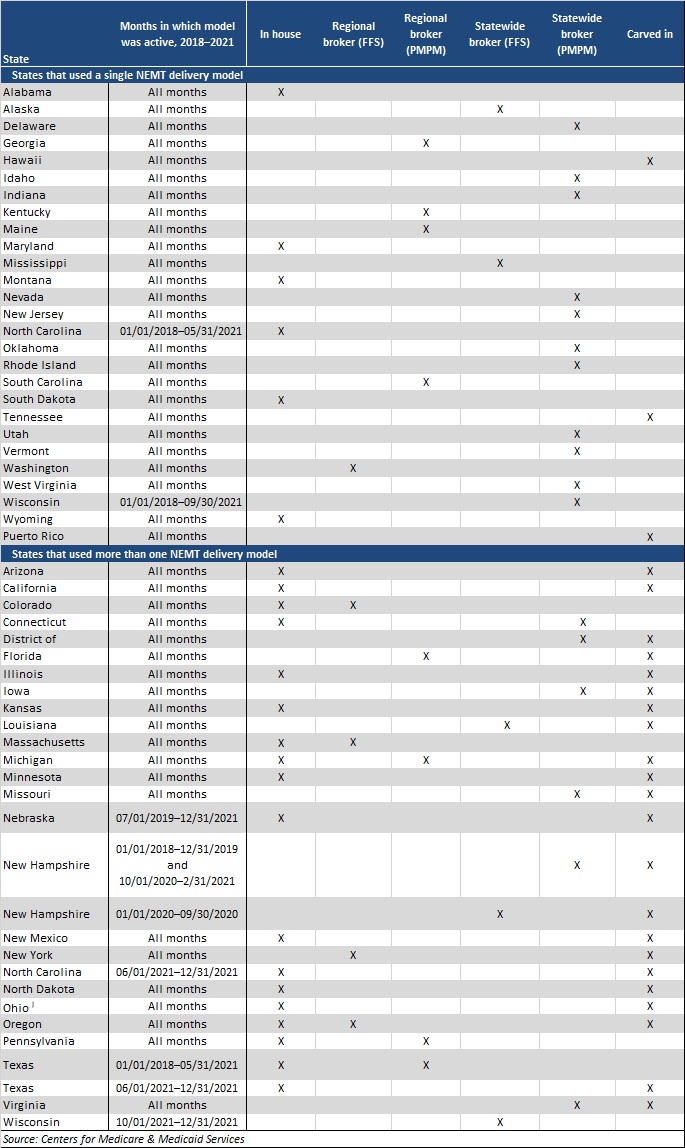
NEMT includes transportation services not limited to public transport, taxis, personal vehicle transport, non-emergency ambulances, air transport, and transportation network companies. Medicaid, unlike private insurers and Medicare, covers NEMT for any covered medical service for beneficiaries with an unmet transportation need. NEMT program administration varies from state to state and can be on a fee-for-service basis, carved out with third-party transportation brokers, or carved into the Medicaid risk-based managed care contracts. Under the Consolidated Appropriations Act, 2021, which made NEMT a statutory requirement, HHS must conduct and submit an analysis of nationwide Medicaid NEMT services to Congress. An initial report was submitted in June 2022.

Table 1. NEMT Service Delivery Models by State, 2018−2021

NEMT data 2018-2021

CMS conducted the analysis using Transformed Medicaid Statistical Information System (T-MSIS) data for calendar years 2018−2021. The analysis covered the number and percentage of Medicaid beneficiaries using NEMT, the average number of NEMT ride days, the types of medical services beneficiaries accessed when using NEMT, monthly trends in use of NEMT versus telehealth services before and during the COVID-19 public health emergency (PHE), and a comparison of the volume of NEMT services used by delivery model and state.

The T-MSIS data has some limitations and may not capture all Medicaid NEMT provided to beneficiaries due to differences in billing practices across states and providers. For example, if states claim certain medical service expenditures as administrative expenditures, T-MSIS will not capture it. Further, the number of ride days undercounts the total number of NEMT rides, as beneficiaries may receive multiple NEMT rides in a day. Because of these and other limitations, the data represents a subset of the NEMT that the Medicaid program covers.

Findings

Approximately 3−4 million Medicaid beneficiaries used NEMT annually in 2018−2021, representing 4−5 percent of Medicaid beneficiaries. Alaska, Minnesota, Arizona, Maine, and Wisconsin had the highest percentage of Medicaid beneficiaries who used NEMT, with up to nearly 11 percent in Alaska in 2021.

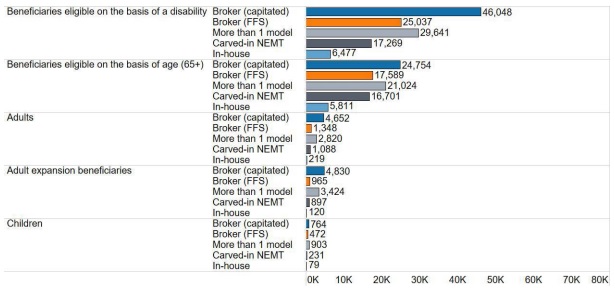
States that used a capitated broker model to deliver NEMT saw the highest use of these services. However, on average, states that used in-house NEMT delivery model claimed a relatively high percentage of NEMT expenditures as administrative expenditures, and NEMT administrative expenditures generally are not captured in the T-MSIS data.

Figure 1. Number of NEMT Ride Days per 10,000 Beneficiaries, by Delivery Model and Beneficiary Subgroup, 2021

NEMT ride dates
Source: The Centers for Medicare & Medicaid Services

Medicaid enrollees with the highest NEMT usage rates included individuals in Money Follows the Person, receiving Section 1915c home- and community-based services, dually eligible for Medicare and Medicaid, and aging adults and people with disabilities. In addition, Medicaid members with certain physical and mental health conditions and those with a substance use disorder had higher rates of usage compared with the average Medicaid members. Medicaid enrollees in remote areas also used NEMT at the highest rates.

During the COVID-19 PHE, rates of NEMT dropped from 3.9 million beneficiaries, or 5 percent of all Medicaid members in 2019, to 3.5 million (4 percent) in 2020 and 3.3 million (4 percent) in 2021. In 2019−2020, the total number of annual NEMT ride days dropped by 37 percent, from 81.3 million to 53.1 million, but increased by more than 4 percent (to 55.5 million) in 2021. On average, the monthly number of NEMT ride days in 2021 remained about 30 percent below pre-PHE levels, and the number of beneficiaries using NEMT remained 23 percent below pre-PHE levels. The COVID-19 PHE caused telehealth to sharply increase. Throughout the PHE, telehealth was used more frequently than NEMT to access certain services.

Recommendations

CMS found that public transit was rarely used for NEMT, even though more than one-third of beneficiaries live in large, urban areas. In the report, CMS recommends that states should find opportunities to improve operations between NEMT and public transit networks to better coordinate services for beneficiaries.

CMS also recommends that states further examine the role of NEMT in improving the use of timely preventive care. Beneficiaries used NEMT to access preventive services at the highest rate of all service types examined. The analysis found some evidence that use of NEMT increases access to preventive services and is cost-effective, implying that increasing the uptake of NEMT may confer cost savings to states and the federal government.

Finally, CMS recommends that states increase awareness of the NEMT benefit. Medicaid beneficiaries’ knowledge of the benefit is low. CMS urges states to work with health plans and providers to share information with beneficiaries about the availability of NEMT.

Link to report

CMS releases national healthcare expenditure and enrollment projections through 2031

This week, our In Focus section reviews the projected healthcare expenditure and enrollment data from the Centers for Medicare & Medicaid Services (CMS) Office of the Actuary, published June 14, 2023. The Office of the Actuary provides annual updates to historical and projected National Health Expenditure data on Medicare, Medicaid, CHIP, and other public insurance programs, as well as commercial healthcare insurance.

CMS projects that the average annual growth for national healthcare spending from now through 2031 will be 5.4 percent. CMS estimated that the number of insured individuals in the United States was projected to reach a high of 92.3 percent in 2022 and would decrease to 90.5 percent by 2031. CMS projects 93.6 million Medicaid and CHIP members will account for more than $1.2 trillion in annual spending in 2031 and that 76.4 million Medicare beneficiaries will account for more than $1.8 trillion in expenditures that year.  A summary of other key takeaways from the actuarial report follows.

Enrollment Projections

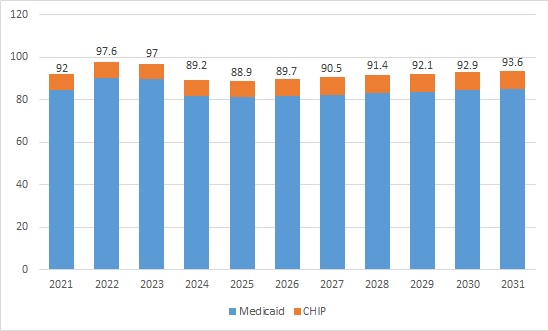
Approximately 92 million people were enrolled in Medicaid and CHIP programs in 2021. Enrollment is projected to have reached a high of 97.6 million in 2022 and is expected to fall between 2023 and 2026 because of Medicaid redeterminations. CMS projects the largest loss in 2024, with 8 million people leaving Medicaid and CHIP that year alone. By 2026, enrollment is projected to hit a low of 89.7 million and start to rise back up in the subsequent years until reaching 93.6 million enrollees in 2031.

Table 1. Historical and Projected Medicaid/CHIP Enrollment (in Millions)

Medicaid CHIP table

Figure 1. Historical and Projected Medicaid/CHIP Enrollment (in Millions)

Medicaid CHIP chart

Medicare enrollment is projected to continue growing steadily. CMS estimates that Medicare beneficiaries totaled 63.6 million in 2022. By 2031, Medicare enrollment is expected to climb to 76.4 million.

Expenditure Projections

Medicaid expenditures are expected to grow by 5 percent on average in 2022−2031. In 2022, the Medicaid annual growth rate was projected to be −2.1 percent. Following the public health emergency unwinding, average expenditure growth would pick up to 5.6 percent in 2025−2031.

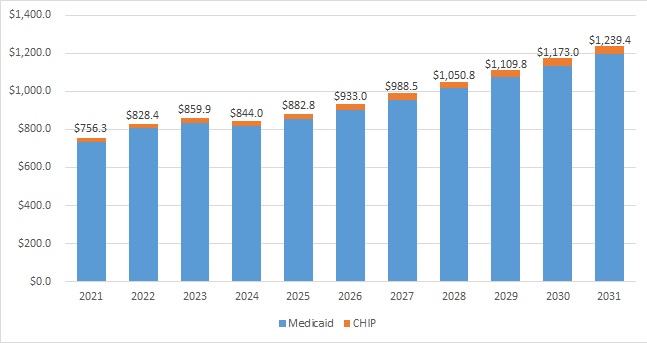
CMS estimated that total Medicaid and CHIP annual spending in 2022 was $828.4 million; by 2031, it is projected to hit $1.2 trillion. For context, private health insurance is projected to reach nearly $2.1 trillion in 2031.

Table 2. Historical and Projected Medicaid/CHIP Expenditures (in Billions)

Medicaid CHIP expenditures

Figure 2. Historical and Projected Medicaid/CHIP Expenditures (in Billions)

Medicaid CHIP expenditures in billions

Medicare spending is projected to grow to more than $1.8 trillion in 2031 from $944.2 million in 2022. During this time, average annual expenditure growth is projected to be 7.5 percent. In 2022, spending growth dropped to 4.8 percent compared with 8.4 percent in 2021 because fee-for-service beneficiaries were using fewer emergency department services and as a result of reinstated payment rate cuts associated with the Medicare Sequester Relief Act of 2022.

Medicaid Expenditure Projections by Category

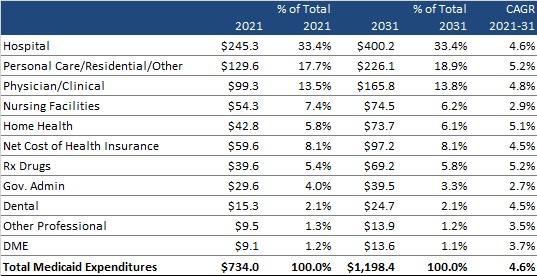
CMS provides a historical and projected breakdown of expenditures by category for Medicaid only (CHIP is bundled with Department of Defense and other public spending). Table 3 summarizes the projected change in annual expenditures for several categories of services and other expenditures. It also shows each category’s percentage contribution to total Medicaid expenditures and the compounded annual growth rate (CAGR) in 2021−2031 for each category of spending. Hospital spending, personal care/residential/other, and physician/clinical expenditures are projected to continue to be the largest contributors to overall Medicaid expenditures, together equaling approximately 65 percent of total expenditures in 2021 and a projected 66 percent in 2031.

Table 3. Historical and Projected Medicaid-Only Expenditures by Category, 2021-2031 (in Billions)

Medicaid-only expenditures

Link to National Health Expenditure Data

To treat residents with OUD, nursing facilities must improve practices and reduce stigma

This week, our In Focus section highlights a Health Affairs Forefront post, “To Treat Residents With OUD, Nursing Facilities Must Improve Practices and Reduce Stigma,” published June 8, 2023. Health Management Associates (HMA) consultants Dina Besirevic, Kamala Greene Genece, Debbi Witham, David F. Polakoff, and Barry J. Jacobs wrote the article.

The HMA colleagues note that two recent healthcare industry trends are converging to change the admission criteria and clinical practices that some skilled nursing facilities (SNFs) use. Driving one movement is the opioid epidemic in which increased prevalence of fentanyl and its medical complications are spurring the need for posthospital discharge SNF admissions. The other stems from the low occupancy rates in many SNFs since the pandemic. As a result, more SNFs are considering filling beds by admitting individuals with opioid use disorder (OUD) for the first time.

In many respects, this a positive development. The need for skilled nursing care, such as medication-assisted treatment (MAT), for individuals with OUD has never been greater. A March 23, 2023, US Drug Enforcement Administration public safety alert reported that recently analyzed fentanyl samples in 48 of the 50 states had been adulterated with xylazine, or “tranq,” a veterinary sedative added to prolong an opioid high. According to the Substance Abuse and Mental Health Services Administration (SAMHSA), extensive xylazine use commonly causes severe skin wounds requiring weeks of intravenous antibiotics and skilled wound care to prevent amputations. Providing well-managed post-acute care for these patients could lead to improved outcomes.

But admitting and treating individuals with OUD now poses multiple challenges for SNF staffs and administrators. Many of these healthcare workers lack training in OUD pharmacological and support care. Some have stigmatizing attitudes toward individuals with OUD. To address these concerns, SNFs across the country have developed different practice models. Examples include:

  • Laguna Honda in San Francisco trains its staff to understand OUD, recognize the signs of resident opioid use, and work closely with nearby OUD providers to provide all OUD treatment.
  • At Highbridge Woodycrest Center in the Bronx, NY, the storage and administration of MAT is managed by the SNF staff through a collaborative relationship with a community-based provider, Bronx Care Health System, which prescribes the medications and then delivers them to the facility.
  • At other SNFs, SNF physicians and nurse practitioners prescribe buprenorphine with consultation as needed from community-based OUD providers.

HMA’s experts in OUD and SNFs are working collaboratively to assist SNFs interested in exploring the clinical, financial, and operational opportunities and challenges with this emerging line of business. For questions or inquiries, please contact our experts below.

Link to Health Affairs post.

Takeaways from the early Medicaid unwinding actions

This week, our In Focus checks in on the Medicaid unwinding work and key issues HMA experts are watching as more states resume their normal policies and processes for determining eligibility. A total of 19 states started disenrollments effective for April or May coverage, and 22 additional states plan to start ending coverage this month. States are scheduled to submit the next monthly report by June 8, 2023.

Background

As explained in earlier In Focus articles, (January 12, 2023; November 12, 2022; and April 6, 2022) federal COVID-19 relief laws allowed states to receive higher federal funding for Medicaid as long as the state did not terminate Medicaid coverage for anyone enrolled in Medicaid during the public health emergency (PHE). One result of the continuous coverage policy was sustained growth in Medicaid enrollment; more than 21 million additional individuals were continuously enrolled in Medicaid for up to three years between February 2020 and March 2023. In December 2022, Congress ended the Medicaid continuous coverage policy after March 31, 2023. States were allowed to begin processing redeterminations as early as February 2023 and start disenrolling ineligible individuals as early as April 2023.

Preparations for the Medicaid unwinding have been under way for well over two years. The Centers for Medicare & Medicaid Services (CMS), states, Medicaid health plans, providers, beneficiary advocates, and other interested stakeholders have been working to ensure that the policies, outreach, and assistance are in place to support this massive eligibility renewal and redetermination initiative.

What Do We Know… Or Not Know?

Most of the available forecasts project between 10-15 million enrollees will lose Medicaid coverage. The Health Management Associates (HMA) insurance mix model projects that more than 10 million of the approximately 90 million Medicaid enrollees are at risk for disenrollment. HMA’s model illustrates the variety in state approaches to managing the resumption of eligibility redeterminations as well as key insights related to the differential impact by Medicaid eligibility categories.

  • Based on published information, the number of individuals who were disenrolled from Medicaid in April through May is likely to approach 500,000. In these early days of the unwinding period, HMA experts are closely reviewing the reports and engaging with key stakeholders in individual states. Several issues already are garnering more attention, such as the impact on child enrollment, churn and experiences in states using the extended reconsideration period flexibility, among others. Stakeholders will want to monitor how these and other program nuances evolve over the next year.
  • We do not yet have robust or consistent data from the states that have resumed their normal processes for determining eligibility. States must submit disenrollment reports to CMS each month, and CMS must publish this information. The states are not, however, required to publish this information on their website. While some states have chosen to publish the data or plan to do so, there is no consistent approach to the specific data states post. For example, while most states publishing a state data dashboard are sharing the number of renewals they are processing each month, only slightly more than half also are sharing the number of renewals resulting in coverage terminations.
    CMS is not expected to publish the state data before the end of June. Once this information is available, the state unwinding reports may provide a more comprehensive and consistent picture of enrollment over the next year.

In addition, the total number of “procedural terminations” currently is difficult to determine. Lack of consistent public reporting creates gaps in the data about the number of individuals disenrolled because they did not provide a timely response to the state’s request for more information (or for other procedural reasons). As Medicaid stakeholders know, the procedural disenrollment number is critical because these individuals could still be eligible for the program.

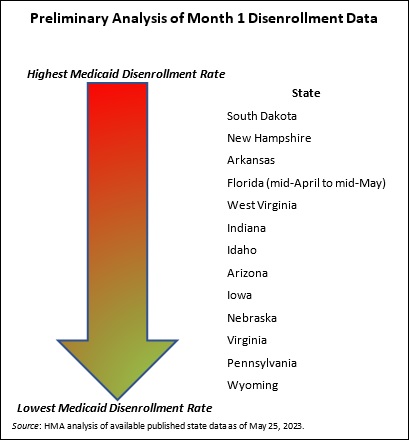
Preliminary Analysis of Month 1 Disenrollment Data
  • Early disenrollment numbers should be analyzed carefully and in the context of the state. As noted earlier, the full eligibility renewal and disenrollment reports are unavailable at this time. We do know, however, that the available data is best analyzed in the context of the state’s unwinding plan (e.g., how the state is sequencing its eligibility reviews). The sequencing, pace, staffing, messaging consistency, partner outreach and assistance, and other factors will result in variation in state experiences. States are actively analyzing the data as the information is released and considering course corrections that may be needed, which could affect enrollment.
  • Ongoing federal and state collaboration is improving preparations and allowing partners to address concerns as they arise. CMS and states have been transparent about the magnitude of the Medicaid unwinding and the fact that challenges will be inevitable throughout this process. The experiences reported by the first tranche of states to begin their unwinding period reinforce those points. They also provide important lessons for states that are or will shortly resume normal eligibility operations.

What to Watch

HMA’s experts are working with states, Medicaid health plans and their partners, providers, and advocacy organizations to identify and implement solutions to some of the known challenges. We also are looking ahead to forthcoming data, qualitative input, and other important developments that may inform federal and state policies and operations beyond the unwinding period.

  • Unwinding trends. Though it is too early to definitively identify trends, HMA experts are monitoring the early state data, and we are prepared to analyze the CMS reports once they are published. We anticipate the CMS published data could be more instructive regarding the impact of the unwinding on enrollment, including states or regions that could benefit from additional outreach and assistance strategies, disproportionate impacts on certain demographic groups, new flexibilities that states may want to consider, and steps that health plans, hospitals and health systems, providers, and other partners could advance.
  • State operational plans. As of late May, CMS officials reported they have not asked any state Medicaid agency to develop a corrective action plan related to the unwinding; however, this does not mean that federal officials do not have concerns about the experiences and data being reported out of certain states. States, their business partners, and advocates will all benefit from monitoring shifts in state plans, potential future CMS resources and direction to states such as additional reporting or modifying eligibility processes.
  • Coverage Program Transitions. Significant attention has been appropriately placed on the Medicaid disenrollment numbers. HMA experts also are closely watching for new data on the number of individuals who successfully transition and enroll in qualified health plans offered in the Health Insurance Marketplaces. In the short term, the Medicaid unwinding could have a notable impact on total enrollment in Marketplace plans as well as provider payer mix. This could affect longer-term policy, strategy, and operational decisions for officials at the federal and state levels, managed care organizations, providers, and other stakeholders. For example:
    • Health insurers should assess the opportunity to participate in the Marketplace program. Other insurers may need to develop new strategies to remain competitive in the Marketplace.
    • Providers have similar assessments to conduct related to changes in the number of uninsured people to whom they deliver care, as well as their payer mix and the Marketplace plan networks in which they participate.
    • Policymakers may revisit Marketplace regulations and standards in response to enrollment growth, enrollee demographics, and acuity of enrollees in Marketplace plans.

Medicaid agencies, health plans, all types of Medicaid providers, and advocacy organizations should continue to analyze their immediate needs during the Medicaid unwinding. They should also be planning to identify and incorporate lessons from this transition period, as well as preparing for policy and operations changes in the post-unwinding environment.

HMA: What We’re Watching

On June 8, 2023, the Health Care Payment Learning & Action Network (LAN) will hold a virtual meeting focused on accountable primary care. The LAN — an initiative supported by the Centers for Medicare & Medicaid Services (CMS) Innovation Center — is a group of public and private health care leaders that provide thought leadership, strategic direction, and ongoing support to accelerate our care system’s adoption of alternative payment models (APMs). During the session, CMS Administrator Chiquita Brooks-LaSure and the Innovation Center’s Deputy Administrator and Director Liz Fowler will share their vision for accountable primary care.

Over the past several months CMS leaders have discussed their intent to accelerate the transition to value-based care and more accountable primary care. They have identified key principals and hinted at certain components of a potential new primary care model. Additionally, the Innovation Centers’ earlier strategy documents have highlighted the imperative to include payers beyond Medicare, importantly Medicaid and commercial insurers, in models to achieve person-centered accountable and equitable care.

This meeting is notable because the Innovation Center’s models can drive transformational shifts in health care delivery and payment across public and private payers at the system and practice levels. Providers, health systems, insurers, and other interested stakeholders will want to closely monitor the LAN discussion for more information about CMS’ evolving thinking and future opportunities related to a potential model for accountable primary care. HMA experts are available to work with health care organizations and stakeholders to interpret and respond to developments flowing from the LAN session.

Read more about LAN meeting registration and information.

If you have any questions, contact our experts below.

Ready to talk?