Blog

Child and family wellbeing: family resilience

This is part of an ongoing series highlighting efforts in human services and family wellbeing. 

For decades, practitioners have recognized that child neglect was often interconnected in some families with stressors associated with familial poverty. Poverty is often a stressor in cases of child neglect, poor health, and even youth incarceration. Food insecurity, housing instability, and family stressors often related to unemployment, incarceration, and domestic violence can in some circumstances, result in parental burnout and lead to poor parenting decisions. There is also a perverse disincentive for families to experience career and wage progression which often results in steep fiscal cliffs with benefits that are needed to stabilize families and guide them towards economic self-sufficiency[1]. There is advocacy and increasing recognition through efforts such as Universal Basic Income Pilot programs and experiments with expanding Earned Income Tax Credits and Child Tax Credits attempting to mitigate catastrophic benefits cliffs that impact child and family wellbeing and economic self-sufficiency.

Public Safety Net programs such as Temporary Assistance to Needy Families, Supplemental Nutrition Assistance Program, WIC, Free and Reduced School Meals, Child Care Subsidies, Earned Income Tax Credit, Eviction Prevention Grants, and a host of other federal, state, and local programs are intended to support and strengthen families and increase protective factors for children[2].   

Recent investments in the safety net including the childcare tax credit and the Pandemic Electronic Benefit Card (P-EBT) have shown that when concrete supports are provided to families, child maltreatment rates significantly decrease.[3]  

During the height of the COVID-19 pandemic, the federal government implemented a One-Year Expansion of the Child Tax Credit which extended the eligibility to families with little to no income. It helped increase the credit amount families received from $3,600 per qualifying child younger than six years old and $3,000 for qualifying child between the ages of 6 and 17. It also provided monthly payments of $250 to $300 per qualifying child as opposed to an annual payment which aligned with monthly living expenses. According to the US Census Bureau, 2021 saw a historic decline in child poverty which lifted one million children under the age of six out of poverty, and 1.9 million for children between the ages of six and 17.  

More recently States are experimenting with Universal Basic Income projects aimed at reducing child poverty, improving protective factors in families and reducing child maltreatment.[4] These experiments are currently being evaluated, but early research is showing promising signs of reduced child poverty in jurisdictions where these projects have gone live. 

There is considerable literature that shows that changes in income alone, holding all other factors constant, have a major impact on the numbers of children being maltreated. Conversely, reduction in income or other economic shocks to the family increase incidents of child maltreatment. 

A study performed by the Nuffield Foundation noted that internationally, evidence has shown a much stronger relationship between poverty and child abuse and neglect. Research has shown that without government and service providers responding to increased pressures on family life will lead to the risk of more children suffering harm, abuse and neglect.[5]

 Another study by Casey Family Programs on predicting chronic neglect, found that the strongest predictors of chronic neglect were parent cognitive impairment, history of substitute care, parent mental health problems, and a higher number of substantiated allegations in the first CPS report[6]. This suggests that families at risk for chronic neglect face multiple challenges and significant financial insecurity that require significant support.

  • Other significant predictors include:
    • Younger parents
    • Families with a higher number of children
    • Families with a child under age 1

Recognizing these challenges to strengthening the protective factors for young moms, there have been several successful efforts around the country to focus on pregnant and parenting teen and young adult moms. From Health Families America, Nurse Home Visiting Programs, there has been a body of evidence created that shows the strengths of providing wrap around services and home-based interventions for moms and babies. These supports strengthen the mom-baby nurturing relationship and reduce risk of maltreatment and increase protective factors. 

One such organization that has demonstrated significant success in disrupting the cycle of generational poverty is The Jeremiah Program. This is a national organization that aids single mothers and their children to provide coaching and assistance in navigating barriers to education, college access and career support, safe and affordable housing, early childhood education and childcare, and empowerment, leadership, and career training. This supportive program helps build up single mothers to achieve their educational and career goals and gain long-term economic prosperity. 

As child welfare and poverty policies intersect, the current thought leadership is focused on recognizing that economic and concrete supports reduce involvement in child welfare.[7] As the science and voices of children and families with lived experience intersect and rise up, the federal and state policy landscape around alleviating poverty to improve child wellbeing will continue to gain momentum. Family and Child Well-Being indicators significantly reflect racial and ethnic inequalities both in child welfare and across the poverty landscape. Economic stability is also a key strategy to address racial and ethnic inequalities and closing the opportunity gap for all. Over the next 3-5 years we believe there will be a fundamental shift in policy, financing, and outcomes tracking that reflect our commitment to our society’s most vulnerable children and families. That is why it is crucial for States and Local governments to enact policies that would support programming to alleviate poverty and improve child and family resilience and protective factors.

HMA consultants have decades of experience working hand-in-hand with public health, social services, behavioral health, Medicaid, and human services agencies. We help strengthen relationships surrounding policy, practice and revenue maximization in the human services space. Our experts work to help support programs in areas of Nutrition: Women, Infants & Children (WIC), Supplemental Nutrition Assistance Program (SNAP); Financial Support: Child Support, Temporary Assistance for Needy Families (TANF); Child and Adult Welfare Services; Medicaid; Housing and Weatherization; Early Education: Childcare Subsidy, Child Care and Development Block Grant (CCBDG) programs; and Workforce Development and Workforce Innovation and Opportunity Act (WIOA) programs.

If you have questions on how HMA can support your efforts in Child and Family Wellbeing, please contact our experts below.


[1] What Are Benefits Cliffs? – Federal Reserve Bank of Atlanta (atlantafed.org)

[2] Economic Supports Chapin Anderson Nov 2020b (chapinhall.org)

[3] Research Reinforces: Providing Cash to Families in Poverty Reduces Risk of Family Involvement in Child Welfare | Center on Budget and Policy Priorities (cbpp.org)

[4] Understanding The Difference Between Guaranteed Basic Income Vs Universal Basic Income – Orange and Blue Press

[5] New evidence on the relationship between poverty and child abuse and neglect

[6] Predicting Chronic Neglect – Casey Family Programs

[7] Economic Supports Chapin Anderson Nov 2020b (chapinhall.org)


Crisis and Managed Care 

Managed Care Organizations (MCOs) are key partners in ensuring members have access to integrated physical and behavioral health care, which includes a robust, coordinated crisis care continuum. MCOs can also manage early intervention and help prevent crises and high-cost utilization through care coordination. 

CRISIS SYSTEM AND SERVICES 

Mental health and substance use distress has increased nationally and has been exacerbated by COVID-19. The Federal government in partnership with States and localities around the country are working to expand access to effective crisis interventions. The creation of the national 988 suicide and crisis hotline combined with new funding and guidance on mobile crisis services are critical to preventing and responding to behavioral health crises.

Health Management Associates (HMA) consultants have deep experience and expertise designing, operating, and overseeing crisis services. This includes a broad portfolio of current projects, working with a range of state and local policymakers, payers, providers, first responders, and communities to implement robust crisis continuums. 

Opportunities for MCOs 

MCOs can play an important role in informing how crisis services meet the needs of their members, and reduce high cost utilization of emergency departments and inpatient care. HMA can help you identify innovative ways to collaborate with States and community-based organizations to drive real access to crisis prevention and intervention services for individuals and families. This work includes building robust crisis continuum networks that include the full array of options, and best practices in crisis response including diversion from and alternatives to expensive emergency department and hospital visits.

This presents an opportunity for MCOs to play a pivotal role in driving better population health outcomes, expanded health equity, improved member experience, and to ultimately reduce the total cost of care.

Our Expertise and Capabilities: 

Evidence-based and leading edge clinical and operational practices

Cross-sector partnerships with law enforcement, emergency service providers and community partners

System change by connecting policy to practice

Defining and measuring key performance indicators and outcomes

Developing sustainable financing models (e.g., rate setting, reimbursement strategies)

Identifying effective workforce strategies including training and maximizing of multi-disciplinary teams (e.g., peers, behavioral health providers, nurses, licensed health care providers)

Maximizing virtual and technology interventions

988 state planning and implementation support

Designing and implementing crisis receiving and stabilization facilities

Conducting certified community behavioral health clinic (CCBHC) readiness and implementation support

Cross-sector crisis collaboration and partnerships, including emergency management services (EMS) and law enforcement

Crisis call hotline and 911 centers collaboration

Individuals with Medicaid and justice system involvement (e.g., 1115 waivers, reentry, and care coordination during transition from jail/prison into the community)

Approaches, programs, and strategies for individuals with complex care needs and high utilizers

Identifying cross-sector technology and information sharing solutions and best practices

Crisis transportation services and financing models, including least restrictive alternatives to law enforcement transport

How HMA can assist MCOs:

Strategic
Planning

Understanding emerging trends and federal and state policies that impact managed care plans, including maximizing funding streams at state and county levels, 1115 justice waivers and school-based mental health, and including key stakeholders in the planning process.

Design and Implementation

Adopting state Medicaid criminal justice reforms (e.g., in reach, care coordination, Medicaid eligibility); engaging local and county stakeholders in building partnerships with health plans; designing and developing requests for proposals (RFPs), procurement support and readiness reviews; and developing utilization management programs and care coordination strategies.

Training
and Support

Assessing benefit design, and developing standards for network development, management, and adequacy; identifying quality, key performance indicators, monitoring and compliance strategies; identification and implementation of evidence-based practices across the age continuum; and developing training standards and oversight. 

HMA Crisis Portfolio Clients:

Health plans

Federal, state & local governments

Health and behavioral health care providers

Hospitals & health systems

Educational settings and academic institutions

Coalitions and advocates

Associations and foundations

Investors

Criminal justice stakeholders and facilities

Law enforcement

Emergency management services (EMS)

Public health departments

Contact our experts:

Headshot of John Volpe

John Volpe

Principal

John Volpe is an experienced senior health official with a demonstrated record of success at the intersection of health, social … Read more

Supporting state and local public health collaborative efforts with communities to improve birth outcomes and end racial disparities

HMA has valued recent opportunities to support public health departments to collaborate with communities working to identify and address root causes and ultimately reduce maternal and infant mortality and racial disparities in birth outcomes in Delaware and Maryland.

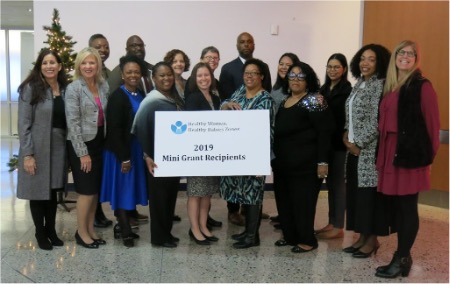
In partnership with the Delaware Department of Health and Social Services’ Division of Public Health, HMA is in its fourth year of administering a mini-grant program and providing backbone services to community-based organizations. These entities provide wraparound services and a variety of other supports to pregnant and parenting people and their families, with the goal of improving maternal and infant health and reducing racial disparities. We also lead a collective impact evaluation of the programs, working closely with the participating organizations to help them build their capacity to collect and analyze data, developing interim and annual reports, and providing frequent updates to the Division of Public Health and other stakeholders in the state that are collaborating to improve health and wellbeing. HMA provides fiscal and administrative oversight, coaching and evaluation, and convenes the participating organizations for quarterly learning collaboratives, which have contributed to stronger relationships and collaboration among the mini-grantees. In addition, we are implementing and evaluating a guaranteed basic income program as part of the Social Determinants of Health committee of the Delaware Healthy Maternal Infant Consortium (DHMIC). This project is a long-term commitment to collaborating with community-based organizations to build their capacity to address racial disparities and support their work, which is driven by the needs of the people they serve and know best. Grantees are selected through a streamlined process with low administrative burden, prioritizing community input on needed services. Through a collective impact evaluation, the participating organizations are finding positive effects on the self-reported health and wellbeing of program participants.

Launch of the first cohort of Healthy Women Healthy Babies Zones Mini-grantees in 2019. Photo Credit: Division of Public Health – Delaware Health and Social Services

With the Frederick County, Maryland Health Department, HMA conducted a study in 2022 using a community-based participatory research (CBPR) approach to understand and articulate drivers of maternal and infant health disparities experienced by Black women in Frederick County. In collaboration with the health department and newly formed Community Advisory Board (CAB), we facilitated a series of in-person retreats to: collect, analyze, and share quantitative and qualitative data regarding disparities and the drivers of those disparities with stakeholders; understand the data and the story behind the health disparity numbers; and develop and deploy additional research methods, such as surveys, key informant interviews, and focus groups, to further explore the lived experience of Black Frederick County mothers. This iterative approach to conducting mixed-methods research uses the CBPR framework to ensure sustained and meaningful community engagement from project start to end. HMA also developed a driver diagram to illustrate how the root cause, systemic racism, directly influences other drivers of Black maternal health disparities such as historic disinvestment in Black maternal health, historical trauma navigating healthcare, low social capital, health insurance availability, and a perceived lack of emotional and physical safety in clinical settings. The diagram will be shared with relevant stakeholders and inform next steps.

In our reproductive health-related work, HMA has guided groups through decision-making processes, with transparency and without bias, and we understand the importance of group dynamics. Bringing decades of real-world public policy and community and key stakeholder facilitation experience, HMA collaborates with a variety of stakeholders and community members to develop and implement public policy at the local and state levels, as well as to evaluate these efforts. Our experience ranges from national, state, and county agencies, to private sector and community-based organizations that partner with governments to implement policy. Our team has extensive experience working with and within organizations to facilitate discussions, listen to and build consensus across sectors, develop strategic plans, and bring diverse perspectives together to promote health and wellness for communities.

See below for the HMA colleagues participating in these projects.

As part of recognizing Women’s History Month, HMA colleagues reflected on recent work to support maternal and infant health and reduce racial disparities in birth outcomes in collaboration with health departments and communities in Delaware and Maryland. More information on our recent projects supporting reproductive health can be found here.

Health Management Associates selected as CalAIM Technical Assistance vendor

One of only two firms selected in all seven domains out of 46 vendors.

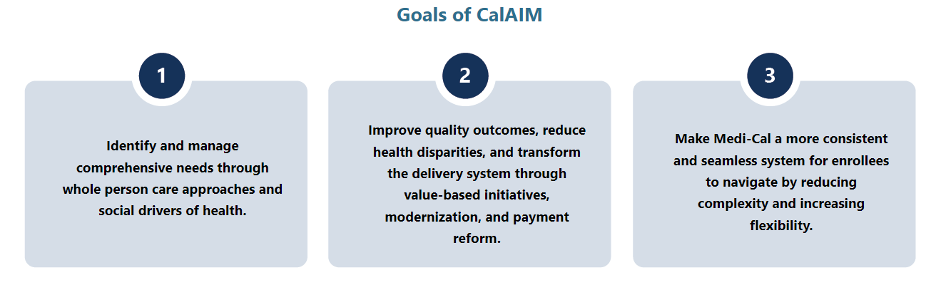
The California Department of Health Care Services (DHCS) has developed a multi-year initiative whose goal is to improve health outcomes and health care quality through broad delivery, payment, and program reforms known as California Advancing and Innovating Medi-Cal (CalAIM). This includes the introduction of new programs and changes to existing programs that will occur over the span of five years. CalAIM further expands upon prior initiatives, such as Whole Person Care, the Health Homes Program, and the Coordinated Care Initiative, and strives to integrate California’s delivery systems to better facilitate the overall Medi-Cal program.

Goals of CalAIM
Image source

With the rollout of these programs and the vast requirements associated with them, DHCS and California’s Medi-Cal managed care health plans are now tasked with the challenge of implementing CalAIM and enabling the participation of community providers and partners in these opportunities. To support these partners, DHCS developed a funding initiative, known as Providing Access and Transforming Health (PATH) to aid in strengthening capacity and infrastructure of Community Based Organizations, public hospitals, county agencies, and others to stand up CalAIM. This five-year, $1.85 billion initiative includes the creation of a virtual Technical Assistance (TA) Vendor Marketplace that organizations can use to request resources and support from approved vendors through services that are fully paid for by the State.

Health Management Associates (HMA) is recognized as a valued partner to Payers, Community Based Organizations, public hospitals, and county agencies and has deep expertise in CalAIM policy, operations and implementation. Recognized for our extensive capabilities in the field, HMA is one of only two firms out of 46 vendors that received State approval to serve as a technical assistance vendor on the PATH Technical Assistance (TA) Marketplace for all seven domains:

  • Domain 1: Building Data Capacity: Data Collection, Management, Sharing, and Use
  • Domain 2: Community Supports: Strengthening Services that Address the Social Drivers of Health
  • Domain 3: Engaging in CalAIM Through Medi-Cal Managed Care
  • Domain 4: Enhanced Care Management (ECM): Strengthening Care for ECM Population of Focus
  • Domain 5: Promoting Health Equity
  • Domain 6: Supporting Cross-Sector Partnerships
  • Domain 7: Workforce

HMA also has expertise in and hands-on experience with addressing the unique challenges experienced by providers and partner agencies serving rural communities. Please visit the PATH Technical Assistance (TA) Marketplace to access TA resources that can help strengthen capacity to provide high quality Enhanced Care Management (ECM) and Community Supports services for Medi-Cal members.

HMA recognizes unseen populations on International Overdose Awareness Day 2023 

In honor of International Overdose Awareness Day (IOAD), August 31, 2023, we take time to pause and reflect on this year’s theme of “recognizing those people who go unseen.” HMA stands with those affected by overdose and promotes an ecological approach to addressing substance use, one that acknowledges the many facets of the crisis that leads to approximately 300 overdose deaths every day in the United States.  

We recognize that many Americans experience the repercussions of overdose in ways that are often unseen: friends and family members who act as first responders by reversing an overdose with naloxone; seniors and older adults experiencing addiction; pregnant and parenting people who use drugs and/or medications for opioid use disorder; those who are often unable to access resources due to structural barriers such as homelessness or those living in rural and frontier communities; and, the justice-involved population, who serve as a salient example and often go unseen. Research has confirmed that overdose is the leading cause of death among people leaving carceral settings, as well as the third leading cause of deaths in custody in U.S. jails.  

We also recognize that many of the racial disparities in U.S. overdose deaths are unseen and underrepresented in national dialogue about the crisis. At a time when people of color are dying at a higher rate than non-Hispanic White people, the International Overdose Awareness Day theme of recognizing those unseen is timely, and apt. Non-Hispanic American Indian or Alaskan Native people had the highest drug overdose death rates in both 2020 and 2021. Rates of overdose among Black or African American men outpace other groups. Racial disparities extend beyond overdose fatality rates and into the broader substance use disorder continuum of care. People of color are offered medications for opioid use disorder at a rate almost 50% lower than non-Hispanic White people, and the duration of their treatment tends to be shorter; ultimately leading to increased risk of returning to use. These statistics only reinforce the need for an expanded, comprehensive, and equity-centered approach to care. 

Finally, we recognize that the overdose landscape is developing unseen changes, as overdose deaths involving psychostimulants such as methamphetamine are increasing with and without synthetic opioid involvement. Polysubstance use is the norm, not the exception. The healthcare sector must broaden and expand services to meet the current needs, including incorporating harm reduction strategies for stimulants, especially in states with high concentrations of deaths such as Nevada, West Virginia, Maine, and among non-Hispanic American Indians or Alaskan Natives.  

HMA honors the often-unseen work and expertise of those leading advances in the field including peers, public health professionals, people who use drugs, and friends and family who become first responders. In remembrance of those impacted by overdose, our call to action is to honor unseen populations affected by this crisis, to elevate existing work by and for these communities, and to continuously seek innovative approaches that ensure we carry everyone forward into a responsive system of care.  

Someone you know or may have seen may be struggling with addiction. Help is always available. The Substance Abuse and Mental Health Services Administration (SAMHSA) offers free, confidential, and 24/7 support in both English and Spanish at 1-800-662-HELP (4357). 

For more information on HMA overdose prevention services, visit HMA’s Behavioral Health page or contact our experts below.

Digital innovation to be a featured topic at 2023 HMA fall conference

Advancements in digital health and data technology have made for rapid and remarkable transformation of the healthcare landscape. From wearable devices to mobile health apps to telemedicine platforms, the integration of digital solutions and patient data is disrupting every facet of healthcare – to say nothing of the AI revolution that has only just begun. While this innovation is exciting and meaningful, it still has runway to truly deliver “better, cheaper, faster” for patients. These innovations and others will be featured at Health Management Associates annual fall conference, being held October 30-31, 2023.

Digital innovation has graduated from its “experimentation/compliance” phase and is now in its “expectation of results” phase. Healthcare payers and providers should incorporate digital into core payment and delivery strategies to deliver better outcomes and a better care experience at a most efficient cost. Health data management is creating more efficient platforms to provide the right care at the right time to the right patient. Federal policy programs like the 21st Century Cures Act, and CMS Interoperability and Patient Access rule have opened the door for providers, payers, and applications to make better use of health information, with patients more in control. 

While this level of innovation is exciting anywhere, it is particularly exciting to see how it is enabling improvements in publicly funded healthcare programs to deliver more effective care. HMA consultants are leading conversations and presentations on how digital innovation is driving change in Medicare, Medicaid, and state marketplaces. 

Key Sessions (full agenda and panelists here)

The Dynamic World of Publicly Sponsored Health Care: Trends and Innovations: Learn about new payment models, quality and equity initiatives, new products and services, workforce, likely policy initiatives, and new ways of reaching and serving members. (Monday 9:15-10:30am plenary session)

Digital Health, Interoperability, and Information Sharing: From Compliance to Innovation: Discover how early adopters will show how they have moved from compliance to innovation by embracing data sharing, FHIR APIs, and third-party applications using real-time data. (Monday 1:30-3:00pm breakout session)

The Pitch: Innovative and Potentially Disruptive Models in Care Delivery: Hear the latest innovations in care delivery models and will also gain an understanding of how to best approach managed care partners when considering value-based contracting or other network arrangements. (Monday 3:30-5:00pm breakout session)

Behavioral Health System Redesign: Learn why federal and state governments and the healthcare delivery system must collaborate in new and innovative ways to meet the rapidly growing demand for a more integrated behavioral health system (Sunday preconference, this session and others running 1pm – 5pm)

To learn more about HMA’s work in the digital innovation space or digital health work, please contact our experts below.

Learning the invaluable lessons of value-based care at 2023 HMA conference

If you search the term “value-based care” on the internet you will find over 2.5 million hits on that term alone. No one would disagree with the need to provide value to patients and purchasers, but how we define value differs based on where we sit. Value is paying for outcomes, not volume of services. Value is ensuring that patients get the right care at the right time. Value is ensuring that purchasers pay a reasonable cost for the highest possible quality. Value is ensuring that healthcare is provided equitably and sustainably. Implementing value is even trickier than defining it, given the complexity of who pays for care and the challenges of measuring the outcomes we seek to reward.  

From the top office of HHS to the back office of a health center and everywhere in between, HMA leaders have been part of our collective journey to value: advancing policy and regulatory change, calculating risk and setting prices, crafting alternative payment models, integrating social services and behavioral health, and coaching industry leaders to make important changes to their business models to adapt to a more sustainable approach to American healthcare. These experiences – both successes and challenges – provide a unique perspective from which to advise clients on transformation of healthcare.  

The HMA 2023 fall conference, scheduled for October 30-31, 2023, has thoughtfully curated several discussions to educate, enlighten and motivate attendees on industry standards and navigating the practicality of providing value in care, coverage, and patient experience in publicly funded healthcare:  

Leading the Charge on Value, Equity and Growth: The Future of Publicly Sponsored Healthcare: Discuss how these public programs came to be the industry standard bearers and what this shift means for outcomes, affordability, policy, and the overall direction of U.S. healthcare.  

Positive Change and the Growing Importance of Managed Care in Publicly Sponsored Healthcare: Discuss the future of publicly sponsored healthcare, outline promising initiatives aimed at improving coverage and care, and address key concerns over funding, policy, equity, and coordination between government, plans, providers, and members.  

The Future of Delivery Systems: Achieving Operational and Financial Sustainability: Discuss a wide range of practical approaches to prepare for the future, including managing cash flow, optimizing the workforce, developing long-term reimbursement plans, improving operational efficiency, and addressing changes in government policy.   

Real Talk from the Trenches of Value-based Payments: Learn about the advantages and pitfalls of value-based payments, with important insights from organizations that have made it work.  

Navigating Change in Medicare Advantage: A Roadmap for Success: Discuss what Medicare Advantage plans must do to meet the demanding, new requirements – all against a backdrop of continued efforts to improve equity, access, outcomes, and cost.   

In addition, a pre-conference workshop on behavioral health will be held the afternoon of October 29th, prior to the official start of the conference. This workshop will highlight the integral role of behavioral healthcare in improving patient outcomes across the continuum of publicly sponsored healthcare programs.  

We are excited to engage with industry experts throughout these discussions about value-based care and forge a better path forward toward a more sustainable and equitable system of care.  

Focus on equitable access at 2023 HMA conference

Access to care is not as simple as obtaining an insurance card. Some people find access to care is limited by geography or distance, others are limited by their native language or cultural awareness. In other ways, care can be limited by who is in the insurance network. All of these inequities can cause gaps in care that undermine health outcomes. In a system that is increasingly paying for outcomes, elimination of inequities is a matter of financial performance, as well as a sign of clinical excellence. Finding and reducing inequities in access to care requires an operational commitment to change workflows, leverage technology, and train staff at all levels to align incentives and culture.

Providing equitable access to care is subject to ever-changing policy and regulatory requirements, and it is increasingly tied to funding, work force staffing and many other operational requirements. This topic will thread through several discussions and panels during the 2023 HMA fall conference with federal policy leaders, health system administrators, and other industry leaders all poised to address the pain points of achieving and maintaining equitable access.

Key sessions:

Leading the Charge on Value, Equity and Growth: The Future of Publicly Sponsored Health Care – A discussion on how these public programs came to be the industry standard bearers and what this shift means for outcomes, affordability, policy, and the overall direction of U.S. health care. (Monday 8:30am keynote by Alan Weil)

Understanding and Meeting New Health-Related Social Needs Requirements – An environmental overview, including a look at what’s driving these demands and how organizations are specifically working to address the new mandates. (Monday 1:30pm breakout session featuring Bryan Buckley of NCQA, Richard Ayoub of Project Angel Food, and Paul Leon of National Healthcare & Housing Advisors)

Practical Approaches to Ensuring Equity in Publicly Sponsored Healthcare Programs – This session will provide practical approaches to addressing equity, including an overview of efforts by policymakers, health plans, and providers to make equity the central component of all initiatives to improve healthcare outcomes, access, and health-related social needs. (Tuesday 8:30am keynote by Karen Dale of Amerihealth Caritas)

Medicaid in a Post-Pandemic World: Challenges, Opportunities, and a Renewed Focus on Equity – State Medicaid directors will provide a status report on all this and more, including a special emphasis on how equity plays into planning and policy decisions. (Tuesday 9:15am plenary featuring Jacey Cooper of the California Department of Health Care Services, Kelly Cunningham of the Illinois Department of Healthcare and Family Services, Drew Snyder of the Mississippi Division of Medicaid, and Stacie Weeks of the Nevada Department of Health and Human Services)

HMA consultants and our speakers look forward to engaging with participants as they delve into these topics to gain a better understanding of the gains we are making as industry leaders and where we still need to innovate. 

To learn more about our Equity and Managed Care work, please contact our experts below.

New CMS dementia care model emphasizes role of caregivers

This week, our In Focus section reviews the new Guiding an Improved Dementia Experience (GUIDE) Model, announced by the Centers for Medicare & Medicaid Services (CMS) Center for Medicaid and Medicare Innovation (the Innovation Center) on July 31, 2023.

In addition to announcing the Innovation Center’s GUIDE Model, CMS released five final fiscal year (FY) 2024 payment rules this past week. Of note, these regulations set higher than anticipated reimbursement rates for many providers:

CMS also released the 2024 projected Medicare Part D premium and bid information, which may provide early indications on the effects of the Inflation Reduction Act’s drug pricing policies.

GUIDE Model: Parameters and Opportunities

President Biden signed an Executive Order in April 2023 on Increasing Access to High-Quality Care and Supporting Caregivers. The order directed the Innovation Center to develop a payment and delivery system model for dementia care. The program is intended to improve the quality of life for people living with dementia, reduce strain on unpaid caregivers, and help people remain in their homes and communities through improved care coordination and management, caregiver education and support, and respite services.

The announcement this week outlines the basic parameters of the model, which track with CMS’s focus on reducing health disparities, supporting innovation, and addressing affordability. CMS expects that the model’s additional support for caregivers will reduce federal spending on hospitalizations and post-acute care. Notably, CMS projects savings will come from reduced long-term nursing facility placement through a decrease in Medicaid spending on the federal medical assistance percentage (FMAP). Helping Medicare enrollees stay in their homes may also lower state spending on long-term care.

Additional information, including the application to participate, will be available this fall. In the meantime, CMS is accepting letters of interest through September 15, 2023. The model will begin on July 1, 2024, and run for eight years.

HMA’s experts identified the below list of policies that will be important for provider organizations, caregivers, and other stakeholders considering participation in the model:

  • GUIDE Model participants will be Medicare Part B enrolled providers/suppliers, excluding durable medical equipment (DME) and laboratory suppliers, that are eligible to bill for Medicare physician fee schedule services and agree to meet the care delivery requirements.
  • The GUIDE Model comprises two tracks for participation—one for established programs and another for new programs.
    • Established programs must have an interdisciplinary care team, including a care navigator, use an electronic health record (EHR) platform that meets the standards for certified EHR technology, and meet other care delivery requirements as outlined in the request for applications.
  • If a participant cannot meet the GUIDE healthcare delivery requirements alone, CMS will allow the provider or supplier to partner with other Medicare organizations, to meet the mandates.
  • The model also includes policies designed to reduce disparities in dementia care. For example, CMS plans to conduct outreach with organizations that do not yet offer comprehensive dementia care or lack prior experience with alternative payment models such as safety net providers. Participants also will need to develop health equity plans, and a “health equity adjustment” will be made to payments for providers that serve disadvantaged beneficiaries.
    • CMS will support model participation for these organizations by providing technical assistance and learning support as well as a pre-implementation year to prepare for participation.
  • CMS will test an alternative payment methodology for participants that deliver key care management and coordination services to people with dementia and their family caregivers, including comprehensive, person-centered assessments and care plans; 24/7 access to a helpline; and caregiver support and education, such as training on how to best care for a relative with dementia. CMS clarifies that GUIDE is not a shared savings or total cost of care model and does not address coverage of novel Alzheimer’s drugs.
  • Participants will assign Medicare fee-for-service beneficiaries, including people who are dually eligible for Medicare and Medicaid, living with dementia and their caregivers to a care navigator. This individual will help people access services and supports, including clinical services and non-clinical services such as meals and transportation through community-based organizations. Model participants will also help caregivers access respite services, which enable them to take temporary breaks from their caregiving responsibilities. Evidence demonstrates that respite enables caregivers to care for individuals with dementia at home for a longer period, thereby forestalling institutional placement.

CMS will host a webinar with more details about the model on Thursday, August 10, from 2:00−3:00 pm.

The HMA team will continue to evaluate the GUIDE model and other Innovation Center opportunities. If you have any questions about the model or any of the new regulations, contact our experts below.

We also would like to remind our readers that the HMA team hosted a webinar last week on the Medicare Behavioral Health proposed changes titled “New tools for Medicare policy changes impacting behavioral health services”. We previously discussed those changes in the July 19, 2023 In Focus.

The CMS managed care proposed rule: three implications for local and regional MCOs

Previously, HMA reviewed the provisions of the Medicaid and Children’s Health Insurance Program (CHIP) managed care access, finance, and quality proposed rule published by the Centers for Medicare & Medicaid Services (CMS) on May 3, 2023. CMS is accepting comments on the proposed rule through July 3, 2023. While the proposed rule, if finalized as put forward, will have a significant impact across Medicaid stakeholders including enrollees, managed care organizations (MCOs), providers, and state Medicaid agencies, this blog post outlines three specific aspects of the proposed the rule and their implications for a subset of MCOs: regional and local MCOs.

Medical Loss Ratio (MLR) Standards

In the proposed rule, CMS outlines three areas for revisions to its existing MLR standards which require MCOs to annually submit MLR reports to states and require states, in turn, to annually provide a summary of those reports to CMS. An MLR is calculated by adding the expenditures for incurred claims to the expenditures for activities that improve health care quality and fraud prevention activities (the numerator) and dividing this by adjusted premium revenue (the denominator). The three areas where CMS proposes revisions include: (1) requirements for clinical or quality improvement standards for provider incentive arrangements, (2) prohibited administrative costs in quality improvement activity (QIA) reporting, and (3) additional requirements for expense allocation methodology reporting.

Related to provider incentive arrangements (which are considered part of incurred claims), CMS proposes to require that contracts between MCOs and providers: (1) have a defined performance period that can be tied to the applicable MLR reporting period(s), (2) include well-defined quality improvement or performance metrics that the provider must meet to receive the incentive payment, and (3) specify a dollar amount that can be clearly linked to successful completion of these metrics as well as a date of payment. Furthermore, MCOs would be required to maintain documentation to support these arrangements and cannot rely upon attestations as documentation of compliance.

Related to QIA reporting, CMS proposes to explicitly prohibit MCOs from including indirect or overhead expenses when reporting QIA costs in the MLR. CMS notes that today, for example, expenditures for facility maintenance, marketing, or utilities may be included in the MLR even though such expenses do not directly improve health care quality. From the perspective of CMS, the inclusion of such expenditures in the MLR numerator may be resulting an inflated MLRs that then provide a distorted view of MCO performance.

Related to expense allocating reporting, CMS proposes to add requirements regarding how MCOs can allocate expenses for the purpose of calculating the MLR. Specifically, MCOs would need to describe in their methodology a detailed description of the methods used to allocate expenses, including incurred claims, quality improvement expenses, federal and state taxes and licensing or regulatory fees, and other non-claims costs. The goal of requiring this additional detail is to give state Medicaid agencies the ability to assess whether MLRs are accurately represented as a result of the methodology employed by an MCO to allocate expenses across lines of business (e.g., Marketplace, Medicaid, and Medicare).

For local and regional MCOs, the changes to MLR standards proposed by CMS will require meaningful efforts to ensure compliance. Provider incentive arrangements, most expansively, may need to be renegotiated to conform to the requirements and, at a minimum, may need to be documented in a more robust fashion to ensure evidence of compliance can be furnished upon request. The impact of QIA expenditures that are no longer able to be included in the MLR numerator will need to be modeled to ensure that a resulting failure to meet any minimum MLR requirements does not occur and, if this is projected to occur, a strategy will need to be developed and executed to ensure it does not. Expense allocation methodologies will need to be documented more extensively and evaluated for reasonability to ensure that they can withstand regulatory scrutiny when additional detail is provided to state Medicaid agencies.

Medicaid and CHIP Quality Rating System (MAC QRS)

In the proposed rule, CMS outlines a MAC QRS framework that includes: (1) mandatory quality measures, (2) a quality rating methodology, and (3) a mandatory website display format. State Medicaid agencies and MCOs will be required to adopt and implement the MAC QRS framework developed by CMS or adopt and implement an alternative managed care quality rating system. CMS will update the mandatory measure set at least every other year. Measures will have public notice through a call letter (or similar guidance) on any planned modifications with measures being based on: (1) value in choosing an MCO, (2) alignment with other CMS programs, (3) the relationship to enrollee experience, access, health outcomes, quality of care, MCO administration, or health equity, (4) MCO performance, (5) data availability, and (6) scientific acceptability.

State Medicaid agencies will be required to collect from MCOs the data necessary to calculate ratings for each measure and ensure that all data collected are validated. Additionally, state Medicaid agencies must calculate each measure and issue ratings to each MCO for each measure. Finally, the mandatory state website will be required to contain the following elements: (1) clear information that is understandable and usable for navigating the website itself, (2) interactive features that allow users to tailor specific information, such as formulary, provider directory, and ratings based on their entered data, (3) standardized information so that users can compare MCOs, (4) information that promotes beneficiary understanding of and trust in the displayed ratings, such as data collection timeframes and validation confirmation, and (5) access to Medicaid and CHIP enrollment and eligibility information, either directly on the website or through external resources.

For local and regional MCOs, the MAC QRS framework proposed by CMS will require assessing their capability to produce the mandated data upon request by state Medicaid agencies. It will also then require ensuring that all mandated data is available to be provided on an annual basis. To the extent possible, at the appropriate time, assessing baseline performance on measures and proactively developing and implementing strategies to improve performance will be prudent. Assessing the impact of the greater transparency around quality performance that the proposed MAC QRS will bring in order to understand the potential impact on competitive position will also be important.

Network Adequacy Requirements

In the proposed rule, CMS outlines important network adequacy requirements meant to further timely access to care for Medicaid and CHIP managed care enrollees. Two of these are focused upon here: (1) appointment wait time standards and (2) secret shopper surveys. Other policies to enhance access are also included in the proposed rule including, for example, a requirement that state Medicaid agencies conduct an annual enrollee experience for each MCO.

For appointment wait time standards, CMS proposes that state Medicaid agencies develop and enforce wait time standards for routine appointments for four types of services: (1) outpatient mental health and substance use disorder (SUD) for adults and children, (2) primary care for adults and children, (3) obstetrics and gynecology (OB/GYN), and (4) an additional service type determined by the state Medicaid agencies in an evidence-based manner (in addition to the previous three noted). The maximum wait times must be no longer than 10 business days for routine outpatient mental health and SUD appointments and no longer than 15 business days for routine primary care and OB/GYN appointments. State Medicaid agencies could impose stricter wait time standards but not more lax ones. The wait time standard for the fourth service type selected by state Medicaid agencies will be determined at the state level.

For secret shopper surveys, state Medicaid agencies will be required to utilize an independent entity to conduct annual secret shopper surveys to validate MCO compliance with appointment wait time standards and the accuracy of provider directories to identify errors as well as providers that do not offer appointments. For an MCO to be compliant with the wait time standards, as assessed through the secret shopper surveys, it would need to demonstrate a rate of appointment availability that meets the wait time standards at least 90% of the time. State Medicaid agencies would be required to develop remedy plans when MCO compliance issues are identified which designate the party responsible for taking action, outline the appropriate steps to be taken to address the issue, and document the intended implementation timeline.

For local and regional MCOs, the wait time standards and secret shopper surveys present opportunities to prepare to ensure compliance and to collaborate with state Medicaid agencies. For preparation, undertaking secret shopper surveys ahead of implementation to determine the current performance relative to maximum wait times may be advisable. Additionally, there is an opportunity to collaborate with state Medicaid agencies regarding the selection of the fourth service type for which wait time standards will be established.

For More Information

If you have questions about how HMA can support your efforts related to the proposed rule’s implications for local and regional MCOs, please contact our experts below.

Ready to talk?