This week, our In Focus section reviews the year-end legislative package congressional leaders announced as part of the stopgap funding to prevent a government shutdown. The package, which was unveiled December 18, 2024, would extend expiring Medicaid and Medicare policies, reauthorize health and human services programs, and extend federal funding for discretionary programs through March 14, 2025. The existing temporary funding measure expires December 20, 2024.
Following is a summary of several major healthcare policies that, if approved, will inform the shifting federal policy landscape and state and local programs in 2025.
Pharmacy Benefit Managers
The healthcare package includes policies that reflect several years of increased scrutiny on pharmacy benefit managers (PBMs), including:
Prohibiting PBMs from charging a Medicaid managed care organization more for a drug than the amount that a PBM pays a pharmacy (i.e., spread pricing)
Requiring consistency and additional transparency in contracts between Part D plans and PBMs
Prohibiting Medicare Part D plans from linking payments to drug list prices
Adding report requirements for PBMs
Medicaid Policies and Programs
The legislative text includes 13 separate sections that address Medicaid policies, including extensions on expiring policies, establishment of new programs, and plans to codify certain other policies related to Medicaid eligibility and renewals. These policy changes include:
Medicaid Disproportionate Share Hospital (DSH) allotment: Eliminates reductions for fiscal year (FY) 2025; delays the effective date of the two remaining years of Medicaid DSH allotment reductions until January 1, 2027; and changes the definition of the Medicaid shortfall component of the Medicaid DSH cap to include costs and payments for patients who have Medicaid as their primary source of coverage and for patients who are dually eligible for Medicare and Medicaid.
Home and community-based services (HCBS) waiver: Establishes a three-year, five-state Medicaid HCBS waiver program, which would allow states to cover these services for individuals who need them but do not meet the current statutory requirement of needing “institutional level of care.” States will have an opportunity to apply for planning grants.
Services for juveniles leaving public institutions: Delays by 12 months the requirement that state Medicaid programs provide screenings, diagnostic services, and targeted case management services for eligible juveniles within 30 days of their scheduled date of release from a public institution following adjudication.
Medicare Payments
The compromise package also increases the Medicare Physician Fee Schedule conversion factor by 2.5 percent in 2025 to partially offset a 2.83 percent cut that the Centers for Medicare & Medicaid Services (CMS) finalized in November. Providers consider this a short-term fix, however, and Congress, provider advocates, and other interested parties are engaged in discussions about making broader changes to Medicare physician pay in 2025.
Notably, the agreement includes a payment policy consistent with a bill that the House of Representatives passed earlier this year—the Lower Cost More Transparency Act—to provide enhanced information about payment differentials between off‐campus outpatient departments and other outpatient facilities. The provision requires each off-campus outpatient department to obtain and bill for services under a unique national provider identifier.
Other notable Medicare policies include:
Telehealth: Extends Medicare telehealth flexibilities through December 31, 2026; establishes special rules for telehealth services provided by Federally Qualified Health Centers and Rural Health Clinics for prospective payment and all-inclusive rates; adds modifiers for telehealth services provided incident-to other services and those offered via contracts with virtual platform vendors; expands services that can be provided via telehealth; and enhances tracking of telehealth use
Payment extensions: Extends the Medicare low-volume hospital payment adjustment and Medicare-dependent hospital program through December 31, 2025; Medicare ground ambulance add-on payments through December 31, 2026; incentive payments for advanced alternative payment models through payment year 2027 at an adjusted amount of 3.53 percent; and Qualifying Participant eligibility thresholds in effect for performance year 2023 through payment year 2027
Hospital at-home program: Extends the Acute Hospital Care at Home initiative through December 31, 2029
Part D: Prohibits cost sharing for generic drugs for Part D beneficiaries who are eligible for the low-income subsidy
Provider directories: Requires Medicare Advantage plans to maintain accurate provider directories on a public website beginning in plan year 2027
Screening: Adds multi-cancer early detection screening tests as a covered benefit beginning in 2029
Home infusion: Allows coverage of home infusion treatments by classifying certain approved infusion treatments as Durable Medical Equipment (DME)
Other Notable Provisions
Reauthorizes and revises the Second Chance Reauthorization Act of 2024, including allowing substance use disorder (SUD) services to be provided through the State and Local Reentry Demonstration Projects program
Reauthorizes and modernizes several aspects of child welfare programs
Provides mandatory funding for community health centers and the National Health Service Corps through FY2026, the Teaching Health Center Graduate Medical Education Program through FY2029, and the Special Diabetes Programs (SDP) for Type I diabetes and the SDP for Indians through FY2026
Reauthorizes through FY 2029 the SUPPORT for Patients and Communities Act, which includes a range of mental health and SUD prevention, treatment, and recovery programs
Reauthorizes Older Americans Act programs
Reauthorizes several programs and authorities related to preparedness and response through FY2026, including the Public Health Emergency Preparedness Program and the Hospital Preparedness Program
What’s Next
Funding for the federal government expires December 20, 2024. Congress will need to approve another temporary measure to avert a government shutdown. The length and scope of such an extension remains under discussion, though the current continuing resolution would push the funding deadline into the first few months of the incoming Trump Administration and new Congress. Healthcare stakeholders, including payers, state and local governments, providers, and community organizations, should continue to monitor the congressional negotiations and be prepared to analyze the impact of legislation that Congress ultimately approves.
Connect with Us
Health Management Associates, Inc. (HMA) experts will continue analyzing the implications of the funding and policy updates in the December 18 package and ongoing congressional discussions to reach an agreement. HMA’s experts have the depth of knowledge, experience, and subject matter expertise to assist organizations with navigating these changes and the impact for health and health adjacent sectors. Please contact Laura Pence and Andrea Maresca to connect with our experts.
Following the 2024 election, incoming federal officials have begun to lay the groundwork for significant changes in the federal policy landscape and agency operations. In 2025, Republicans will control the executive branch and both chambers of Congress, a trifecta of power that affords more opportunity for advancing their federal healthcare agenda over the next two years. HMA consultants are available to help organizations understand, inform, and plan for future federal policy initiatives and the impact for publicly funded programs and the healthcare sector.
Experts from HMA and from Wakely and Leavitt Partners, both HMA companies, collaborated to host three webinars that examine key issues and considerations for different parts of the healthcare sector.
This webinar explored insights on the election results, discussed both confirmed outcomes and remaining uncertainties, along with the mandate for change that has emerged. Panelists from HMA and Leavitt Partners provided an overview of what to expect from Congress and the Administration, focusing on key legislative priorities and executive actions, and shared their prediction for what to watch over the first 100 days.
With a Republican majority in Congress and presidency, healthcare priorities are expected to include revisiting ACA tax subsidies, addressing Medicaid allotments, and reexamining Medicare’s system for reimbursing providers. Powerful tools like budget reconciliation could drive major changes in tax and healthcare entitlement programs, however, this tool can be limited by parameters of the Senate’s procedural rules, known as the Byrd Rule.
Panelists also addressed the regulatory policy landscape which could include reinstating Trump-era policies like the 1332 waivers, allowing non-ACA plans, and altering Medicare and Medicaid policies to emphasize transparency and fiscal responsibility.
With Medicare Advantage (MA) a key area of focus for incoming federal agency leaders, experts from HMA, Leavitt Partners, and Wakely discussed how the election results will impact what policy changes could be considered in the coming year.
As the MA program expands, conversations about its future reveal a mix of partisan priorities and bipartisan opportunities. Partisan changes are likely to include moderation of regulatory oversight, and the possibility of easing the audit process and restrictions on payment models. Other strategies and policies may shift the emphasis away from health equity initiatives and revise the federal approach to competitive prescription drug pricing negotiations.
There are, however, certain reforms that are likely to garner bipartisan support, such as the expansion of telehealth services and increased access to behavioral healthcare. Ongoing discussions about health plans’ approaches to prior authorization and management of prescription drug will likely remain a bipartisan priority.
The 2024 elections may lead to significant changes in the ACA Marketplace. Enhanced ACA subsidies available during the COVID-19 pandemic are set to expire in 2025, and the new CMS administrator will shape policy and regulatory components that affect marketplace and consumer dynamics.
Key insights highlight anticipated changes to the Meaningful Difference Rules for non-standard plans, an increase in Marketplace user fees, and a proposal to codify silver loading into regulation. Additionally, it’s important to monitor policy areas focused on improving compliance among agents and brokers in the Marketplace the unveiling of a new Risk Adjustment model and coefficients to reflect costs that are not related to active medical conditions.
Our consultants are ready to meet with you to discuss any projects or ideas to help you navigate the evolving landscape in 2025.
In recognition of National Recovery Month this September, our In Focus section spotlights a new report from Health Management Associates, Inc. (HMA), Substance Use Disorder in California: A Focused Landscape Analysis. Published in August 2024 with support from the California Health Care Foundation, this analysis provides valuable insights into California’s substance use disorder (SUD) treatment system and offers actionable recommendations for improvement that can be applicable for other states.
The SUD Landscape in California
SUDs continue to be a significant issue both nationally and in California. In 2022, approximately 9 percent of Californians ages 12 and older met the criteria for SUD, compared with 16.5 percent nationally in 2021. The prevalence of SUD is also on the rise: in 2015, 8.1 percent of Californians ages 12 and older met SUD criteria, rising to 8.8 percent in 2022. Of the Californians struggling with SUD, only 10 percent received treatment for their condition, compared with 6 percent nationally in 2021. Overall, 81 percent of US adults who received care for SUD reported struggling to access necessary services.
California’s public behavioral health system siloes specialty mental health (MH) services, mild-to-moderate MH services, and SUD treatment services, resulting in a fragmented and inconsistent system that struggles to effectively support people with co-occurring conditions.
County plans administer specialty behavioral health (BH) services. They all have memorandums of understanding with the state’s Department of Health Care Services that are separate from the state arrangements to provide physical healthcare services. BH programs vary significantly across the state because counties operate them differently, with key variations in access policies, quality monitoring, services, and programming. Mild-to-moderate (non-specialty) MH benefits are administered by Medicaid managed care plans. Much of the state’s SUD treatment is operated by the Drug Medi-Cal Organized Delivery System (DMC-ODS).
Barriers to Care: Key Findings
System barriers prevent many Californians with SUD from accessing adequate care. Interviewees received a pre-interview questionnaire to determine the factors they believe have the greatest impact on access to SUD treatment. According to 11 out of 14 respondents, lack of access to housing and residential services is a “huge barrier” to SUD treatment.
Other barriers to care access, ranked in order, include limited access to food, transportation, and other social drivers of health (SDOH), SUD provider shortages, stigma against people with SUD, disparities in service availability across racial/ethnic groups and other populations, and complex referral and intake processes.
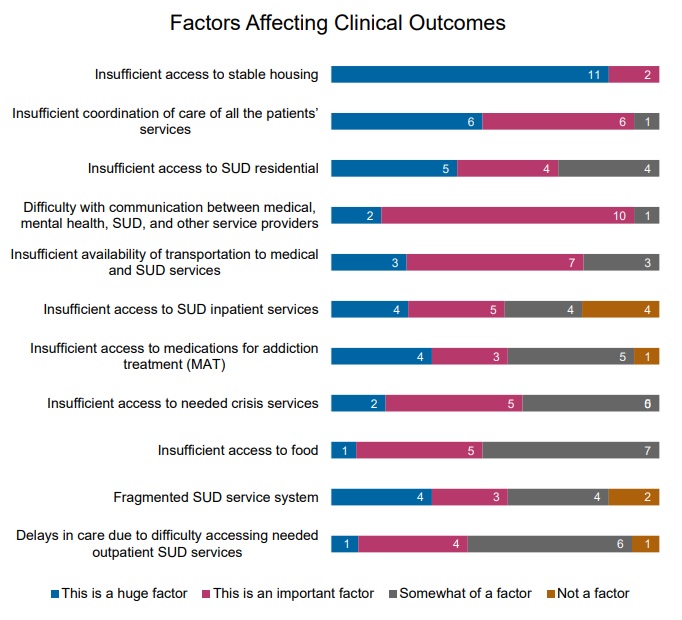
Respondents also identified factors that could negatively affect clinical outcomes for people with SUD. Insufficient access to stable housing ranked first, followed by inadequate care coordination, and limited access to residential SUD treatment. Respondents ranked 11 factors as follows:
Figure 1: Factors Leading to Reduced Outcomes, Ranked from a List of 11
Service gaps pose another significant barrier to people accessing SUD treatment, and some populations are more likely to encounter challenges than others. According to the respondents, by various population groups, Latine/Hispanic populations, African American/Black populations, and Native American/Alaska Native populations are most likely to experience SUD service gaps. By age, people who are 19−25 years old (transition-age youth) and adults ages 26−65 are most likely to face service gaps.
Opportunities to Support Improvements in SUD Care
Findings and recommendations to enhance support for individuals are informed by surveys and interviews conducted with SUD stakeholders from across the state. Recommendations highlighted in the report include:
Investments in the workforce. By addressing the shortage of licensed clinicians and implementing peer support workers into the care continuum, the state would increase access to care. Many stakeholders have positioned themselves to meet SUD needs, but they cannot do so without an adequate workforce. Furthermore, the workforce would benefit from strengthening culturally responsive training in evidence-based practices.
Expansion of residential treatment services and housing options. There is a growing need, especially among transition-age youth, for residential treatment and SUD recovery housing.
Increased access to and training around harm reduction. Although stigma around harm reduction has decreased, training and access remains a barrier. Respondents highlighted the need to better manage contingencies, make methadone more accessible, establish safe consumption sites, expand medication assisted treatment for SUD and AUD, and improve the availability of Narcan.
MH and SUD treatment integration. Offering concurrent MH and SUD treatment with the same providers can help improve access to care for people with co-occurring conditions and minimize duplication.
Improved care coordination. Respondents suggested funding formal care coordination positions—a recommendation that is consistent with the national movement toward the coordinated care model applied in certified community behavioral health centers.
Improved data literacy. Behavioral health organizations need support and technical assistance to learn how to track and use data to support continuous quality improvement.
What to Watch
The overarching challenges facing California’s recovery system are present in other states. These states can adapt the strategies discussed in this report to address their own SUD concerns. In California, as in other states, an important aspect of addressing SUD treatment involves strategic allocation of opioid settlement dollars. These funds, resulting from legal settlements with opioid manufacturers and distributors, are expected to play a significant role in improving the state’s SUD treatment infrastructure, especially when considered alongside available federal funding, demonstrations, and regulatory flexibilities.
Connect With Us
The upcoming HMA event, Unlocking Solutions in Medicaid, Medicare, and Marketplace, will offer more opportunities to engage with leaders from various sectors who are advancing solutions to improve access to care and reducing access disparities. Throughout the conference, federal and state officials, community leaders, and national experts will shed light on the challenges and solutions to these issues.
This week, our In Focus section provides an overview of the two key Medicare proposed payment rules that the Centers for Medicare & Medicaid Services (CMS) released last week—the Physician Fee Schedule (PFS) and the Hospital Outpatient Prospective Payment System (OPPS). These two rules include policies that will affect a variety of providers. Below we highlight some key provisions. Comments on these proposals are due to CMS in early September.
PFS Proposed Rule for 2025
Released on July 10 and with comments due by September 9, this wide-ranging regulation proposes policy changes for many different types of providers.
PFS Payment Update: The estimated 2025 PFS conversion factor is $32.36, a $0.93 or 2.80 percent decrease from the calendar year (CY) 2024 level of $33.29, which included a one-time update required by statute. In previous years with cuts like this one looming, Congress has stepped in and adjusted the payment update in the positive direction. Congress is now considering approaches to do so again for this year.
Caregiver training services (CTS): CMS is proposing a new code for caregiver training for direct care services and supports such as wound dressing changes, infection control, and medication administration. These services could be provided via telehealth.
Telehealth services: CMS is proposing to add several new codes to the telehealth list and to refine a variety of policies related to the type of technology that must be used and what supervision must be provided for telehealth services and other requirements such as removing frequency limitations. Nonetheless, several telehealth flexibilities will end December 31, 2024, because of the expiration of pandemic era expansions unless Congress extends or makes telehealth flexibilities permanent.
Advanced primary care management services (APCM): CMS proposes to create a new set of APCM codes that would incorporate parts of several existing care management and communication technology-based services into a monthly bundle of services. The billing codes are differentiated by three levels based on a person’s number of chronic conditions and enrollment as a qualified Medicare beneficiary to reflect patient medical and social complexity. These APCM services could be provided by advanced primary care teams and are tied to primary care quality measures.
CMS seeks feedback on whether the agency should consider additional payment policies to recognize the delivery of advanced primary care, including on potential changes to coding and payment policies within traditional Medicare such as for additional bundles of services.
Behavioral health services: CMS is proposing new codes for behavioral health crisis services, including safety planning and interventions for patients at risk of suicide or overdose, follow-up contact after a crisis emergency department (ED) visit, for digital mental health treatment (DMHT) services, and for nonphysician practitioners to bill for interprofessional consultations.
Screening and risk assessment: The agency updates and expands coverage for screening and preventive services, including proposals to cover screening computed tomography colonography (CTC) for colorectal cancer, drugs covered as additional preventive services, the hepatitis B vaccine, and cardiovascular risk assessment and risk management.
Dental and oral health services: CMS proposes to add services provided to Medicare beneficiaries with end-stage renal disease to the list of clinical scenarios in which Medicare payment may be made for dental services. CMS also seeks comments on other clinical conditions appropriate for coverage.
Improving ambulatory specialty care: CMS seeks stakeholder feedback about a potential Innovation Center model that would increase specialist participation in value-based care through Merit-based Incentive Payment System (MIPS) Value Pathways (MVPs) and expand incentives for primary and specialty care coordination.
Medicare Shared Savings Program (MSSP): CMS is proposing several refinements to the permanent accountable care program. These include a prepaid shared savings option that lets eligible accountable care organizations that have previously earned shared savings to receive advanced earned shared savings to make investments that support beneficiaries, the addition of a health equity benchmark adjustment (HEBA) that increases an ACO’s historical benchmark based on proportion of beneficiaries who are enrolled in the Medicare Part D low-income subsidy (LIS) or dually eligible for Medicare and Medicaid, changes to the MSSP quality measure set to align the measure with the universal foundation measure set and seeking comment on creating a risk track that is higher than what currently exists.
Rural health clinics and federally qualified health centers: CMS proposes several changes to update payment and coverage of services provided in these facilities including care coordination services, vaccines, and dental services.
Payment for major surgical procedures: CMS makes coding proposals to address scenarios in which follow-up care for beneficiaries who have undergone major surgical procedures is provided by different clinicians in different group practices.
Opioid treatment programs: CMS makes several proposals related to opioid treatment programs, including allowing assessments conducted via audio-only telecommunications, and increasing payments for social determinants of health (SDOH) risk assessments. CMS also proposes to pay for new FDA-approved opioid agonist and antagonist medications.
2025 Medicare Hospital OPPS Proposed Rule
CMS released the Medicare Hospital OPPS proposed rule on July 10, 2024, with comments due by September 9, 2024. This regulation proposes policy changes that largely impact hospital outpatient departments and ambulatory surgery centers (ASCs).
OPPS and ASC Updates: CMS proposes to update OPPS rates for hospitals that meet applicable quality reporting requirements as well as ASCs by 2.6 percent.
Access to non-opioid pain relief: The Consolidated Appropriations Act (CAA) of 2023, provides temporary additional payments for certain non-opioid treatments for pain relief in hospital outpatient department (HOPD) and ASC settings from January 1, 2025, through December 31, 2027. CMS proposes to implement this law with proposals on the evidence requirements for medical devices and the Food and Drug Administration (FDA)-approved indications that would meet the criteria for the temporary additional payments. CMS has identified seven drugs and one device that would qualify as non-opioid treatments for pain relief and proposes that they receive separate payment in 2025. CMS also is soliciting comments on other products that may qualify for these payments.
Justice-involved individuals: To support individuals returning to the community from incarceration, CMS proposes to narrow the definition of “custody” in Medicare’s payment exclusion rule and to revise the Medicare special enrollment period (SEP) for formerly incarcerated individuals. These modifications would remove real or perceived barriers to Medicare access for individuals who have recently been released from incarceration or are on parole, probation, or home detention.
Maternal health: CMS is proposing several new maternal health related requirements for hospitals and critical access hospitals (CAHs). The proposed changes to conditions of participation, include new requirements for maternal quality assessment and performance improvement; baseline standards for the organization, staffing, and delivery of care within obstetrical units; and annual staff training on evidence-based maternal health practices. CMS further proposes changes to the emergency services requirements related to emergency readiness for hospitals and CAHs that provide emergency services.
Connect with Us
HMA’s Medicare policy experts collaborate to monitor legislative and regulatory developments in the physician, outpatient, and ASC policy arenas and to assess the impact of changes in these reimbursement systems. HMA’s Medicare experts interpret and model policy proposals and use these analyses to assist clients in developing their strategic plans and comment on proposed regulations.
For more information or questions about the policies described below, please contact our experts below.
A public health crisis is growing more acute in rural America, disproportionately impacting individuals with both Medicaid and Medicare (the “dually eligible”). Dually eligible individuals residing in rural areas represent about 5 percent of all rural residents. They reside at the intersection of a public health crisis and a fragmented Medicaid and Medicare care delivery system. As HMA wrote in Health Affairs, this small population is at risk of falling through the cracks of this crisis and suffering a steep rural mortality penalty.
With support from Arnold Ventures, HMA prepared “The Health Equity & Access for Rural Dually Eligible Individuals (HEARD) Toolkit: Raising Rural Voices from New Mexico, North Dakota, and Tennessee to Create Action. The toolkit contains eight actionable solutions for federal and state policymakers to use and tailor to states’ needs. Ellen Breslin, Samantha Di Paola, and Susan McGeehan authored the toolkit, with research contributions from Rebecca Kellenberg and Andrea Maresca.
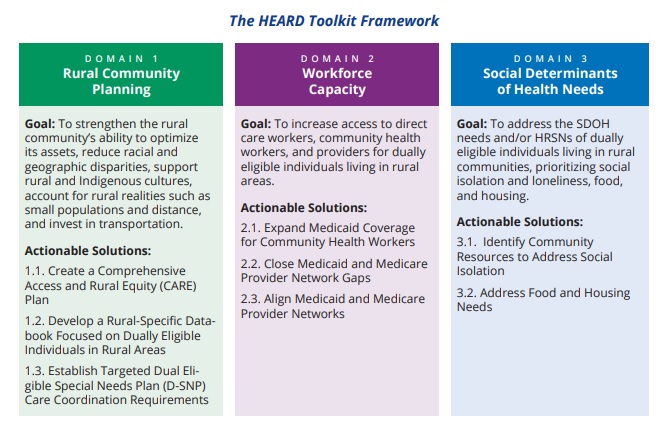
In 2022, HMA convened stakeholder roundtables in three states – including New Mexico, North Dakota, and Tennessee to identify the challenges facing dually eligible individuals living in rural areas and to propose solutions to these challenges. Informed by this process, HMA developed the Health Equity & Access for Rural Dually Eligible Individuals (HEARD) Toolkit.
The toolkit is structured around three domains used to organize eight solutions. For each solution, HMA provides a description of the rural access challenge, the proposed solution, and the proposed tool. Each tool is powered by some type of lever available to the federal and state government. We anticipate that policymakers will build upon this toolkit through continued dialogue with rural communities. The toolkit’s framework, goals, and actionable solutions are summarized in the figure below.
HMA Principal Ellen Breslin, Consultant Samantha Di Paola, and Senior Consultant Susan McGeehan authored the toolkit, with research contributions from HMA Principals Rebecca Kellenberg and Andrea Maresca. Download the toolkit.
On February 2, 2023, HMA will hosted a webinar on the HEARD toolkit. During this webinar, HMA experts and panelists including Dr. Kevin Bennett (USC-SOM Columbia, SC CRPH), Dennis Heaphy (DPC), Pam Parker (SNP Alliance), and Tallie Tolen (New Mexico Medicaid) will summarized and discussed the toolkit’s actionable solutions for improving rural dually eligible individuals’ health and social outcomes.
This week, our In Focus section highlights the Health Affairs article, Advancing Health Equity and Integrated Care for Rural Dual Eligibles, authored by Ellen Breslin, Samantha Di Paola, Susan McGeehan, Rebecca Kellenberg, and Andrea Maresca, Health Management Associates.
A public health crisis is growing more acute in rural America, disproportionately impacting individuals with both Medicaid and Medicare (the “dually eligible”). The rural health crisis is a health equity concern that affects all rural residents, including dually eligible individuals. There are 47 to 60 million people residing in rural areas. Twenty-one percent of dually eligible individuals live in rural areas—that’s about 2.6 million people. Based on these numbers, the authors calculate that the dual eligible population residing in rural communities accounts for about 5 percent of the total rural population. Dually eligible individuals living in rural areas are at risk of falling through the cracks.
Dually eligible individuals lack access to adequate medical, behavioral health, home-and community-based services (HCBS) and other social services; those living in rural areas face even steeper challenges. Since dually eligible individuals are among the poorest of all individuals covered under Medicare, they are at significant risk of paying a steep rural mortality penalty.
With these challenges there are opportunities for innovation for the dually eligible population living in rural communities. The US can reverse the mortality-disparity rate trajectory. Public and private entities are interested in revitalizing rural America, confronting the rural health crisis, and harnessing the power of rural communities. Investment in the rural health care sector is essential given it is a major economic driver of rural communities.
HMA is creating a toolkit with actionable solutions to improve access to services and integrated care and health equity for individuals dually eligible for Medicare and Medicaid who live in rural areas across the country. This project is a follow-on project to a previous HMA project supported by Arnold Ventures. In 2021, HMA prepared a brief, Medicare-Medicaid Integration: Essential Elements for Integrated Care Programs for Dually Eligible Individuals, to increase and promote enrollment in integrated care programs (ICPs) meeting dually eligible individuals’ needs and preferences. Interviewees including dually eligible individuals helped HMA to identify “access to needed services in rural areas” as an essential element of ICPs. In response, HMA started a new project to create a toolkit with actionable strategies to improve access to needed services and improve integrated care opportunities, specific to dually eligible rural residents’ needs.
HMA designed the toolkit around four values: 1) rural health equity is an imperative for dually eligible individuals, 2) actionable solutions and innovations must come from the community, 3) there is no single pathway to integration, and 4) Medicare and Medicaid flexibilities are critical to inspiring innovations to advance health equity, access, and integration. The toolkit will provide actionable solutions for states with and without integrated care programs for dually eligible individuals to increase access to needed supports and services, care coordination, and integrated care programs. We expect that states and rural communities will use the toolkit as a foundation for mapping a holistic plan to advance access to care coordination and integrated programs for dually eligible individuals residing in rural communities. Other states may employ contractual tools listed in the toolkit to expand access to providers and new services; strengthen partnerships among entities serving the community such as community-based organizations, providers, and health plans; and increase community-wide accountability for meeting dually eligible individuals’ whole person-centered needs. The toolkit is scheduled for an early 2023 release.
Today’s blog is the next in our series highlighting significant developments in the Medicare program. In our first article we covered the Centers for Medicare and Medicaid Services’ (CMS) calendar year 2023 Medicare Physician Fee Schedule (MPFS) proposed rule. This week we are highlighting a few key policy developments in the proposed rule that governs payment levels and policy updates for hospital outpatient departments and ambulatory surgical centers (ASCs).
As we discussed last week, this is a pivotal moment for the Biden Administration’s Medicare policy agenda. Because the rulemaking cycle takes about 18 months, CMS needs to begin the process of collecting input on new proposals this year if it intends to finalize proposals before the end of the President’s first term. Additionally, the CY2023 rule represents an important transition year for CMS as it navigates the COVID-19 related anomalies in the data used to calculate payment levels.
Health care plans, providers, and facilities are continuing to transition to value based payment strategies, making it increasingly important to assess the entire environment of Medicare payment rules as these payment systems are the basis of financial benchmarks, quality incentives, and other key components of value-based payments. In addition, these payment rules provide insight into the cost pressures, incentives, and areas of misalignment throughout the health care system.
HMA experts are analyzing and closely tracking several issues in the CY 2023 hospital outpatient prospective payment system (OPPS) proposed rule. A brief summary of some of the most important proposed policy changes for the outpatient hospital setting are included below and highlight many of the Administration’s top health care priorities.
Policies to sustain access and address health disparities in rural communities.
Enhancing Medicare’s behavioral health payment and access policies beyond the COVID-19 public health emergency.
Uncertainty in the hospital outpatient prospective payment system (OPPS) rate increase due to future implementation of changes in 340B payment.
Increasing transparency of consolidation and mergers in the marketplace to help advance quality and affordability.
The remainder of our post delves into these issues and other notable proposals. Our post also includes analysis of the implications of these policies for stakeholders deserving.
Key Action Items for Stakeholders
The CY 2023 OPPS Proposed Rule was published on July 15, 2022, and all comments from stakeholders are due to CMS by September 13, 2022. We anticipate CMS will release their Final Rule in late fall 2022, before the new rules are implemented January 1, 2023.
The public comment period is also an important window of opportunity during which stakeholders can analyze the impact of CMS’s proposed policies, assess the proposals against other applicable pending federal and state payment policies, and consider how the proposals may impact business decisions. Further, the public comment period is essential for CMS to deepen its understanding of the impact of its policies on stakeholders. The agency benefits from hearing stakeholder’s perspectives, viewing their quantitative and legal analyses, and understanding the general stakeholder environment.
Rural Emergency Hospitals: Definition and Payment
The Consolidated Appropriations Act of 2021 (CAA) established a new provider type called Rural Emergency Hospitals (REHs) beginning in 2023. REHs are facilities that convert from either a critical access hospital (CAH) or a rural hospital with less than 50 beds, by choosing to close their inpatient capacity. Instead, these facilities provide emergency department services, outpatient services, post-hospital extended care services, and other defined services.
While the statute specifies many foundational aspects of REHs, CMS was given the authority to further define REH eligibility status and to specify the unique reimbursement mechanisms for REHs. All of these components will be vital to a provider or entity’s decision to pursue REH status.
On June 30, CMS released the first component: Conditions of Participation (CoPs) for REHs, which defined REH status within the Medicare program. Within the CY 2023 OPPS Proposed Rule CMS proposed to define reimbursement and several other key components of REHs. Below we detail the key elements of REH reimbursement. In HMA’s blog next week we will offer greater detail on the COP and reimbursement policies.
REH policies proposed in the CY 2023 OPPS Proposed Rule:
REHs will receive a monthly facility payment of approximately $268,000 (or more than $3 million per year) beginning in CY 2023.
REHs will receive a 5 percent payment increase for all services covered under the Medicare OPPS.
REHs may provide outpatient services that are not otherwise paid under the OPPS (e.g., the Clinical Lab Fee Schedule) as well as post-hospital extended care services furnished in a unit of the facility that is a distinct part of the facility licensed as a skilled nursing facility (SNF).
Beneficiaries served at REHs will not be charged a copayment on the additional 5 percent OPPS payments, but standard OPPS cost-sharing requirements would still apply.
REHs must comply with all applicable provider enrollment provisions in order to enroll in Medicare.
REHs will have a unique quality reporting program distinct to REHs, in order to reduce reporting burden on these smaller facilities. CMS seeks feedback from stakeholders on the measures used for the REH quality reporting program.
REHs will be provided an exception from the Physician Self-Referral Law (commonly known as the “Stark Law”).
Takeaway: The creation of REHs is both a significant change for the Medicare program and potentially a unique opportunity for small rural hospitals and health systems which own/operate rural hospitals. The Congress and CMS believe this model will address access to care concerns and health disparities present in rural communities. Many assert that under the REH approach, hospitals and health system providers serving rural communities may have greater flexibility to support the rural communities they serve.
Look for our additional analysis of the set of proposed REH policies next week.
Mental Health Services Furnished Remotely by Hospital Staff
For CY 2023, CMS proposes several updates to its remote services policy to plan for a transition from temporary policies enacted during the PHE to when the PHE is declared over. CMS proposes to:
Allow clinical staff of a hospital to conduct remote mental health and substance abuse services and to designate these services as hospital outpatient department services for purposes of reimbursement. Patients will be permitted to be in the homes and hospital clinical staff must conduct the service from inside the hospital facility. Further, CMS proposes new hospital outpatient codes for these services, and CMS will not permit these outpatient services to be conducted (and billed) in tandem with physician fee schedule services.
The agency will require an in-person service within 6 months prior to the initiation of the remote service and then every 12 months thereafter. CMS will allow exceptions to the in-person visit requirement based on beneficiary circumstances.
The agency is also proposing that audio-only interactive telecommunications systems may be used to furnish these services when the beneficiary is not capable of, or does not consent to, the use of two-way, audio/video technology.
Takeaway: As CMS wrote in the proposed rule, many beneficiaries may be receiving mental health services in their homes from hospital or critical access hospital staff during the COVID-19 PHE. The policy update could help minimize disruptions in continuity of care that might otherwise occur following the end of the PHE. The proposals also reflect CMS’ desire to adapt to changing beneficiary preferences and new methods of providing services that have evolved during the COVID-19 PHE.
Hospitals and health systems may benefit from these proposals because it will maintain and expand patient-provider access points and care coordination after the patient has left the hospital. Stakeholders will need to continue to assess beneficiary utilization of services furnished remotely, potential staffing changes to support these services, and community-specific access needs for remote mental health services. Stakeholders may have important perspectives to offer CMS through the regulatory comment proceed as the agency determines whether to finalize a requirement that hospital clinical staff be physically located in the hospital when furnishing services remotely using communications technology.
Payment Policies
CMS is proposing to update OPPS payment rates for hospitals and ASCs that meet their respective applicable quality reporting requirements by 2.7 percent. This update reflects the following factors:
Projected hospital market basket percentage increase of 3.1 percent; and
A 0.4 percentage point reduction for projected multifactor productivity.
In the context of the OPPS, CMS proposes to increase the OPPS conversation factor by 2.7 percent from CY 2022 to CY 2023, from $84.18 to $86.79. CMS estimates this will increase OPPS payments to providers from CY 2022 to CY 2023 by $1.8 billion.
In the context of ASCs, CMS estimates a proposed increase to the ASC conversation factor by 2.7 percent from CY 2022 to CY 2023, from $49.91 to $51.31. CMS estimates this change will increase industry-wide payments from CY 2022 to CY 2023 by $130 million. In addition, CY 2023 is the final year in which CMS will apply the productivity-adjusted hospital market basket update to ASC payment system rates for an interim period of 5 years (CY 2019 through CY 2023).
Consistent with CMS’s methods for updating other Medicare prospective payment systems during the 2023 regulatory cycle, the agency proposes to use claims data from CY 2021 and hospital cost report data from the June 2020 Healthcare Cost Report Information System (HCRIS) to update payment rates for CY 2023. Some stakeholders have expressed concern during this regulatory cycle that claims data continue to include anomalous trends influenced by covid cases and the cost data do not accurately reflect covid-related costs because the data primarily are associated with pre-COVID time period.
340B Payment Policy
CMS’s proposed rule acknowledges the recent Supreme Court decision in American Hospital Association v. Becerra (No. 20-1114, 2022 WL 2135490), which will have a significant impact on the 340B program. However, given the recency of this decision the agency formally proposed to maintain the current payment rate of Average Sale Price (ASP) minus 22.5 percent for drugs and biologics acquired through the 340B program.
In response to the decision, CMS stated that the agency will adjust 340B payment rates within the CY 2023 final rule. In its recent ruling, the Supreme Court held that HHS may not vary payment rates for drugs and biologicals among groups of hospitals without having surveyed hospitals’ acquisition costs. The decision relates to payment rates for CYs 2018 and 2019 but has implications for the CY 2023 rates.
CMS also stated that it anticipates applying a 340B payment rate of ASP plus 6 percent for specified drugs and biologics in the CY 2023 final rule. This would likely result in a budget neutrality reduction approaching 5% in the OPPS conversion factor.
Takeaway: Hospitals and federally qualified health centers (FQHCs) receiving 340B reimbursements will view the court ruling and potential increase to 340B payment rates as positive. However, it remains unclear at what exact level 340B payments will be set. Therefore, stakeholders may want to comment on the CY2023 policy options CMS is considering. Additionally, stakeholders should plan for CMS to conduct a survey of acquisition costs as it considers newly proposing changes to the payment rates. It remains possible that CMS will continue to apply the 340B cut for 2023 in light of a 2020 survey of hospital acquisition cost that it conducted. Future budget neutrality adjustments may also be necessary for any payments that are returned to hospitals due to the overturning of the 340B cut for 2018 and 2019.
Additional Issues for Stakeholder Consideration
In addition to the financing and policy issues discussed above, the wide-ranging rule contains numerous other policy proposals with direct and indirect implications on Medicare providers, beneficiaries, and other stakeholders. Table 1 provides a snapshot of some of the issues that warrant further consideration.
Table 1. Other Notable Proposed Changes Impacting Health Care Providers and Stakeholders
Topic
Summary
Provider Transparency
CMS issues a request for information linked to the President’s July 2021 Executive Order (E.O.) on Promoting Competition in the American Economy. CMS currently manages a database of nursing homeowners and operators, and the agency has begun to leverage that data to support hospital and nursing home patients and their families. The agency solicits feedback on whether it should release additional data that is already being collected “to help identify the impact of provider mergers, acquisitions, consolidations, and changes in ownership on the affordability and availability of medical care.” CMS also invites comments on whether the agency should release similar data for other types of providers. The solicitation represents the next phase in CMS’ expansive portfolio of work to address the impact of market consolidation on health care prices, consumer costs, and quality in the healthcare industry writ large. Medicare providers and stakeholders should be tracking how federal health care regulators, including CMS, are working to respond to the E.O. There is a strong likelihood that CMS will begin to include data on other types of providers and stakeholders will need to understand this shifting landscape and how it could impact their current and potential future business decisions.
SaaS
CMS discusses its desire to address the novel and evolving nature of Software as a medical Service (Saas) procedures. The agency is seeking comments on the specific payment approach we might use for these services under the OPPS as SaaS-type technology becomes more widespread. We are also concerned about the potential for bias in algorithms and predictive modeling, and are seeking comments on how we could encourage software developers to prevent or mitigate the possibility of bias in new applications of this technology.
Inpatient Only List
Removes ten services from the Inpatient Only (IPO) list.While the IPO list has previously been targeted for major reforms, this year’s narrower set of proposed changes signal CMS’ is deprioritizing IPO list reform.
Payment for surgical N95 Respirators
CMS recognizes that hospitals may incur additional costs when purchasing domestic NIOSH-approved surgical N95 respirators. CMS is proposing payment adjustments under the IPPS and OPPS that would reflect, and offset, the additional marginal resource costs that hospitals face in procuring domestically made NIOSH-approved surgical N95 respirators. Under this proposal, these payments would be provided biweekly as interim lump-sum payments to the hospital and would be reconciled at cost report settlement. The rule outlines the information providers need to include on the cost report to determine payments for cost reporting periods beginning on or after January 1, 2023.
Ambulatory Surgery Centers
CMS requests stakeholder feedback on methods that could be implemented to collect cost data from ASCs that minimize reporting burden.This could be the beginning of a process to implement cost reports for ASCs.
The HMA Medicare team will continue to analyze these proposed changes. We have the depth and breadth of expertise to assist with tailored analysis, to model policy impacts, and to support the drafting of comment letters to this rule.
On June 30, 2022, the Centers for Medicare & Medicaid Services (CMS) released a proposed regulation establishing the Conditions of Participation (CoPs) for a new hospital provider type, Rural Emergency Hospitals (REHs). The REH concept was first developed by the Medicare Payment Advisory Commission (MedPAC) and subsequently mandated by Congress through the Consolidated Appropriations Act (CAA) of 2021 to address the growing concern over closures of rural hospitals.
REHs provide an opportunity for Critical Access Hospitals (CAHs) and rural hospitals to improve the way care is delivered in their communities, maintain access, and avert potential closure by choosing to focus on the service offerings that are most essential to their communities, such as emergency services, observation care, and additional medical, behavioral, and maternal outpatient services. Importantly, the REH concept enables facilities to maintain a hospital designation absent inpatient capacity thereby ensuring that rural communities retain access to services. This proposed regulation is a significant milestone in CMS’ work to implement the REH designation and their novel payment methodology by their mandated start date of January 1, 2023.
The REH concept is expected to help address the observed health inequities that arise when rural communities lack access to hospitals and other providers. Obtaining an REH designation could be an opportunity for many independent hospitals and delivery systems to strategically reshape themselves in line with their community’s needs while receiving payments from Medicare for doing so.
Within CMS’ proposed regulation, the agency proposes to establish a novel set of REH CoPs which will define the parameters of the REH designation. The REH CoPs closely align with the current CAH CoPs in most cases, while considering the uniqueness of REHs and the statutory requirements. In some instances, the proposed REH policies closely align to the current hospital and ambulatory surgical center standards, such as the polices for outpatient services’ requirements and life safety code, respectively.
As a part of this proposed regulation, CMS seeks input from the rural community on a few key aspects of the REH designation, including:
The specific proposed REH standards, including the ability of an REH to provide low-risk childbirth-related labor and delivery services and whether the agency should require REHs to provide outpatient surgical services in the event that surgical labor and delivery intervention is necessary.
Whether it is appropriate for an REH to allow a physician, physician associate, nurse practitioner, or clinical nurse specialist, with training or experience in emergency medicine, to be on call and immediately available by telephone or radio contact and available on site within specified timeframes.
Updates to CoPs for Critical Access Hospitals
Also within this draft regulation CMS proposes to update the CoPs for CAHs by: (1) adding a definition of primary roads to the location and distance requirements; (2) establishing a patient’s rights CoP; and (3) allowing CAHs that are a part of a larger health system (containing other hospitals and/or CAHs) to unify and integrate their infection control and prevention and antibiotic stewardship programs, medical staff, and quality assessment and performance improvement programs (known as QAPI) to ensure consistent and safe care.
What’s Next
CMS is accepting comments on this rule until August 29, 2022. CMS intends to propose additional policies related to Medicare enrollment, payment, and quality reporting in the upcoming Calendar Year 2023 Outpatient Prospective Payment System/Ambulatory Surgery Center proposed rule. CMS will develop final policies for this program later this year.
For more information about this proposed regulation including how to submit comments and how the REH concept may impact the hospital industry and patients in rural communities please contact our Medicare team who have knowledge in Congressional, MedPAC and CMS policy and operations featured below.
In this week’s In Focus section, HMA Managing Director Matt Powers and Associate Principal Lora Saunders discuss observations and perspectives as we approach completion of the Medicaid unwinding.
Overview
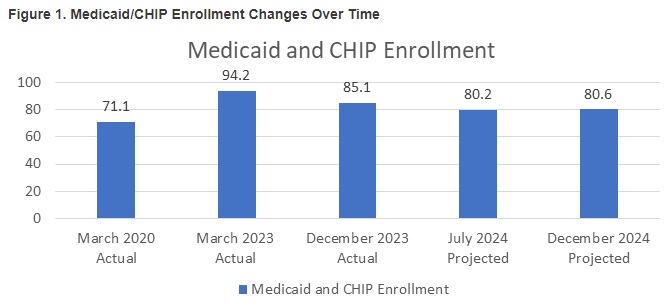
In response to the COVID-19 pandemic, CMS offered states an enhanced federal match in exchange for states pausing Medicaid disenrollments. As a result, Medicaid enrollment increased from around 71 million at the start of the pandemic to more than 92 million in December 2022, when Congress passed a bill to end the “continuous eligibility” provision. States began to resume normal (pre-pandemic) redetermination activities in early 2023—a massive undertaking of attempting to reach and verify eligibility for the then 94 million Medicaid enrollees known as “unwinding.”
More than 70 percent of the efforts that will precipitate the largest one-year drop in enrollments since the program’s inception in 1965 have been completed. The enrollment reductions to date have been virtually identical to HMA’s aggregate projections, and overall enrollment remains well above pre-pandemic levels. Perhaps most importantly, the Medicaid unwinding has put policymakers in a position to better evaluate how to improve enrollment and redetermination processes going forward.
Figure 1 summarizes pre-pandemic enrollments, unwinding enrollments, and the projected end of 2024 enrollment. If the current trend holds, national Medicaid enrollment will be approximately 80 million enrollees—down from the 94 million pre-unwinding enrollment peak and nearly 10 million greater than the 71 million pre-pandemic enrollment.
Our team’s assessment of the status of and data related to the Medicaid unwinding has led us to the following observations:
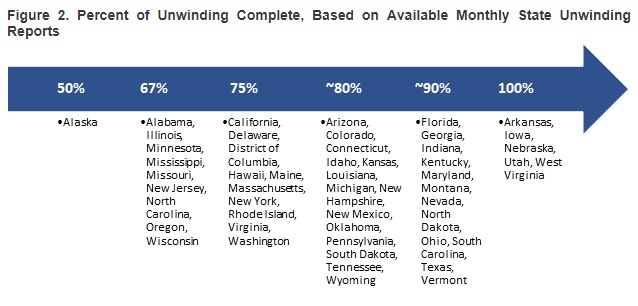
Arkansas, Iowa, Nebraska, Utah, and West Virginia have completed the redetermination process. More than half of the states are within two months of finishing the process.
The states that saw Medicaid enrollment grow the most under the continuous coverage policy are generally the same ones that are experiencing the greatest enrollment declines during the Medicaid unwinding.
Some larger states—including California, New York, and Texas—have sizeable outstanding redeterminations.
Nationally, more than 70 percent of all Medicaid enrollees have completed the redetermination process. Figure 2 points out how far along states are with the redetermination process as of late April 2024.
Medicaid Unwinding: The Road Ahead
As the Medicaid unwinding process enters its final phase in most states, we are looking back at the experiences and lessons that can be applied to make impactful changes to Medicaid eligibility policies, systems, and procedures.
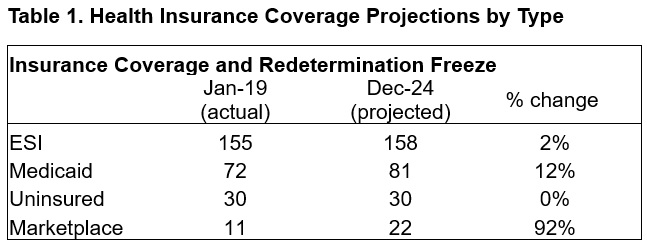
Despite the challenges that the pandemic presented,the safety net was tested and responded well. In early 2020, the number of employed Americans decreased from 158 million to 133 million, and unemployment levels quickly reached 15 percent. Many new healthcare policies targeted direct access issues (e.g., financial supports to providers and telehealth regulatory relaxations), whereas the Medicaid continuous coverage requirement was intended to mitigate the effects of the abrupt spike in unemployment and potential effects on healthcare insurance. Table 1 shows how HMA projects national coverage patterns to change by type of coverage from before the pandemic through the end of the Medicaid unwinding. While the number of people with employer-sponsored insurance (ESI) or uninsured remains essentially flat, Medicaid enrollment grows significantly, and marketplace enrollment nearly doubles. Myriad federal and state policy changes contributed to a remarkably stable uninsurance rate during one of the most volatile economic periods in the past century.
A next question for policymakers is whether, or to what extent, the rate of uninsured people can be sustained or reduced. The broad state adoption of policies to expand postpartum coverage to 12 months from two months and the nationwide January 2024 requirement for states to offer 12 months of continuous Medicaid coverage for children provide a coverage and continuity boost, especially given that nearly 40 million children will benefit from the new law. Other policy levers have the potential to be widely accepted and provide a further incentive to move people who are uninsured toward coverage, more stable insurance products, and more predictable outcomes and costs relative to the inefficiencies and ineffectiveness of non-coverage.
Pivoting to best practices and making policy changes permanent. Just as the relaxation of relatively rigid telehealth policies has become more accepted, post-Medicaid unwinding will provide a natural opportunity to assess best practices and consider permanent policy changes.
Making Ex Parte Durable Policy. Evidence suggests that ex parte policies effectively reduce churn. Further refinement of longstanding ex parte policies is within reach. Ensuring ex parte appropriately manages both the complexities of household versus individual eligibility issues and addresses the weaknesses of unreliable member contact information can improve the likelihood that ex parte can effectively serve as durable policy.
Pivoting from Paper to Electronic Communications. The Medicaid unwinding has seen more partnerships and innovation with state and federal workers, providers, managed care organizations, and consumer advocates, and allowed the increased use of mobile devices for outreach and engagement. Making more deliberate strides to simplify eligibility and move the eligibility platform, patient engagement, and member outreach to more reliable communication methods (e.g., email, text, and member portals rather than paper communication) while adhering to privacy and security requirements is a logical next step.
Continuing to Measure Better. Call abandonment rates, call center wait times, and application processing times—metrics that focused on some of the key challenges to a successful redetermination and timely access to care—received greater attention during the unwinding but were frequently overshadowed by other primary metrics like “disenrollments” and “procedural terminations.” Though disenrollment data and procedural terminations could be used to identify potential areas of concern, their emergence as primary metrics often diverted energy from innovative engagement and redetermination efforts. A focus on contextualized metrics that provide actionable information will support effective oversight and monitoring.
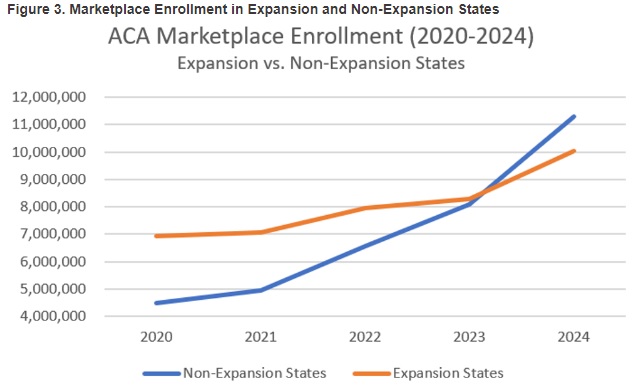
Marketplace growth may be the real story. Throughout the pandemic, marketplace enrollment has steadily increased, jumping nearly 90 percent from 2020 to 2024 and 30 percent from 2023 to 2024, to reach more than 21 million enrollees. Driving the growth in marketplace enrollment are temporarily increased marketplace subsidies and Medicaid unwinding public awareness campaigns.
The marketplaces are proving to be a reliable source of coverage for consumers without health insurance access through ESI or other public programs, particularly in times of significant change such as the Medicaid unwind. With more marketplace enrollees and, therefore, broader risk pools, more health insurers are considering offering marketplace plans and are assessing competitive advantages like lower costs, broader provider networks, and more robust drug formularies.
Figure 3 shows that marketplace growth in non-expansion states is far outpacing marketplace growth in Medicaid expansion states, suggesting that the key elements of the Affordable Care Act have developed deep roots.
HMA’s experts continue to monitor Medicaid unwinding developments. We are taking a comprehensive approach to assessing lessons learned and opportunities to improve Medicaid as state and stakeholder experiences and data continue to become available over the next two quarters.
For more information or questions about Medicaid unwinding developments, contact our featured experts.