Blog

Five Takeaways on Medicaid, AI, Financial Sustainability, and Program Integrity from HMA’s 2026 National Conference

From financial sustainability and program integrity to value, technology, and cross-sector collaboration, healthcare leaders are being challenged to rethink how their organizations operate. 

Healthcare leaders are entering a period in which the decisions they make now will shape their organizations for years to come. During the Health Management Associates (HMA) 2026 National Conference, US Healthcare 2026: Signals, Signs & Flashing Lights, conversations repeatedly touched on a common question: How do healthcare organizations adapt their strategies and operating models to deliver better outcomes in a more constrained environment? 

Across discussions on financial sustainability, program integrity, technology, AI, access, and the future of public programs, a clear imperative emerged: Organizations face more difficult choices about where to invest, how to define and demonstrate value, and how to work across traditional silos. The implications extend well beyond any one program or sector. 

Five takeaways stand out for healthcare leaders looking ahead.

1. Financial sustainability requires organizations to get much clearer about where they create value

Financial pressure was an ongoing topic of discussion at the conference, though conversations diverged from the traditional focus on managing tighter budgets. Instead, leaders are reconsidering where their organizations can have the greatest impact and the expertise they need to protect and strengthen, and where partnerships can improve effectiveness of service delivery. 

The conversation about sustaining access to care brought that challenge into sharp focus. Safety-net providers are confronting growing needs while also reassessing how far they can stretch their existing resources. Panelists emphasized the need for organizations to stay anchored to their mission, continually assess priorities and resources, and resist the temptation to pursue every potential opportunity or funding stream. Partnerships with government, philanthropy, schools, community organizations, and other healthcare organizations can help extend reach while allowing organizations to concentrate resources where they are uniquely positioned to deliver. 

What healthcare leaders should be thinking about

The organizations that emerge stronger will be clear about their mission and where they create distinctive value. Executive teams should be asking whether their resources, partnership, and operating models reflect those priorities.

That shift will require difficult decisions. Sustainability cannot be achieved by cutting costs indiscriminately or expecting existing models to absorb additional pressure indefinitely. Organizations will need a clearer view of the services and capabilities they must preserve, where operational models need to change, and which investments can produce meaningful results for the communities they serve.

2. Program integrity is moving closer to the center of healthcare operations

Program integrity is receiving heightened attention, particularly as public programs face greater scrutiny over how healthcare dollars are spent. Federal and state leaders highlighted the tension healthcare leaders must manage, specifically, improving stewardship of public dollars while preserving access to necessary services and avoiding undue burden on legitimate providers. They also highlighted the importance of provider management, including using data analytics to determine utilization and payment, quality, and member outcomes—all of which can help organizations identify problems earlier and make better decisions about where intervention is warranted. 

Across the sessions, healthcare leaders spoke of program integrity as a component of operations, signaling a movement away from the historical framing of program integrity as a stand-alone function. The shift creates an opportunity to connect program integrity more deliberately with quality and value.

 What leaders should be thinking about

Expect program integrity to become more integrated with operational and financial strategy. Organizations that strengthen data, governance, provider oversight, and cross-functional coordination now will be better positioned as federal and state expectations continue to evolve.

3. Managed care entities must create value across the healthcare ecosystem

Expectations for managed care delivery systems are changing, particularly for Medicaid managed care entities. Conversations throughout the conference centered on how to achieve value. Speakers discussed concepts for a financial framework that gives plans and their partners enough time, resources, and flexibility to demonstrate value. The number of years available to show results, the structure of incentives, reimbursement levels, and the allocation of financial risk all shape what plans, providers, and community partners can realistically deliver. As expectations rise, states and managed care entities will need to align these factors more deliberately so that accountability for outcomes is matched by the conditions needed to produce them. 

Plans need a clear understanding of where each partner can make a meaningful contribution, whether by strengthening primary and specialty care, addressing behavioral health and social needs, improving data exchange, or reaching members who remain disconnected from care. The value comes from how well those capabilities work together around shared priorities.

What healthcare leaders should be thinking about

Medicaid managed care leaders should not wait for the next contract cycle to determine whether their financial and partnership models can deliver the outcomes now expected of them. They should identify where incentives, reimbursement, risk, timelines, or data constraints are working against shared goals and address those gaps with states and partners.  

4. Technology strategy needs to start with the problem, not the tool

Throughout the AI preconference session and the main event, healthcare organizations grappled with the immediate challenge of deciding where AI adds value and whether they are prepared to use it responsibly. 

The AI preconference discussion focused on a framework to support key decisions and the need to put readiness before adoption. Core components of the readiness framework include reliable data, workforce preparation, engaged leadership, governance, and clear operational processes. Both technology experts and clinical leaders encouraged organizations to prioritize practical, high-value use cases rather than implementing AI broadly for its own sake. 

And, as the conference discussion of the Office of the National Coordinator’s Trusted Exchange Framework and Common Agreement (TEFCA) and the Centers for Medicare & Medicaid Services (CMS) Health Tech Ecosystem demonstrated, simply connecting more data is too little. The next step is making that information usable in ways that improve decisions, coordination, and care without creating additional work.

What leaders should be thinking about

Before making the next technology investment, organizations should be clear about the problems they are trying to solve. The strongest use cases will connect technology to a defined operational or clinical need, supported by the governance, data workforce, and measurement needed to determine whether is is actually working.  

5. Some of the biggest opportunities are emerging between programs, sectors, and traditional lines of business

Healthcare may be organized around programs and sectors, but the problems leaders are trying to solve rarely respect those boundaries. 

That was particularly evident in conversations about behavioral health. People with complex needs often interact with not only healthcare providers, but also housing, social services, and criminal justice systems. Better outcomes, therefore, depend in part on connecting services and organizations that historically have operated separately. 

The same concept surfaced during the discussion about sustaining access. Speakers challenged organizations to move beyond a siloed mindset and focus more broadly on what patients and communities need while using partnerships to extend their reach. 

A conversation with leaders from the US Department of Veterans Affairs (VA) offered another perspective on this opportunity. The VA is taking steps to make its healthcare data more actionable and to ensure its Community Care program draws on core capabilities of industry and to ensures its approach is informed by both Medicare and Medicaid. 

There is an important strategic implication here. Expertise developed in Medicaid managed care, value-based purchasing, population health, provider networks, data analytics, program integrity, interoperability, and implementation does not necessarily have to remain within the business or program where it originated. Leaders have an opportunity to look across the healthcare ecosystem for proven approaches and consider where those capabilities can solve problems in new settings. 

What healthcare leaders should be thinking about

The next opportunity may site outside the line of business in which an organization has traditionally operated. Leaders who can identify where their expertise translates, and where partners bring complementary capabilities, may find new ways to address longstanding challenges.

From Responding to Change to Shaping What Comes Next 

The discussions at HMA’s 2026 National Conference point to a healthcare environment that is entering a different phase. Understanding policy change remains essential. The work ahead, however, needs to be strategic and transformational. 

The leaders best positioned for what comes next will know where their organizations create value, be able to demonstrate it, and recognize when bringing that expertise into a new partnership, program, or market can be transformative. 

HMA can help leaders move this work forward by bringing the right partners to the table and connecting strategy with execution. As a convener and strategic advisor, HMA combines market and policy expertise with data analysis and technology capabilities to help organizations assess changing expectations, align financial and operating models, and build partnerships that deliver measurable value. 

These conversations continue in 2026 through HMA’s State of Reform events, where policymakers, health plans, providers, community organizations, and other stakeholders come together to examine state and local market realities and develop practical solutions. HMA’s next national conference will be held October 12-14, 2027, in Nashville, TN. 
What CMS’s New Medicaid Quality Pledge Means for the Future of Measurement

The Centers for Medicare & Medicaid Services (CMS) has launched the Investing in Health Outcomes initiative with a founding group of 37 states, establishing a voluntary Medicaid Quality Pledge intended to shift Medicaid and Children’s Health Insurance Program (CHIP) quality strategy toward outcomes that matter to beneficiaries. The initiative is an effort to redirect policy, tools, data, and improvement resources away from an expansive inventory of process-oriented requirements and toward a more focused system that can demonstrate progress in prevention, chronic disease management, and behavioral health. 

That direction matters now because Medicaid agencies, managed care entities, providers, and vendors are being asked to improve outcomes while managing extensive and often duplicative performance reporting expectations. CMS reported that its review of managed care programs in 42 states identified approximately 450 reporting requirements corresponding to roughly 260 unique quality measures, many focused on processes and utilization. A smaller, more coherent portfolio could reduce administrative burden, but only if the measures selected are meaningful, the data are trusted, and accountability is built into the policy and contractual structures that drive delivery-system behavior. 

Through this voluntary pledge, CMS is encouraging, rather than requiring participating states to apply the four principles, as they develop health outcome targets and consider outcomes-oriented measures for state quality strategies and upcoming procurements. A disciplined, multiyear approach focused on a limited number of priorities is therefore best understood as an implementation strategy that states can use to make the pledge actionable and establish a credible performance trajectory. 

To learn more about the four principles for an outcome-focused Medicaid quality system access the full report. 

CMS Marketplace Anti-Fraud Actions: Financial and Strategic Implications for ACA Health Insurers

Program integrity has become an urgent, administration-wide healthcare priority, placing the Affordable Care Act (ACA) Marketplace under heightened scrutiny. On September 22, 2026, the Centers for Medicare & Medicaid Services (CMS) announced Federal Marketplace anti-fraud actions with immediate operational and financial implications for insurers. 

This week, actuaries from Wakely Consulting Group, an HMA company, examine how Marketplace disenrollment actions could affect health insurers in 2026 and beyond across enrollment, morbidity, risk adjustment, financial reporting, operations, distribution strategy, and future pricing. 

CMS Marketplace Anti-Fraud Actions and Unauthorized Enrollment Cancellations 

CMS’s three-part program integrity strategy focuses on preventing fraudulent and improper enrollments, removing confirmed unauthorized enrollments, and enforcing Marketplace requirements for agents and brokers. The agency also established a Federal Marketplace anti-fraud coordination group comprising leaders from CMS and the US Department of Health and Human Services (HHS) to direct these efforts. 

CMS reported canceling approximately 315,000 enrollments covering more than 760,000 individuals after determining that the coverage was unauthorized. The agency expects approximately $2.2 billion in advance payments of the premium tax credit (APTC) to be returned and will continue working with insurers to identify additional cases, prevent improper subsidy payments, and recoup prior payments. 

This action follows a June 2026 report from the HHS Office of the Assistant Secretary for Planning and Evaluation, which identified approximately 1 million highly suspicious agent- and broker-assisted HealthCare.gov enrollments involving applications without a Social Security number and members paying no premium. 

Although the absence of a Social Security number does not independently establish fraud, the September announcement sends a strong signal about CMS’s willingness to cancel enrollments confirmed as unauthorized. 

Financial and Operational Implications for ACA Marketplace Insurers 

Enrollment Losses and Morbidity Risk for ACA Marketplace Plans 

In their August 2026 white paper, Implications for Potential Marketplace Unauthorized Enrollment Actions, actuaries from Wakely noted that while the overall enrollment reduction is known, its distribution across issuers and markets is not publicly available. If canceled members are disproportionately healthy or had limited healthcare utilization, their removal could increase average claims among the remaining population. For example, if non-utilizers represented 10 percent of an issuer’s enrollment, removing them would increase average claims per member per month by approximately 10 percent, assuming no other changes. 

ACA Risk Adjustment Implications of Marketplace Disenrollments 

Changes in enrollment and morbidity could materially affect ACA risk adjustment transfers, but the results will vary according to each issuer’s concentration of confirmed or potentially unauthorized enrollment. Issuers with greater exposure to canceled enrollment could see more favorable risk adjustment results even as average claim costs increase. Those transfers may not fully offset deterioration in the remaining risk pool, which underscores the need for plan- and state-specific analysis. 

APTC Recoupment and Financial Reporting Considerations for Insurers 

The timing and process to recoup approximately $2.2 billion in APTCs has near-term financial reporting considerations. Issuers should evaluate potential effects on: 

  • Premium and APTC accruals 
  • Risk adjustment transfer accruals 
  • Per member claims cost estimates 
  • Premium deficiency reserve considerations 

According to CMS, the cancellations announced in September 2026 will be applied retroactively to original effective dates. The full effect of this heightened scrutiny, however, will depend on how CMS approaches recoupment and how quickly issuers process enrollment and financial adjustments.  

Issuers may also incur near-term costs associated with identifying and investigating suspicious enrollments, reconciling records with CMS, processing cancellations, adjusting revenue accruals, supporting affected consumers, and updating broker oversight. Lower enrollment also leaves fewer premium dollars available to cover fixed administrative expenses. 

How CMS Disenrollments Could Affect Future Marketplace Premiums 

As 2027 premiums are finalized, issuers will need to consider enrollment and morbidity shifts for 2028 prices. Insurers with established monitoring and projection processes will be better positioned to assess new CMS information and adjust forecasts as policy and enforcement evolve for 2026 and 2027. 

CMS Broker Enforcement and Marketplace Distribution Risks 

In addition to strengthening oversight of enrollment data, CMS has intensified enforcement of agent and broker requirements. Since January 2026, the agency has sent termination notices to more than 200 noncompliant agents and brokers and issued 569 notices of intent to terminate Exchange Agreements associated with 2026 applications that lacked identifying applicant information. Issuers should assess concentration by broker, monitor enrollment quality, and consider how enforcement may affect acquisition channels, member mix, and future growth. 

Market-Level Variation in Marketplace Disenrollment Risk 

The effects of CMS’s actions are limited to Federally Facilitated Marketplace (FFM) states and state-based Marketplaces using the federal platform (SBE-FM) and do not extend to state-based Marketplaces operating their own eligibility and enrollment systems. Individual issuer effects could vary materially based on several factors, including state, county, issuer, product, broker channel, and member premium contribution. 

Some issuers will be more exposed than others, particularly those with more enrollees paying low or $0 net premiums, greater broker reliance, substantial automatic reenrollment, or a strong presence among lower-cost plans. Understanding the financial impact will require analysis at the plan and market levels. 

Key Actions for Health Insurers Following CMS Marketplace Disenrollments 

Health insurers should assess a range of outcomes at the plan and state levels. This analysis should show how the concentration and health profile of canceled enrollment could affect claims, APTCs, risk adjustment, financial accruals, administrative expenses, distribution, and future rates. 

The timing of CMS’s actions will shape those outcomes. Because the announced cancellations apply retroactively to original effective dates, insurers will need to account for APTC recoupment and related enrollment and financial adjustments. The ultimate impact will depend on the data CMS provides, the scope of additional reviews, processing timelines, and any appeals or corrections. Issuers should revisit their forecasts as these details emerge and federal actions continue ahead of the 2027 plan year. 

Assessing Marketplace Disenrollment Risk: How HMA and Wakely Can Help 

Health Management Associates (HMA) and Wakely Consulting Group combine policy, market, actuarial, and financial expertise to help health plans and state regulators assess the effects of Marketplace program-integrity actions. For insurers, our teams can develop plan-by-plan and state-by-state projections of enrollment, morbidity, claims, APTCs, risk adjustment, and premiums; test prospective and retrospective cancellation scenarios; and translate the findings into pricing, forecasting, distribution, and market strategy decisions. 

State insurance regulators in affected FFM and SBE-FP states will need a market analysis of how the cancellations are distributed across issuers and whether changes in enrollment and morbidity could affect rates, risk adjustment, capital, or continued plan participation. Regulators should also evaluate whether approved 2027 rates and financial assumptions remain supportable and monitor solvency and consumer access as insurers adjust to this and CMS’s broader program integrity actions. HMA and Wakely can support this work through state-specific market assessments, issuer-level stress testing, rate and risk-pool analysis, and scenario projections that help regulators identify emerging concerns and act before they threaten market stability.

Pennsylvania Health Policy Conference 2026: What’s Next for Medicaid Enrollees, Rural Hospitals, and the Workforce

State of Reform (SOR), an HMA Company, hosted its inaugural Pennsylvania Health Policy Conference in Harrisburg on September 16, 2026, bringing together more than 170 interest-holders, including state health and human services departments leaders, policymakers, providers, health plans, community‑based organizations (CBOs), and others to discuss the most pressing health-related issues in the commonwealth. 

The conference focused on how federal Medicaid policy changes, managed care challenges, and workforce shortages, are reshaping Pennsylvania’s healthcare landscape while highlighting prevention and cross-sector collaboration as essential to building a more sustainable system. Key discussions are highlighted below. 

Central Discussions: Federal Medicaid Policy, Managed Care, and the Workforce 

Pennsylvania Medicaid 

Valerie Arkoosh, MD, Secretary of the Pennsylvania Department of Human Services (DHS) opened the conference by examining how federal policy and fiscal pressures are likely to affect Pennsylvania’s health and human services system. She discussed the anticipated loss of Medicaid coverage for approximately 310,000 enrollees due to the 2025 budget reconciliation act (P.L 119-21, now known as the Working Families Tax Cut Act [WFTCA]) and the resulting strain on individuals, providers, and the broader healthcare system. 

WFTCA and broader financial pressures also raise concerns about the sustainability of hospitals, with closures threatening access to care, especially in rural and underserved communities. Hospitals and safety-net facilities are consistently working against staffing shortages, capacity constraints, and shifting payer dynamics. Pennsylvania is using funds from the Rural Health Transformation Program (RHTP) to support struggling rural hospitals as best it can. DHS has awarded $42 million in RHTP grant fund awards so far to support various rural facilities. 

Medicaid managed care 

Community HealthChoices (CHC), Pennsylvania’s Medicaid managed long-term services and supports (MLTSS) program, has been at the forefront of the healthcare conversation in the state as a result of the cancellation of its 2024 contract awards for the program. In June 2026, DHS released a request for information seeking responses on several topics that could shape a new CHC re-procurement, including the number of Medicaid managed care organizations (MCOs) within CHC, regional versus statewide coverage, length of contract terms, strategies to align coordination of Medicare and Medicaid, artificial intelligence (AI), and other program recommendations. 

During the managed care discussion, Sally Kozak, Deputy Secretary of the Office of Medical Assistance Programs, and Emily Katz, Executive Director of Pennsylvania Medicaid MCOs, joined health plan leaders in assessing how well the physical health managed care program is improving access, quality, and cost management. 

The conversation centered on persistent challenges involving provider participation, care coordination, the complexity of administering the programs, and the variation in performance by region. There are opportunities to reform or refine managed care to better align incentives with patient needs and system sustainability. 

Workforce shortages 

Like all states, Pennsylvania is facing a health professional shortage across all sectors. Jennifer Hale, Director of the Bureau of Policy and Regulatory Management in the Office of Long-Term Living, and Garry Pezzano, President and Chief Executive Officer of LeadingAge PA, highlighted how this issue is affecting people who need long-term care. Speakers emphasized that Pennsylvania’s ability to meet the needs of an aging population will depend largely on strengthening the workforce that delivers these services. They explained several of the strategies underway and being discussed to achieve this goal, for example by improving wages and benefits for direct care workers, strengthening education and training pipelines, expanding loan repayment programs, prioritizing recruitment, and investing in technology for telehealth services and AI-assisted workflows. 

Advancing Change: Upstream Interventions and Collaboration 

Paying for care continues to be a chief concern. While many of the financial pressures come from within the healthcare system as the result of policy and budgetary challenges, throughout the conference speakers emphasized that many of Pennsylvania’s most pressing healthcare challenges begin outside the healthcare system. Food insecurity, unstable housing, transportation barriers, limited caregiver support, and lack of social and community supports worsen health outcomes and lead to increased healthcare expenditures. 

Panelists called for greater investment in upstream prevention services that help people remain healthy and independent before their needs become more acute to contain costs over time. Speakers recommended approaches such as expanding housing supports, food as medicine initiatives, community health worker investments, caregiver supports, reentry services, and technology that allows people to receive care at home, as well as other initiatives to ensure people can remain healthy and independent. 

Pennsylvania has already begun investing in several of these areas. The fiscal 2027 budget allocated $1.9 million to the Investments in Health pilot program for housing stability services and reentry supports for incarcerated individuals. Federal matching dollars for the first year of this program total $5.2 million. Another tool, PA Navigate, connects people with CBOs, state agencies, and providers that can help people access basic necessities. 

Speakers also stressed that these efforts will have limited reach if organizations operate separately. Better coordination among healthcare providers, MCOs, CBOs, hospital systems, and state agencies can reduce the fragmentation, make services easier to navigate, and help funding and data systems support common goals. That message was consistently expressed throughout the conference: Pennsylvania’s healthcare challenges cannot be addressed by one sector alone, and progress will depend on sustained collaboration among the organizations that serve individuals and communities. 

Looking Ahead 

If you are looking for strategies and solutions to address urgent healthcare policy and operational challenges, Health Management Associates (HMA) experts are available to help you navigate these complex changes and identify practical paths forward. 

Through the HMA National Conference, State of Reform partnership events, and other HMA meetings across the country, we connect state leaders, providers, health plans, and community stakeholders to share insights, elevate lessons, and advance solutions. Join us at an upcoming event—including our next HMA National Conference in New Orleans, LA, October 5–7, 2026—or explore additional opportunities to engage with HMA and access the full schedule of conferences and resources. 

State of Reform develops its conference agendas through collaboration with HMA subject matter experts/market leads and stakeholders across the public and private sectors, including state officials, community-based organizations, providers, payers, and more.

VA Community Care Program: Richard Topping to Discuss NextGen VA at HMA 2026 Conference

Health Management Associates (HMA) is pleased to welcome The Honorable Richard F. Topping, Assistant Secretary for Management and Chief Financial Officer at the US Department of Veterans Affairs (VA), to HMA’s US Healthcare 2026: Signals, Signs & Flashing Lights conference, October 5-7, 2026, in New Orleans, LA. His participation will give health plans, providers, technology companies, and other organizations interested in working with the VA Community Care program a timely opportunity to hear directly from senior VA leadership about the priorities shaping the program’s next phase. 

VA Community Care Priorities and Opportunities for Collaboration 

HMA’s Jean Glossa, MD, MBA, FACP, will join Mr. Topping during Community Care for Veterans—NextGen VA to discuss priority healthcare issues for the VA. They will examine the VA care delivery system, Mr. Topping’s areas of oversight, and opportunities to better integrate care delivered by VA providers with services furnished by contracted community providers. 

In addition to its direct care system, the VA operates six national payer programs, including VA Community Care—now the fourth-largest health insurer in the United States. Mr. Topping will describe how the VA is shifting Community Care from a network administration model toward a true healthcare purchasing and performance‑management model. CCN NextGen is the VA’s first major modernization of Community Care contracting since the MISSION Act, which took effect in 2019. This 10‑year, multiple‑award IDIQ structure will increase competition, enable regional adaptability, and support iterative improvements through sequential task orders opening up new opportunities for industry to partner with the VA. 

Explore Best Practices for Working with the VA 

Mr. Topping also will participate in one of HMA’s Coffee Conversations and Collaborations, a highly interactive format, which fosters practical discussion. Participants will have an opportunity deepen their knowledge about effective approaches to working with the VA, ask questions, and share experiences. This combination of senior-level perspective and smaller group dialogue makes Mr. Topping’s participation especially relevant for managed care plans, provider organizations, technology firms, and other partners monitoring the direction of VA Community Care. 

Join VA and Healthcare Leaders at HMA’s 2026 Conference 

HMA is honored to host Mr. Topping and create space for a substantive discussion about the future of VA Community Care. Register for HMA’s US Healthcare 2026 conference to hear directly from leaders who are shaping public healthcare and connect with peers working to turn policy priorities into stronger systems of care. 

Medicaid Managed Care Enrollment Declines in Q2 2026: HMA Analysis of State Trends and Market Share

Health Management Associates (HMA) analyzed monthly Medicaid managed care enrollment data reported by 34 states in the second quarter of 2026. Enrollment totaled 59.2 million members in June 2026—a decline of 3.5 million members (5.5%) from June 2025. The broader Medicaid and CHIP population has declined at approximately the same pace as managed care, with the Centers for Medicare & Medicaid Services (CMS) data showing a 5.9% decrease from May 2025 to May 2026. 

The findings establish a timely baseline before new eligibility policies take effect. Under the 2025 budget reconciliation act (P.L. 119-21), now known as the Working Families Tax Cut (WFTC) Act, most states must implement Medicaid community engagement requirements for certain adults beginning January 1, 2027, conduct eligibility redeterminations every six months for this population, and implement other policies that will narrow Medicaid eligibility. 

Medicaid Managed Care Enrollment Trends in Q2 2026 

HMA Information Services (HMAIS) tracks monthly Medicaid enrollment for all states, including managed care enrollment in the subset of states with managed care programs. Among the 34 states with managed care programs that reported enrollment data in the second quarter of 2026: 

  • Enrollment changes varied across states, reflecting a combination of state-specific demographic, administrative, operational, and policy factors. 
  • Only three states—Mississippi, Nevada, and South Carolina—reported modest gains in Medicaid managed care enrollment since June 2025. 
  • Arizona, Indiana, and Louisiana each reported double-digit declines, ranging from 10.1% to 21.1%. 
  • The seven non-expansion states in this analysis—Florida, Georgia, Mississippi, South Carolina, Tennessee, Texas, and Wisconsin—experienced a decline of 455,000 (3.8%), bringing enrollment to 11.6 million enrollees. 

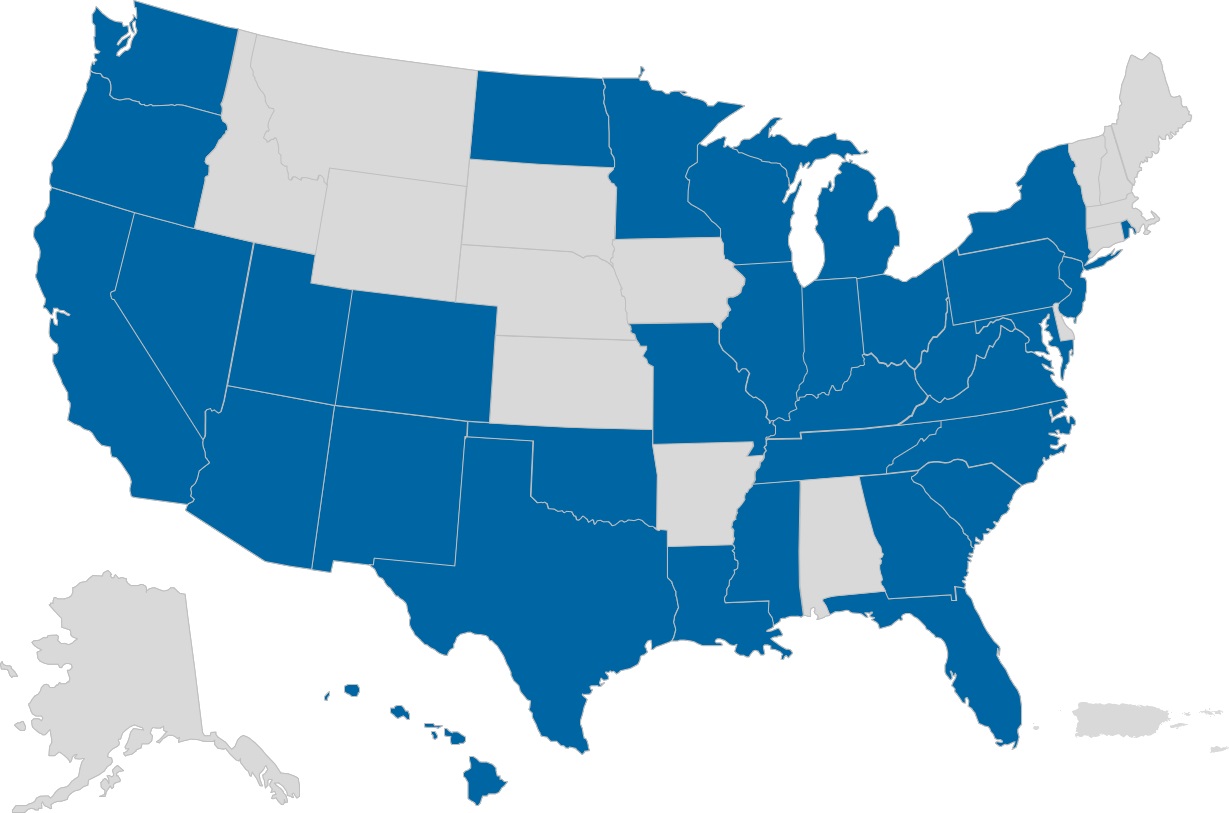
Among the expansion states in the analysis, enrollment decreased by 3 million (5.9%) to 47.6 million. The larger decline among expansion states is particularly relevant because adults in expansion states will be most directly affected by the new community engagement and six-month redetermination policies. Details are illustrated in Figure 1. 

Figure 1. States Included in the Medicaid Managed Care Enrollment Analysis, June 2026

Map of the USA

Note: States colored as blue shown on the map above are included in the HMA Enrollment Analysis. 

National Medicaid Managed Care Market Share 

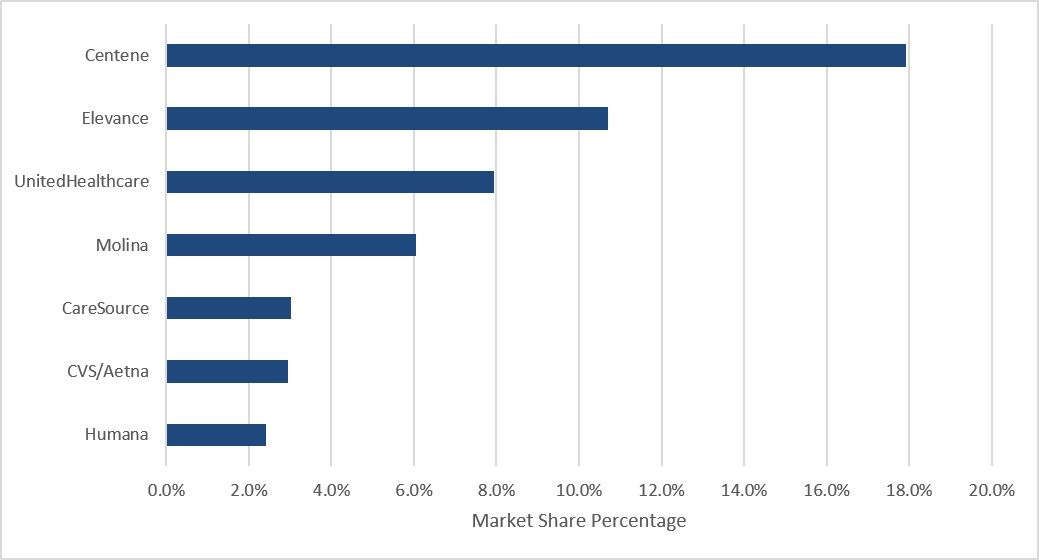
HMAIS also tracks Medicaid managed care ownership, program participation, and tax status for nearly 300 plans. In this June 2026 snapshot, Centene covered 17.9% of enrollees, followed by Elevance at 10.7%, UnitedHealth Group at 8%, and Molina at 6% (see Figure 2). These four organizations represented 42.6% of enrollment in the HMAIS dataset, underscoring continued concentration among large, national Medicaid managed care organizations. (Note: The number and mix of plans changed over the past 12 months, and several state enrollment reports reflect different reporting months. Other limitations are discussed in the Data Considerations section of this article.) 

The enrollment declines as well as pressure from acuity, utilization, and payment rates are compelling Medicaid managed care organizations (MCOs) to reassess where they participate, including whether individual markets can support sustainable performance. For example, one national Medicaid MCO has publicly discussed exiting unprofitable Medicaid markets and left one state market in August 2026 with plans to exit another at the end of the year. These decisions illustrate how enrollment contraction can interact with rate adequacy, acuity, utilization, and state-specific contract performance to influence plan participation. 

Figure 2. National Medicaid Managed Care Enrollment Share by Parent Organization, June 2026 

Medicaid enrollment

How Medicaid Work Requirements and Eligibility Policies Could Affect Enrollment in 2027 

In June 2025, approximately 20.4 million people were enrolled in Affordable Care Act Medicaid expansion plans—5 million of whom reside in California, and nearly 2 million live in New York. The WFTC Act applies requirements to Affordable Care Act (ACA) expansion adults and certain Medicaid Section 1115 demonstration populations in 44 states beginning January 2027. 

In September 2026, CMS published an implementation resource that outlines an optional framework that states may use to identify and verify individuals who qualify for the medical frailty exclusion. Although the framework gives states options for consideration, they still must determine which health conditions to cover and data sources to use when additional documentation is requested and how to notify members of their determinations. Many states have already made decisions about these issues, which could materially affect administrative workload, the consistency of determinations, and whether eligible individuals maintain coverage as well as the number of people who retain coverage and the composition of the population that remains enrolled. 

In addition, a few states have already started implementing the new eligibility policies. For example, Nebraska launched Medicaid work/community engagement requirements on May 1, 2026. Montana began implementation on July 1, 2026, while Arkansas began a soft launch in July 2026 before enforcement begins in January 2027. Iowa intends to begin early implementation December 1, 2026. Although Montana and Arkansas are not managed care states, they, along with Nebraska, can offer directional insights on beneficiary response, exclusion determinations, procedural losses, appeals, and administrative workload before nationwide implementation. 

Notably, the second quarter enrollment decline predates full implementation of the new federal eligibility policy changes and community engagement requirement, which means future enrollment changes may not be entirely attributable to the WFTCA requirements. 

Organizations should continue to monitor total enrollment, churn, eligibility category, risk mix, and transitions to Marketplace or uninsured status. 

Data Considerations. HMA Information Services (HMAIS) tracks monthly Medicaid managed care enrollment, ownership, program participation, and tax status for approximately 300 plans. The data in this analysis have some important limitations. States report enrollment figures at different points throughout the month, with some data reflecting beginning of the month totals and others capturing end of month enrollment. In addition, some state datasets encompass all Medicaid programs that offer managed care plans, whereas others reflect only a subset of the managed Medicaid population. As a result, the analysis can be used to identify direction, magnitude, and market signals rather than as a comprehensive state-by-state comparison. 

The HMAIS enrollment reports and analyses, available through subscription, use data from nearly 300 health plans in 39 states, DC, and Puerto Rico. HMAIS’s Medicaid enrollment data, financials, procurement tracking, and a robust library of public documents equips stakeholders with timely, actionable intelligence. Subscribe here. 

Preparing for Enrollment Shifts

WFTC Act implementation will require state-specific policy decisions, eligibility system changes, new data-matching processes, staff training, beneficiary outreach, and workable approaches to identifying people who qualify for exemptions for medical frailty and other conditions. Differences in data availability, verification pathways, documentation requirements, and review processes could produce materially different effects on enrollment, continuity of coverage, beneficiary experience, and the risk profile of the population that remains enrolled. 

Healthcare executives and state Medicaid leaders should establish a baseline, monitor emerging implementation signals, and model the operational and financial implications. Priority measures include enrollment and churn, procedural terminations, exclusion determinations, appeals, transitions to other coverage, changes in acuity and utilization, payer mix, and geographic variation. These insights can inform decisions about eligibility operations, beneficiary support, capitation and rate development, network strategy, provider reimbursement, revenue forecasting, and uncompensated care exposure. 

MCOs are unable to help states with determining eligibility determination or compliance, cannot receive capitation rate bumps for non-medical activities, or use their own work programs to help beneficiaries meet the community engagement requirements but may be able to provide support through outreach and education. CMS has indicated it expects to provide additional guidance on what activities are appropriate. MCOs can potentially use their existing relationships with beneficiaries, care managers, providers, and community organizations to help members understand and navigate the new requirements. 

HMAIS provides the market intelligence needed to track these shifts, including state-reported enrollment, plan ownership, financial performance, procurement activity, and related public documents. HMA consultants extend that intelligence through state- and market-specific scenario modeling, policy and operational analysis, and implementation support—helping clients forecast enrollment and revenue, assess payer mix and utilization effects, strengthen eligibility and beneficiary support workflows, evaluate competitive positioning, and prepare for changes in program financing and oversight. 

Contact HMA to translate evolving enrollment and implementation signals into an actionable strategy for your state, market, or organization.

HMA Conference to Open with State Leaders’ Insights on Healthcare Policy and Program Pressures

The Health Management Associates (HMA) Conference, US Healthcare 2026: Signals, Signs & Flashing Lights, will open October 6, 2026, with a discussion between two distinguished state officials—Bruce D. Greenstein, Secretary of the Louisiana Department of Health, and Stephen Cha, MD, Commissioner of the New Jersey Department of Human Services. Their conversation will frame the major policy, financial, and operational issues confronting the states and set the tone for deeper discussions throughout the conference about solutions being designed and implemented across the healthcare sector. 

Navigating a New Federal Landscape 

Mr. Greenstein, chief technology officer at the US Department of Health and Human Services (HHS) during the first Trump administration, and Dr. Cha, who has served in a range of roles at HHS and its agencies, bring both state and national perspectives to the discussion. Drawing on their experiences, they will discuss the challenges confronting public healthcare programs and the consequential choices before them. 

Those choices are becoming increasingly significant as federal policy changes reshape public healthcare coverage and financing. State leaders must protect access, sustain systems of care, and accept greater accountability for spending. Mr. Greenstein and Dr. Cha will explore the difficult tradeoffs behind their decisions, the potential consequences for health plans, providers, community organizations, and the people they serve. They will also address how leaders can manage fiscal and operational pressures without losing sight of quality and outcomes. 

In addition, the conversation will answer key questions about the future of state health and human services programs, including:  

  • How can artificial intelligence, data, and other technologies help states reduce administrative burden, improve oversight, and make programs more responsive?  
  • Where can states work more effectively with health plans, providers, technology companies, and other industry partners, and where is closer coordination with sister agencies essential to advancing shared goals? 

Mr. Greenstein and Dr. Cha will offer examples of how their states and their peers in other states have responded to these issues. 

Representing states with different political and policy environments, they also will explore where leaders across party lines are reaching similar conclusions—even when their strategies differ—and which practical challenges receive scant attention. Their exchange will consider how states should define success amid changing federal expectations, which outcomes matter most, and what early evidence can show whether a policy is working or health outcomes are beginning to deteriorate. 

Michael O. Leavitt, former Utah Governor and US Secretary of HHS, and co-founder of Leavitt Partners, an HMA Company, will moderate the discussion, adding his state and federal expertise and knowledge to a timely conversation about governance, accountability, and value. 

The opening plenary session will take place Tuesday, October 6, from 8:30 to 9:30 a.m. in New Orleans, LA. 

Register today to join the conversation.

2027 Maternity Care Coding Changes: How Providers, Health Plans, and States Can Prepare for Service-Level Reimbursement

UPDATE: CMS Finalizes Payment Rule for Unbundling Maternity Services 

On November 4, 2026, the Centers for Medicare & Medicaid Services (CMS) released CMS-1848-F, the Calendar Year (CY) 2027 Medicare Physician Fee Schedule Final Rule, which finalizes payment policies and addresses comments on the proposed rule issued July 16, 2026, including the 2027 maternity payment unbundling. Key takeaways include:

  • CMS will not create an interim system of G-codes, which had previously been considered for use during the transition to the unbundled codes and which most commenters on the proposed rule opposed. CMS notes that it “may consider the creation of bundled codes describing maternity care services in future rulemaking using the information on the billing patterns associated with the unbundled visit codes.”
  • CMS notes that there is temporary flexibility in coding and billing for pregnancies spanning 2026–2027, deferring to American Medical Association (AMA) and American College of Obstetricians and Gynecologists (ACOG) guidance. The rule states that “Payers and health plans may issue business rules in advance of January 1, 2027, instructing providers, clearinghouses and other trading partners regarding CPT [Current Procedural Terminology] code use when billing for Maternal Care Service episodes of care in which services begin in 2026 and end in 2027.”
  • CMS is enacting the redistribution of Relative Value Units (RVUs) from prenatal visits to labor and delivery codes that the agency outlined in the proposed rule, which would reallocate about 15 percent of the relative value of services from prenatal visits to labor and delivery. RVUs are used to measure the relative resources involved in providing a service and to calculate payment rates. This change will remove four of the previously assumed 12 prenatal evaluation and management (E/M) visit codes that were covered in the global payment approach from the utilization estimate calculation and reallocate the RVUs within the code family to the new labor and delivery codes. This adjustment is intended to reflect a more current view of how resources and services are typically used. With services and payment unbundled across the course of care, this change may shift additional reimbursement toward providers that offer labor and delivery services, although it is not intended to affect the number of prenatal visits provided. The final rule reiterates that the number of prenatal visits should be determined by medical necessity and that the change aligns with more recent guidance from ACOG.[1] CMS stated that it “is not endorsing a reduced number of prenatal visits for pregnant women. Our recalculation of the utilization estimates in the valuation of these services should not be used to determine the appropriate number of visits to provide reasonable and necessary care” for enrollees.

HMA can help your organization understand the impact of these changes and prepare for implementation in January 2027.


[1] CMS noted in the proposed rule that: The previous MMM global period included 12 prenatal E/M visits bundled into CPT codes 59400, 59510, 59610, and 59618. In May 2025, the American College of Obstetricians and Gynecologists (ACOG) published new clinical guidelines, recommending that obstetrician-gynecologists and other maternity care professionals tailor the visit frequency and monitoring schedule to the needs of the pregnant woman. These new clinical guidelines provide a sample schedule for prenatal care services and visit frequency, which describes 8 visits for average-risk pregnant women without medical or pregnancy complications, and 13 visits for pregnant women with greater-than- average risk.

What the shift away from global obstetric billing may mean for care delivery, coding and documentation, reimbursement, quality measurement, and more.

AT A GLANCE: Beginning January 1, 2027, maternity care reimbursement will change from bundled global obstetric codes toward more granular, service-level reporting for antepartum care, labor management, delivery, and postpartum care. The new approach is intended to more accurately capture how maternity care is delivered today across multiple clinicians, settings, modalities, and risk profiles. Organizations should begin assessing operational, financial, contracting, and data implications now.

What Is Changing?

Under the new approach, maternity services will be recognized and reported at the service level rather than through a single global obstetric payment. The impacts will unfold over time and will depend on final policy, coding guidance, fee schedules, contracts, and implementation decisions specific to payers, providers, and local markets.

What This Will Mean?

This change is more than a coding update. It will affect payment policy, claims systems, documentation workflows, actuarial assumptions, provider contracts, quality and access monitoring, data reporting, and patient care models. For Medicaid agencies, health plans, federally qualified health centers (FQHCs), hospitals, physician and midwifery practices, and professional associations, the transition creates implementation risks and uncertainties as well as opportunities to modernize maternity care financing around person-centered perinatal care, social needs screening and management, telemedicine, home monitoring, and postpartum support. Early preparation can reduce disruption and enable increased visibility into access, quality, equity, outcomes, and total cost.

New Questions Stakeholders Will Need to Answer

  • How will payment rates, fee schedules, and contracts change when maternity care is no longer paid as a single global payment?
  • What documentation, coding, and billing workflows will providers need to update before the new codes (and/or potential interim codes, depending on the Centers for Medicare & Medicaid Services (CMS) decision-making) take effect in order to ensure that care is correctly reimbursed?
  • What systems changes and staff training will be needed?
  • What claims edits, utilization management rules, encounter data processes, and reporting systems will need to be revised?
  • How will payers distinguish routine care, higher-risk care, care coordination, social needs services, telehealth, and home monitoring?
  • How can stakeholders use new data to assess access, quality, equity, outcomes, and total cost of maternity care?

Supporting Next Steps

HMA can help stakeholders understand the implications of the new coding structure, evaluate policy and operational options, create a practical path forward, and operationalize that plan across programs, systems, contracts, and care delivery models.

StakeholderHow HMA Can HelpHMA Services Include
StatesAssess Medicaid policy impacts, update provider guidance, model budget and rate implications, align managed care contracts, and design monitoring strategies for access, quality, equity, and outcomesRevenue Cycle Management

Actuarial Analysis

Market Analysis and Strategic Planning

Financial Modeling

Operational Planning and Implementation Support

Research and Evaluation

Contract Review and Negotiation Support

Business Analytics

Clinical and Health-Related Social Needs Service Model Development

Quality Measurement and Accreditation Support

Information Technology Advisory Services    
Providers: FQHCs, hospitals, physician practices, and midwifery groupsHelp organizations prepare for coding, documentation, billing, revenue cycle, and clinical workflow changes; identify training needs; and evaluate how new payment rules affect service delivery and financial sustainability
Health plansRevise payment policies, claims logic, provider communications, contract terms, encounter data processes, and network oversight approaches to support a smooth transition
Associations and coalitionsTranslate the changes for members, develop implementation roadmaps, convene stakeholders, identify advocacy priorities, and support coordinated action across the maternity care environment

Frequently Asked Questions

What is changing in maternity care reimbursement in 2027?

Maternity care reimbursement is shifting from bundled global obstetric billing toward more granular, service-level reporting for antepartum care, labor management, delivery, and postpartum care.

Who will be affected by the maternity care coding changes?

OB/GYN practices, hospitals, FQHCs, midwifery groups, health plans, Medicaid agencies, professional associations, and other organizations involved in maternity care financing, delivery, claims, contracting, or oversight will be affected by these significant changes.

What should organizations do first?

Start with an impact assessment: inventory current payment arrangements, map services and documentation, identify systems changes and training needs, model financial effects, review contracts, and develop implementation roadmaps.

Rural Health Transformation Program: The Window to Build Sustainable Change Is Now

The Rural Health Transformation Program (RHTP) is entering a critical implementation phase. As states begin deploying historic federal investments in rural healthcare, attention is shifting from grant awards to execution, performance measurement, and sustainability. Recent Centers for Medicare & Medicaid Services (CMS) approvals of additional state RHTP initiatives, coupled with upcoming reporting requirements and future funding determinations, are heightening the focus on how states, providers, technology companies, and community organizations will demonstrate progress and long-term value. 

This article examines emerging themes in RHTP implementation, including the growing emphasis on chronic disease prevention, technology-enabled care delivery, performance measurement, and sustainability planning. Health Management Associates’s (HMA) multidisciplinary teams also are available to support organizations seeking to maximize the long-term value of RHTP investments beyond the initial federal funding period.

Common Priorities Emerging in State Rural Health Transformation Program Plans 

State RHTP strategies vary considerably; however, state applications share several priorities aligned with CMS’s funding priorities. Technology modernization, telehealth, workforce development, chronic disease management, behavioral health, maternal health, and care coordination appear throughout state proposals. Through its work with states, providers, and rural communities, Health Management Associates (HMA) has identified another common thread across applications: rural health challenges are deeply interconnected.  

Providers struggling with workforce shortages are often serving populations with higher rates of chronic disease. Communities facing limited specialty access frequently experience transportation barriers and gaps in digital connectivity. Behavioral health needs intersect with physical health conditions, maternal health outcomes, and emergency department utilization. States are responding by increasing their focus on and pursuit of broader transformation strategies. 

During a recent HMA webinar, RHTP Beyond the Grant Approval: Building Sustainable Rural Transformation, speakers highlighted one of the most important directional lessons emerging from early RHTP implementation: technology, workforce, access, care delivery, and prevention strategies must be designed as mutually reinforcing investments and not as siloed initiatives. 

Chronic Disease Prevention and Management Is Central to Rural Health Transformation 

Our work with states and their RHTP partners indicates that chronic disease prevention, monitoring, and management have become a central organizing principle for many RHTP investments. Technology modernization, telehealth expansion, workforce initiatives, behavioral health integration, and community-based care models are frequently being positioned as complementary strategies to improve population health and address the conditions that drive preventable morbidity, mortality, and healthcare costs in rural communities. This includes ensuring rural residents receive care earlier, stay connected and engaged in their care longer, and avoid preventable deterioration in health status. 

As HMA experts discussed during the recent webinar, this represents an important shift. Historically, many healthcare systems have been structured around treating disease after complications emerge. RHTP creates an opportunity to invest in more effective models, including those that can identify risk sooner, improve follow-up with patients, and strengthen connections between patients and care teams. 

Telehealth, Data Platforms, and AI Support in Rural Health Transformation 

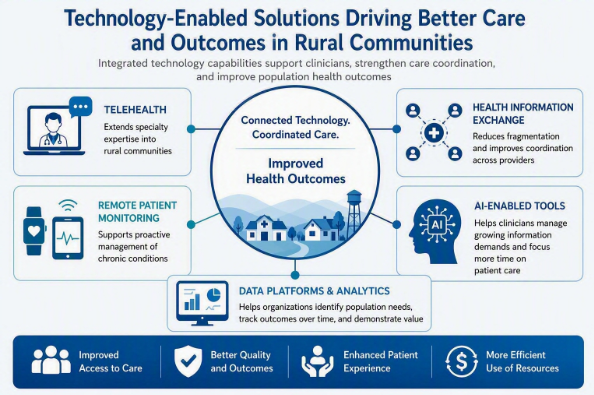
Technology appears throughout nearly every state strategy and is often viewed as one of the most visible components of RHTP. HMA webinar speakers emphasized that technology is a vital enabling capability in RHTP initiatives.

Technology-enabled solutions driving better care and outcomes in rural communities

Technology alone is unlikely to produce meaningful transformation. 

HMA is working with states and their partners on strategic approaches to technology adoption. For example, states, providers, care teams, and patients should consider technology initiatives that can strengthen care models, extend workforce capacity, improve coordination and collaboration in support of population health, and generate actionable insights. 

Sustainability Planning Must Begin Early in the Rural Health Transformation Program  

Every state and RHTP participant understands that this federal funding is temporary. The urgent challenge is to identify, early and explicitly, which initiatives can produce enough value to warrant ongoing support after the funding period concludes. 

While some states awarded the first year of RHTP funding quickly, many of these awards may serve as a bridge while states establish the structures and policies needed to support long-term RHTP initiatives. CMS’s reporting and ongoing evaluation of RHTP programs will require states to embed sustainability into program design, governance, measurement, financing, and partnerships from the outset. 

States will need to provide RHTP participants with clear baselines and direction on meaningful outcomes. It also requires thinking beyond grant budgets to identify long-term operational and financial models capable of supporting ongoing services. 

What States, Providers, and Technology Partners Should Do Next 

The window for shaping long-term RHTP success is open now. State and local government and partner organizations have an opportunity to move beyond individual projects and build integrated strategies.  

HMA’s multidisciplinary teams support program design, implementation planning, data strategy, technology modernization, performance measurement, governance, financing strategy, partnership development, and sustainability planning. As states and RHTP participants make decisions regarding governance, technology, data strategy, care models, and performance measurement, HMA can help ensure decisions and investments are optimized to make the progress needed to secure future funding and sustain transformation beyond the grant period.  

Connecting the Dots: Medicaid Program Integrity Enters a New Era of Strategy and Operational Readiness

There is no shortage of news, federal activity, and operational urgency concerning fraud, waste, and abuse (FWA) in healthcare. Across Medicare, Medicaid, the Affordable Care Act Marketplaces, and other federally funded health programs, the executive branch is advancing a more aggressive program integrity agenda. The US Department of Health and Human Services (HHS), including the Centers for Medicare & Medicaid Services (CMS) and HHS Office of Inspector General, as well as the US Department of Justice, are placing greater emphasis on payment accuracy, provider and vendor oversight, data-driven detection, and defensible compliance processes. 

As scrutiny intensifies, organizations across the healthcare ecosystem are challenged to move beyond traditional audit and recovery activities toward a more proactive, enterprise-wide approach to managing risk and preventing FWA. Although these trends affect all healthcare stakeholders, the implications for Medicaid are particularly significant given the program’s scale, complexity, and reliance on partnerships among state agencies, managed care organizations, providers, and technology vendors. 

To better understand how organizations should respond, Jennifer Colamonico connected with Clint Eisenhower, Regional Director at Health Management Associates (HMA), and Jennifer Bridgeforth, Associate Principal at HMA. The discussion below incorporates insights from HMA colleagues Christine Rein, Amber Swartzell, and Elizabeth Linville, who joined HMA’s August 12, 2026, webinar on how new program integrity expectations are affecting Medicaid payment, operations, and compliance strategies.

Jennifer Colamonico: We hear a lot lately about heightened scrutiny and program integrity. What’s fundamentally different about this moment from what Medicaid leaders and their organizations have experienced in the past?

Clint Eisenhower: The biggest shift is that program integrity can no longer be viewed as a narrow compliance function. What we are seeing now is a move toward enterprise accountability—and we are really at the outset of this journey. Program integrity touches finance, operations, eligibility, screening, compliance, provider oversight, analytics, clinical teams, procurement, technology, and leadership decision-making. A provider issue can become a payment issue. A data gap can become an audit issue. A documentation weakness can become a compliance issue. The organizations that are best positioned are the ones that understand how those functions connect and can demonstrate that they are managing risk in a coordinated, evidence-based way. 

From a leadership standpoint, leaders of Medicaid organizations can’t simply ask whether they have a program integrity function. We know—and federal and state regulators know—that most organizations do. Instead, leaders need to ask whether that function is designed to withstand increasing scrutiny while it also helps the organization manage risk, support stronger operational performance, and continue to serve Medicaid beneficiaries effectively. 

Q: Many organizations are trying to figure out whether this is just another enforcement cycle or something more significant. How are you advising clients to think about the current level of federal scrutiny? 

Eisenhower: Every organization should be asking where its greatest vulnerabilities are—whether its controls, oversight processes, policies or operational capabilities may not be sufficient to address them. From there, leaders can prioritize what should be addressed now and what can be phased in. 

We’ve worked with agencies and organizations first on the objective assessment of their risk and moved to translate the findings into operational change, which may include developing roadmaps, updated workflows, and& stronger policies, among other actions.

Q: There’s a lot of discussion about moving beyond the traditional pay-and-chase model, but what does a program integrity-first approach look like in practice? 

Jennifer Bridgeforth:HMA is working with many state leaders and healthcare organizations that are navigating significant changes across Medicaid financing, eligibility and enrollment systems, and program administration. At the same time, new federal policy and budget constraints are prompting many states to rethink how services are delivered, managed, and financed. Whether a state is redesigning benefits, implementing new eligibility processes, restructuring payment approaches, or pursuing broader delivery system reforms, program integrity considerations need to be embedded into those decisions from day one. 

That includes documentation requirements, monitoring protocols, data validation, and accountability structures built into the program design. 

It also means aligning oversight efforts with emerging federal and state priorities. We are seeing increased attention on areas such as nonemergency medical transportation, applied behavior analysis, personal care services, durable medical equipment, and behavioral health services, as well as techniques such as evaluation and management coding, and identifying high-volume billing patterns. Medicaid leaders need to design programs and workflows that identify risks earlier, support appropriate access to care, and create feedback loops that strengthen operations over time, reducing reliance on a traditional pay-and-chase approach. 

Q: One challenge we hear about frequently is how to strengthen oversight without creating barriers to care. How can organizations strike that balance, particularly in areas like behavioral health and applied behavior analysis (ABA), where access is already strained? 

Bridgeforth: That balance is critical. Many of the areas under scrutiny are also in which there is tremendous demand and, in some markets, a shortage of providers. ABA and behavioral health are good examples. The answer cannot be to discourage appropriate access. Instead, organizations need stronger documentation, clearer policies, better training, and a shared understanding of what compliant billing and service delivery look like. 

Provider education is one of the most important tools. When providers are asked to document more or differently, it can feel like administrative burden. Education has to explain not only what the requirements are, but why they matter. 

Eisenhower: Health plans and providers have a strategic opportunity here. States still need partners to help achieve access goals and improve outcomes. Plans, providers, and vendors that can demonstrate strong program integrity policies and effective oversight can position themselves as trusted partners. They help states pursue access and quality goals with greater confidence that those initiatives will not create unnecessary compliance exposure. 

Q: Organizations are investing heavily in analytics and AI capabilities. Where do you see the greatest opportunity for these tools to strengthen program integrity efforts? 

Bridgeforth: Advanced analytics and AI are becoming increasingly important for detection and prevention. Real-time monitoring, claims pattern analysis, and predictive tools can help organizations identify risk earlier and take action before issues become larger findings or recoveries. But technology is valuable only if the organization has the governance, workflows, documentation, and case management processes to act on the data that the tools identify. 

Cross-program compliance is also important. Many organizations operate across Medicaid, Medicare, Marketplace, commercial, and other public programs. When program integrity is approached at the enterprise level, improvements in one area can strengthen compliance across multiple product lines or programs. 

Q: You’ve worked with states and healthcare organizations at very different stages of maturity. What are some of the most common gaps or challenges you’re helping clients address today? 

Bridgeforth:We’ve worked with organizations atvery different stages of maturity.For example, we supported an organizational assessment and gap analysis that helped a client identify major opportunities across its program integrity function. The team developed a roadmap organized across seven FWA pillars, identified 52 enhancement opportunities, translated those into 184 key actions, and developed 116 success measures so leadership could monitor progress over time. 

HMA and HealthTech Solutions, an HMA Company, also supported a statewide implementation that included electronic visit verification improvements, prepayment analytics, post-payment analytics, and modernization of claims review processes. The effort the state move from manual, reactive processes toward a more proactive model, with insights from post-payment analytics informing prepayment edits that could be updated in weeks rather than months. 

Q: If you’re a Medicaid leader looking ahead to the next 12 to 24 months, what should be at the top of your program integrity agenda? 

Eisenhower: Many of the steps that reduce program integrity risk are the same steps that help organizations perform better: stronger governance, better data, clearer accountability, more consistent workflows, improved provider relationships, and effective monitoring. The upside is not only avoiding findings or reducing audit exposure. It is also ensuring Medicaid dollars are directed to the right beneficiaries, the right services, the right providers, and the right outcomes. 

How HMA Can Help 

HMA helps states, health plans, providers, and healthcare organizations assess program integrity risk, strengthen governance and compliance infrastructure, design and implement payment integrity strategies, support provider education, modernize analytics and monitoring, and translate findings into measurable operational improvements. HMA can meet organizations where they are, whether they need a targeted assessment, a phased roadmap, implementation support, data analytics support, or enterprise-wide program integrity transformation. 

Learn more about HMA’s Medicaid consulting services. 

Ready to talk?