
Insights

HMA Insights: Your source for healthcare news, ideas and analysis.

HMA Insights – including our new podcast – puts the vast depth of HMA’s expertise at your fingertips, helping you stay informed about the latest healthcare trends and topics. Below, you can easily search based on your topic of interest to find useful information from our podcast, blogs, webinars, case studies, reports and more.

Show All | Podcast | Blogs | Webinars | Weekly Roundup | Videos | Case Studies | Reports | Spotlight

Filter by topic:

Receive timely expert insights on topics you care about.

Select Topics

19 Results found.

Helping Clients Succeed in Value Based Payments

Read More

As Medicare, state Medicaid agencies, Medicare Advantage plans, Medicaid managed care organizations, and commercial insurers increasingly adopt alternative payment models (APMs), Health Management Associates (HMA) provides a range of innovative and successful approaches to value-based care (VBC).

Our subject matter experts can help you succeed with
value-based payments (VBP).

WHAT WE DO

Offer insights for transforming the care delivery model to efficiently deliver optimal patient and population-level health outcomes while successfully managing total cost of care

Ensure quality is the primary goal of VBP program design and implementation

Develop payment models that align the incentives of payers and providers

Integrate physical and behavioral healthcare, and close gaps related to social determinants of health and health equity

Help clients successfully transition from fee-for-service to value-based payments by providing expertise in change management, analytics, network engagement, and IT infrastructure

Improve the patient and provider experience

Qualify, manage, and monitor health insurance risk

Prepare for and succeed in accreditation for VBP capabilities

ORGANIZATIONS WE SUPPORT

Those engaged in VBP or interested in engaging in VBP

Payers

Providers

Purchasers

Those interested in advancing the broader movement to value

Federal, State & Local Governments

Associations

Foundations

Investment Firms

HMA Can Support You Through All Phases of Value-Based Care

From contract to care plan, we have the experience and guidance tools to support your organization’s move to value-based care and risk-based contracting.

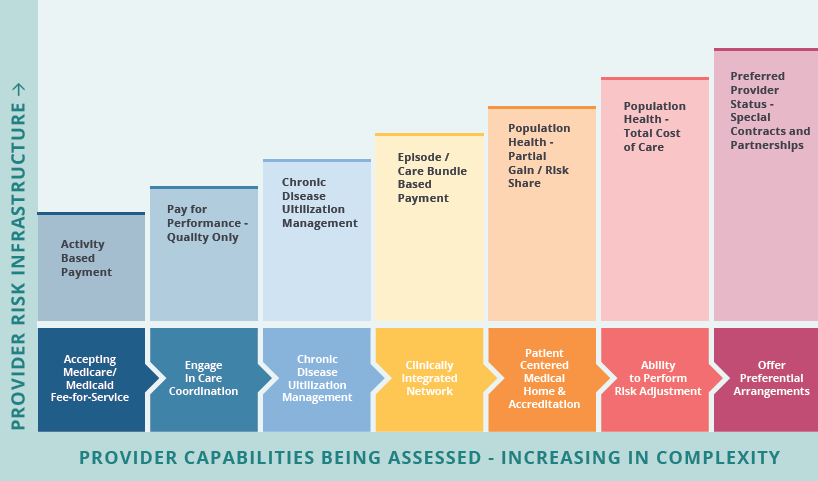
value based payment graph

This graphic showcases the capabilities needed to address the complexities of risk-based contracting and deliver value-based care. As your organization moves from left-to-right along the glidepath to risk, additional strategies and capabilities must be developed. For example, utilizing Institute for Healthcare Improvement frameworks for quality improvement, regulatory and credentialing needs, and specialty access within a clinically integrated network. NEJM Catalyst. (2017). What is value-based healthcare?

Our philosophy involves applying a health equity model to close social determinant gaps and health disparities. Value-based healthcare is all about the care delivery model. Under value-based care agreements, providers are rewarded for helping patients improve their health, reduce the effects of emerging/rising risks and incidence of chronic disease, and live healthier lives in an evidence-based way.

Our Comprehensive Approach

Our collaborative approach will be tailored and customized to your needs to help you successfully implement VBP.

Our integrated process is based on the following model:

WHAT HMA PROVIDES

Determine readiness across key building blocks for moving to value-based payments and achieving continuous improvement across healthcare organizations.

Implementation that includes benchmarks and measurements of success. We facilitate stakeholder input to capture and analyze data from these interactions through surveys, focus groups, and interviews.

Aligning incentives with providers is key to successful value-based care strategies. Understanding methods for identifying and closing gaps in care pathways for common chronic conditions or addressing rising/emergent risks as well as how to create buy-in among providers and other members of the care team.

Including actuarial expertise required for contracting in key areas such as financial projections, reserves, total cost of care analysis, and benchmarking. We provide an assessment of third-party software to support APMs.

Including methods for incorporating whole-person care into clinical algorithms that apply to every interaction with the patient and their families. Integrating behavioral health with physical health and addressing social determinants of health/health-related social needs into VBC programs.

Assist with identifying key performance indicators (KPIs) and quality measurement incentives
for pay-for-performance or pay-for- value to support population health outcomes and support total cost of care in various VBP arrangements.

Provide support and consultation on scope of requirements to ensure VBC contract meets delegation requirements for operational, state, CMS regulatory and accreditation requirements.

OUR EXPERTS INCLUDE

Former CEOs, COOs, CFOs, and chief medical officers and other physician executives as well as executive quality leaders of the following organizations:

Providers including hospitals, academic medical centers, physician practices, community health centers, rural health centers, and federally qualified health centers

Medicaid, Medicare, Marketplace and Commercial MCOs

State and federal agencies

In addition, HMA offers expert actuaries, coders, analytic staff, and clinicians to support your transformation.

Contact our experts:

Headshot of Craig Schneider

Craig Schneider

Principal

Craig Schneider is a leader in developing and implementing payment reform strategies, promoting all-payer claims databases, and engaging stakeholders across … Read more

HMA keynote speakers preview themes and imperatives for March 5-6 value-based care workshop

Read Blog

HMA’s Spring Workshop on Value-Based Care, March 5-6 in Chicago, is just a few weeks away. Listen to why our speakers are so excited to engage with attendees on value-based care.

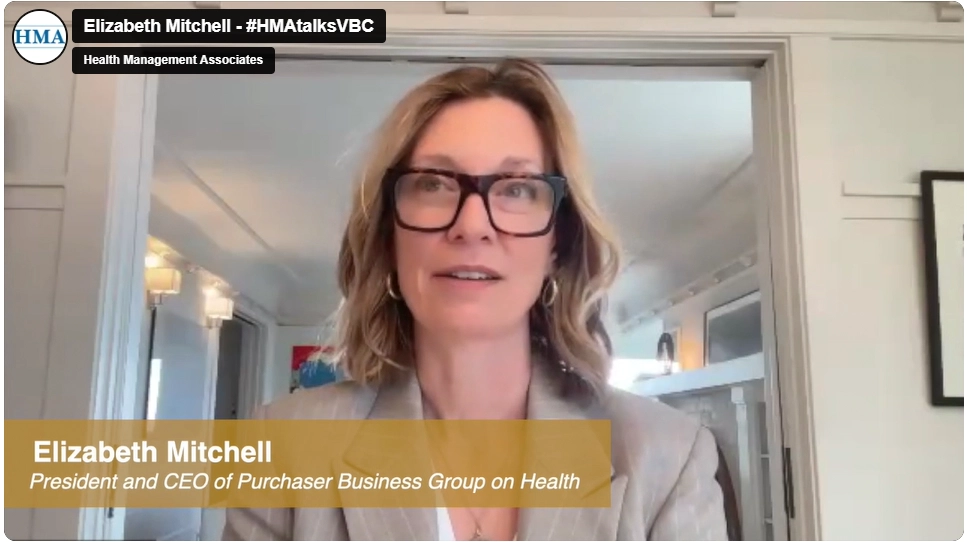
Elizabeth Mitchell, CEO, Purchaser Business Group on Health will deliver the keynote speech on “The Purchaser’s Dilemma: Why Employers Should Demand Value (and Why They Don’t).”

Our March 5 dinner headliner Katie Kaney, CEO of LovEvolve will discuss her “Whole Person Index” and how we can collaborate in new ways to transform the healthcare system to deliver better health at a lower cost for all.

Katie Kaney video
Elizabeth Mitchell video

Hurry – online registration ends February 28!

Analyzing the Expanded Landscape of Value-Based Entities: Implications and Opportunities of Enablers for the CMS Innovation Center and the Broader Value Movement

Download

New Report Analyzes the Expanding Landscape of Value-Based Entities    

Research from HMA and LP VBP experts segments and sizes the growing enabler market, considering benefits and risks, and proposing guiding principles and policy recommendations for the CMS Innovation Center

A new in-depth HMA report analyzes the landscape of emerging value-based entities and the implications for accelerating the adoption of accountable care.

In recent years, the value-based care market has expanded to include a variety of risk-bearing care delivery organizations and provider enablement entities with capabilities and business models aligned with the functions and aims of accountable care. Despite their prevalence, there has been little formal research into the role, growth, and impact of these entities to date and publicly available information is limited.

The report, “Analyzing the Expanded Landscape of Value-Based Entities: Implications and Opportunities of Enablers for the CMS Innovation Center and the Broader Value Movement,” represents a nine-month research effort leveraging the combined VBP policy and market expertise of HMA and Leavitt Partners, an HMA Company with support from Arnold Ventures.

The report offers a detailed overview of this evolving landscape by introducing a novel framework for classifying these entities and estimating the size of the market.

The authors interviewed 60 entity leaders, providers, and policymakers and conducted extensive secondary research into approximately 120 organizations, generating report insights that detail the common offerings, partnership models, and growth strategies of these entities. Authors examined providers’ experiences selecting and collaborating with enablement partners and the role of these entities within Medicare accountable care models and the broader value movement.

The report concludes by proposing a set of guiding principles to describe the optimal attributes of value-based enablement entities that would be in alignment with CMS, provider, and patient goals. Authors point to steps CMS can take to best engage with this expanded ecosystem in support of its efforts to scale accountable care while ensuring appropriate guardrails to protect patients and providers.

As this landscape evolves and expands, CMS and its Innovation Center should continue to carefully consider how these entities participate in its models while also leveraging these important partners for learning and advancing accountable care.

With its acquisition of Leavitt Partners and Wakely Consulting, along with its strong and growing Medicare policy practice, HMA is developing a diverse and robust set of solutions for entities engaging in value-based care and payment. In March, HMA will be devoting its spring event to the topic, with the report authors featuring prominently among discussion leaders and presenters. More information about the Spring Workshop, “Getting Real about Transforming Healthcare Quality and Value”, can be found here.

Report authors include Kate de Lisle, Amy Bassano, Jared Staheli, Spencer Morrison, and Melissa Mannon. Data collection and analysis was supported by Thomas Gubbay, Tom Williams, and Lucas Asher.

Driving change in healthcare delivery: HMA Spring Workshop dives into metrics, coordination, and partnerships for value-based care

Read Blog

Within the healthcare sector, there is an imperative for a comprehensive understanding of the care delivery framework that will positively impact outcomes, equity, and the overall health of communities. Among the drivers for this imperative is renewed focus among Medicare officials and interest from states and employers to transition to alternative payment methods that focus on value for payers and patients. A variety of care delivery structures and metrics can be used, and all have a role in driving value-based care (VBC).

One critical element of VBC hinges on whether and how healthcare organizations focus their care delivery structures on patients. VBC also incorporates metrics that further validate the ability of the system to positively impact patient outcomes, reduce health disparities, and improve population health. Emphasizing technology, interdisciplinary collaboration, and streamlined communication can revolutionize the care delivery model.

The HMA workshop-style spring conference on March 5 and 6, is designed to delve deeply into the intricacies of these care delivery frameworks and metrics within the context of VBC. This unique workshop will challenge attendees to roll up their sleeves and actively engage to become part of the solution through an interactive conversation, allowing participants to discuss real-world scenarios, analyze data and metrics and, using small-group breakout sessions, engage in focused and in-depth knowledge sharing.

Break-out sessions facilitated and led by subject matter experts will challenge attendees to identify new solutions around care delivery structures and contractual metrics that improve outcomes, that may include:

  • Engaging providers around consistent approaches to enhance patient outcomes, optimize treatment plans, and ensure the delivery of evidence-based, high-quality care.
  • Developing approaches for patient engagement that improve care delivery and foster active involvement and collaboration between patients and healthcare providers.
  • Crafting strategies for seamless coordination among healthcare providers, spanning sectors, and involving non-traditional providers and community organizations.
  • Understanding components of effective provider network agreements and how they contribute to achieving healthcare goals through strong partnerships and collaborations.

The workshop promises to be a dynamic platform for professionals in the healthcare sector, offering valuable insights, practical strategies, and collaborative opportunities to secure a place for high-quality value-based care. By focusing on care delivery structures, patient engagement, care coordination services, and provider network agreements, attendees will be well-equipped to navigate the complexities of healthcare and contribute to a healthier, more equitable future.

To learn more about the HMA 2024 Spring Conference Workshop and to register, visit the conference website.

Discover the challenges and opportunities of implementing value-based care at the HMA Spring 2024 workshop

Read Blog
LEARN MORE ABOUT HMA’S SPRING WORKSHOP

Policymakers have been working to move the U.S. healthcare system away from the costly and inefficient framework of fee-for-service to patient-centered structures focused on value and quality. Financial pressures, government regulation, and improvements in managed care all contribute to the drive toward value-based care, and that creates challenges for providers, payers, manufacturers, government, and others supporting the industry. Though some stakeholders are hanging on to the old ways of doing things, others are rightly moving toward putting their emphasis on value, changing their payment and workforce structures, and improving quality.  

Health Management Associates will host the spring workshop, Getting Real About Transforming Healthcare Quality and Value, March 5−6, 2024, at the Fairmont Chicago Millennium Park Hotel in Chicago. The workshop starts with a kickoff event the evening of March 5 designed to foster meaningful connections for attendees, regardless of their role as a government official, provider, health system representative, payer, or vendor in public or private healthcare markets.  

The full-day program on March 6 will feature a compelling keynote speaker and include multiple interactive workshop sessions focused on four key pillars of value-based care: Policy & Strategy Frameworks, Payment & Risk Management, Data & Technology, and Care Delivery Measures. HMA has expertise in working with commercial payers; primary, specialty, and behavioral healthcare providers; and publicly sponsored health plans at the local, state, and federal levels. Session discussions will help participants adapt to the new value-based market and are designed to provide a comprehensive exploration of the intricacies involved in healthcare transformation. Attendees will discuss what to expect during the early phases of transformation, as well as strategies, collaborations, and actions that have moved them closer to adding value on the ground.  

Participants will be challenged to think critically about their organization’s cultural and operational readiness to create additional value for patients within the healthcare ecosystem. Drivers of policy, innovation, population health, risk management, IT, and data, as well as enablers and other stakeholders working in public and commercial markets, will meet in smaller groups to discuss and analyze scenarios, pose challenging questions, and identify tactical steps and solutions to thorny issues.  

Other groups focusing on value will address multi-sector issues and perspectives that affect value-based care, including behavioral health, primary, and specialty care. From navigating the complexities of employee insurance plans for businesses to advocating for the needs of individual consumers, this workshop will address the formidable challenge of reshaping the healthcare landscape.  

Don’t miss this opportunity to gain valuable insights and contribute to genuine and productive discussions that will shape the future of healthcare.  

Whether you attend on behalf of your organization or with a team of colleagues whose roles touch upon different links in the value-based chain, you will bring back ideas and strategies that can be implemented upon your return. Register today! 

Learning the invaluable lessons of value-based care at 2023 HMA conference

Read Blog

If you search the term “value-based care” on the internet you will find over 2.5 million hits on that term alone. No one would disagree with the need to provide value to patients and purchasers, but how we define value differs based on where we sit. Value is paying for outcomes, not volume of services. Value is ensuring that patients get the right care at the right time. Value is ensuring that purchasers pay a reasonable cost for the highest possible quality. Value is ensuring that healthcare is provided equitably and sustainably. Implementing value is even trickier than defining it, given the complexity of who pays for care and the challenges of measuring the outcomes we seek to reward.  

From the top office of HHS to the back office of a health center and everywhere in between, HMA leaders have been part of our collective journey to value: advancing policy and regulatory change, calculating risk and setting prices, crafting alternative payment models, integrating social services and behavioral health, and coaching industry leaders to make important changes to their business models to adapt to a more sustainable approach to American healthcare. These experiences – both successes and challenges – provide a unique perspective from which to advise clients on transformation of healthcare.  

The HMA 2023 fall conference, scheduled for October 30-31, 2023, has thoughtfully curated several discussions to educate, enlighten and motivate attendees on industry standards and navigating the practicality of providing value in care, coverage, and patient experience in publicly funded healthcare:  

Leading the Charge on Value, Equity and Growth: The Future of Publicly Sponsored Healthcare: Discuss how these public programs came to be the industry standard bearers and what this shift means for outcomes, affordability, policy, and the overall direction of U.S. healthcare.  

Positive Change and the Growing Importance of Managed Care in Publicly Sponsored Healthcare: Discuss the future of publicly sponsored healthcare, outline promising initiatives aimed at improving coverage and care, and address key concerns over funding, policy, equity, and coordination between government, plans, providers, and members.  

The Future of Delivery Systems: Achieving Operational and Financial Sustainability: Discuss a wide range of practical approaches to prepare for the future, including managing cash flow, optimizing the workforce, developing long-term reimbursement plans, improving operational efficiency, and addressing changes in government policy.   

Real Talk from the Trenches of Value-based Payments: Learn about the advantages and pitfalls of value-based payments, with important insights from organizations that have made it work.  

Navigating Change in Medicare Advantage: A Roadmap for Success: Discuss what Medicare Advantage plans must do to meet the demanding, new requirements – all against a backdrop of continued efforts to improve equity, access, outcomes, and cost.   

In addition, a pre-conference workshop on behavioral health will be held the afternoon of October 29th, prior to the official start of the conference. This workshop will highlight the integral role of behavioral healthcare in improving patient outcomes across the continuum of publicly sponsored healthcare programs.  

We are excited to engage with industry experts throughout these discussions about value-based care and forge a better path forward toward a more sustainable and equitable system of care.  

Exploring value-based payment opportunities for long-term care providers

Read Blog

This week, our In Focus section reviews value-based payment (VBP) opportunities for long-term care providers. HMA Principal Dana McHugh authored the article, “Life Plan Communities and Value-Based Payments: Aligning Incentives So Everyone Benefits”, for LeadingAge national magazine, discussing how life plan communities can establish value-based payment arrangements with managed care organizations (MCOs) to maximize value and add additional revenue streams.

Read More

Ready to talk?