Long-Term Services and Supports

Building Bridges: Key Insights from the 2025 HCBS Conference and What They Mean for Your Organization

This week, our In Focus features insights from the team of Health Management Associates (HMA) experts who attended the 2025 Home and Community-Based Services (HCBS) Conference. Over a handful of days, aging and disability leaders, state officials, health plans, providers, and advocates gathered to explore strategies to transform long-term services and supports. The event celebrated advances in cross-sector collaborations, evidence of program value, seamless access to care for older adults and people with disabilities, member engagement, and integrated care plans for dually eligible individuals.

HMA participants identified seven cross-cutting themes that are reshaping the aging and disability landscape. We examine how these themes connect to ongoing federal policy changes and provide actionable guidance for stakeholders looking to stay ahead of the curve in this evolving field.

Key Cross-Cutting Themes from the Conference                 

Executive Leadership Is Making the Difference

State leaders are developing new partnerships to continue progress toward meeting the needs of people with disabilities and aging adults across the lifespan. The conference showcased the significant progress that states have made by engaging governors and cabinet-level leaders. Pennsylvania’s aging department, for example, though small, leverages lottery funding and executive support to coordinate across departments and various strategic planning initiatives such as their Aging Our Way, PA multisector plan for aging.

North Carolina’s policy leadership in the governor’s office has been instrumental in aligning aging goals across state agencies such as the Department of Commerce on workforce initiatives and Department of Transportation which includes specific older adult needs in its planning.

Tennessee exemplified this approach by merging its Commission on Aging and Disability with the Department of Intellectual and Developmental Disabilities to establish a single cabinet-level Department of Disability and Aging.

This executive engagement enables what Kathy Greenlee, former ACL Administrator, emphasized: building partnerships beyond traditional aging and disability networks including connections with children and families programs that share common goals around caregiver support and prevention.

Technology Is Extending Human Capacity, Not Replacing It

Technology took centerstage as one of the major solutions to providing personalized caregiver supports and extending the capacity of human services. States are embracing AI (artificial intelligence)-powered tools for routine tasks like call transcription and resource database management, while maintaining human oversight for complex client interactions.

The most successful approaches recognize what MIT AgeLab’s Joe Coughlin highlighted, “High tech won’t replace the need for high touch, but high touch is in short supply.” Technology networks can stretch caregiver capacity, but the human element remains essential. The next generation of service professionals must be tech-savvy integrators who combine digital tools with caring relationships. Key technological advances include digital and virtual coaching platforms, AI precision analytics for risk identification, and “home intelligence” systems that support aging in place. Success, however, depends on ensuring these tools enhance rather than replace human connection.

Direct Care Workforce Crisis Demands Immediate Action

Leading states are not just attempting to manage workforce shortages; they are working on comprehensive workforce infrastructure solutions. Wisconsin’s Certified Direct Care Professional program enrolled over 3,400 workers in its first year, reduced turnover rates, and created a statewide registry where employers actively recruit graduates. Michigan developed four-level stackable credentials that transform direct care into respected career pathways.

States are deploying integrated workforce platforms that combine multiple solutions, including worker registries that promote workforce access and transparency, learning management systems that strengthen development through credentialing, and job matching that enhances access to quality care, and data insights that support evidence-based decisions.

Missouri demonstrates effective stakeholder engagement through its Direct Support Worker Advisory Panel, where 15 workers provide feedback on rates, documentation, scheduling, and professional development while being compensated in developing the solutions, for example, by including them in official advisory entities.

Forward-thinking organizations are breaking down silos through cross-sector partnerships. Area Agencies on Aging and Centers for Independent Living are cross-training workers to serve both populations, effectively expanding the available workforce capacity. Technology integration scales solutions through online, self-paced training that accommodates work schedules and diverse learning needs, while states use federal funding and Medicaid rate increases to boost wages and implement recognition strategies that elevate professional status.

Evidence-Based Investment Strategies

States shared the power of systematic, data-driven approaches to secure aging and disability investments. Ohio’s disciplined four-step process—identify priorities, determine evidence-based interventions, quantify return on investment, and operationalize results—resulted in $40 million in legislative funding for Healthy Aging Grants.

Under this reframing, aging can now be seen as an opportunity rather than a burden. States are building ecosystems and partnerships to enhance reach and effectiveness. This positions aging investments as competing priorities capable of delivering measurable returns. Wisconsin’s new Certified Direct Care Professional certification with career ladder pathways exemplifies how evidence-based workforce strategies can address critical shortages while improving quality.

The Urban Institute’s research on benefit uptake reveals that nearly 9 million older adults are eligible for programs they don’t receive. Success factors include coordinated state agencies, streamlined applications, community trust-building, and staff training—all areas where evidence-based approaches can guide improvement.

Holistic Support for Caregivers and Care Members

The conference emphasized a fundamental shift from viewing caregivers as invisible helpers to recognizing them as partners who require comprehensive support. Key elements for achieving caregiver-driven outcomes include providing support, guidance, and assistance while measuring burden, resilience, satisfaction, and finally, the intent to remain in home settings. Medicare now covers ADL/IADL supports through new coding structures, reflecting growing recognition of how caregiver skill-building adds value. This holistic approach extends to addressing the question of who replaces the family caregiver, as older adults increasingly live alone. The answers rest with the development of new partnerships with retailers, pharmaceutical companies, and employers, plus technology that enables remote family support.

Cross-Sector Collaborations: Systems Integration as Survival Strategy

Breaking down silos that have historically separated aging, disability, children and families, and health services resonated throughout the conference. Kentucky observed that states struggle with multiple uncoordinated plans, each with different goals and measures.

Several states have demonstrated successful integration strategies, such as aligning funding streams, creating shared governance structures, and using common metrics across traditionally separate systems. North Carolina’s approach of embedding aging considerations in transportation planning and commerce workforce development shows how integration can extend beyond human services.

From a federal perspective, integration has support. As Greenlee noted, the Administration for Children, Families, and Communities includes “communities” in its title as a signal of broader inclusion. States that build partnerships across these traditionally separate areas will be better positioned for future federal funding and policy changes.

MLTSS as a Critical Vehicle for Whole-Person Care

Managed Long-Term Services and Supports (MLTSS) programs are evolving an infrastructure for providing coordinated and integrated care delivery care. As this transformation occurs, states must have adequate oversight capacity to manage MLTSS programs effectively.

Effective MLTSS programs can help people early enough to prevent nursing facility placement by integrating all services including medical, behavioral, and HCBS and social supports through capitation. Plans should allocate resources to support provider technological investments that facilitate improved care coordination. This technological support becomes essential to maintaining the high-touch, personalized services that MLTSS members require while achieving the scale necessary for program sustainability.

Policy Connections: From Conference Themes to Federal Action

These conference themes reflect broader federal policy shifts, including:

  • New funding must be used more strategically. The $10 billion annually for rural health transformation (2026‒2030) can also create opportunities to integrate aging services into the broader health infrastructure.
  • Resource constraints sparks innovation. As the Administration for Community Living faces resource constraints with significant staff reductions, states must be more proactive and resourceful in developing innovative programs.
  • Advocacy must be timed. Upcoming budget cycles require strategic timing for advocacy efforts.

The Road Ahead for Stakeholders

Organizations across the aging and disability ecosystem must prepare for a more integrated, technology-enhanced, and evidence-driven environment. Success will require executive leadership, strategic partnerships, and measurable value.

State Agencies

  • Engage executive orders establishing aging as a priority across all state departments.
  • Developing systematic evidence-based investment strategies that quantify return on investment for aging initiatives, using Ohio’s four-step methodology as a template.
  • Building partnerships beyond traditional aging and disability networks, including with children and family services, workforce development, and transportation agencies.
  • Implementing workforce development strategies that include investing in credentialing and tech-enabled training, and cross-sector partnerships to address to strengthen the direct care workforce.

Health Plans and Payers

  • Implementing holistic caregiver support programs that combine digital tools with human coaching, measuring outcomes like burden reduction and care member satisfaction.
  • Leveraging new Medicare coding opportunities for ADL/IADL supports to pay for evidence-based caregiver training and skill-building programs.
  • Partnering with technology companies to deploy AI-powered risk identification tools while maintaining human oversight for member interactions.
  • Investing in provider technology infrastructure that enables better care coordination and supports MLTSS program effectiveness.

Providers and Community Organizations

  • Developing technology-enhanced service delivery that extends human capacity while preserving personal connection, following the “high tech, high touch” principle.
  • Pursuing evidence-based training and credentialing programs with clear career pathways.
  • Building partnerships with non-traditional allies like retailers, pharmaceutical companies, and employers to expand aging-in-place support networks.
  • Participating in workforce development initiatives that create shared worker pools across aging and disability services.

Technology Vendors

  • Developing AI-powered tools that enhance rather than replace human service delivery, focusing on routine tasks like documentation and risk assessment.
  • Creating integrated platforms that support cross-system coordination between aging, disability, health, and family services.
  • Building home intelligence systems that enable remote family caregiving and professional monitoring while preserving independence and dignity.
  • Designing workforce development platforms that support credentialing, job matching, and career advancement tracking.

Moving Forward Together

The 2025 HCBS Conference revealed a field that is embracing innovation and integration. States leading this transformation share common characteristics: executive leadership, evidence-based investment strategies, technology that enhances human connection, holistic support approaches, and systems that collaborate to break down traditional silos.

The path forward requires strategic planning, rigorous evaluation, cross-sector partnerships, and sustained political will. Organizations that can integrate evidence-based approaches with compassionate care, leverage technology to extend human capacity, build partnerships that transcend traditional boundaries, and develop sustainable workforce solutions, will be best positioned to serve the growing population of older adults and people with disabilities.

Connect with Us

The HCBS Conference highlighted significant momentum toward integrated service delivery, evidence-based investment, and technology-enhanced care. Stakeholders should expect continued federal policy evolution, including new funding opportunities and partnership requirements in the coming years. Organizations that wait will miss critical opportunities. HMA works with state agencies, health plans, providers, and community organizations to design and implement aging and disability initiatives. We help clients engage executive leadership, develop evidence-based business cases, deploy appropriate technology solutions, build cross-sector partnerships, and create sustainable workforce development strategies. To discuss how these trends affect your organization and explore next steps, contact our featured experts below.
Addressing the Growing Crisis in Older Adult Behavioral Health

Imagine a 77-year-old man named Don who lives alone in his small apartment after his wife, Marcia, suddenly died a year ago. She had been his constant companion and long-time caregiver, making sure he took his medications for diabetes and bipolar disorder. Now he is socially isolated, lonely, and depressed. When he neglects to eat, his blood sugar levels tend to drop, and he becomes light-headed. He won’t call his doctors then; he doesn’t want to bother them. Besides, it was his wife who used to communicate with his doctors and psychiatric team about any concerns. Without her, he doesn’t have much motivation to do anything.

Don illustrates several U.S. demographic and epidemiologic trends:

He is a “Baby Boomer” driving the ongoing aging of this country. Within the next 20 years, the number of Americans aged 65 and over will exceed the number of those under 18. The population of working age, including those available to care for older adults, will decline by 5 percent. As a result, the emerging care gap between the numbers of Americans who need care and those who can provide it will greatly increase.

Like greater numbers of older Americans, he has at least two chronic illnesses, adversely affecting his overall functioning and quality of life. According to a 2025 Centers for Disease Control research summary, chronic conditions put him at risk for higher healthcare costs[1]. The combination of chronic physical and mental health conditions will likely mean very high health care costs.

Like increasing numbers of older Americans, he has a behavioral health disorder. About 25% of older adults have a diagnosable mental, substance use, and/or cognitive disorder. These conditions are often exacerbated by social isolation and loneliness, which is associated with increased rates of both mental and physical health problems.

Unfortunately, about half of older adults with mental or substance use disorders do not get treatment or are treated by primary health care providers who have limited training in addressing geriatric psychiatric concerns. As a result, only about a third of people who get treatment receive what is “minimally” adequate treatment. Only about half of those who get treatment from mental health professionals receive adequate care.

The low utilization by older Americans of behavioral health services reflects several access challenges including: 

  • Access to providers who are clinically, culturally, linguistically, and generationally competent are in short supply. The shortages are most acute for rural residents. There is also a shortage of geriatric mental health professionals participating in the Medicare program.
  • Service access is also problematic. Many treatment programs are in hard-to-reach locations. There is also a tremendous shortage of services in home and community settings, due to workforce shortages.
  • Discrimination including stigma and ageism, plus the lack of awareness about mental illness and the effectiveness of treatment result in reluctance to seek or accept behavioral health services.

Unlike many of his contemporaries suffering from a behavioral health condition, Don does have long-standing behavioral health treatment which has been effective for most of his lifetime for managing his bipolar disorder. But without his wife’s support, his attendance and adherence have faltered. He now needs other sources of support and guidance, as well as more intensive treatment, or he faces several major risks:

  • He may wind up being taken by ambulance to hospital emergency rooms for falls. *
  • He may be admitted to the hospital for broken bones, diabetic complications, or even a stroke or heart attack.
  • He may deteriorate further and become unable to care for himself, eventually transferring from a hospital to a long-term care facility.
  • He may suffer premature death.

Older Americans, like Don, need not suffer injury and decline in addition to grievous loss. With the right systems of behavioral health, supported by care coordination and person-centered care plans, they can recover, adapt, and remain in their homes, as most Americans prefer.

HMA has the expertise to create and strengthen those systems of care. To learn more about How HMA Can Help.


[1] Watson KB, Wiltz JL, Nhim K, Kaufmann RB, Thomas CW, Greenlund KJ. Trends in Multiple Chronic Conditions Among US Adults, By Life Stage, Behavioral Risk Factor Surveillance System, 2013–2023. Prev Chronic Dis 2025;22:240539. DOI: http://dx.doi.org/10.5888/pcd22.240539

Preparing for Ohio’s Aging Future: With Federal Uncertainty, Local Innovation Must Lead

Ohio faces a demographic reckoning. With 55 million Americans now over 65, including 2.2 million Ohioans, Ohio’s older adult population is expected to grow faster than the national average, while its population under 65 is projected to shrink. Nationally, by 2050, the number of individuals aged 85 and older is expected to double, creating an unprecedented demand for services as this population becomes more diverse and economically vulnerable. Innovation and collaboration will be especially critical in supporting those who won’t qualify for existing programs and in simplifying access to a complex system of providers and resources.

Fortunately, Ohio also boasts remarkable aging service innovators, from National Church Residences’ expertise in institutional transitions back to the community, to United Church Homes’ expanded service coordination beyond its affordable housing communities, to the Area Agencies on Aging serving as key partners to managed care organizations for the MyCare Ohio program. Success in Ohio’s aging future will hinge on building on these kinds of examples, mastering collaboration, and creating integrated systems that serve vulnerable populations effectively, irrespective of federal funding levels.

To that end, the following questions represent critical challenges reflecting conversations happening in boardrooms, county commissioner meetings, and strategic planning sessions across Ohio and the country.

Building Age-Ready Communities: Key Questions for Local Stakeholders

1. How can state and counties align their aging-in-place investments with those of payers, providers, and purchasers to increase the value of existing programs and resources?

As the aging population grows rapidly, states and counties can maximize aging-in-place investments by establishing unified visions that bring together public agencies, healthcare systems, and private sector partners under shared, evidence-based strategies. This requires deliberate alignment with state and local priorities while engaging private insurers, employers, and community organizations as strategic co-investors. Ohio exemplifies this approach through its remarkable growth in age-friendly communities—36 communities have now achieved age-friendly designation, including 10 new communities since early 2023, demonstrating accelerating momentum toward the development of systematic aging-in-place infrastructure.

Ensuring accountability and tracking progress are essential in demonstrating the effectiveness of public-private investments. Tools like data dashboards help maintain initiative momentum and adapt to needs. Additionally, strategically coordinating funding from various sources, such as Medicaid, Medicare, and private insurance, can enhance resource integration. The Westchester Public/Private Partnership for Aging Services exemplifies how shared resources can improve aging-in-place outcomes while serving as a replicable blueprint for creating age-friendly communities.

2. How can support for older adults in rural communities be increased? 

While urban areas grapple with capacity, rural Ohio faces a different challenge: doing more with less. Nearly one in three rural Ohioans is now 60 or older—a concentration that’s both a testament to community strength and a preview of coming pressures. These challenges include limited access to healthcare specialists, transportation systems designed for different needs, and the risk of social isolation as neighbors and family members become more dispersed. Ohioans in rural and Appalachian regions are designated as priority populations in eight of the nineteen outcomes outlined in Ohio’s 2023-2026 State Plan on Aging.

Additionally, local leaders across health plans, hospitals, aging services organizations, and government are uniquely positioned to expand telehealth networks that bring care directly into homes, invest in the broadband and housing infrastructure that makes aging in place possible, and build homegrown training programs that keep caregivers rooted in their communities. Partnerships between Area Agencies on Aging, rural hospitals, and community organizations can create integrated care models that align multiple funding streams, including Medicare and Medicaid, as well as Older Americans Act and county resources. What is needed now is coordination to replicate or scale approaches that will be key to ensuring sustainable aging support for Ohio’s rural older adults and ensure the access required for the changes underway.

3. How can stakeholders reduce social isolation and increase access to age-friendly behavioral health services?

The National Academies of Sciences, Engineering, and Medicine report, “Addressing the Impact of COVID-19 on Social Isolation and Loneliness”  documents the impact of COVID-19 on social isolation and loneliness among older adults. The report recommends five strategies to promote social connectedness and reduce social isolation, including:

  • Community-based support: Using existing community infrastructure to leverage the resources of community service networks.
  • Community leadership: Partnering with communities to design and deliver services, forcing inclusive, action-oriented alliances to enhance social connection and solutions tailored to each unique community.
  • Digital environments: Utilizing online support groups to address loneliness and social isolation, being cognizant of cultural or generational preferences for electronic communication platforms.
  • Social infrastructure: Designing inclusive and multifaceted public infrastructure and mixed-use planning, incorporating libraries, gardens, shops, cafes to promote social connectedness.
  • Comprehensive policy initiatives: Proactive policymaking to aid in the enhancement of social connectedness through supportive programs that address older adults’ unique challenges.

In addition to trends in social isolation, depression and anxiety are frequently unreported and untreated in people age 65 and older; and people over the age of 65 are among those at the highest risk for suicide. Community and state agencies need to come together to expand access to age-friendly mental health and substance use disorder services and to engage older adults in preventive and supportive strategies. Healthy lifestyle programs like Healthy U are offered in communities statewide through the Ohio Department of Aging and local Area Agencies on Aging. These programs offer depression screenings and approaches to managing depression, anxiety, and chronic disease.

4. What are new and innovative approaches to expand affordable housing to prevent homelessness, unsafe living situations, and preventable healthcare costs?

According to the 2024 Ohio Housing Needs Assessment Executive Summary, the number of older Ohioans who live alone is increasing. One in eight Ohio households – or more than 613,000 – houses a single adult aged 65 or over. Aging householders living alone face unique challenges when it comes to maintaining the cost and upkeep of homes, especially among those who wish to age in place. Furthermore, one in eight mortgage holders aged 55 and over (13%) is severely housing cost burdened. Nineteen percent of mortgage holders aged 65 and over and 25% of those aged 75 and over are severely mortgage burdened.

Members of the Ohio General Assembly proposed a comprehensive solution to the housing crisis, including:

  • Increase access to affordable housing for all Ohioans regardless of income by increasing the number of new units being built and helping local governments and for-profits and non-profits rehabilitate existing housing stock.
  • Provide property tax relief that promotes tax fairness for all Ohioans with targeted assistance for veterans, seniors, first-time homebuyers, and low-income and middle-income renters.
  • Update zoning laws and building inspection laws to reduce regulatory obstacles and allow for new housing developments; modernize real estate agency agreements; increase property conveyance transparency; and make changes to the eviction process.

Even for older adults who have affordable housing, most will need support at some point to age in place. The Age-Friendly Health Systems resources from the Institute for Healthcare Improvement provide a great framework for supporting older adults to age in place – the 4Ms of age-friendly organizations. These include (1) understanding what matters to older adults, (2) helping with medication issues, (3) preventing, identifying, and managing mental health conditions and dementia, and (4) ensuring mobility needs are met. 

5. How can the state increase older adults, caregivers and communities access to   information that is easy to understand about resources to support aging in place?

Currently, Ohio has a 29-year life expectancy gap by zip code, partly driven by unequal access to aging resources. With 99,484 older Ohioans speaking languages other than English, simply having services is not enough; information must be accessible and culturally relevant.

Older adults struggle to navigate complex systems to find housing assistance, healthcare options, transportation, and caregiver supports. Many give up before getting help. Research shows that nationally, 21% of Area Agencies on Aging employ Community Health Workers (CHWs), with 20% more seeking to add them. These trusted community members serve as cultural bridges, providing linguistically appropriate connections to care, accompanying older adults to appointments, and offering emotional support and companionship.

Gaps exist, but there are solutions where partnerships can accelerate progress.

  • Community-Based Organizations: Expand CHW programs, host resource fairs in culturally familiar venues like faith centers and community halls, develop peer-to-peer information networks.
  • Health Plans: Fund CHW positions, create simplified resource materials, and integrate aging services information into member communications.
  • Local Government: Support broadband access in underserved areas, fund transportation to resource centers, and coordinate age-friendly community planning.
  • Private Sector: Provide workplace caregiver supports and partner on innovative outreach methods.

Better access to information requires a coordinated effort. Communities are finding that reaching older adults requires innovative partnerships that meet them where they are, whether that’s at their church, community center, doctor’s office, or through a trusted neighbor who understands their language and culture.

PACE Plans and The Changing Risk Environment

Programs for All-Inclusive Care for the Elderly (PACE) plans are programs aimed at keeping low-income older adults living in the community and out of nursing homes, providing home care, prescriptions, meals, and transportation to participants. The Centers for Medicare & Medicaid Services (CMS) recently proposed changes to the risk score model used for PACE (which determines the calculation for how many Medicare dollars PACE gets) that will create funding vulnerabilities in the Medicare rate. If approved, this would likely mean PACE programs get significantly lower funding amounts from Medicare than under the current model. The final notice is expected to be released in April 2025. If approved, this change would be fully phased in by 2029.

PACE enrollees, as compared to enrollees in Medicare Advantage plans, disproportionally have conditions that will no longer be risk-adjustable, such as depression, leading to an across-the-board drop in risk scores. Along with the reduced funding for PACE programs, this risk model change will create data submission issues for PACE organizations and their vendors. When health plans, who are much more risk-score focused in general than PACE plans, underwent this same change, risk scores dropped by between 5%-20%. If PACE programs don’t fix their data submissions in 2025, they’ll lose money in 2026 and beyond.

To sustain and grow, PACE leaders must understand and plan for the change to v28 risk scores. HMA’s team of consultants and our actuaries from Wakely, an HMA Company, have put together an analysis to help PACE plans understand and prepare for the transition:

  • HMA will create reports showing the current (v22) risk score, the proposed (v28) risk score, and the impact by diagnosis category to help with potential recapture efforts.
  • Identify data submission problems and suggest strategies for fixing them.
  • Outline potential financial and operational adjustments uncovered during the analysis.

HMA has found that this the change in the process of diagnosis submission is a blind spot for many PACE plans and may be more critical to mitigate than the impacts from the risk adjustment model change.  

HMA & Wakely will be hosting a booth at the National PACE Association Spring Policy Forum in Washington, DC on March 17 and 18. If you are attending, we hope you will visit us there. If you would like help understanding the potential impact to your PACE organization, contact us about developing an analysis to help you respond to these changes.

Massachusetts releases RFR for One Care and Senior Care Options

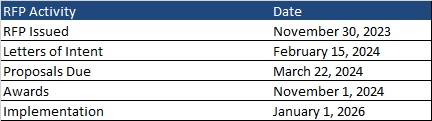
This week, our In Focus section reviews the request for responses (RFR) for the Massachusetts One Care and Senior Care Options (SCO) programs, released by the Massachusetts Executive Office of Health and Human Services (EOHHS) on November 30, 2023. The programs provide physical, behavioral, long-term services and supports (LTSS), and other community services to Medicare and Medicaid dual-eligible beneficiaries. Implementation is set to begin January 1, 2026.

One Care

One Care launched in 2013 as a Section 1115 Medicare-Medicaid Plan (MMP) program dual demonstration waiver. It operates under a financial alignment initiative (FAI) capitated model. The program provides integrated care to dual eligible adults ages 21 to 64. Individuals may remain enrolled in One Care when they turn 65 years old as long as they continue to meet all other requirements. Members can also access an independent LTSS coordinator.

As the Centers for Medicare & Medicaid Services (CMS) sunsets the FAI dual demonstrations, One Care will shift to a Fully Integrated Dual Eligible Special Needs Plan (FIDE SNP) beginning in 2026, pending federal approval of the Section 1115 amendment request. Members will have exclusively aligned enrollment with the same plan for both Medicare and Medicaid coverage.

SCO

SCO launched in 2004 and is currently a FIDE SNP with exclusively aligned enrollment. Medicaid enrollees ages 65 and older with or without Medicare are eligible. Enrollment in this managed care program is voluntary. Individuals on the Frail Elder Waiver can only join SCO.

RFR

Massachusetts will award separate contracts for One Care and SCO but may prefer bids from plans seeking to operate both; however, plans may submit bids to operate one type of plan. The state seeks to offer both One Care and SCO coverage for eligible individuals in as many counties as possible, and ideally statewide. Plans must propose to cover people in at least six counties for each type of plan.

To be selected, plans will need to have a contract with CMS to operate a FIDE SNP in Massachusetts in 2026. Applications must be submitted to CMS by February 2025.

Timeline

Letters of intent are due February 15, 2024, and the deadline for responses is March 22, 2024. Plans will be selected by November 1, 2024. Implementation is set to begin January 1, 2026. Contracts will run an initial five-year term through December 31, 2030. Contracts may be renewed for up to five years in any increment.

Current Market

Commonwealth Care Alliance, Tufts, and UnitedHealthcare serve 43,000 One Care members.

SCO incumbents WellSense Senior Care Options (formerly BMC Healthnet), Commonwealth Care Alliance, Fallon Health, Molina/Senior Whole Health, Tufts, and UnitedHealthcare serve 77,000 members.

Link to RFP

Arizona releases Medicaid ALTCS-EPD Program RFP

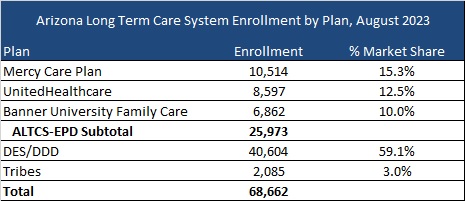
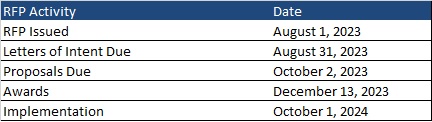
This week, our In Focus section reviews the Arizona Long Term Care System (ALTCS) Elderly and Physically Disabled (EPD) Program request for proposals (RFP), which the Arizona Health Care Cost Containment System (AHCCCS) released on August 1, 2023. The ALTCS-EPD program covers 26,000 individuals, representing approximately 38 percent of the ALTCS managed care population. The remaining ALTCS members are covered under a state-run model through the Department of Economic Security, Division of Developmental Disabilities (DES/DDD) health plans, which provide long-term care (LTC) to individuals with intellectual/developmental disabilities. Contracts for ALTCS-EPD are worth approximately $1.6 billion and will take effect October 1, 2024.

Background

ALTCS is one of the oldest Medicaid managed long-term services and supports (MLTSS) programs in the country, providing integrated physical health, behavioral health, and LTSS to individuals who are 65 years of age or older or who have a disability and require nursing facility level care. Beneficiaries may live in assisted living facilities or receive in-home services. The ALTCS-EPD program covers nearly all Arizonans who are dually eligible for Medicaid and Medicare statewide. Winning managed care organizations (MCOs) also will be required to implement companion Medicare Advantage Fully Integrated D-SNPs (FIDE SNPs) effective January 1, 2025.

Market

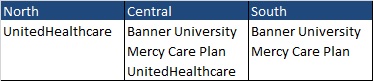
Members receive coverage through Banner-University Family Care, Mercy Care Plan, and UnitedHealthcare, depending on their geographic service area (GSA). MCOs will bid on all three GSAs and indicate their order of preference to be awarded. AHCCCS will not award the South GSA only or the North GSA only. At present, in the South region, Mercy Care Plan serves Pima County only. Under the new RFP, AHCCCS will not make an award specific to Pima County; rather the MCO will serve all seven counties within the South GSA.

Together, the plans cover 25,973 individuals (see below).

(United and Mercy administer DDD plans.)

Timeline

Intent to bid forms are due by August 31. Proposals are due October 2, and awards are expected to be announced December 13. As noted previously, implementation is scheduled to begin October 1, 2024.

RFP Link

New CMS dementia care model emphasizes role of caregivers

This week, our In Focus section reviews the new Guiding an Improved Dementia Experience (GUIDE) Model, announced by the Centers for Medicare & Medicaid Services (CMS) Center for Medicaid and Medicare Innovation (the Innovation Center) on July 31, 2023.

In addition to announcing the Innovation Center’s GUIDE Model, CMS released five final fiscal year (FY) 2024 payment rules this past week. Of note, these regulations set higher than anticipated reimbursement rates for many providers:

CMS also released the 2024 projected Medicare Part D premium and bid information, which may provide early indications on the effects of the Inflation Reduction Act’s drug pricing policies.

GUIDE Model: Parameters and Opportunities

President Biden signed an Executive Order in April 2023 on Increasing Access to High-Quality Care and Supporting Caregivers. The order directed the Innovation Center to develop a payment and delivery system model for dementia care. The program is intended to improve the quality of life for people living with dementia, reduce strain on unpaid caregivers, and help people remain in their homes and communities through improved care coordination and management, caregiver education and support, and respite services.

The announcement this week outlines the basic parameters of the model, which track with CMS’s focus on reducing health disparities, supporting innovation, and addressing affordability. CMS expects that the model’s additional support for caregivers will reduce federal spending on hospitalizations and post-acute care. Notably, CMS projects savings will come from reduced long-term nursing facility placement through a decrease in Medicaid spending on the federal medical assistance percentage (FMAP). Helping Medicare enrollees stay in their homes may also lower state spending on long-term care.

Additional information, including the application to participate, will be available this fall. In the meantime, CMS is accepting letters of interest through September 15, 2023. The model will begin on July 1, 2024, and run for eight years.

HMA’s experts identified the below list of policies that will be important for provider organizations, caregivers, and other stakeholders considering participation in the model:

  • GUIDE Model participants will be Medicare Part B enrolled providers/suppliers, excluding durable medical equipment (DME) and laboratory suppliers, that are eligible to bill for Medicare physician fee schedule services and agree to meet the care delivery requirements.
  • The GUIDE Model comprises two tracks for participation—one for established programs and another for new programs.
    • Established programs must have an interdisciplinary care team, including a care navigator, use an electronic health record (EHR) platform that meets the standards for certified EHR technology, and meet other care delivery requirements as outlined in the request for applications.
  • If a participant cannot meet the GUIDE healthcare delivery requirements alone, CMS will allow the provider or supplier to partner with other Medicare organizations, to meet the mandates.
  • The model also includes policies designed to reduce disparities in dementia care. For example, CMS plans to conduct outreach with organizations that do not yet offer comprehensive dementia care or lack prior experience with alternative payment models such as safety net providers. Participants also will need to develop health equity plans, and a “health equity adjustment” will be made to payments for providers that serve disadvantaged beneficiaries.
    • CMS will support model participation for these organizations by providing technical assistance and learning support as well as a pre-implementation year to prepare for participation.
  • CMS will test an alternative payment methodology for participants that deliver key care management and coordination services to people with dementia and their family caregivers, including comprehensive, person-centered assessments and care plans; 24/7 access to a helpline; and caregiver support and education, such as training on how to best care for a relative with dementia. CMS clarifies that GUIDE is not a shared savings or total cost of care model and does not address coverage of novel Alzheimer’s drugs.
  • Participants will assign Medicare fee-for-service beneficiaries, including people who are dually eligible for Medicare and Medicaid, living with dementia and their caregivers to a care navigator. This individual will help people access services and supports, including clinical services and non-clinical services such as meals and transportation through community-based organizations. Model participants will also help caregivers access respite services, which enable them to take temporary breaks from their caregiving responsibilities. Evidence demonstrates that respite enables caregivers to care for individuals with dementia at home for a longer period, thereby forestalling institutional placement.

CMS will host a webinar with more details about the model on Thursday, August 10, from 2:00−3:00 pm.

The HMA team will continue to evaluate the GUIDE model and other Innovation Center opportunities. If you have any questions about the model or any of the new regulations, contact our experts below.

We also would like to remind our readers that the HMA team hosted a webinar last week on the Medicare Behavioral Health proposed changes titled “New tools for Medicare policy changes impacting behavioral health services”. We previously discussed those changes in the July 19, 2023 In Focus.

HMA annual conference on innovations in publicly sponsored healthcare

Innovations in Publicly Sponsored Healthcare: How Medicaid, Medicare, and Marketplaces Are Driving Value, Equity, and Growth

Pre-Conference Workshop: October 29, 2023
Conference: October 30−31, 2023
Location: Fairmont Chicago, Millennium Park

Health Management Associates has announced the preliminary lineup of speakers for its sixth annual conference, Innovations in Publicly Sponsored Healthcare: How Medicaid, Medicare, and Marketplaces Are Driving Value, Equity, and Growth.

Hundreds of executives from health plans, providers, state and federal government, investment firms, and community-based organizations will convene to enjoy top-notch content, make new connections, and garner fresh ideas and best practices.

A pre-conference workshop, Behavioral Health at the Intersection of General Health and Human Services, will take place Sunday, October 29.

Confirmed speakers to date include (in alphabetical order):

  • Jacey Cooper, State Medicaid Director, Chief Deputy Director, California Department of Health Care Services
  • Kelly Cunningham, Administrator, Division of Medical Programs, Illinois Department of Healthcare and Family Services
  • Karen Dale, Chief Diversity, Equity, and Inclusion Officer, AmeriHealth Caritas
  • Mitchell Evans, Market Vice-President, Policy & Strategy, Medicaid & Dual Eligibles, Humana
  • Peter Lee, Health Care Policy Catalyst and former Executive Director, Covered California
  • John Lovelace, President, Government Programs, Individual Advantage, UPMC Health Plan
  • Julie Morita, MD, Executive Vice President, Robert Wood Johnson Foundation
  • Anne Rote, President, Medicaid, Health Care Service Corp.
  • Drew Snyder, Executive Director, Mississippi Division of Medicaid
  • Tim Spilker, CEO, UnitedHealthcare Community & State
  • Stacie Weeks, Administrator/Medicaid Director, Division of Health Care Financing and Policy, Nevada Department of Health and Human Services
  • Lisa Wright, President and CEO, Community Health Choice

Publicly sponsored programs like Medicare, Medicaid, and the Marketplaces are leading the charge in driving value, equity, and growth in the U.S. healthcare system. This year’s event will highlight the innovations, initiatives, emerging models, and growth strategies designed to drive improved patient outcomes, increased affordability, and expanded access.

Early bird registration ends July 31. Group rates, government discounts, and sponsorships are available.

New experts join HMA in April 2023

HMA is pleased to welcome new experts to our family of companies in April 2023. This diverse team brings significant expertise in Medicare, Medicaid, regulatory strategies, and managed care, strengthening HMA’s capabilities in healthcare consulting across areas like actuarial support, regulatory compliance, and strategic leadership in Medicare Advantage and Medicaid programs.

Headshot of Jed Abell

Jed Abell

Consulting Actuary I

Headshot of Elrycc Berkman

Elrycc Berkman

Senior Consulting Actuary I

Headshot of Monica Bonds

Monica Bonds

Associate Principal

Headshot of Yucheng Feng

Yucheng Feng

Senior Consulting Actuary I

Headshot of Ryan McEntee

Ryan McEntee

Senior Consultant II

2022 Yearly Roundup: a year of successful partnerships

The holiday season is grounded in gratitude. At HMA, we are grateful for successful partnerships that have fueled change to improve lives.

We are proud to be trusted advisors to our clients and partners. Their success is our success. In 2022 our clients and partners made significant strides tackling the biggest healthcare challenges, seizing opportunities for growth and innovation, and shaping the healthcare landscape in a way that improves the health and wellness of individuals and communities.

Reforming Colorado’s Behavioral Health System

HMA partnered with the Colorado Department of Human Services to support the planning and implementation of a new Behavioral Health Administration (BHA). HMA provided technical research and extensive stakeholder engagement, drafted models for forming and implementing the BHA, employed an extensive change management approach, and created a detailed implementation plan with ongoing support. Today the BHA is a cabinet member-led agency that collaborates across agencies and sectors to drive a comprehensive and coordinated strategic approach to behavioral health.

From Bid to Trusted Advisor

Wakely Consulting Group, an HMA Company, was engaged to support the launch of a Medicare Advantage (MA) joint venture partnership between a health plan and a provider system. Wakely was responsible for preparing and certifying MA and Medicare Part D (PD) bids, a highly complex, exacting, and iterative effort. The Wakely team quickly became a trusted advisor and go-to resource for the joint venture decision makers. The joint venture has driven significant market growth over its initial years, fueled by a competitive benefit package determined by the client product team.

Laying the Foundation for Modernizing Indiana’s Public Health System

In 2021 Indiana Governor Eric Holcomb appointed a 15-member commission to assess Indiana’s public health system and make recommendations for improvements. The Indiana Department of Health (IDOH) engaged HMA to provide extensive project management and support for six workstreams. HMA prepared a draft report summarizing public input as well as research findings and recommendations. The commission’s final report will form the basis of proposed 2023 legislation, including proposals to substantially increase public health service and funding across the state.

Multiple Clients Accepted into ACO REACH Model

In early 2022 HMA and Wakely Consulting Group, an HMA Company, assisted multiple clients with their applications to participate in the new CMS ACO REACH model. The purpose of this model is to improve quality of care for Medicare beneficiaries through better care coordination and increased engagement between providers and patients including those who are underserved. The team tailored their support depending on each client’s needs. The application selection process was highly competitive. Of the 271 applications received, CMS accepted just under 50 percent. Notably, nine out of the 10 organizations HMA and Wakely supported were accepted into the model.

Pipeline Research and Policy Recommendations to Address New Innovative Therapies

HMA, and subsidiaries The Moran Company and Leavitt Partners, were selected by a large pharmaceutical manufacturer to analyze the current pipeline of innovative therapies, examine reimbursement policies to assess long-term compatibility with the adoption of innovative therapies and novel delivery mechanisms, and make policy recommendations to address any challenges identified through the process. The project equipped the client with a holistic understanding of future potential impacts and actions to address challenges in a detailed pipeline analysis of innovative therapies.

Ready to talk?