Medicaid

Medicaid unwinding: enrollment shifts and Q2 2024 managed care insights

This week, our In Focus section addresses the significant change in national and state-specific Medicaid enrollment as a result of the Medicaid unwinding process. First, we highlight notable enrollment changes in the post-unwinding months. Next, we provide an update on second quarter (Q2) 2024 monthly capitated, risk-based Medicaid managed care enrollment. The experiences of the unwinding and the impact and current enrollment landscape are directly affecting strategic and programmatic decisions across all states, Medicaid managed care plans, and their partners and stakeholders. 

Background 

As explained in previous In Focus articles (article #1, article #2 and article #3), federal COVID-19 relief laws allowed states to receive higher federal funding for Medicaid as long as they did not terminate Medicaid coverage for anyone enrolled in Medicaid during the public health emergency. One result of the continuous coverage policy was sustained growth in Medicaid enrollment. More than 21 million additional individuals were continuously enrolled in Medicaid for up to three years between February 2020 and March 2023. In December 2022, Congress ended the Medicaid continuous coverage policy after March 31, 2023. States were allowed to begin processing redeterminations as early as February 2023 and start disenrolling ineligible individuals as early as April 2023. 

The Centers for Medicare & Medicaid Services (CMS) offered states a series of flexibilities intended to facilitate the unwinding process, which reduced some administrative burden and improved continuity of coverage for Medicaid enrollees. Most states adopted at least one of the flexibilities, with many using multiple options. Nonetheless, variations in timing and implementation of the flexibilities have affected their effectiveness. 

California, for example, received federal approval for flexibilities in its automatic redetermination process early on but implemented enhanced automation months into its unwinding process. This increased automation cut the number of disenrollments in half. Another key challenge during the unwinding was contacting enrollees about the redetermination process, and several of the federal flexibilities involved increased coordination with Medicaid managed care organizations (MCOs). 

Key Takeaways 

States lost an average of 15 percent of their peak COVID-era Medicaid enrollment between March 2023 and June 2024. Several effective practices could be adopted to address those individuals and families who remain eligible but not enrolled and to minimize procedural disenrollments in the future. Below is a snapshot of data and early insights Health Management Associates, Inc. (HMA), experts identified through their work with Medicaid stakeholders and analysis of Medicaid enrollment and eligibility data. 

  • Some states are several months beyond their anticipated unwinding period. Still, more than half of states continue to see small net reductions in their Medicaid populations (see Table 1). 

Table 1. Enrollment Changes during and after Unwinding, September 2024 

  • Despite the ongoing enrollment reductions, net Medicaid enrollment generally remains above pre-pandemic levels and is likely to remain so. This enrollment change has been boosted by several states—Idaho, Utah, Nebraska, Oklahoma, Missouri, South Dakota, and North Carolina—which expanded their Medicaid programs immediately before or during the COVID-19 pandemic. 
  • Following the official end of the Medicaid unwinding period, the acuity of the Medicaid population increased significantly. Early actuarial assessments, including those conducted by HMA actuaries, indicate that the average Medicaid population is older and sicker than before the unwinding started. Consequently, Medicaid populations may be more complex and expensive to manage—prompting states and managed care plans to reassess their capitation rates for current and future years. The 24th annual Medicaid Budget Survey conducted by The Kaiser Family Foundation (KFF) and Health Management Associates (HMA), in collaboration with the National Association of Medicaid Directors (NAMD), also provides key take-aways on provider rates and managed care, among other issues in the report As Pandemic-Era Policies End, Medicaid Programs Focus on Enrollee Access and Reducing Health Disparities Amid Future Uncertainties: Results from an Annual Medicaid Budget Survey for State Fiscal Years 2024 and 2025

Medicaid Managed Care Enrollment Update – Q2 2024 

Today, HMA Information Services (HMAIS) posted a quarterly update for Medicaid managed care enrollment. We collected and analyzed monthly Medicaid enrollment data from the second quarter (Q2) of 2024 (April−June) in capitated, risk-based managed care in 29 states. These data allow for the timely analysis of enrollment trends across states and MCOs as well as state and plan-specific analyses of managed care enrollment following the official end of the Medicaid unwinding period.1  

The 29 states highlighted in this review have released monthly Medicaid managed care enrollment data via a public website or in response to HMA’s public records request. This report reflects the most recent data posted or obtained. HMA has made the following observations related to the enrollment data (see Table 2): 

  • As of June 2024, Medicaid managed care enrollment across the 29 states tracked in this report was 62.7 million, down by 10.2 million (14 percent) year over year. 
  • In our review, all but one state, Mississippi, saw decreases in enrollment in June 2024 because of Medicaid redeterminations. 
  • The 22 expansion states included in the review—Arizona, California, Illinois, Indiana, Iowa, Kentucky, Louisiana, Maryland, Michigan, Minnesota, Missouri, Nevada, New Jersey, New Mexico, New York, North Carolina, Ohio, Oregon, Pennsylvania, Virginia, Washington, and West Virginia—have seen net Medicaid managed care enrollment decrease by 6.2 million (11.1 percent) in the past year, to 50.1 million members at the end of Q2 2024. 
  • The seven states that had not expanded Medicaid as of June 2024—Florida, Georgia, Mississippi, South Carolina, Tennessee, Texas, and Wisconsin—have seen Medicaid managed care enrollment decrease 24 percent to 12.6 million members at the end of Q2 2024. 

Table 2. Monthly MCO Enrollment by State, April−June 2024 

Note: In Table 2 above, “+/- m/m” refers to the enrollment change from the previous month. “% y/y” refers to the percentage change in enrollment from the same month in the previous year.

It is important to note the limitations of the data presented. First, not all states report the data at the same time during the month. Some of these figures reflect beginning of the month totals, whereas others reflect an end of the month snapshot. Second, in some cases the data are comprehensive in that they cover all state-sponsored health programs that offer managed care options; in other cases, the data reflect only a subset of the broader managed Medicaid population. This limitation complicates comparison of the data described above with figures reported by publicly traded Medicaid MCOs. Hence, the data in Table 1 should be viewed as a sampling of enrollment trends across these states rather than a comprehensive comparison, which cannot be established based solely on publicly available monthly enrollment data. 

Connect with Us 

More detailed information on the Medicaid managed care landscape is available with a subscription to HMAIS, which collects and aggregates Medicaid enrollment data, health plan financials, and additional actionable information about eligibility expansions, demonstration and waiver initiatives, as well as population- and service-specific information, such as Medicare and Medicaid dually eligible beneficiaries, ABD populations, long-term services and supports, and patient-centered medical homes. HMAIS also includes a comprehensive public documents library containing Medicaid requests for proposals and responses, model contracts, scoring sheets, and protests.  

For additional analysis of the Medicaid unwinding initiative and HMAIS’s enrollment data and subscription service, contact our featured experts below.
24th annual Kaiser Family Foundation state Medicaid budget survey released 

The 24th annual Medicaid Budget Survey conducted by The Kaiser Family Foundation (KFF) and Health Management Associates (HMA), in collaboration with the National Association of Medicaid Directors (NAMD), was released on October 23, 2024 in the report As Pandemic-Era Policies End, Medicaid Programs Focus on Enrollee Access and Reducing Health Disparities Amid Future Uncertainties: Results from an Annual Medicaid Budget Survey for State Fiscal Years 2024 and 2025.

At the end of state fiscal year (FY) 2024 and heading into FY 2025, states were wrapping up the unwinding of the pandemic-related continuous enrollment provision, focusing on an array of other priorities, and facing uncertainty about the stability of state revenues. States were also looking ahead to federal and state elections in November and the potential implications of those elections for Medicaid enrollees, states, and providers. As states have emerged from the now-expired COVID-19 Public Health Emergency, which profoundly affected Medicaid enrollment and spending, many are focused on using Medicaid to address long-standing health disparities (often exacerbated by the pandemic), improve access to behavioral health services and long-term services and supports (LTSS), address enrollee social determinants of health, and implement broader delivery system and value-based initiatives. The report includes key take-aways on provider rates and managed care, benefits and prescription drugs, and social determinants of health and reducing health disparities.  

The report was prepared by Kathleen Gifford, Aimee Lashbrook, and Caprice Knapp from HMA; and by Elizabeth Hinton, Elizabeth Williams, Jada Raphael, Anna Mudumala, Robin Rudowitz from the Kaiser Family Foundation. The survey was conducted in collaboration with NAMD.

read the 2024 report

Other links:
Press release
Growth and Spending report

Illinois D-SNP RFP: Highlights and signals of forthcoming trends

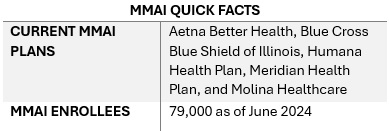
This week, our In Focus section from the HMA Weekly Roundup highlights the Illinois Department of Healthcare and Family Services request for proposals (RFP) for a dual-eligible special needs plan (D-SNP) to replace its current Medicare-Medicaid Alignment Initiative (MMAI) demonstration.

Overview

Illinois is one of the states affected by the Centers for Medicare & Medicaid Services (CMS) decision to end the capitated model in the federal Financial Alignment Initiative (FAI) demonstration. Illinois is among the last states to issue an RFP that will support the transition from the demonstration program. Two states, Texas and South Carolina, have yet to issue RFPs. On September 10, 2024, CMS issued a memo discussing end-of-demonstration enrollment and operational considerations and deadlines by which states should make operational decisions.

The Health Management Associates, Inc., (HMA) In Focus article June 26, 2024, discussed related changes that CMS finalized to the federal policy framework for D-SNPs to enhance care coordination, improve health outcomes, and ensure that dual-eligible beneficiaries receive accurate information about their healthcare while integrating successful features of the FAI demonstration and the Medicare-Medicaid Plan (MMP) program. These decisions are prompting more states to develop new models for integrating Medicare and Medicaid services.

Illinois D-SNP RFP Highlights

This Illinois procurement will transition the state to a fully integrated dual-eligible special needs plan (FIDE-SNP) model, which will include a requirement that plans provide managed long-term services and supports (MLTSS) for both people who are dually eligible and Medicaid-only beneficiaries beginning in 2027.

The RFP is largely focused on quality care provisions and improved care coordination across all services lines, including overall expectations to achieve the following:

  • Improved access and quality of community-based behavioral health services
  • Better quality of care in facilities
  • Fewer program opt-outs
  • A strategy for increasing the use of alternative payment models (APMs) in Medicaid managed care in Illinois, particularly for behavioral health providers

Emerging National Trends

Overall, the Illinois D-SNP procurement reflects broader national trends toward more coordinated, equitable, and outcome-focused healthcare.

Focus on Health Equity. The procurement emphasizes health equity and reducing disparities, including information on innovations that are responsive to health-related social needs (HRSNs) and social determinants of health (SDOH). The state is weighing payers’ experience partnering with non-traditional providers to meet Medicaid customers’ needs, their innovative programs to address customers who are difficult to locate, and their strategies for improving care for adults with complex needs in facility or community-based settings.

In addition, the state will require plans to report outcomes by race, ethnicity, and geography. Given the demographic and health equity reporting requirements, payers should be prepared to speak to their data collection, member engagement strategies, and relationships with community-based organizations. This capability will be an essential component of addressing both population health and health equity activities.

Alternative Payment Models. The RFP also requests detailed information on the payer’s strategy for increasing the use of APMs in Illinois Medicaid managed care, including the models the payer intends to implement. Experience supported by data-driven outcomes and explanations of work with providers or clinics to adopt, manage, and support reporting and analytics for APMs is a key area of interest for the state. Notably, the state seeks information on plans to include behavioral health providers in APMs.

Long-Term Services Related Transitions. The RFP questions also reflect the long-term services and supports that dually eligible beneficiaries need, as well as those of Medicaid-only beneficiaries who are eligible for these services. More specifically, the RFP raises questions to determine how payers will effectively implement nursing home diversion plans, incentivize hospitals to discharge patients to community settings, and approaches to transition members from institutional settings to the home and community, including by connecting members with supports for HRSNs. Payers will be expected to provide specific examples of their experience and outcomes in other states.

Emerging National Trends

The emphasis on health equity in the Illinois RFP reflects a broader national trend. States are increasingly interested in—and in some situations required—addressing SDOH and reduce disparities, especially for the Medicare and Medicaid dual-eligible population. As a result, payers and other healthcare organizations must develop capacity internally and through external collaborations to build their expertise and evidence base for advancing improvements.

The push for APMs in the Illinois procurement aligns with national efforts to move away from fee-for-service models. Illinois’s inclusion of behavioral health providers in APMs and requiring integrated care models highlights the growing recognition of the importance of mental health in overall health outcomes.

Illinois’s RFP also reflects heightened interest in improving care transitions and coordination. The potential for incentive programs related to community placement and increased focus on nursing home diversion will require innovative plans and a long-term commitment to working with all stakeholders to build on the federal FAI experiences.

What We’re Watching

Responses to the Illinois RFP are due October 18, 2024, and awards are expected to be announced in December. The state anticipates making awards to the top four bidders. Contract execution is estimated July 2025, with implementation January 1, 2026.

As the FAI demonstration ends and CMS’s integration requirements take effect over the next several years, there will be a steep learning curve for states, payers, and other key stakeholders adapting to this evolving environment. Compliance with new CMS rules will be crucial, and experiences in Illinois and other FAI demonstration states can provide valuable insights for other states and stakeholders.

Additional growth and program refinements in the federal Medicare Advantage (MA) landscape are expected in the coming years, especially among MA D-SNPs. Those MA D-SNPs that have yet to participate in Medicaid will need to continue make significant business decisions on participation and actively compete to secure state Medicaid contracts, which will have downstream implications for their state and local partners.

Connect with Us

Health Management Associates (HMA) experts continue to review the evolving landscape and federal changes that will affect D-SNPs in 2025 and beyond. Contact our featured experts below for details about the nationwide D-SNP rules and landscape.

Countdown to HMA’s fall 2024 conference: Spotlight on Medicare-Medicaid integration

The upcoming HMA event, Unlocking Solutions in Medicaid, Medicare, and Marketplace, offers extensive opportunities to engage with leaders from various sectors who are designing and implementing Medicare-Medicaid integration initiatives. Join us for main stage panel discussions with distinguished health plan executives from national and local plans and Medicaid directors from Iowa, New Mexico, New York, and Rhode Island.

HMA Principal Holly Michaels Fisher will lead a deeper dive into integration issues during the breakout session, Innovations to Improve Outcomes for Medicare-Medicaid Dually Eligible Individuals, with speakers Michael Carson, President and CEO of WellCare; Dr. Steven R. Counsell, Medical Director for the Division of Aging at Indiana Family and Social Services Administration; Dr. Linda Kurian, Executive Medical Director for the Center of Excellence of Medicare Duals/D-SNP at Aetna; and Juliet Marsala, Deputy Secretary for the Office of Long-term Living in the Pennsylvania Department of Human Services.

During the breakout, Meeting New Expectations for Health Equity and Improved Beneficiary Outcomes in Medicare Advantage, HMA Principal Greg Gierer will facilitate a conversation on the evolving landscape of MA rates and supplemental benefits, with experts Melinda Buntin, Health Economist and Bloomberg Distinguished Professor at the Johns Hopkins Bloomberg School of Public Health and the Johns Hopkins Carey Business School; Mark Fendrick, Director of the University of Michigan’s Center for Value-Based Insurance Design, and Matt Kazan, Vice President of Policy and Government Affairs at the SCAN Group.

Online registration ends October 1st.

Highlights from HMA survey on state approaches to managing the Medicaid pharmacy benefit

This week’s In Focus covers key takeaways and insights from a recently released HMA report, State Approaches to Managing the Medicaid Pharmacy Benefit: Insights from a National Survey for State Fiscal Years 2023 and 2024.

The report, released in August 2024 with support from Arnold Ventures, includes survey responses from 47 states (including DC) for state fiscal years (SFYs) 2023 and 2024. The survey instrument builds on questions posed in the 2019 Medicaid Pharmacy Study of all 50 states and the District of Columbia, which HMA and the Kaiser Family Foundation conducted.  

The report discusses state trends for how Medicaid pharmacy benefits are administered across the country, including planned priorities and anticipated challenges in SFY 2025 and beyond. The findings are based on information provided by the nation’s state Medicaid Directors, Medicaid Pharmacy Directors, and other Medicaid agency experts. 

Pharmacy Benefit Administration  

In many states, managed care delivery systems play a pivotal role in administering Medicaid benefits, including prescription drugs. As of July 1, 2023, survey results found that:  

  • A total of 33 states carved pharmacy benefits into managed care organization (MCO) contracts, with one state, Kentucky, directing its MCOs to use a single state-selected pharmacy benefit manager (PBM). 
  • Eight states carve-out the pharmacy benefit—double the number in 2019. 

MCO states were surveyed about their use of carve outs for certain drug products/classes, inclusive of physician-administered drugs covered under the medical benefit.  

  • In all, 19 states reported carving out one or more drug classes or select agents within a drug class—often high-cost specialty drugs. 
  • Of those states, 13 reported using the carve-out as part of a risk mitigation strategy.  
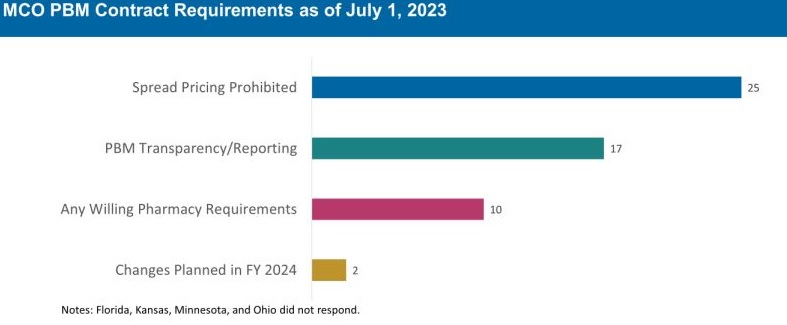
Bar chart titled "MCO PBM Contract Requirements as of July 1, 2023,"

Pharmacy Benefit Managers 

The significant role and market power of PBMs have prompted many state legislatures to enact greater transparency practices and require health plans to accept more responsibility for monitoring the PBMs they contract with, which reflect notable changes since the 2019 survey. More specifically: 

  • A total of 33 states reported contracting with a PBM.  
  • The most frequently reported PBM functions included utilization management, drug utilization review, claims processing and/or payment, and rebate administration activities.  

The 30 MCO states that carve in pharmacy benefits responded to survey questions about PBM transparency and spread pricing requirements. Of these states:  

  • 25 prohibit spread pricing in MCO PBM contracts—more than double the number of states reporting prohibitions on spread pricing in 2019.  
  • 17 reported having PBM transparency reporting requirements.  
  • 10 states reported having “any willing” pharmacy requirements.  

The Role of PDLs, Prior Authorization, and Step Therapy in Controlling Drug Costs and Utilization  

HMA’s experts also sought information on state payment strategies and utilization management protocols that are used to manage pharmacy expenditures. Nearly all responding states (44) have a preferred drug list (PDL) in place for fee-for-service prescriptions, which allow states to drive the use of lower cost drugs by encouraging providers to prescribe preferred drugs. Further, nearly two-thirds of responding MCO states (19 of 30 states) that do not carve out the pharmacy benefit reported having a uniform PDL for some or all drug classes, requiring all MCOs to cover the same drugs.  

Many states have implemented step therapy and prior authorization (PA) guardrails in their Medicaid programs through legislation. However, 85.1 percent of responding states (40 of 47) report utilization controls like PA or step therapy applied to drugs that are reimbursed through the medical benefit to control utilization and costs. States also play an active role in managing MCO clinical protocols or medical necessity criteria, with 22 out of 30 MCO pharmacy carve-in states reporting that they require uniform clinical protocols for some or all drugs with clinical criteria. Approximately one-half of responding MCO carve-in states also require review and approval of MCOs’ PA criteria (15 of 30 states) and step therapy criteria (14 of 30 states).  

State Adoption of VBAs: Improving Patient Access to Cell and Gene Therapies  

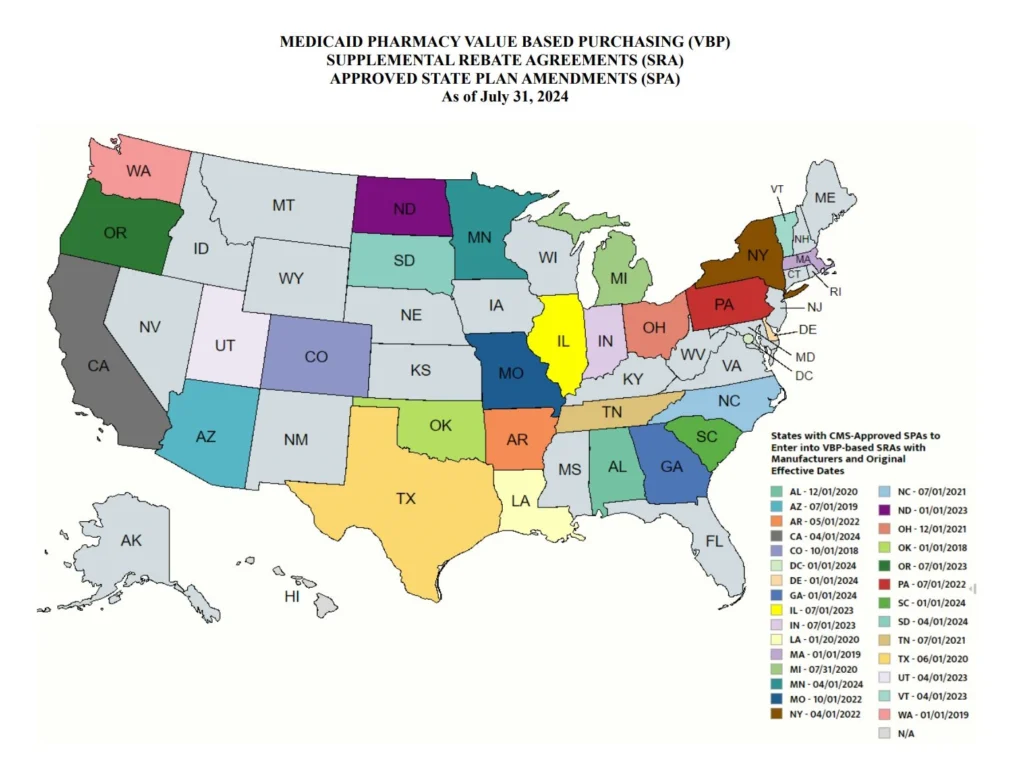
A growing number of states are actively considering entering into value-based arrangements (VBAs) with manufacturers, as pressure to improve patient access to cell and gene therapies increases. Nine states have at least one VBA in place, and 23 states reported that VBAs are among their future solutions for addressing coverage of new high-cost therapies. States will need to address common barriers to VBA implementation, which involves more upfront costs and operational challenges to implement than traditional contracts. 

Subsequent to the submission of survey responses, the Centers for Medicare & Medicaid Services (CMS) released a Cell and Gene Therapy (CGT) Access Model, which begins with a focus on sickle cell disease, anticipated to go live on January 1, 2025. Under the model, CMS will negotiate outcomes-based agreements with manufacturers on behalf of the state to ensure that treatment pricing is related to treatment effectiveness. In the coming years, experiences with this model will help determine whether a CMS-led approach to developing and administering VBAs for CGTs improves Medicaid member access to innovative treatment and their impact on expenditures, if any.  

Map of the United States titled "States with Approved VBA State Plan Amendments as of March 14, 2024,"
Source: VBPUpdate (medicaid.gov)

Looking Ahead  

Managing the Medicaid pharmacy benefit has never been more challenging. In FY 2025 and beyond, most states will be focused on managing their Medicaid pharmacy budgets, especially the development of VBAs and other policies and strategies for managing new high-cost therapies. Other top priorities and challenges cited by multiple states include management of PBM arrangements and considering coverage of the new generation of GLP-1 anti-obesity medications. States also must react to changing drug marketplace conditions driven, in part, by federal policy changes to the Medicaid drug rebate formula and changes designed to lower Medicare drug costs. Drug manufacturer responses to these changes have implications for Medicaid state budgets, but also for state PDL management decisions and beneficiary access to needed medications. 

Connect with Us 

The upcoming event, Unlocking Solutions in Medicaid, Medicare, and Marketplace, hosted by HMA, will offer more opportunities to engage with report author Kathy Gifford at the pre-conference workshop Paying for Innovative Pharmaceuticals: State and Federal Trends Shaping Public Programs. Leaders from various sectors will join Kathy to discuss trends in prescription drug policies in public and commercial insurance programs. 

For details about the report, contact our featured experts below.
How states are shaping Medicaid managed care and marketplace participation

This week, our In Focus section reviews state policies designed to increase insurer participation in Medicaid managed care and Marketplace programs. As states seek to address healthcare costs, affordability, and consumer experiences, they are exploring a range of initiatives—from the rise of prescription drug affordability boards to cost containment commissions, cost growth benchmarks, transparency, and examination of mergers and acquisitions.  

A notable trend is the use of state policy and purchasing power to encourage or mandate that Medicaid managed care organizations (MCOs) offer Marketplace plans. Dual-market participation can help smooth coverage transitions, ensure continuity of care, and expand consumer choice. The remainder of this article addresses original research and analysis of this trend by our Health Management Associates, Inc. (HMA), featured experts.

Current Landscape  

In 2024, enrollment in the Marketplace program has surged to more than 21 million, approximately a 30 percent increase from 2023. This growth was largely attributed to the temporary enhanced subsidies that allowed more people to access affordable coverage. Over the past several regulatory cycles, federal policymakers also have taken steps to further align the Marketplace framework with Medicaid on key issues, such as essential community provider access, eligibility and enrollment processes, and plan design standards. In response, states are innovating to meet federal requirements while pursuing their own healthcare goals related to coverage, affordability, access, and healthcare outcomes.  

Value Proposition  

A compelling value proposition for Medicaid MCOs to participate in the Marketplace (and vice versa) includes the ability to market to and retain people moving from one program to another as life circumstances change. Dual-market participation also supports diversification and growth strategies. In fact, enrollment in the Marketplace has nearly doubled since 2020. For Medicaid MCOs in particular, expanding product offerings to include Marketplace plans presents a unique opportunity to leverage existing provider networks and reimbursement arrangements to deliver more competitive rates. 

Consumers benefit when the same organization participates in both markets. Families with parents and children who obtain coverage under different programs have an opportunity to work with a single organization and choose providers from the same or overlapping networks. Income fluctuations may result in disenrollment from one program (e.g., Medicaid) and eligibility for a new program (e.g., Marketplace subsidies). Continuity of care policies can smooth these transitions in areas such as prior authorization, care management, and provider network.  

State Strategies to Increase Dual-Market Participation 

The Affordable Care Act expanded access to affordable health insurance coverage for as many as 45 million individuals by giving states the option to expand Medicaid and provide federal subsidies to people who purchase Marketplace plans. States are now using various strategies to encourage or require insurer participation in both programs to ease transitions for individuals and families “churning” from one program to another, increase competition and choice of Marketplace plans, and reduce the risk of coverage gaps. For example:  

  • Nevada is requiring any bidder that plans to respond to its upcoming Medicaid MCO procurement to separately submit a “good faith” response to the Battle Born State Plans (BBSP) RFP. This state-contracted, public option will be available on the Silver State Health Insurance Exchange beginning in 2026. Failure to submit a good faith proposal will disqualify an organization from participating in the Medicaid MCO procurement later this fall. Nevada’s current Medicaid MCOs must participate in the Marketplace by offering at least one Silver and one Gold qualified health plan (QHP) that has overlapping provider networks, serves the same service area, and charges reasonable premiums. 
  • Rhode Island and New Mexico require or intend to require that their Medicaid MCOs participate in the Marketplace. As an awardee of Rhode Island’s recent Medicaid MCO procurement, UnitedHealthcare, must reenter the HealthSource Rhode Island market in 2027. These states also have designed their Medicaid MCO auto-assignment methodology to favor enrollment in a Medicaid MCO affiliated with an individual’s previous Marketplace plan or a family member’s Marketplace plan.  
  • In its last Medicaid MCO procurement (2018), North Carolina offered bonus points to any bidder that agrees to offer a Marketplace MCO. The resulting contract codified the market entry commitment and included implications for failure to follow through. Nonfulfillment could result in the highest level of contract noncompliance and associated penalties. 
  • Arkansas expanded its Medicaid program using federal matching funds to purchase QHP coverage through the Marketplace. Minnesota, one of the few states offering a basic health program, contracts with the same organizations to provide coverage under both programs.  
  • Iowa uses contract language to encourage, but not require, Medicaid MCOs to participate in the Marketplace to facilitate continuity of care during coverage transitions. 

The Centers for Medicaid & Medicare Services (CMS) collaborated with states to promote continuity of coverage following the end of the Medicaid continuous enrollment requirement established in the Families First Coronavirus Response Act of 2020, also known as the Medicaid public health emergency (PHE) unwinding. This support includes the clarification of permissible outreach activities by Medicaid MCOs that also offer a Marketplace plan, information sharing, and other assistance. Many states have incorporated the CMS guidanceiii into Medicaid MCO contracts. North Carolina, Utah, and West Virginia include additional contract terms supporting their Medicaid MCOs’ ability to co-market Medicaid and Marketplace plans, including when an individual is losing Medicaid eligibility.  

What to Watch For 

Coverage transition challenges throughout the Medicaid PHE unwinding have highlighted the real-life impact of coverage gaps and the importance of policies and practices that promote uninterrupted access to healthcare coverage. Historic Marketplace enrollment levels and recent CMS guidance clarifying the allowability of outreach to people who are losing Medicaid coverage about Marketplace plan available make the prospect of dual-market participation increasingly attractive for Medicaid MCOs. A greater focus on improving continuity of care and Marketplace plan choice may lead to more states encouraging or requiring Medicaid MCOs to participate in the Marketplace.  

Connect with Us  

The upcoming HMA event, Unlocking Solutions in Medicaid, Medicare, and Marketplace, will offer more opportunities to engage with leaders from various sectors who are advancing innovations in Medicaid managed care and Marketplace programs and the points at which these programs intersect. State Medicaid and insurance commissioners, health plan executives, and community leaders, among others, will share insights into their market success and initiatives designed to address healthcare costs and insurance affordability.  

Experts from HMA and our family of companies have extensive experience in the policy, structure, and administration of healthcare markets and health plan contracting. For more information, contact our featured experts below.

Improving healthcare for justice-involved populations: key insights on Medicaid Section 1115 reentry demonstrations

This week, our In Focus section considers state and local initiatives centered on the intersection of carceral care and state Medicaid programs.

The Health Management Associates (HMA) team includes clinicians and leaders who bring extensive expertise in justice healthcare, Medicaid, managed care, administration and operations, quality and accreditation, and information technology. Drawing on this wealth of experience, we provide five key insights for states, industry professionals, and other stakeholders aiming to improve healthcare access and related services for justice-involved populations.

Community Reentry: A Pivotal Point to Impact Health Outcomes

The Centers for Medicare & Medicaid Services (CMS) designed the Medicaid Section 1115 Reentry Demonstration Opportunity to improve access to community resources that address the healthcare and health-related social needs of people who are preparing to reenter their communities after incarceration. Medicaid enrollment assistance and prerelease coverage for certain services can help ensure successful care transitions during reentry. This demonstration allows states to provide Medicaid-reimbursable services up to 90 days before release from carceral facilities. These services include care management, behavioral health consultations, and peer support designed aiming to smooth the transition back into the community.

States and their partners are using these Medicaid regulatory flexibilities to develop—and eventually implement—programs that focus on the critical point of transition and reduce emergency department visits and inpatient hospital admissions for both physical and behavioral health issues once individuals are released and return to the community.

Recent State Activity Interest in Medicaid Reentry Initiatives

In July 2024, CMS approved Medicaid Section 1115 reentry demonstration proposals from Illinois, Kentucky, Oregon, Utah, and Vermont. These states join California, Washington, Montana, and Massachusetts in their work to develop the operational details and implementation plans to cover some services prior to release, increasing access to and continuity of care for returning individuals. According to HMA’s monitoring and analysis, another 13 states and the District of Columbia have reentry proposals pending CMS review.

Roles for Medicaid Partners

With 41 states, including the District of Columbia, using managed care for specific Medicaid populations, local and regional managed care organizations (MCOs) are integral to this landscape. The Medicaid Reentry Section 1115 Demonstration highlights the importance of early engagement with state partners and MCOs in preparing to serve the justice-involved population effectively.

By understanding these demonstrations and strategically developing their policy and operational plans, states and MCOs can enhance their services and improve outcomes for individuals transitioning out of carceral facilities. The continued focus on integrating comprehensive care models reflects a commitment to advancing the quality of healthcare for justice-involved individuals and ensuring their successful reentry into the community.

Key Considerations for States and Partners

CMS approval of state reentry demonstration proposals is the first of several critical steps required to improve access to services and health outcomes. Based on their real-world strategy, policy, and operational experience in Medicaid and correctional systems, the HMA team identified the following key considerations for states and their partners pursuing reentry initiatives:

  • Successful reentry programs require breaking down longstanding silos and challenges in policy, funding, contracting, systems/IT, bias, and other aspects integral to reentry.
  • All stakeholders will benefit from operationalizing best practices that use data metrics and reporting to demonstrate compliance with federal and state oversight and monitoring across carceral, public health, and Medicaid programs.
  • State and local carceral facilities may need to change their contracts with healthcare vendors to meet contractual and quality standards and best practices, including, in some cases, transitioning to provision of care to public health systems and university partners.
  • Build a team that will support successful state reentry programs. For example, government and their partners need expertise in the intersection of healthcare and correctional systems, skills in delivery system transformation, and knowledge of the publicly funded healthcare industry. The team will benefit from comprehensive experience with state prison systems, county and municipal jails, drug courts, and probation and parole, including implementing and coordinating medications for addiction treatment along a continuum of care in response to the substance abuse and opioid use disorder crisis facing communities nationwide.
  • Prepare to collaborate with new entities that have a range of experiences and perspectives.

Connect with Us 

The July 2024 edition of HMA’s Podcast, Vital Viewpoints, features a discussion with HMA Managing Director for Justice-Involved Services Linda Follenweider about her insights on this pivotal moment in carceral healthcare. Linda, an advanced practice registered nurse and board-certified family nurse practitioner, discusses the critical gaps in continuity of care for incarcerated individuals. She emphasizes how many people receive necessary medical care while in jail or prison but struggle to maintain these services upon release. The episode showcases the opportunities presented by adopting routine screening questions about incarceration history to ensure better health outcomes and resource utilization.

The upcoming conference, Unlocking Solutions in Medicaid, Medicare, and Marketplace, hosted by HMA, will offer more opportunities to engage with fellow executives, policymakers, and thought leaders across multiple sectors and industries advancing policy and programmatic innovations in carceral care and reentry. Notably, HMA experts Tonya Moore and Stuart Venske offer invaluable insights from their involvement in the development and execution of the CMS Section 1115 demonstration policies, including the reentry opportunity.

For more information about HMA’s work at the intersection of carceral care and Medicaid, contact our featured experts below.

HMA conference keynote speaker discusses innovation in Medicaid, Medicare, and Marketplaces

Given that 50 percent of Americans have publicly funded health insurance—including Medicare, Medicaid, or Affordable Care Act Marketplace plans in which many premiums are subsidized—the need is growing for innovations that will yield better quality at lower total cost. The Health Management Associates (HMA) Fall Conference, Unlocking Solutions in Medicaid, Medicare, and Marketplace, offers an agenda that dives deeply into the latest innovations and opportunities in these critical programs. Focused on improving collaboration and information sharing, the event will explore strategies and practical solutions to reduce health disparities and enhance outcomes for aging, disabled, and chronically ill people.

The federal government recently created the Advanced Research Projects Agency for Health (ARPA-Health), which is charged with supporting the development of high-impact solutions to improve health outcomes. We are fortunate to have as our keynote speaker Dr. Darshak Sanghavi from ARPA-H. We have asked him to share his thoughts on why innovation in the public healthcare space is critical.

Dr. Sanghavi will kick off the HMA conference with a discussion on how ARPA-H initiatives are intended to support new solutions to modernize today’s healthcare landscape—not only with technology, but also through changes in our approaches to healthcare delivery and payment.

Only a month before the November elections, the HMA conference presents a valuable opportunity to engage with healthcare leaders across the public and private sectors to hear how they are thinking about potential policy and regulatory changes that could affect publicly funded programs and supplemental coverage. Attendees will take home insights and actionable ideas to drive improvements in health and well-being. Join us to shape the solutions that will impact the future of healthcare!

HMA celebrates 59th anniversary of Medicaid and Medicare

This week, Health Management Associates (HMA) shifts In Focus from a newsworthy development to commemorate a seminal event in the expansion and strengthening of healthcare access in the United States. On July 30, 1965, Medicaid and Medicare were signed into law under Title XVIII and Title XIX of the Social Security Act. Today we celebrate the 59th anniversary of this pivotal moment in America’s healthcare journey.

Medicaid: A Critical Safety Net that Remains Strong

All states, the District of Columbia, and the U.S. territories have Medicaid programs designed to provide health insurance coverage for low-income individuals. As of March 20241, 82,751,338 people, including eligible low-income adults, children, pregnant women, older adults, and people with disabilities are covered under their state’s Medicaid program in accordance with federal requirements. The COVID-19 pandemic underscored just how important this safety net program is for American families, as it continued to deliver vital services during unprecedented times.

Beyond its traditional role, Medicaid also drives significant innovations in care for people with complex conditions and challenges. States have implemented various programs and initiatives to improve healthcare quality and outcomes. These include:

  • Managed Care Expansion: Many states have expanded Medicaid managed care programs to enhance care coordination and improve health outcomes.
  • Value-Based Care Models: Innovations in value-based care are being tested, aiming to link reimbursement to quality of care and patient outcomes rather than volume of services.
  • Integration of Behavioral Health: Several states are integrating behavioral health services into Medicaid to address mental health and substance use disorders more effectively.
  • Telehealth: The pandemic accelerated the adoption of telehealth services in Medicaid, expanding access to care and reducing barriers for patients.

Medicare: Leading in Innovation and Coverage

Medicare provides coverage to more than 60 million seniors and people with disabilities. In addition to being a lifeline for so many Americans, Medicare is a force for innovation in health policy, piloting changes to payment and care delivery through the Innovation Center and through Medicare Advantage plan design. Key innovations include:

  • Alternative Payment Models: The Innovation Center has been at the center of piloting various alternative payment models to improve quality and reduce costs.
  • Medicare Advantage Enhancements: Medicare Advantage plans continue to evolve, offering more comprehensive benefits that include mental health and substance use disorder services and integrating additional services such as dental, vision, and wellness programs.
  • Chronic Care Management: Medicare is expanding its focus on chronic care management, providing additional resources and support for individuals with chronic conditions.

HMA’s Commitment to Medicaid and Medicare

Since HMA’s founding, our experts have helped states, plans, providers, and other stakeholders deliver the full spectrum of Medicaid and Children’s Health Insurance Program (CHIP) services. As HMA has evolved, we have built a leading-edge Medicare team that includes former agency officials, plan leaders, policy and data analysts, and actuaries. Healthcare plans, providers, and innovators call upon our colleagues to anticipate policy and regulatory change, develop and support Medicare Advantage business, transform fee-for-service programs, and support access to new technologies and treatments that can both improve quality patient outcomes and reduce costs of care.

Our growing team of includes 10 former state Medicaid directors and many more former state agency leaders, hospital and health plan executives, senior officials from the Centers for Medicare & Medicaid Services (CMS), and public health leaders.

HMA Colleagues Who Are Former Medicaid Directors Looking Ahead

Headshot of Kathy Gifford

Kathy Gifford

Principal

Headshot of Farah Hanley

Farah Hanley

Regional Director

Headshot of Beth Kidder

Beth Kidder

Regional Director

Headshot of Chuck Milligan

Chuck Milligan

Chief Executive Officer

Headshot of Matt Powers

Matt Powers

Senior Advisor

Headshot of Patrick Tigue

Patrick Tigue

Senior Vice President, Practice Groups

Anya Wallack, PhD

Anya Wallack

Principal

HMA’s Top Medicare Experts

Headshot of Amy Bassano

Amy Bassano

Senior Advisor

Headshot of Julie Faulhaber

Julie Faulhaber

Senior Advisor

Headshot of Holly Michaels Fisher

Holly Michaels Fisher

Senior Advisor

Headshot of Zach Gaumer

Zach Gaumer

Regional Director

Headshot of Kevin Kirby

Kevin Kirby

Senior Advisor

Headshot of Rachel Kramer

Rachel Kramer

Senior Principal

Headshot of Wendy Radunz

Wendy Radunz

Managing Principal

Headshot of Kelsey Stevens - Wakely

Kelsey Stevens

Chief Executive Officer

Looking Ahead

As Medicaid and Medicare near their seventh decade, the programs will continue to evolve and change to better support covered individuals and meet the demands of policymakers and taxpayers. HMA experts are committed in service of this important mission, and we are excited about building their future together with our clients to create more innovative, high-quality care that improves health outcomes for all.

  1. April 2024 Medicaid & CHIP Enrollment Data Highlights | Medicaid ↩︎

CMS invites states to apply for transforming maternal health model

This week, our In Focus section reviews the notice of funding opportunity (NOFO) for the Transforming Maternal Health (TMaH) Model, which the Centers for Medicare & Medicaid Services (CMS) Center for Medicaid and Medicare Innovation (the Innovation Center) announced on December 15, 2023. States interested in participating in this model must submit an application to CMS during the competitive application process.  

As described in a December 2023 In Focus, pregnancy-related deaths have more than doubled since 1987 to 17.6 deaths per 100,000 live births, with health disparities only worsening outcomes for different racial and ethnic groups. For example, the pregnancy-related mortality rates for Black and Native American and Alaska Native people are approximately two to three times higher than the rate for White people. In recent years, 38 states have extended postpartum coverage, and 11 states now offer doula coverage for Medicaid enrollees. This initiative accelerates the focus on maternal outcomes and, with Medicaid paying for nearly 43 percent of births, has the potential to affect health across generations. 

This model is designed exclusively to improve maternal healthcare for people enrolled in Medicaid and the Children’s Health Insurance Program (CHIP). The TMaH model takes a whole-person approach to pregnancy, childbirth, and postpartum care, addressing the physical, mental health, and social needs people experience during pregnancy. 

Model Overview 

Up to 15 participating state Medicaid agencies (SMAs) will receive as much as $17 million over the 10-year period to develop a value-based alternative payment model for maternity care services, with the intention of improving quality and health outcomes and promoting the long-term sustainability of services. TMaH will focus on three pillars: 

  • Access to care, infrastructure, and workforce capacity 
  • Quality improvement and safety 
  • Whole-person care delivery  

The TMaH model is designed to support birthing persons along their care journey, expanding continuity, and improving outcomes. 

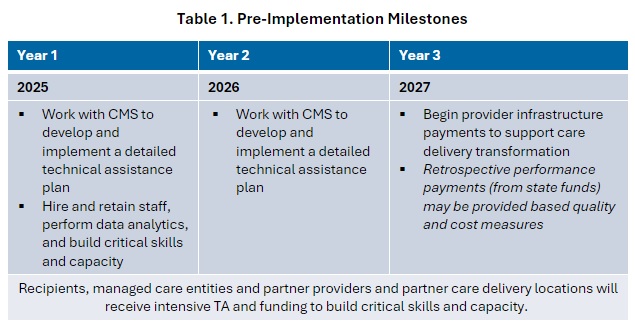
During the model’s first three years, states will receive targeted technical assistance to achieve pre-implementation milestones. The table below highlights the key activities in the pre-implementation phase. 

Following pre-implementation, participants will enter a seven-year implementation period during which the SMAs will implement the program with partners, such as managed care organizations (MCOs), perinatal quality collaboratives, hospitals, birth centers, health centers and rural health clinics, maternity care providers, and community-based organizations. 

In year four, states will offer partnering providers and care delivery sites upside-only performance payments from state funds (no cooperative funds may be used). In year five, states will transition partner provider and partner care delivery locations to a new value-based payment model. CMS will lead the development of the value-based model, and it will be finalized during the pre-implementation period. 

The model also requires a health equity plan, which has been a consistent requirement across models from the Innovation Center. Awardees must develop a plan that addresses disparities among underserved populations, such as racial and ethnic groups and people living in rural areas, who are at higher risk for poor maternal outcomes. 

State Medicaid Agency Requirements 

For states considering TMaH, the NOFO outlines the requirements for participating SMAs, which include: 

  • States must include CHIP if pregnant people receive services through CHIP 
  • States that have managed care plans must contract with at least MCO for implementation 
  • Collaborate with partner providers (e.g., OBs, midwives, doulas), care delivery location (e.g., hospitals, birth centers, federally qualified health centers), and partner organizations 
  • Collaborate in the process to create cost and quality benchmarks with CMS 
  • Be actively involved in technical assistance activities, including attending regularly scheduled calls, providing input and working on portions of documents as appropriate 
  • Execute the data-sharing agreements necessary to support the exchange of data and information related to the TA activities and completion of milestones 
  • Provide CMS and contractors the necessary information and data to support the development of documents to help reach milestones 
  • States must demonstrate their ability to meet these requirements as part of the NOFO process, and CMS will evaluate their responses as part of the selection process 

TMaH Opportunities and Considerations 

The model offers states resources and technical assistance to develop value-based alternative payment models to support whole-person pregnancy, birth, and postpartum care and improved outcomes. Many SMAs already are working on programs to innovate care and payment, and the TMaH is an opportunity to expand and accelerate those programs. 

The model offers an opportunity for states that have yet to expand postpartum coverage or added doula benefits to adopt these policies with the funding and technical assistance they may need to support their efforts. 

SMAs interested in this opportunity should evaluate their application readiness and pre-plan for the application. 

What’s Next? 

States interested in TMaH should submit a letter of intent by August 8, 2024. Applications are due by September 20, 2024, and the model is expected to start January 2025. 

The Health Management Associates team will continue to evaluate the TMaH model as more information becomes available. For more information, contact our featured experts below.

Ready to talk?