Insights

HMA Insights - Blog

or
or
Receive timely expert insights on topics you care about.

544 Results found.

Outlook 2026: Building Coordinated Behavioral Health Systems Through Quality, Program Integrity, and Provider Partnership

Read Blog

States are facing growing pressure to strengthen behavioral health systems and demonstrate outcomes. In response, states are increasingly examining how program integrity can serve not only as an oversight function, but also as a catalyst for quality improvement and value-based care. 

In this Outlook 2026 interview, Jen Colamonico speaks with Alyssa Lord, Health Management Associates (HMA) Principal and former Deputy Secretary of Maryland’s Behavioral Health Administration, about lessons from Maryland’s experience, the role of provider partnerships, and how states can use program integrity, quality measurement, regulatory modernization, and data-driven decision-making to improve behavioral health outcomes. 

Jen Colamonico: States across the country are working to improve behavioral health access and coordination while facing workforce shortages, fragmented systems, and growing demand for services. Based on your experience, what are the biggest challenges to building a truly coordinated behavioral health system? 

Alyssa Lord: One of the biggest challenges is that we still tend to think about behavioral health separately from the rest of healthcare. The head is not disconnected from the body, and, as a result, our systems, financing structures, and care delivery models often operate in silos. 

For individuals and families with complex behavioral health needs, navigating the healthcare system can be incredibly difficult. There are barriers related to access, network adequacy, stigma, and parity. The result is often delayed care and missed opportunities to address physical health, behavioral health, and social needs in a coordinated way. Building better coordination requires states to move beyond individual programs and look at how the entire continuum of care works together. 

Q: What lessons can other states learn from Maryland’s efforts to strengthen coordination and improve access? 

Alyssa Lord: One of the most important lessons is the value of stakeholder engagement. In Maryland, meaningful reforms were possible because providers, families, advocates, state leaders, and individuals receiving services all had a voice in identifying barriers and opportunities for improvement. For example, the state found that eligibility requirements for certain home and community-based behavioral health services had become so restrictive that they created barriers rather than pathways to care. By working closely with families and providers, Maryland was able to redesign the program, reduce access barriers, and improve awareness that services were available. 

Another lesson is that access and quality must be addressed together. Expanding services is important, but states also need to define what success looks like. How are services being measured? Are people receiving timely care? Are outcomes improving? States need clear performance measures that help determine whether investments produce meaningful results. 

Q: Why should healthcare leaders think differently about the relationship between program integrity and quality? 

Alyssa Lord: Too often, program integrity is viewed solely through the lens of fraud, waste, and abuse. Although those issues are important, that definition is incomplete. Program integrity also encompasses the policies, safeguards, oversight processes, and accountability structures that support patient safety, access, quality, and responsible stewardship of public resources. 

The strongest programs view program integrity and quality improvement as complementary rather than competing priorities. States have an opportunity to use program integrity frameworks to identify and reward high-performing providers, measure outcomes, and support value-based approaches that improve care. Providers that embed quality and compliance into their operations—from staff training and onboarding to internal monitoring and performance measurement—often have the strongest foundation for long-term success. 

Q: Maryland implemented a provider enrollment moratorium that attracted national attention. What problem was the state trying to solve, and what lessons emerged from that experience? 

Alyssa Lord: Maryland observed exponential growth in several behavioral health service categories without measurable improvements in quality, outcomes, or patient experience. That disconnect raised important questions about quality, utilization patterns, continuity of care, and whether individuals were receiving the right services at the right time. 

Importantly, many providers supported the state’s temporary pause on new provider enrollment effort because they shared concerns about maintaining a continuum of care and distinguishing high-quality providers from those with rapid growth that may not have been accompanied by positive outcomes. 

For states considering similar approaches, transparency and provider engagement are essential. Providers need to understand the objective is improving quality and protecting access—not simply limiting participation. 

States and payers should be focusing on metrics that matter—reductions in avoidable emergency department utilization, improved care coordination, stronger continuity of care, reduced hospitalizations, faster access to treatment, and other outcome measures that demonstrate whether services are improving lives.

This is where value-based approaches become particularly important. Rather than focusing exclusively on volume, states can align incentives around outcomes and quality, creating a more sustainable model for providers while ensuring that public resources are supporting meaningful improvements in care. 

Q: What role do technology, data, and predictive analytics play in improving care and program integrity—and where can they become a hindrance? 

Alyssa Lord: Technology and data should help organizations focus on meaningful signals rather than creating additional administrative tasks. The goal is to use data to improve decision-making, identify emerging risks, support providers, and strengthen quality improvement efforts. 

Advanced analytics can help states and health plans identify unusual utilization patterns, monitor quality measures, improve oversight, and prioritize resources where they are needed most. Better dashboards, automated processes, shared data sources, and predictive analytics all have the potential to improve both program integrity and care delivery. 

At the same time, technology can become a hindrance when it generates duplicative reporting requirements, repeated manual submissions, or additional administrative burden without producing meaningful insights. Behavioral health providers have historically faced challenges adopting technology, in part because they were often excluded from earlier investments that accelerated electronic health record adoption across the broader healthcare system. Many behavioral health providers remain small practices with limited infrastructure and resources. 

As states continue modernizing oversight and quality measurement, technology investments need to be accompanied by realistic implementation strategies, provider support, and a clear focus on reducing—not increasing—administrative burden. 

Q: We expect program integrity to remain a high priority this year and beyond. How should states and other healthcare organizations be thinking about planning? 

The future belongs to organizations that stop viewing program integrity, quality, and value as separate workstreams. The strongest behavioral health systems will be those that use all three together to improve outcomes, strengthen provider performance, and build greater trust in the care being delivered. 

HMA, including HMA companies Wakely and Leavitt Partners, is actively helping states, health plans, providers, and other stakeholders navigate the changing landscape of behavioral health delivery. HMA can support strategic planning, policy design, value-based payment design and readiness, data development and reporting. Connect with HMA to learn how we can support your organization in navigating the next phase of behavioral health transformation and care delivery. 

You can listen to the full discussion with Alyssa Lord on HMA’s Vital Viewpoints podcast, Can Better Program Integrity Lead to Better Behavioral Health? Access additional insights from HMA’s behavioral health team here.

CY 2027 OPPS Proposed Rule Signals Major Changes for 340B Hospitals, Site-Neutral Payments, and Digital Health

Read Blog

The Centers for Medicare & Medicaid Services (CMS) released the Calendar Year (CY) 2027 Medicare Hospital Outpatient Prospective Payment System (OPPS) and Ambulatory Surgical Centers (ASC) proposed rule (CMS-1850-P), July 2, outlining policies that would take effect, if finalized, January 1, 2027. Although the proposed rule includes annual payment updates, it also offers insights into the agency’s broader policy agenda. 

CMS continues to advance several long-term priorities, including site-neutral payment reform, elimination of the inpatient only list to migrate services to lower-cost settings, and efforts to align reimbursement more closely with acquisition costs for pharmaceuticals purchased through the 340B Drug Pricing Program. CMS is refining its policies that encountered operational or legal challenges, most notably in the case of its 340B payment proposals. 

The rule also signals how CMS is preparing Medicare for the next generation of healthcare delivery. As software-based therapies, artificial intelligence, and other health technology become increasingly integrated into care delivery, the agency is laying the groundwork for payment policies that reflect evolving care models and emerging medical innovation.   

This article highlights five proposals that may have significant financial, operational, and strategic implications across the healthcare system.  

Highlights of Key Changes in the OPPS Proposed Rule 

1. CMS Intends to Cut to Reimbursement for Drugs Acquired Under the 340B Program 

Based on findings from a survey of hospital acquisition costs, CMS proposes reducing reimbursement for drugs acquired through the 340B Drug Pricing Program from Average Sales Price (ASP) plus 6 percent to ASP minus 33.4 percent beginning in CY 2027. CMS estimates the policy could reduce Medicare fee-for-service (FFS) drug spending by $4.55 billion in its first year, which would be redistributed to non-drug service payments under OPPS’s budget neutrality rules. 

The proposal would similarly reduce payment rates for 340B drugs paid under alternative methodologies, including those reimbursed using Wholesale Acquisition Cost (WAC). Vaccines, pass-through drugs, and certain non-opioid pain management products would remain exempt, as would Children’s Hospitals, Sole Community Hospitals, and PPS-exempt cancer hospitals. 

CMS also proposes applying the policy to 340B drugs administered in non-excepted off-campus provider-based departments while leaving reimbursement for non-340B drugs unchanged. 

Health Management Associates (HMA) Analysis: CMS is effectively continuing a policy discussion that has been ongoing for nearly a decade. Although prior litigation altered the agency’s approach, the proposal demonstrates CMS’s continued interest in aligning Medicare reimbursement more closely with acquisition costs for 340B drugs. The financial implications will vary significantly across hospitals depending on their reliance on 340B savings. At the same time, providers with limited 340B exposure may benefit from the budget-neutral redistribution of savings elsewhere in the OPPS payment system. 

2. Because of the 340B Payment Cuts, Hospitals Will See an Increase in the Conversion Factor Used to Set Payments for Most Non-Drug Items and Services  

CMS proposes an overall 2.4 percent payment increase in OPPS payments for CY 2027, but payment levels will vary under the rule based on major policy changes. The proposed 340B payment reduction, for instance, would trigger an 8.44 percent increase in the conversion factor for non-drug services. CMS is also proposing a conversion factor reduction of 3 percent intended to recover increased payments hospitals received for non-drug items and services as a result of CMS’s remedy related to prior 340B reimbursement cuts.i 

HMA Analysis: The proposed payment updates illustrate how interconnected Medicare payment policies have become. Organizations should look beyond the headline increase and evaluate how individual provisions interact. The proposed reduction in 340B reimbursement serves as a budget-neutral offset that increases the OPPS conversion factor, creating winners and losers across provider categories. Separately, the proposal would accelerate the pace and magnitude of legal-remedy-related rate reductions originating from the termination of an earlier iteration of the 340B payment reduction policy. Understanding this redistribution effect will be critical for forecasting organization-specific financial effects. 

3. More Proceduresare Moving to the Outpatient Setting 

CMS proposes removing 638 procedures from the Medicare Inpatient Only (IPO) list in CY 2027, representing nearly half of the remaining procedures designated as such. The proposed removals focus on less complex services across several clinical areas, including digestive, endocrine, respiratory, urinary, maternity, and other procedural categories. 

HMA Analysis: This proposal continues CMS’s long-term strategy of shifting appropriate services to outpatient settings. As the IPO list continues to shrink, hospitals will have greater flexibility to conduct procedures in the outpatient setting than in the past. At the same time, hospitals billing for certain previously IPO-listed services in inpatient settings could encounter greater scrutiny and pressure to migrate towards outpatient sites. Because many commercial coverage policies and utilization management approaches have historically relied on Medicare’s IPO framework, the proposal may accelerate broader market movement toward outpatient care, creating operational, capacity, and revenue implications for providers. 

4. Site-Neutral Payment Reform Remains a Long-Term CMS Priority

CMS proposes extending site-neutral payment policies to imaging services without contrast provided in excepted off-campus provider-based departments (PBDs). The agency notes substantial growth in the utilization and spending associated with these services over the past decade and views the proposal as a continuation of broader efforts to reduce payment differentials across sites of care. This proposal follows CMS’s recent expansion of site-neutral payment policies for drug administration services. 

HMA Analysis: The proposal reinforces that site-neutral payment reform remains a priority for CMS. Although the immediate policy targets imaging services without contrast, stakeholders should view the proposal within the context of a broader and continuing effort to reduce payment differentials between hospital outpatient departments and physician office settings. Hospitals with significant outpatient imaging capacity—particularly in off-campus PBDs—should evaluate the potential financial impact and consider how future site-neutral policies could affect other service lines. Hospitals should also anticipate incremental additions to this framework in the future, as CMS continues to scrutinize site-of-care allocations for services.  

5. A Future Framework for AI and Digital Health is in the Works, While Maintaining Existing Policies in the Short Term  

Recognizing the growing role of software and AI-enabled technologies in healthcare delivery, CMS proposes using CY 2027 as a bridge year while it develops a longer-term payment approach for technologies categorized as Software as a Medical Service (SaMS). Under the proposal, technologies currently assigned to New Technology Ambulatory Payment Classifications (NT-APCs) would generally maintain their payment assignments during CY 2027. 

HMA Analysis: Although the proposal preserves near-term payment stability, it may be one of the most consequential signals in the rule for manufacturers, digital health companies, investors, and providers adopting new technologies. CMS is exploring how software-based interventions, AI-enabled tools, and algorithm-driven services generate value and how that value should be reflected in Medicare payment policy. Future reimbursement methodologies will likely place greater emphasis on demonstrated clinical outcomes, efficiency gains, and measurable impacts on healthcare utilization. Organizations developing or deploying these technologies should view CY 2027 as an opportunity to prepare for a more mature reimbursement framework in the years ahead and to engage with CMS on preferred policy approaches. 

Looking Ahead 

The CY 2027 OPPS proposed rule provides insight into the direction of Medicare reimbursement policy, changes in Hospital Conditions of Participation (CoP) for obstetrical services, and planned revisions to the exceptions to the “four walls” requirement under the Medicaid clinic benefit for Indian Health Services/Tribal clinics, behavioral health clinics, and clinics located in rural areas. For hospitals, health systems, manufacturers, life sciences companies, digital health organizations, and investors, now is the time to assess potential impacts and evaluate strategic responses before policies are finalized. Comments on the proposed rule are due August 31, 2026. 

HMA is helping organizations understand the financial, operational, and market implications of the proposed rule through: 

  • Customized financial impact modeling 
  • 340B reimbursement and redistribution analyses 
  • Site-neutral payment impact analyses 
  • Clinical service line and specialty-specific analyses 
  • Medicare and Medicaid policy scenario planning and forecasting 
  • Regulatory comment strategy development 

As CMS continues to pull the thread on several long-term policy priorities, organizations that begin planning now will be better positioned to navigate the changes ahead. Contact HMA’s Medicare experts to discuss how these proposals may affect your organization and explore potential strategic responses before the final rule is released.

2026 Medicaid, Medicare Advantage, and Marketplace Trends Healthcare Leaders Need to Understand

Read Blog

As Independence Day approaches, we have curated a selection of In Focus analyses that continue to resonate with healthcare leaders as they navigate a rapidly changing policy environment. From Medicaid work requirements and Affordable Care Act (ACA) Marketplace stability to social determinants of health initiatives, state transformation efforts, and consequential legal decisions, these articles offer insights into the developments shaping healthcare in 2026. 

  1. Act Now to Implement Community Engagement Requirements 

New Medicaid community engagement requirements are moving from policy debate to implementation reality. Health Management Associates (HMA) experts break down the critical implementation challenges and strategic decisions that cannot wait. Get the insights here

  1. ACA Marketplace Affordability and Coverage Stability

Coverage affordability and enrollment stability remain among the most important healthcare policy challenges facing states and issuers. HMA analyzes emerging funding approaches, policy risks, and what healthcare leaders should watch as ACA Marketplace dynamics continue to evolve. Get the insights here

  1. New Guidance Raises the Bar for MedicaidSection 1115 Demonstrations 

New guidance from the Centers for Medicare & Medicaid Services (CMS) fundamentally changes expectations for Medicaid Section 1115 demonstrations. HMA provides a first take on how the guidance could affect Medicaid 1115 waiver approvals and the future of state innovation. Understand the policy changes and their implications before your next strategic planning discussion. Get the insights here

  1. The Value Shift in Medicare Advantage: What 2026 Benefits Tell Us About the Market’s Next Chapter

Medicare Advantage (MA) is entering a new era of value management as plans rethink benefit design amid mounting financial and regulatory pressures. Drawing on proprietary analysis from Wakely, an HMA Company, this article reveals how 2026 benefit changes are reshaping member value and what they signal about the future direction of the MA market. Get the insights here

  1. The New Operating Reality in Behavioral Health

The rules of success in behavioral health are changing. HMA explores the market, policy, and operational trends that are redefining performance and what leaders should do now to stay ahead. Get the insights here

As healthcare policy, financing, and delivery systems continue to evolve, organizations need more than headlines—they need actionable insights grounded in real-world experience. HMA’s multidisciplinary team works with state agencies, health plans, providers, community organizations, and federal stakeholders to navigate complex challenges across Medicaid, Medicare, behavioral health, Marketplace coverage and healthcare transformation initiatives. 

The articles highlighted here offer a snapshot of our capabilities and expertise. Through our consulting services, research, analytics, and thought leadership, HMA provides the expertise and strategic guidance organizations need to anticipate change, manage risk, and seize emerging opportunities across the healthcare landscape. 

Medicaid Managed Care Enrollment Declines in Q1 2026: HMA Analysis of State Trends and Market Share

Read Blog

Health Management Associates (HMA) analyzed monthly Medicaid managed care enrollment data from 34 states to assess enrollment trends as of March 2026. The findings show that Medicaid managed care enrollment continued to decline as states navigate new eligibility policies and preparations for new Medicaid community engagement requirements under the 2025 budget reconciliation act, P.L. 119-21, now known as the Working Families Tax Cut (WFTC) Act. These trends serve as an early indicator of how policy and programmatic changes may affect Medicaid enrollment levels in the years ahead.

Drawing on monthly enrollment data from the 34 states, HMA found that Medicaid managed care enrollment fell to 60.4 million members in March 2026—a decline of 3.1 million members from March 2025, or 4.8 percent year over year. As states prepare to address this issue, this enrollment snapshot provides important insights into how administrative and policy changes may shape Medicaid participation in the years ahead.

Medicaid Managed Care Enrollment Trends in Q1 2026

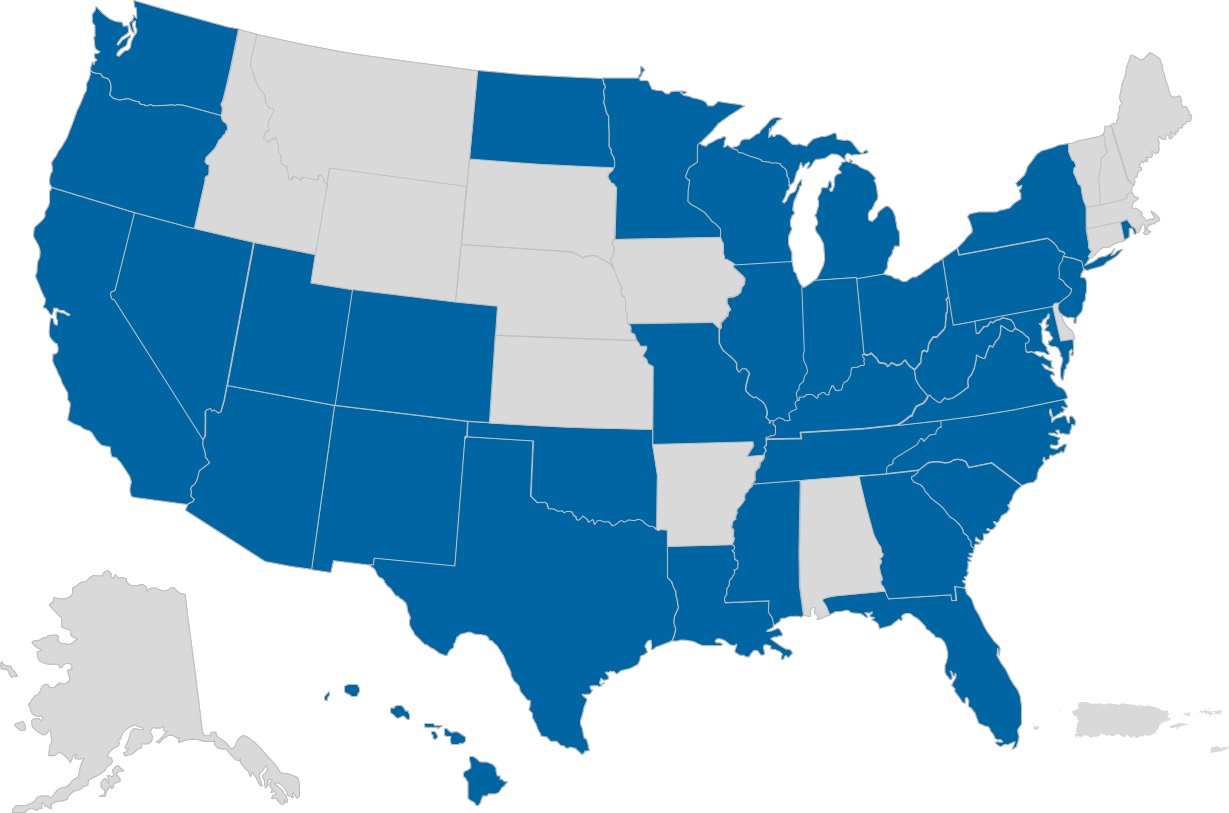
HMA Information Services (HMAIS) maintains a database of monthly Medicaid enrollment from all 50 states and Puerto Rico. The most recent HMA analysis showed that enrollment declines were widespread across the 34 states studied (Figure 1). Key findings include:

  • Enrollment changes varied considerably across states, reflecting a combination of state-specific demographic, administrative, operational, and policy factors.
  • Of the 34 states, only four—Colorado, Mississippi, Nevada, and South Carolina—showed modest gains in Medicaid managed care enrollment from March 2025.
  • Several states experienced particularly significant declines. Arizona, Indiana, Kansas, and Louisiana each reported data reflecting , ranging from
  • Among the expansion states in the analysis, enrollment declined by 2.5 million (5 percent) to 48.4 million. The eight non-expansion states included in this analysis experienced a decline of 547,000 (4.4 percent), bringing enrollment to 12 million enrollees.

Figure 1. HMA Analysis of Medicaid Managed Care Enrollment in 34 States, March 2026

Note: States colored as blue shown on the map above are included in the HMA Enrollment Analysis.

National Medicaid Managed Care Market Share

HMAIS’s resource contains information on approximately 300 Medicaid managed care plans across 41 states and tracks corporate ownership, program participation, and tax status among participating plans.

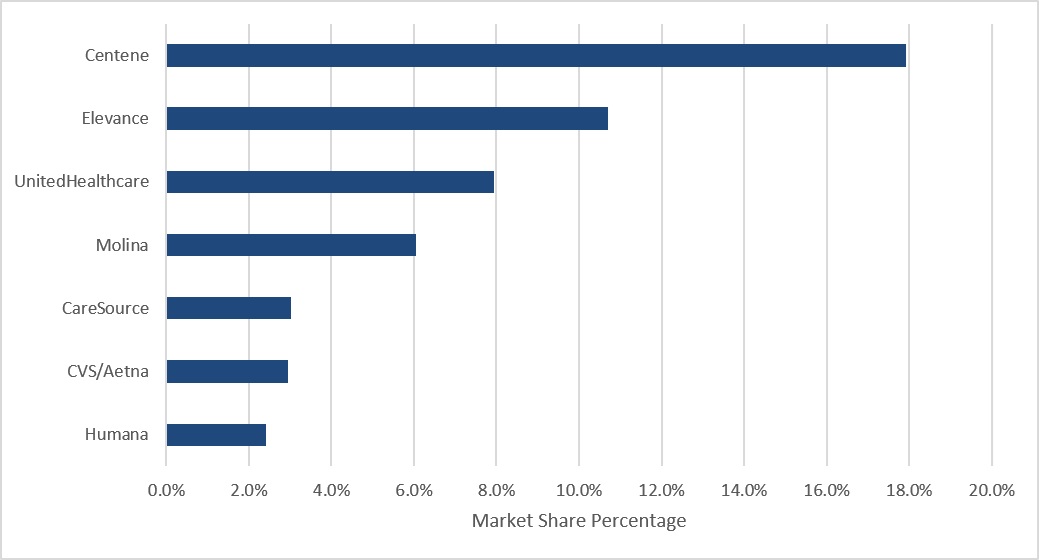
As of March 2026, Centene held the largest share of the national Medicaid managed care market at 17.9 percent. Elevance followed with 10.6 percent, while United and Molina accounted for 8.4 percent and 6.0 percent, respectively (see Figure 2). These four organizations represented 42.9 percent of enrollment among the plans analyzed, underscoring continued concentration among large, national Medicaid managed care organizations, even as overall enrollment declines.

Figure 2. National Medicaid Managed Care Enrollment Share by Parent Organization, March 2026

How Medicaid Work Requirements and Eligibility Policies Could Affect Enrollment in 2027

The enrollment trends observed at the end of the first quarter (Q1) of 2026 come on the cusp of significant policy change. On June 1, 2026, the Centers for Medicare & Medicaid Services (CMS) released an interim final rule establishing a national framework for implementing Medicaid community engagement requirements under P.L. 119-21. The rule outlines federal parameters for eligibility exemptions and state implementation responsibilities.

States must now translate these federal requirements into operational eligibility policies, technology systems, administrative procedures, and beneficiary communications. As implementation moves forward, enrollment trends will provide important insights into how policy changes and state implementation affect enrollment levels and continuity of coverage across Medicaid programs.

Several states are advancing implementation of the new eligibility policies. Nebraska launched Medicaid work/community engagement requirements on May 1, 2026. Montana plans to begin implementation on July 1, 2026, while Arkansas intends to begin a soft launch of the new requirements in July 2026 before enforcement begins in January 2027.

Declines in enrollment are often an early indicator of broader impacts across the healthcare system, including uncompensated care levels, shifts in payer mix, and increased financial pressure on safety‑net systems. For managed care organizations, even modest enrollment changes can mask shifts in risk profiles, geographic concentration, or service needs.

Data Considerations.The data in this analysis have some important limitations. States report enrollment figures at different points throughout the month, with some data reflecting beginning of the month totals and others capturing end of month enrollment. In addition, some state datasets encompass all Medicaid programs offering managed care plans, whereas others reflect only a subset of the managed Medicaid population. As a result, the findings should be viewed as indicative of broader trends rather than a comprehensive state-by-state comparison.

The HMAIS enrollment reports and analyses, available through subscription, use data from nearly 300 health plans in 41 states. The report provides by-plan enrollment plus corporate ownership, program inclusion, and for-profit versus not-for-profit status, with breakout tabs for publicly traded plans. HMAIS’s Medicaid enrollment data, financials, procurement tracking, and a robust library of public documents equips stakeholders with timely, actionable intelligence. Subscribe here.

Connect with Us

HMA knows the Medicaid managed care landscape and how it is evolving. Medicaid changes under the WFTCA are affecting eligibility, financing, waivers, managed care oversight, provider reimbursement, and program integrity. HMA helps organizations assess impact, plan next steps, and move from policy analysis to implementation with confidence. Contact us to prepare your organization.

Clover Health Star Ratings Decision Signals Need for MA Plans to Engage in Scenario Planning

Read Blog

On May 27, 2026, a federal court ruled that the Centers for Medicare & Medicaid Services (CMS) unlawfully included certain quality measures in Clover Health’s 2026 Medicare Advantage (MA) Star Ratings, raising important questions for MA issuers.

In an exclusive webinar for clients, Wakely, an HMA Company, addressed the court ruling, its implications, and the resulting policy and financial issues, some of which remain unanswered.

Clover Decision Requires Careful Interpretation

The US District Court for the Southern District of Georgia ruled that CMS acted unlawfully when it incorporated certain quality measures into Clover’s Star Ratings. According to the decision, CMS relied on data sources beyond those permitted and did not follow required procedural steps, including notice and comment rulemaking. As a result of the decision, CMS was required to recalculate Clover’s 2026 Star Ratings, removing the disputed measures from the rating process.

Although the judgment applies specifically to Clover, the underlying legal reasoning raises broader questions that could affect how the Star Ratings program is administered for MA plans going forward.

Clover Decision Raises Strategy Questions for Other Plans

Wakely Consulting modeled the revenue impact of the 20 Stars measures specific to the Clover case as well as three scenarios based on the court’s ruling:

Key takeaways for MA plans include:

  1. The Clover decision creates a meaningful degree of uncertainty for the Star Ratings program and its future design. Carriers need to have nimble approaches and resources that respond to the evolving legal and policy landscape.
  2. The ruling is limited to the 20 measures Clover disputed in its lawsuit; however, the legal reasoning in the case and the US District Court ruling could apply to other measurements.
  3. Although the judgment only directly affects Clover, other MA plans have already cited the decision in separate, ongoing litigation, which increases the possibility that similar arguments could be applied more broadly. Organizations participating in the MA market should closely monitor these developments.
  4. CMS’s near-term steps will be critical for the market and current strategy. It is still unknown whether CMS will appeal the decision. MA organizations should be watching for further legal filings as well as additional guidance from the agency. Potential future guidance could address whether rebids will be permitted and, if so, the scope and timing of that process.
  5. MA organizations also need to keep an eye on the federal policies that will inform future federal policy decisions related to the design and implementation of the Star Ratings program. The Clover decision and related litigation may determine policy proposals advanced by Congress, CMS, or both.

Decision Creates Urgency for Modeling and Scenario Planning

The range of possible outcomes requires carriers to undertake robust scenario planning to ensure they are prepared to act on the options available to them and the multiple pathways that are likely to emerge.

Wakely’s actuarial and policy team will continue to monitor guidance from CMS as well as the ongoing legal process. To discuss specific scenarios and implications for your organization specifically and the market generally, contact our actuarial team.

Outlook 2026: New Guidance Raises the Bar for Medicaid 1115 Demonstration

Read Blog

As part of its ongoing effort to reshape Medicaid policy and oversight, the Centers for Medicare & Medicaid Services (CMS) over the past few months has released a series of guidance documents in 2026 that collectively signal a more structured, fiscally rigorous approach to federal Medicaid funding. These changes will have a considerable impact on state innovation within the program.

In the most recent of these consequential directives, CMS outlines its plan to implement updated budget neutrality requirements for Medicaid Section 1115 demonstrations beginning in 2027.

To understand what this guidance means for states, health plans, and providers, Health Management Associates (HMA) senior principal Andrea Maresca caught up with Sara Singleton, Principal at Leavitt Partners, an HMA Company, and Rob Buchanan, Senior Principal at HMA. Of particular interest was the need for significantly more robust modeling and financing strategies to provide the new prospective actuarial analyses required for approval.

A Shift in Federal Policy Direction

Q: CMS has issued several guidance documents this year, but why and how does the one on Section 1115 budget neutrality stand out?

Sara Singleton: This guidance reflects a broader shift toward increased federal oversight and a more standardized interpretation of budget neutrality. While Section 1115 demonstrations have always been required to be budget neutral in concept, CMS and states have historically relied on methodologies that allowed for flexibility and, in some cases, greater federal spending over time.

What’s different now is that Congress recently added a requirement that the CMS Chief Actuary certify that demonstrations will not increase federal expenditures relative to what Medicaid would otherwise spend. That requirement, combined with CMS’s implementing guidance, is driving a more prospective, and in theory, data-driven approach to evaluating demonstrations.

Q: How is the change from reviewing retrospective to prospective spending expected to affect Medicaid programs?

Sara Singleton: Historically, CMS often reviewed budget neutrality retrospectively against what’s called “without waiver” spending limits, which means the agency reviewed what spending would have been in the absence of the waiver program. Going forward, CMS is emphasizing prospective certification and signals an expectation that states will provide more rigorous actuarial analysis and activity-level financial modeling.

The implication is that states will need to demonstrate upfront and in much greater detail how each component of their demonstrations affect federal spending. This is a substantive change in expectations for documentation, analytics, and accountability.

Implications for Innovation, Including HRSN Initiatives

Q: Sara, you’ve written previously about the opportunities to address health-related social needs (HRSN) through Medicaid. How does this new guidance intersect with those efforts?

Sara Singleton: The timing is important. Over the past several years, the number of states utilizing 1115 waivers to address HRSNs, such as housing instability, nutrition, and transportation, has significantly increased. Many of these waivers and additional research have proven what we have long known to be true—that addressing HRSNs has a clear impact on health outcomes and costs.

The new budget neutrality framework raises the bar for states to demonstrate that new innovations in an 1115 waiver will reduce costs before the waiver can be approved. States will need to show not just that these services are beneficial, but that they also are financially sustainable within the federal budget neutrality test. That’s a higher evidentiary standard, particularly for newer or more complex interventions.

Q: Does that mean HRSN initiatives are at risk?

Sara Singleton: Not necessarily; however, it does mean states may need to rethink how they structure and justify them.

One key element in the guidance is the distinction between services that are already Medicaid-authorizable and those that are unique to Section 1115 demonstrations. CMS is signaling a preference for using existing authorities where possible. CMS’s preference and negotiations with states could lead states to shift some HRSN activities into managed care programs, including using in lieu of services, or state plan options.

For services that remain in 1115 demonstrations, the burden will be on states to build a more robust financial and policy case. That expectation could shape which interventions move forward.

Q: Rob, what are you hearing from states as they process this guidance?

Rob Buchanan: States recognize that Section 1115 demonstrations are critical tools—they allow flexibility to test new delivery models and address complex population needs. In fact, every state has an 1115 demonstration, each with tailored initiatives that span coverage, benefits and services, workforce investments, and other programs. The pathway to approval and iteration of these programs is becoming more complex.

From a planning perspective, states will need to rethink how they approach the entire life cycle of a demonstration—from concept development to modeling, implementation, and evaluation.

Q: Where are the biggest pressure points?

Rob Buchanan: HMA consultants have identified three key areas.

First is analytics and actuarial capacity. The guidance calls for more rigorous financial projections and certification prior to approval, which means states need stronger data infrastructure and modeling capabilities earlier in the process.

Second is program design and prioritization. Because demonstrations that increase federal spending will not be approved, states may need to narrow their focus, phase in initiatives, or identify offsetting savings within the demonstration.

Third is timing and alignment. CMS has indicated it will begin applying this framework in 2027, even as rulemaking continues. States with renewals or amendments coming up in that window will need to move quickly to align with the new expectations.

Q: How should states begin adapting their strategies?

Rob Buchanan: We’re advising states to start with a few practical steps.

One is to reassess their current demonstration portfolios. Which components are most essential? Which are most likely to meet the new budget neutrality standard? That prioritization will be critical.

Another is to integrate policy, finance, and operations early. Under this framework, you can’t develop policy concepts in isolation. You need to understand the financial implications from the outset.

Finally, states should think about implementation pathways. For example, if certain services can be authorized through managed care or state plan options, that may provide more flexibility than relying solely on Section 1115 authority.

Q: Does this change how states should think about partnerships?

Rob Buchanan: Yes, the level of coordination required across Medicaid agencies, actuaries, managed care plans, providers, and community organizations is increasing.

States will need strong partnerships to both design workable demonstrations and execute them effectively. That includes building connections with community-based organizations, particularly for initiatives that address HRSNs, where implementation relies heavily on local networks.

Q: As we look toward 2027 implementation, what should states and other Medicaid-focused organizations be focused on now?

Rob Buchanan: The most important thing is to recognize that this is not a distant policy change. It’s an immediate planning issue and states should already be assessing how the new framework applies to their program.

Compliance with this guidance requires state Medicaid programs to have detailed data  – specifically actuarial analyses that have a clear methodology and assumptions and documentation demonstrating the federal fiscal impact of each demonstration component. States must provide sufficient information for CMS’s Chief Actuary to evaluate and certify budget neutrality. Plans and providers should also be engaged because these changes will influence program design, reimbursement approaches, and operational expectations.

Sara Singleton: At a broader level, stakeholders should expect additional guidance from CMS. This is one piece of a larger policy agenda, and CMS plans to provide additional clarification through the federal rulemaking process as well as technical assistance to states.

HMA, including HMA companies Wakely and Leavitt Partners, is actively helping states, health plans, providers, and other stakeholders assess the implications of CMS’s proposed budget neutrality framework and prepare for upcoming section 1115 renewals and amendments, as well as other changes due to recent guidance on community engagement requirements, state directed payments, and program integrity. HMA can support strategic assessments, renewal planning, demonstration redesign, financial modeling, actuarial coordination, federal negotiations, and implementation planning. Connect with HMA to learn how we can support your organization in navigating the next phase of Medicaid Section 1115 demonstration and policy.

You can find more insights on the impact of federal Medicaid policy changes in, CMS Proposes New Budget Neutrality Framework for Medicaid Section 1115 Demonstrations and register for the next edition of HMA’s Summer Webinar Series: Understanding Work and Community Engagement Requirements and New Section 1115 Guidance

CMS Proposes New Budget Neutrality Framework for Medicaid Section 1115 Demonstrations 

Read Blog

New guidance outlines how CMS intends to implement Chief Actuary certification and a fundamentally different approach to budget neutrality beginning January 1, 2027.

[HMA’s analysis on this and related Medicaid changes is ongoing; this blog reflects an initial understanding of the 6/11 SMDL; additional analysis is forthcoming.]

On June 11, 2026, the Centers for Medicare & Medicaid Services (CMS) released State Medicaid Director Letter (SMDL) #26-003, which provides long-anticipated guidance on how the agency intends to implement new statutory budget neutrality requirements for Medicaid section 1115 demonstrations beginning January 1, 2027.

The SMDL provides guidance on CMS’s implementation of provisions enacted in Public Law 119-21 (the One Big Beautiful Bill Act, or OBBBA), which CMS now refers to as the Working Families Tax Cut (WFTC) Act. The law requires the CMS Chief Actuary to certify that Medicaid section 1115 demonstrations will not increase federal Medicaid expenditures before CMS may approve new demonstrations, amendments, or renewals.

While the SMDL includes discussion of CMS’s preference that states rely on Medicaid state plan and other Title XIX authorities when available, the guidance primarily focuses on implementing the new budget neutrality requirements under section 1115(g).

The result is a proposed framework that could fundamentally change how states design, finance, evaluate, and renew section 1115 demonstrations.

Key Takeaway #1: Budget Neutrality framework is changing to become more accurate, detailed, and subject to enhanced review.

For decades, Medicaid Demonstrations under Section 1115 required budget neutrality calculations that relied on comparisons of projected with and without waiver expenditure. Retrospective assessments against established “without waiver” budget neutrality limits then occurred.

CMS now proposes a different model that includes enhancements to how the budget neutrality calculations are developed and reviewed. This will include an actuarial certification requirement that shows how the budget neutrality meets actuarially sound principles.

Beginning with applications, renewals, or amendments submitted after January 1, 2027, the following must occur:

  • CMS’ Chief Actuary must certify that there will be no increase in federal expenditures compared to the expenditures projected in the absence of the Demonstration.
  • A rigorous actuarial analysis of the projected financial impacts of individual demonstration activities must be performed. The budget neutrality analysis is certified by CMS’ Chief Actuary prior to Demonstration approval. This is a change from the historical “without waiver” expenditure cap calculation.
  • With the review above, there is now no expenditure limit or budget neutrality cap. Instead, the budget neutrality is not approved if there is a projected increase in Federal Medicaid expenditures. (Note, approval of historical Demonstration applications and budget neutrality required a projection of reduced overall expenditures.)
  • Monitoring budget neutrality in the Demonstration time period will utilize new special terms and conditions (STCs). There will be corrective actions implemented if expenditure substantially deviates from the State projections. Historically, quarterly and annual reporting was required, and States were subject to return to CMS any excess federal funds. The new guidance appears similar in that ongoing monitor will occur and action will be needed to the extent expenditures are not at or below projections.

For states to be compliant with this guidance, detailed actuarial analyses, methodology, assumptions, data, and documentation demonstrating the federal fiscal impact of each demonstration component will be necessary. States must provide sufficient information for CMS’s Chief Actuary to evaluate and certify budget neutrality, including the populations affected, covered services, payment methodologies, payment rates, administrative costs, and estimated federal expenditures associated with demonstration authorities.

Key Takeaway #2: Beginning January 1, 2027, certain benefits and services may be treated differently under Medicaid section 1115 demonstrations.

A central feature of the new framework is CMS’s proposed classification of demonstration activities into two categories.

The first category is Medicaid Authorizable Populations and Services (MAPS). These are populations and services that could otherwise be covered through the Medicaid state plan or another Title XIX authority. For budget neutrality purposes, CMS proposes treating MAPS expenditures as having a zero net financial impact because they represent expenditures that could have occurred absent the demonstration. This is similar to how current hypothetical expenditures are treated.

The second category consists of section 1115-only activities; that is, activities that could not otherwise be authorized through existing Medicaid authorities. These activities would become the primary focus of budget neutrality review.

States would be required to identify, measure, and document both the costs and savings associated with each section 1115-only activity, including administrative costs. CMS would then evaluate the aggregate financial impact of those activities when determining whether a demonstration qualifies for certification.

Key Takeaway #3: Medicaid 1115 demonstration savings will become more difficult to accumulate and carry forward.

CMS also proposes significant changes to the treatment of demonstration savings.

Historically, states have been able to accumulate budget neutrality savings and, under certain circumstances, carry those savings into future renewal periods. Many demonstrations have relied on these accumulated savings to support cost-not-otherwise-matchable expenditures and other demonstration initiatives.

Under the new approach, savings generally would be limited to those generated during the current demonstration period and could only be applied to the next immediate renewal period. CMS also proposes limiting rollover calculations to the most recent five years of demonstration experience and eliminating the longstanding ability to carry forward legacy savings across multiple renewal cycles.

CMS would provide a transition period for the first renewal after January 1, 2027, allowing states to use savings calculated under the current methodology. Over time, however, the proposed framework is expected to reduce the amount of demonstration savings available to states.

For states that have historically relied on demonstration savings as a key financing mechanism, these changes could require significant strategic and financial planning.

Key Takeaway #4: States and Medicaid-focused organizations should begin to identify alternative approaches, authorities, and partnerships to continue to advance the goals of certain 1115 demonstration initiatives.

One of the more closely watched aspects of the guidance involves CMS’s discussion of the relationship between section 1115 authority and other Medicaid authorities.

The final guidance stops short of directing states to systematically move authorities out of section 1115 demonstrations. Instead, CMS encourages states to reduce reliance on section 1115 authority when alternative Medicaid authorities are available, noting that doing so would strengthen oversight while reserving section 1115 authority for innovation and demonstration purposes. The agency specifically references Medicaid state plan authorities and other Title XIX authorities as potential alternatives where appropriate.

At the same time, CMS recognizes that, in certain circumstances, states may require concurrent section 1115 authority layered over other Medicaid authorities to achieve program goals and has indicated that it will provide technical assistance in those situations.

The interaction between this policy and the new MAPS framework may be particularly important. CMS provides examples showing that many authorities currently treated as hypothetical expenditures—including certain home- and community-based services (HCBS), managed care-related authorities, and other services that could be authorized elsewhere under Medicaid—would now be treated as MAPS activities for budget neutrality purposes.

For states, the immediate significance may be less about whether authorities remain within a section 1115 demonstration and more about how those authorities are treated under the new budget neutrality framework. As states assess the implications of the guidance, they may want to consider how various authorities are structured across section 1115 demonstrations, state plan authorities, and other Title XIX pathways. CMS’s discussion suggests that these decisions may increasingly be informed by both programmatic objectives and budget neutrality considerations.

Key Takeaway #5: States and Medicaid organizations can begin scenario planning and assessments now and monitor additional guidance and clarifications critical to operational issues.

Although CMS provides substantial detail regarding its intended direction, several important implementation questions remain unanswered. Among the issues states are likely to focus on over the coming months:

  • How will CMS apply the new requirements to renewals that are already under review—or that are submitted before January 1, 2027—but remain pending after that date?
  • How long will CMS’s Chief Actuary review take, and how should states adjust renewal and amendment timelines to account for the new certification process?
  • How aggressively will CMS apply its stated preference for using state plan and other Title XIX authorities when alternative pathways exist?
  • What level of documentation, modeling, and actuarial support will CMS ultimately require to support certification?
  • How will CMS define acceptable methodologies and assumptions in the forthcoming rulemaking process?

CMS repeatedly notes that additional technical guidance, technical assistance, and formal rulemaking are forthcoming, suggesting that many operational details remain under development.

Key Takeaway #6: States should build additional time into future section 1115 renewal and amendment planning

Although significant details remain unresolved, the overall direction of federal policy is becoming clearer.

States with upcoming section 1115 renewals, amendments, or major demonstration redesign efforts should begin assessing which components of their demonstrations are likely to be classified as MAPS activities versus section 1115-only activities. They should also evaluate the extent to which future financing strategies depend on rollover savings or other elements of the current framework that may no longer be available after January 1, 2027.

In addition, states may want to assess whether certain demonstration authorities could be more appropriately administered through state plan, managed care, HCBS, or other Medicaid authorities, particularly given CMS’s stated preference for relying on alternative Title XIX pathways when available.

Most importantly, states should prepare for a future in which section 1115 approval decisions are increasingly driven by prospective actuarial analyses of the financial impact of individual demonstration activities that include detailed supporting documentation for CMS’s Chief Actuary to utilize for approval.

The forthcoming proposed rule will provide critical details; however, this guidance makes clear that CMS intends to reshape how section 1115 demonstrations are financed, evaluated, and renewed in the years ahead.

How HMA Can Help

HMA is actively helping states, health plans, providers, and other stakeholders assess the implications of CMS’s proposed budget neutrality framework and prepare for upcoming section 1115 renewals and amendments, as well as other changes due to recent guidance on community engagement requirements, state directed payments, and program integrity. Our experts bring deep experience in section 1115 demonstrations, Medicaid financing, budget neutrality modeling, actuarial analysis, managed care authorities, HCBS programs, waiver strategy, and federal negotiations.

As states evaluate the operational, financial, and policy implications of the new requirements, HMA can support strategic assessments, renewal planning, demonstration redesign, financial modeling, actuarial coordination, federal negotiations, and implementation planning. We are also tracking forthcoming rulemaking and additional CMS guidance that will further shape how section 1115(g) is implemented.

Be sure to register for our upcoming webinar, Understanding Work and Community Engagement Requirements and New Section 1115 Guidance, on July 15.

CMS Proposes New Budget Neutrality Framework infographic of quick takeaways

Act Now to Implement Community Engagement Requirements

Read Blog

On June 2, 2026, the Centers for Medicare & Medicaid Services (CMS) issued the highly anticipated Interim Final Rule (IFR) on implementing the Medicaid work and community engagement requirements set forth in the 2025 budget reconciliation act, P.L. 119-21. States are expected to implement the requirements by January 1, 2027, leaving Medicaid authorities, health plans, providers, and community-based partners with a compressed timeline to design, test, and deploy new workflows that will fundamentally change how eligibility and compliance are administered.

This article builds on Health Management Associates (HMA) colleagues’ ongoing analysis of federal Medicaid policy changes stemming from the Working Families Tax Cut Act and evolving federal priorities (see Connecting the Dots here and here) and explores the implications for enrollees, state agencies, health plans, and providers. 

Community engagement requirements create risk and exposure for all of these interest-holders, opening them to the possibility of increased enrollment churn, particularly during the early stages of implementation as enrollees and administrators adapt to new processes. Even Medicaid enrollees who meet compliance requirements or qualify for exemptions could experience temporary coverage losses or disruptions because of delays in documentation, notice response, or case processing.

Plans and providers, meanwhile, may encounter downstream effects on capitation rate adequacy, financial and membership forecasting, risk adjustment, care management continuity, quality performance, and network stability.

From Policy to Practice: A Systemwide Operational Shift 

Many elements of the IFR align with statutory provisions; however, it introduces new operational expectations that will reshape eligibility processes, including: 

  • Structured verification and documentation requirements 
  • Expanded exemption frameworks tied to functional ability to work 
  • New reporting and oversight obligations 
  • Increased reliance on enrollee notifications and engagement 

Collectively, these changes introduce a new layer of administrative expectations that extend beyond traditional eligibility and enrollment functions and require coordination across state and local agencies, health plans and providers, and community partners. 

Notably, CMS has provided targeted flexibilities—particularly through income-based compliance pathways—which will allow states to leverage existing data sources and potentially reduce administrative burden, if implemented effectively. 

States Need to Build an Operational Foundation 

For state Medicaid agencies, the immediate priority is translating federal requirements into scalable, consistent processes. 

Key actions include: 

  • Redesign eligibility and compliance workflows. States will need to identify affected populations, track compliance, adjudicate exemptions and hardships, and manage appeals—all within tight implementation timelines. 
  • Invest in verification infrastructure. Although automation opportunities exist, particularly using income and existing eligibility data, many determinations (e.g., medical frailty, caregiving, hardship) will require individualized review and new documentation standards. 
  • Strengthen cross-agency coordination and data integration. Effective implementation will depend on integrating data from workforce, social services, and other programs to support compliance and reduce manual processes. 
  • Develop robust communication strategies. Experience from prior Medicaid initiatives demonstrates that coverage loss often results from administrative barriers, not ineligibility, making clear, proactive communication essential. 
  • Balance automation and administrative complexity. States that effectively leverage automation and streamline enrollee-facing processes will be better positioned to maintain coverage continuity while meeting federal requirements. 

Implications for Health Plans: Expanding the Role of Member Engagement 

Health plans will play a pivotal role in implementation, although they cannot determine enrollee compliance with the new requirements. States rely on plans to identify members who may be subject to community engagement requirements, to assist with member communications, and to connect members with resources that support compliance or exemption eligibility. Even though these activities occur outside the traditional managed care financing framework, plans may be called upon to accomplish the following: 

  • Enhance outreach and education capabilities. Plans are often the primary point of contact for members and will need to support awareness, compliance, and navigation of new requirements. 
  • Identify and support at-risk populations. Plans can help flag members likely to qualify for exemptions and assist with documentation and care coordination to reduce inappropriate disenrollment.
  • Prepare for enrollment volatility. Increased churn driven by documentation delays and administrative barriers may affect financial performance, care continuity, and quality outcomes. 
  • Align with state expectations and funding constraints. Because these activities fall outside traditional Medicaid benefits, states and plans must carefully define roles, accountability, and funding mechanisms. 

Implications for Providers: A New Interface with Eligibility Systems 

Providers, particularly safety net organizations, will be directly affected by new documentation and enrollee support responsibilities and should be prepared to address the following: 

  • Expand administrative and clinical workflows. Providers will increasingly be asked to support medical frailty determinations, document functional limitations, and provide verification related to exemptions. 
  • Prepare for increased administrative burden. New documentation requirements and coordination with plans and states will require operational adjustments, particularly for organizations serving large Medicaid populations. 
  • Mitigate impacts of coverage disruption. Gaps in coverage—often tied to procedural barriers—may disrupt care continuity, particularly for high need populations, and increase uncompensated care. 
  • Serve as a critical partner in engagement efforts. Providers are uniquely positioned to identify at-risk individuals, educate patients, and support compliance, making them essential to implementation success. 

Many of the most complex determinations—such as medical frailty and caregiving—cannot be fully automated, requiring nuanced policy design and consistent operational execution. As a result, successful implementation will depend on the following: 

  • Standardized documentation and review processes 
  • Integrated data systems and verification pathways 
  • Clear division of responsibilities across interest-holders 
  • Coordination across policy, operations, and frontline personnel 

Act Now to Influence Community Engagement Rollout 

States and stakeholders face dual, immediate priorities—preparing for implementation and engaging in the federal rulemaking process. CMS is accepting comments on the IFR through July 31, 2026, creating a critical opportunity to shape final policy while building operational readiness. At the same time, the compressed timeline to 2027 for implementation underscores the need for rapid decision-making on policy design, systems investments, and partner engagement. 

The Medicaid community engagement requirements represent one of the most significant operational transformations in the program’s 60-year history. To succeed, organizations should act early, coordinate with interest-holders, and design implementation strategies that balance compliance, administrative efficiency, and coverage continuity. 

Now is the time to: 

  • Establish cross-functional governance and implementation plans 
  • Evaluate verification strategies and data integration opportunities 
  • Define roles and expectations across plans, providers, and partners 
  • Develop targeted communication and engagement strategies 
  • Conduct readiness assessments and system testing 

HMA can actively support state policymakers, health plans, and providers as they in navigate these challenges. For details, access the full HMA Issue Brief and explore the Community Engagement State Support Hub.

New Funding Approaches Prompt Maryland Healthcare Leaders to Reassess Strategies for Affordable Coverage

Read Blog

Strategies to improve healthcare delivery, sustain coverage, and manage growing cost pressures resulting from federal policy changes and state budget dynamics were key topics of discussion at this year’s Maryland health policy conference, May 21, 2026, in Baltimore, MD. Hosted by State of Reform (SOR), an HMA Company, the program convened state policymakers and leaders of health plans, provider groups, and community-based organizations to examine the most pressing healthcare issues in Maryland.

Across sessions, participants explored key policy priorities, including Maryland’s implementation of the Rural Health Transformation Program (RHTP), efforts to stabilize and expand health insurance coverage, and early lessons from implementing the AHEAD (Achieving Healthcare Efficiency through Accountable Design) total cost of care (TCOC) model. 

Sustaining Medicaid and Marketplace Accessibility Amid Federal Policy Changes 

Throughout the conference speakers and attendees engaged on myriad issues and concerns resulting from the 2025 budget reconciliation act, now referred to as the Working Families Tax Cuts (WFTC) Act, and its potential impact on state Medicaid programs and coverage stability. Maryland Deputy Secretary for Healthcare Financing and Medicaid Director Perrie Briskin joined Johanna Fabian-Marks, Deputy Executive Director of the Maryland Health Benefit Exchange (MHBE), and Melissa Horn, Director of State Legislative Affairs at the Arthritis Foundation, to examine strategies for mitigating coverage loss and maintaining affordability. 

Speakers emphasized the need for improved coordination between Medicaid and the MHBE, including clear and consistent consumer communications and targeted outreach in counties most affected by federal policy changes. 

For example, Maryland leaders described several innovative approaches the MHBE is using to help people in the state maintain Marketplace coverage, including state-funded subsidies to offset the expiration of enhanced premium tax credits, streamlined auto-renewals, and simplified enrollment pathways for individuals identified as uninsured based on their tax and employment records. The state reported an 8 percent decline in enrollment in April 2026, noting that without these mitigation strategies, enrollment could have dropped by as much as one-third. 

The MHBE is using artificial intelligence (AI) to support document verification and is deploying a chatbot to help consumers navigate common questions. 

On the Medicaid side, the state is consulting multiple data sources—including CRISP (Chesapeake Regional Information System for our Patients), labor, and education data—to verify eligibility and, compliance with community engagement requirements to reduce administrative burdens.

Rural Health Transformation Program Implementation and Early Priorities 

Maryland’s RHTP, supported by nearly $168.2 million in first-year funding from the Centers for Medicare & Medicaid Services (CMS), was a hot topic at the conference. State leaders and implementation partners emphasized the program’s role in addressing rural health disparities, strengthening care delivery infrastructure, and improving chronic disease outcomes.

Elizabeth Kromm, PhD, Assistant Secretary, Maryland Department of Health, outlined the three pillars of the state’s RHTP plan: 

  • Expand the rural healthcare workforce 
  • Increase access to integrated primary, specialty, and behavioral health services 
  • Address the underlying drivers of chronic disease through nutrition and food system interventions 

Together, these initiatives highlight Maryland’s focus on both clinical care delivery and broader population health strategies. 

State officials also discussed the funding opportunities announced in April 2026, one of which seeks to support care delivery innovation, improve chronic condition management, and advance value-based care models. Speakers emphasized that connection is central to the program’s success—both the strength of community relationships, the connections enabled through technology, and the integration of clinical and nonclinical services. 

AHEAD Model: Advancing Total Cost of Care and Population Health 

Maryland’s participation in CMS’s AHEAD Model represents a significant shift toward healthcare cost containment and system transformation. As one of the first states to implement the framework, Maryland is testing a statewide approach to managing TCOC while improving quality and population health outcomes. 

A panel discussion including leaders from the MedChi, Johns Hopkins, CareFirst Blue Shield, and Kaiser Permanente, addressed implementation considerations, open policy implications, and how providers and payers were approaching these changes in payment for healthcare services. Reimbursement strategies for primary care services were still uncertain and may differ significantly from those used under the Maryland TCOC model. Panelists also discussed what this model means in the broader healthcare environment of reductions in Medicaid payments resulting from the reconciliation legislation and additional funding coming from the Rural Health Transformation Fund. They also described how Maryland could serve as an example for other states working to implement AHEAD in the coming years. 

Speakers noted that successful implementation will require strong coordination among providers, payers, and state agencies, and more details are necessary to fulfill the requirements. The model’s 10-year timeline positions Maryland as a leading test case for future federal and state efforts to scale TCOC approaches. 

AI in Healthcare: From Innovation to Real-World Impact 

AI’s role in healthcare delivery and policy continues to evolve, with growing attention on its practical applications and regulatory implications. A session led by Health Management Associates (HMA) Principal Brandon Greife, JD, and speakers from Microsoft AI, the Pair Team, the Center for Virtual Care, and b.well Connected Health explored how healthcare organizations conceptualize AI use cases to deploy solutions that demonstrate measurable impact. 

AI holds promise for improving care delivery, but realizing that potential requires navigating ethical, regulatory, and operational challenges. Mr. Greife led a panel discussion on how the healthcare industry is transitioning from abstract use cases for AI toward evaluating the real-world impact of deployed solutions. 

Session speakers also explored how healthcare is advancing from AI tools that support clinicians and payers to patient-facing AI that supports care navigation, chronic disease management, and community outreach. They rounded out the session with a focus on fundamentals of healthcare—concepts like data quality, clinical trust, patient safety, and demonstrated value at the point of care. 

Looking Ahead 

If you are looking for strategies and solutions to address urgent healthcare policy and operational challenges, HMA experts are available to help you navigate these complex changes and identify practical paths forward. 

Through the HMA National ConferenceState of Reform partnership events, and other HMA convenings across the country, we connect state leaders, providers, health plans, and community stakeholders to share insights, elevate lessons, and advance solutions. Join us at an upcoming event—including our next HMA National Conference in New Orleans, LA on October 5-7, 2026—or explore additional opportunities to engage with HMA and access the full schedule of conferences and resources. 

State of Reform develops its conference agendas through collaboration with HMA subject matter experts/market leads and stakeholders across the public and private sectors, including state officials, community-based organizations, providers, payers, and more. 

Medicaid State Directed Payments: CMS Proposes Major Changes to Financing and Oversight

Read Blog


The Centers for Medicare & Medicaid Services (CMS) proposed changes to state directed payments mark a significant inflection point for Medicaid financing. For states, plans, and providers, the coming months will be critical in understanding the rule’s final shape—and how they can position themselves for a more constrained and standardized payment environment.

Federal Medicaid policy is entering a period of rapid change. Policymakers are advancing a series of interconnected proposals—including Medicaid community engagement (work) requirements, program integrity initiatives, and new scrutiny of financing mechanisms that shape how dollars flow through the program. 

Among the most significant developments: the CMS’s proposed changes to Medicaid state directed payments (SDPs). As outlined in HMA’s recent Issue Brief, the proposal signals a meaningful shift in how federal policymakers approach provider reimbursement, managed care financing, and oversight of supplemental payment arrangements. 

Health Management Associates (HMA) will further examine these developments in future articles, briefs, and its Medicaid summer webinar series, which will focus on SDPs, work requirements, and program integrity—three policy areas now moving in parallel and reshaping the Medicaid landscape. This article provides an executive overview of the SDP rule

What are Medicaid State Directed Payments? 

State directed payments (SDPs) are a key Medicaid financing tool that allows states to direct how managed care organizations reimburse providers. 

States use SDPs to: 

  • Increase provider payment levels 
  • Target specific provider types or services 
  • Support delivery system reforms 

Over time, SDPs have become a central component of Medicaid managed care financing. As the HMA issue brief emphasizes, their growing scale and complexity have drawn increased federal scrutiny. 

What Does CMS Propose to Change? 

The CMS proposed rule implements the statutory changes approved in the 2025 budget reconciliation act (P.L. 119-21, which CMS refers to as the Working Families Tax Cut Act, or WFTCA). The rule introduces a new framework for how SDPs are structured, regulated, and reviewed. Based on HMA’s analysis, the proposal advances several core policy shifts: 

  1. Expanded Federal Limits on Payment Levels. CMS proposes new constraints on how much states can direct plans to pay providers, extending payment limits across a broader range of services and delivery systems. Specifically, CMS proposes to lower the payment ceiling for all SDPs to either 100 percent of Medicare for states administering Affordable Care Act (ACA) expansion programs or 110 percent of Medicare for states without an ACA expansion program. CMS plans to grandfather certain SDPs at levels above Medicare and provide a transition period with an annual 10 percent reduction until the payments are reduced to Medicare levels. In addition, this rule proposes limiting SDPs to the total published Medicare payment rate at the service level—a departure even from Medicaid fee-for-service (FFS) upper payment limits, which are limited to a reasonable estimate of what Medicare would pay but are calculated at the aggregate level by ownership class. 
  2. Extends Limits Across Programs and Delivery Systems. The proposal seeks to align the limitations on practitioner payments under fee-for-service with the new limitations on SDPs. If a state makes payments to a subset of targeted practitioners, the new proposed limit would be actual Medicare payment rates applicable to the practitioner or provider for the same time period as the Medicaid state plan rate year. The crosswalk of Medicaid payment rates to Medicare will likely be administratively burdensome—especially for states that set Medicaid rates using an entirely different methodology than Medicare’s. Applying the Medicare payment limit at the service level will limit states’ ability to incentivize certain service types that may need enhanced reimbursement amounts to preserve access to care (e.g., primary care, neonatal, etc.). 
  3. Broader Applicability Across Providers. The changes extend beyond a narrow set of provider types, affecting a wider range of stakeholders participating in Medicaid financing and deliveryFor example, the WFTCA called for the reduced payment ceiling to be applied to the specified four classes of providers. This rule proposes that all providers be limited to the same ceiling and that the revised limits also apply to US territories. 

Why Is CMS Focusing on State Directed Payments Now? 

As highlighted in the HMA Issue Brief, federal policymakers are increasingly focused on the growth and complexity of SDPs as well as the role of SDPs in broader Medicaid financing strategies. In addition, CMS policy officials are prioritizing program integrity and fraud, waste, and abuse and have couched the current SDP policies as inefficient use of taxpayer dollars. 

These priorities align with a broader shift toward tighter federal oversight of Medicaid funding mechanisms. 

What Are the Implications for States, Plans, and Providers? 

The proposed changes have wide-ranging implications across the Medicaid ecosystem. 

States: SDPs have been a flexible tool for shaping payment policy and directing resources. New federal parameters may limit that flexibility and require states to reassess existing financing strategies. 

Health Plans: Plans may face a more standardized and regulated environment for implementing SDP arrangements, with less variation driven by state policy choices. 

Providers: Many providers rely on SDPs to supplement base Medicaid payment rates. Changes to these payments could affect reimbursement levels and financial stability, particularly for organizations serving large Medicaid populations. 

As the HMA brief underscores, the impact will vary significantly by state, depending on how SDPs are currently structured. 

How This Fits into Broader Medicaid Policy Changes 

CMS is advancing a broader recalibration of how SDPs fit within Medicaid policy. However, the SDP proposal is also part of a larger set of federal Medicaid policy developments, including: 

  • Medicaid community engagement (work) requirements and other changes to eligibility and redetermination rules included in a June 1, 2026, interim final rule 
  • Program integrity and oversight initiatives 
  • Changes to financing structures and supplemental payments 

Taken together, these policies signal a transition toward greater federal standardization and increased oversight of funding flows. 

What Should Stakeholders Watch Next? 

CMS’s proposed changes to Medicaid state directed payments mark a turning point in Medicaid financing policy. 

Stakeholders should expect continued movement toward greater oversight, tighter payment parameters, and increased consistency across the program. They should begin planning now for a more constrained and standardized payment environment. Key questions center on: 

  • How CMS will implement and phase in payment limits across states 
  • The extent to which existing arrangements will be grandfathered in or phased down 
  • How states respond in redesigning Medicaid payment strategies 

The proposed SDP rule is open for public comment through July 21, 2026, with final policy decisions expected following federal review. As pending issues are resolved, stakeholders across the Medicaid landscape will need to reassess financial models, policy approaches, and operational strategies. 

Stakeholders should begin evaluating potential impacts now, as the policy direction is clear, even if final details are still evolving. 

Staying Ahead of Medicaid Financing Changes 

Given the pace and breadth of these developments, staying informed is critical. HMA’s upcoming Medicaid summer webinar series will provide timely analysis of the SDP proposal alongside related policy changes, including community engagement and work requirements and program integrity initiatives. These sessions are designed to help states, plans, and providers understand policy changes and prepare for operational and financial implications, identify compliance gaps, and address sustainability issues. Register for one or multiple webinars here.  

To understand how these Medicaid policy changes affect your organization, contact one of HMA’s Medicaid experts

Connecting the Dots: Key Trends, Plan Shifts, and 2027 NBPP Changes Affecting ACA Marketplace Enrollment

Read Blog

Explore how 2026 ACA Marketplace enrollment shifts, plan selection trends, and the 2027 NBPP changes are impacting affordability, market stability, and state strategies. 

Recent Health Management Associates (HMA) webinars and reports discussed that Affordable Care Act (ACA) Marketplace enrollment trends are evolving rapidly and the takeaways go beyond total enrollment numbers. In addition in May, the Centers for Medicare and Medicaid Services (CMS) finalized the 2027 Notice of Benefit and Payment Parameters (NBPP), introducing new flexibility for plans and states alongside stronger program integrity requirements. 

To understand how these changes are reshaping the ACA Marketplace,  Andrea Maresca spoke with Zach Sherman, Managing Director for Coverage Policy and Program Design at HMA as well as Michael Cohen, PhD, Principal at Wakely, and Liz Wroe, Principal at Leavitt Partners, both HMA companies.

Q: The recent Wakely analysis has been central to understanding what’s happening with ACA enrollment. What should people be paying closest attention to? 

Michael Cohen: The key takeaway is that ACA Marketplace trends are about much more than the enrollment numbers. The plans consumers choose, how long they maintain coverage over the course of 2026, and the evolving picture of the morbidity and demographics of the enrolled population are all critical factors for understanding the ACA Marketplace.

Our recent Wakely analysis found that only about 86 percent of enrollees paid their firstpremium in 2026. That’s a strong indicator that affordability pressures are already affecting coverage stability.  

Q: Where are these enrollment changes showing up most clearly?  

Michael Cohen: One data point that stood out is the number of new consumers in 2026, which was down 13 percent compared with prior years.  

The impact also shows up in coverage losses and consumer plan selection. Some consumers are dropping coverage altogether, while others are making tradeoffs to stay covered. These consumers are moving to lower-premium products—particularly from silver to bronze plans—which offer less robust coverage and higher out-of-pocket costs. Both trends matter, especially when thinking about access and financial risk. 

Q: How are enrollment shifts affecting broader ACA Marketplace stability? 

Zach Sherman: It varies by state, but there are notable trends. States that are using the Federally Facilitated Exchange (FFE) and expanded Medicaid saw the largest enrollment declines.  

Notably, non-expansion states on the FFE significantly outperformed expansion states. This was surprising because, with enhanced subsidies ending, the biggest net premium hit consumers would feel is at the lowest income levels, yet that’s where we saw most enrollment growth. 

Across the individual states, the enrollment shifts have real implications for stability. When healthier individuals leave the market—or shift to less comprehensive coverage—it can put pressure on premiums and risk pools. Issuers are taking this information to begin to make estimates for their 2027 pricing and what this means for their 2026 performance.  

At the same time, CMS is introducing new flexibilities in the final 2027 Notice of Benefit and Payment Parameters. 

Q: What are the most important changes in the 2027 final rule? 

Zach Sherman: Broadly, the rule makes a clear push toward increased flexibility for consumers, plans, and state regulators. 

One of the categories of changes is around expanded availability of lower premium plans with higher out-of-pocket costs. For example, catastrophic plans can now be offered for up to 10 years. 

CMS also removed certain requirements for standardized plans and relaxed limits on non-standard plan offerings. That gives issuers more room for plan design innovation, but it also means a more complex landscape and plan selection experience for consumers. 

One of the most notable changes is the introduction of non-network plans as qualified health plans. These plans don’t rely on traditional provider networks, which could lower costs while introducing new considerations for access and consumer experience.  

We’re seeing a shift toward allowing more tailored options and potentially less standardized marketplace programs. It will require a different approach from regulators, and it creates a different type of experience for consumers.  

Q: CMS is intensely focused on addressing fraud, waste and abuse. How is that playing out in the Marketplace program? 

Zach Sherman: Program integrity is a central theme in the 2027 final rule, too. It includes stronger eligibility verification, increased oversight of brokers and marketing practices, and new safeguards to reduce improper enrollments. So while there’s more flexibility in plan design, CMS is pairing it with more scrutiny on how the system operates. 

Q: Where do states fit in all of this? 

Zach Sherman: The final rule gives states more authority in key areas, including oversight of plan network adequacy and essential community provider compliance. We’re deep into discussions with states and health plan issuers about the changes they’re interested in exploring for their state. States will have to decide how to use that flexibility to balance affordability, access, and stability. 

Although many of the provisions take effect in the 2027 plan year, regulators and plans are receiving this information fairly late in the cycle which will make it difficult to incorporate some of the flexibilities. We’re anticipating robust discussions to continue next year and expect to see more variation starting in plan year 2028. 

Differences and Alignment in Federal ACA Marketplace Policy Discussions  

Q: Stepping back from the 2027 NBPP, what should interest-holders know about the evolution of the broader policy landscape? 

Liz Wroe: Members of Congress will need to see the 2027 rates being filed before they consider taking action. Even then, there’s no consensus on several key issues that prevented a bipartisan deal to bring back enhanced subsidies in 2025. 

Instead everyone has transitioned to a larger affordability conversation, and we’ll spend this year working on the policies with a goal of moving forward in 2027.  

There are different approaches to affordability and coverage that are driven by fundamentally different philosophies on how to structure the market. Some proposals focus on expanding subsidies, reducing cost sharing, and strengthening ACA protections. Others emphasize consumer-directed models like defined contributions, health savings accounts, and expanded use of ICHRAs [Individual Coverage Health Reimbursement Accounts] as well as broader access to lower premium plans. 

There are also several areas of bipartisan alignment. Prior authorization reform is a big one. There’s broad agreement that the current system creates administrative burden and delays in care. 

We’re also seeing common interest in policy approaches to strengthen medical loss ratio [MLR] requirements, expand price transparency, and address provider consolidation. 

Even if there is divided government after the November elections, these are areas where policy action may be more likely. States, health plans, providers, and other interest holders will want to monitor these issues now for signals of what may move forward later this year or in the next Congress. 

Stakeholder Opportunities to Inform Marketplace Programs 

Q: What should stakeholders be focused on right now? 

Michael Cohen: For issuers, it’s about understanding how these changes affect pricing, enrollment, and risk. There’s more uncertainty in how plans should be priced. 

Zach Sherman: For states, the focus should be on strategy. The choices they make now on plan oversight, market structure, and consumer protections will shape outcomes for several years. Additionally, there were several proposed Marketplace policies that CMS did not finalize in the 2027 rule—State-Based Exchange Enhanced Direct Enrollment Model—that CMS is likely to revisit in future rules, including the 2028 NBPP.   

Liz Wroe: Broadly, stakeholders should recognize that we’re in a transition period. The market is evolving, and policy is still catching up. 

Connecting the Dots: Enrollment, Rules, Regulators, and the ACA Marketplace 

For stakeholders across the healthcare landscape, navigating this environment requires both technical expertise and strategic insight. 

HMA works across policy, actuarial, and operational domains to help states, health plans, and other stakeholders translate these developments into actionable strategies—whether that means evaluating market risk, designing programs, or preparing for future policy scenarios. 

To explore these issues in more detail, access HMA’s webinar discussions and briefs, including: 

What you missed in 2025—and why you should join us in 2026 

Read Blog

Last year’s HMA conference brought together healthcare leaders to confront a changing landscape across Medicare, Medicaid, and the Marketplace. The agenda reflected the issues shaping the industry in real time: public policy in motion, the future of value-based care, behavioral health innovation, digital transformation, population health, and the partnerships needed to turn strategy into results. From keynote and plenary conversations to focused workshops and collaborative small-group sessions, attendees were immersed in practical discussions about what comes next. 

Want a quick look at what made the 2025 conference so valuable? Watch the recap video here. 

Those conversations matter even more now. Join HMA’s annual conference, US Healthcare 2026: Signals, Signs & Flashing Lights, October 5–7 in New Orleans. This year’s event is designed for executives and leaders across providers, payers, government, and the organizations that enable care delivery, with a clear focus on helping attendees navigate financial pressure, performance demands, and AI-driven change. Early registration is already underway, with early-bird pricing available through August 7. 

If you look back at last year’s agenda, you can see how well it anticipated this moment. In three fast-moving days, this year’s conference will help attendees read policy and market signals earlier and translate them into decisions, manage risk and costs while protecting outcomes and access, learn what is working to sustain systems of care amid uncertainty, how to apply AI and emerging technology through real operational and clinical use cases, and build relationships through structured networking across sectors. These priorities come to life across four central themes: managing risk and costs, sustaining systems of care, AI and innovation, and partnerships and collaboration. Together, they reflect exactly what healthcare leaders need now: practical strategies for a more complex environment, clearer paths to stability, measurable approaches to innovation, and stronger models for delivery and community impact. 

The 2026 conference is not just another industry event. It is an opportunity to step away from day-to-day demands and engage with peers facing the same questions about cost, risk, performance, access, and technology adoption. Whether you lead strategy, operations, policy, clinical transformation, product development, or partnerships, you will leave with practical insights you can put to work right away. The value is not only in hearing what is next, but in understanding what to do now. 

Attendees this year can expect the same cross-sector depth that stood out last year, paired with even greater urgency. The forces affecting Medicare, Medicaid, Marketplace, and adjacent programs are not moving in isolation. Payment reform connects to access. Digital transformation connects to quality and workforce realities. Behavioral health connects to community capacity, and long-term sustainability, and governmental policy changes drive all of the above. The organizations that succeed will be the ones that can see these connections early and act on them thoughtfully. 

Last year’s conference showed the value of bringing more than 350 policymakers, providers, payers, advisors, innovators, and community leaders into the same conversation. This year offers the chance to continue that conversation at exactly the right time. If you want insight that is strategic, grounded, and immediately relevant to the decisions in front of you, come join us in New Orleans this October. 

Register now to take advantage of Early Bird pricing, which ends August 7. 

Ready to talk?