
Insights

HMA Insights: Your source for healthcare news, ideas and analysis.

HMA Insights – including our new podcast – puts the vast depth of HMA’s expertise at your fingertips, helping you stay informed about the latest healthcare trends and topics. Below, you can easily search based on your topic of interest to find useful information from our podcast, blogs, webinars, case studies, reports and more.

Show All | Podcast | Blogs | Webinars | Weekly Roundup | Videos | Case Studies | Reports | News | Spotlight

Filter by topic:

Receive timely expert insights on topics you care about.

Select Topics

51 Results found.

Blog

Rural Health Transformation Program Represents a One-Time Opportunity to Reshape Rural Care

Read Blog

The Centers for Medicare & Medicaid Services (CMS) has officially opened the application window for the Rural Health Transformation Program (RHTP)—a $50 billion federal initiative designed to stabilize and transform rural health systems across the country. This one-time opportunity allows states to submit a comprehensive plan that could redefine how rural communities access care, manage chronic conditions, and sustain their healthcare infrastructure.

As outlined in our earlier In Focus article, States Begin to Engage with the Rural Health Transformation Program, RHTP represents one of the most significant federal investments in rural health in decades.

Applications must be signed by governors and submitted by November 5, 2025, and awards are expected by December 31, 2025, providing states with a very narrow window to act.

The remainder of this article explains key aspects of the RHTP application, including the evaluation and scoring aspects. Notably, the structure of the scoring system will reward states that are already aligned with these federal priorities, as well as those willing to implement new initiatives or make state policy changes to achieve alignment.

Program Overview and Funding Structure

Created under HR.1, the 2025 Budget Reconciliation Act, the RHTP allocates $10 billion annually from federal fiscal year (FY) 2026 to FY 2030, totaling $50 billion over five years. Funding is split into two tranches:

  • Tranche 1 (Baseline funding): $25 billion distributed evenly across all states with approved applications.
  • Tranche 2 (Workload funding): $25 billion distributed based on CMS scoring criteria, which include:
    • The percentage of the state population in rural census tracts
    • The proportion of rural health facilities in the state
    • The financial and operational status of hospitals
    • Other factors explained in the RHTP application notice

States must submit a single, one-time application that covers the full five-year period. Stand-alone provider applications will be declined. Hence, states must coordinate across agencies, providers, and stakeholders to develop a unified transformation strategy.

Importantly, this award is not a grant; rather, it is a cooperative funding agreement, which means CMS will play an active role in oversight and collaboration. States must be prepared to meet higher standards of accountability, transparency, and performance monitoring. According to the RHTP application, continued funding requires states to demonstrate satisfactory progress toward implementing their plan.

Application Requirements and Strategic Priorities

To be eligible for funding, states must submit a Rural Transformation Plan that addresses eight core priorities as follows:

Within these core priorities, state plans must propose activities that address several specific issues.

Technical Factor Weighting for Workload Funding Reflects Federal Policy Priorities

CMS outlines the eligibility criteria for baseline funding and the scoring components for workload funding. Baseline funds will be distributed equally among states, while workload funding will be based on each state’s rural facility and population score as well as their technical score. Evaluators will score technical factors based on state policy actions and initiative-based plans for each state.

The technical factors, and the weighting of these factors, in the RHTP application are not just neutral scoring mechanisms; rather, they are closely linked to the Trump Administration’s health policy priorities.

  • Weighting Structure: The RHTP funding is split evenly between baseline funding (50%) and workload funding (50%). Although baseline funding ensures all states receive support, the workload funding is directly tied to technical scores that reflect how well a state’s plan aligns with federal objectives and demonstrates readiness to implement transformative change that furthers federal objectives.
  • Scoring Criteria: Technical factors, such as rural population share, facility density, hospital financial status, scope of proposed activities, administrative capacity, stakeholder engagement, evaluation framework, and especially alignment with federal priorities, all contribute to the overall score. States that have already adopted or are willing to adopt federal policy priorities are positioned to score higher and receive more funding.
  • Annual Recalculation: CMS will recalculate each state’s technical score and workload funding annually to incentivize ongoing alignment with federal priorities and measurable progress toward transformation goals.
  • Alignment with Federal Priorities: One of the explicit scoring factors is “Alignment with Federal Priorities,” which measures the degree to which a state’s plan supports CMS goals for rural health transformation and sustainability. Under the Trump Administration, these priorities may include promoting value-based payment models, encouraging technology adoption, advancing adoption of Supplemental Nutrition Assistance Program (SNAP) food restriction waivers that prohibit the purchase of non-nutritious items, availability of integrated care plans for the Medicare-Medicare dually eligible population, reporting of full Medicaid T-MSIS data, and align policies with federal guidance on short-term limited duration insurance plans.

Preparing for What Happens Next: Implications for States, Providers, and Health Plans

The RHTP offers a rare opportunity to reshape rural healthcare. But success will require strategic coordination and a commitment to long-term change. States in the short and long term should consider include:

  • Identifying stakeholders who will be involved: Hospitals, rural health clinics, federally qualified health centers (FQHCs), behavioral health providers, and community organizations must be part of the planning process.
  • Reexamining priorities: States will need to reconcile competing needs across regions and provider types, balancing infrastructure investments with service delivery redesign.
  • Understanding infrastructure needs to support their project: Technology, workforce, and models of care must be strengthened to support long-term transformation.
  • Designing evaluation frameworks: States must include robust performance monitoring and reporting mechanisms to meet CMS expectations and secure future funding.

Providers and other stakeholders should also prepare to align with state strategies. Examples include:

  • Participating in regional partnerships
  • Adopting new care models and payment arrangements
  • Investing in technology and workforce development
  • Contributing data and insights to support evaluation efforts

The scoring structure also incentivizes states that may not yet be fully aligned to implement new initiatives or make policy changes that would improve their technical scores and secure greater funding. States and their partners will need to be united on the goals and initiatives, disciplined about implementing and evaluating the plans based on data informed reports, nimble and willing to make strategic pivots based on feedback and experiences.

Connect With Us

States that are already aligned with Trump Administration priorities—such as those with established value-based payment models, short-term limited duration plan options, preferred technology infrastructure, or strong rural hospital support policies—are positioned to be rewarded in the scoring and funding process.

Health Management Associates (HMA), is actively supporting states in developing compliant and compelling RHTP applications. Our advisory services include:

  • Strategic assessments and stakeholder engagement
  • Program design and grant writing
  • Implementation support and technical assistance
  • Actuarial support
  • Evaluation and performance monitoring

We help clients navigate the complexities of federal funding, align transformation goals with community needs, and build sustainable models for rural care delivery. For details about the RHTP, including the HMAIS State Action Tracker, contact HMA experts below.

Webinar

Webinar Replay- Beyond the Bill: How Pair Team and MCOs Are Meeting Community Needs Under HR 1

Watch Now

This webinar was held on October 2, 2025.

As Medicaid evolves under HR 1, Managed Care Organizations face increasing pressure to meet new engagement requirements while ensuring vulnerable communities don’t fall through the cracks. This shifting landscape demands scalable, innovative care models that go beyond compliance – focusing instead on meaningful connections, coordinated support, and whole-person care.

In this session, Jami Snyder, former HHSC Commissioner of TX and Medicaid Director of AZ, joined Neil Batlivala, CEO and Co-Founder of Pair Team, and Dr. Nate Favini, Chief Medical & Strategy Officer, to explore how Pair Team and its MCO partners are meeting this moment. Learn how their model combines technology, care coordination, and community-based partnerships to engage hard-to-reach members and address social drivers of health.

We heard real-world examples of how payers and partners can come together in smarter, more connected ways. By aligning efforts and building trust, they can drive better outcomes and create stronger community connections for the people who need support the most.

Learning Objectives:

  • Briefly break down HR 1’s most critical provisions and what they mean for Medicaid and MCO operations.
  • Discover how Pair Team and MCOs are co-designing solutions leveraging technology.
  • Identify best practices for engaging populations facing barriers such as behavioral health needs, housing instability, and transportation challenges.

Featured Speakers:

Carter Kimble, Principal (Moderator) Health Management Associate
Jami Snyder, Former HHSC Commissioner, Texas; Former Medicaid Director, Arizona
Neil Batlivala, Founder and Chief Executive Officer Pair Team
Nate Favini, MD,MS, Chief Medical Officer Pair Team

Blog

States Begin to Engage with the Rural Health Transformation Program

Read Blog

The Rural Health Transformation Program (RHTP) established in H.R. 1 represents one of the most significant federal investments in rural healthcare in decades. With $50 billion allocated between fiscal years 2026 and 2030, the program is designed to stabilize and transform rural health systems nationwide by supporting infrastructure, workforce development, and innovative care delivery models.

Administered by the Centers for Medicare & Medicaid Services (CMS), the RHTP requires each state to submit a one-time application detailing a comprehensive rural health transformation plan. These plans must address eight core priorities, including improving access and outcomes, leveraging technology, fostering regional partnerships, and ensuring long-term financial solvency for rural entities. The Centers for Medicare & Medicaid Services (CMS) has posted the federal program page, with application materials expected to become available in mid-September and state submissions due in late fall 2025.

The experts at Health Management Associates, including our Information Services team (HMAIS), are tracking several state-level indicators and actions, including lead state agency points of contact, regulatory and public comment deadlines, and links to official notices. Following are the key takeaways from HMAIS State Action Tracker—a living resource for HMAIS subscribers, which will be updated with federal and state-level details such as state-selected RHTP categories and award amounts.

Initiative Alignment and Partner Engagement: Common Themes Across States

As of early September 2025, at least 15 states have begun structured intake to inform initiatives and uses of the RHTP funding—requests for information (RFIs), surveys, town halls, webinars—with others maintaining a planning posture pending release of CMS’s application template.

Common themes and approaches emerging from these activities include:

  • Category-aligned input. States are encouraging stakeholders to align proposals with the statute’s eligible activities (e.g., access, outcomes, technology/prevention, partnerships, workforce, data/IT, solvency). Examples include:
    • Missouri requires submissions to identify which of the nine categories are addressed and to discuss outcomes and sustainability.
    • Delaware and Illinois use structured prompts to sort feedback by activity type.
  • Pre-guidance tools. States like Alaska, Montana, Mississippi and Oklahoma are using RFIs and statewide surveys to gather ideas and identify viable projects before CMS guidance is finalized.
  • Tech-enabled care. New and expanded uses of technology are topics of interest to states that are seeking ideas on how to maximize investments in remote monitoring, artificial intelligence (AI)/robotics, data/analytics, and IT/cybersecurity as eligible investments for improving access to services, healthcare delivery, and workforce support. For example:
    • Alaska explicitly references technology-enabled care models.
    • Oregon and Washington highlight health IT/cybersecurity and value-based purchasing.
  • Local coordination. States are encouraging regional partnerships/community hubs and rebalancing or right sizing service lines to match local demand. Missouri and Oklahoma emphasize right sizing service lines and coordinated care across the continuum of pre-hospital, emergency, acute inpatient, outpatient, and post-acute services. Oregon’s solicitation prioritizes regionally coordinated partnerships and explicitly calls out right sizing the care continuum as a focus area. North Dakota highlights strengthening partnerships between rural hospitals and other providers as a required component of the state plan.
  • Sustainability and value-based readiness. States are asking how projects will be sustained after federal funding ends and how these can support and sustain alternative payment models. Delaware and Missouri request implementation details and financial durability plans. Illinois prompts discussion of how proposals enable care coordination and payment reform.

Looking Ahead

The emerging national landscape for RHTP initiatives is mixed. Early state movers and their engaged partners are building momentum and reducing execution risk, while others are preserving flexibility until additional federal guidance arrives. States waiting on CMS’s template may face challenges in coordinating stakeholders and finalizing priorities before the application deadline.

For providers and community-based organizations (CBOs), now is a critical time to engage. These organizations are uniquely positioned to shape state applications by sharing on-the-ground insights, identifying unmet needs, and proposing scalable, sustainable solutions. Participating in state RFIs, surveys, and town halls allow providers and CBOs to inform how funding is prioritized and deployed.

To prepare for the RHTP resources and support, healthcare organizations should:

  • Monitor state-level engagement opportunities and respond to RFIs or surveys with clear, category-aligned proposals
  • Build or strengthen partnerships with other local organizations to demonstrate regional coordination
  • Assess internal capacity to implement and sustain projects beyond the federal funding window
  • Document outcomes and financial models that support long-term viability and alignment with value-based care

Connect with Us

To support transparency during this fast-moving period, HMAIS has launched the RHTP State Action Tracker, a centralized resource for curating each state’s actions, agency leads, deadlines, and links to official notices. The tracker will be updated as CMS guidance is released and as states fill in details, such as selected categories and award amounts. For details about the RHTP, including the HMAIS State Action Tracker, contact HMA experts below.

Webinar

Webinar Replay – Navigating Medicaid Managed Care Shifts: Financial Pressures, Federal Policy, and Medicaid MCO Implications

Watch Now

This webinar was held on September 17, 2025.

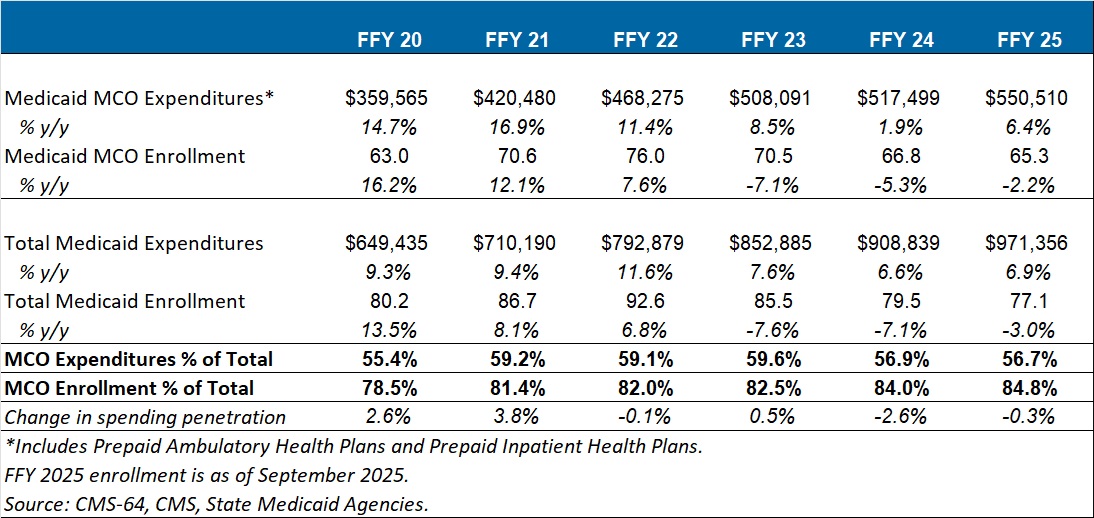
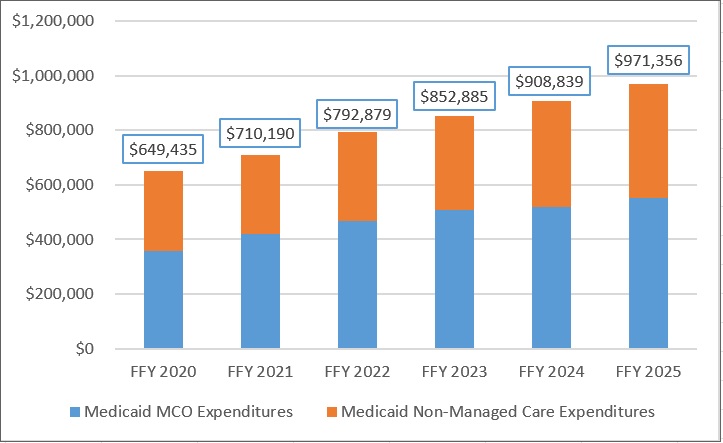
Medicaid managed care organizations face mounting pressure as enrollment patterns shift, federal policy evolves, and state budgets tighten. In this webinar, experts from HMAIS, Wakely, and HMA shared exclusive analysis of Medicaid Managed Care Organization (MCO) financial performance, explored the implications of HR 1 and other federal policies, and offered State and MCO perspectives.

Learning Objectives

  • Interpret 2024 Medicaid MCO financial trends and historical benchmarks to anticipate future market performance.
  • Assess how federal policy changes, including HR 1, are reshaping Medicaid enrollment and creating new fiscal pressures for States and MCOs.
  • Evaluate state considerations around risk corridors, medical loss ratios (MLRs), and similar mechanisms in a challenging budget environment.
  • Identify strategies and planning initiatives that promote resilience, sustainability, and adaptation for Medicaid managed care organizations in a shifting landscape.

This webinar was for Medicaid managed care leaders, state officials, vendors, budget officers, and investors navigating financial pressures and policy shifts.

Blog

Federal Shifts and the Potential Impacts on Healthcare Quality Oversight

Read Blog

This week, our In Focus section explores how recent federal shifts—particularly under the Trump Administration—are reshaping healthcare quality oversight. Health Management Associates (HMA) has published several analyses on the 2025 Budget Reconciliation Act (H.R. 1, formerly known as the One Big Beautiful Bill), Title IV of the Personal Responsibility and Work Opportunity Reconciliation Act of 1996 (PRWORA), and the 2025 Centers for Medicare & Medicaid Services (CMS) Quality Conference. Together, these federal changes and the policy priority shifts described at the Quality Conference, have implications for monitoring and oversight of healthcare quality for publicly insured, commercially insured, and uninsured individuals.

In this article, HMA experts highlight potential areas for state Medicaid programs, healthcare organizations, and other industry partners to watch for as the rollout of new policies and programs begins to affect programs that monitor quality and creates the imperative to develop new oversight mechanisms.

Overview of Key Federal Policy Shifts

2025 Budget Reconciliation Act/H.R. 1

In July 2025, President Trump signed H.R. 1, the sweeping budget reconciliation legislation that directly affects publicly financed health coverage. Notable policy changes with quality implications include:

  • Mandatory six-month redetermination and community engagement for select populations
  • Stricter rules on healthcare-related provider taxes and state-directed payment policies
  • Elimination of Affordable Care Act (ACA) subsidy eligibility for certain lawfully present immigrants
  • An end to conditional eligibility for ACA subsidies, as well as passive re-enrollment
  • Required compliance with community engagement and work policies

Personal Responsibility and Work Opportunity Reconciliation Act of 1996

On July 10, 2025, the US Department of Health and Human Services (HHS) and other agencies, redefined “federal public benefits” to exclude individuals with “unsatisfactory immigration status” from certain healthcare programs. Examples include Certified Community Behavioral Health Clinics (CCBHCs), Community Health Centers/Federally Qualified Health Centers (FQHCs), grant-funded programs administered by the Substance Abuse and Mental Health Services Administration (SAMHSA), and Title X Family Planning.

2025 CMS Quality Conference

During the 2025 CMS Quality Conference, Centers for Medicare & Medicaid Services (CMS) Administrator Dr. Mehmet Oz and senior CMS officials, emphasized CMS’s and HHS’s evolving priorities under the Trump Administration. Notable priorities include empowering patients with data, reducing waste and tackling fraud, focusing on prevention, and transitioning to digital quality measures.

Quality Oversight Impacts

Key impacts on quality monitoring programs resulting from these federal changes and evolving priorities include:

Budget constraints elevate monitoring and value-based care metrics. Reduced Medicaid funding and tighter payment rules heighten the need for real-time monitoring of value-based care metrics to ensure financial sustainability in the changing market, optimize reimbursement.

Enrollment changes challenge quality tracking. Tighter eligibility and enrollment policies are expected to decrease enrollment in Medicaid (particularly among the adult expansion population) and the Affordable Care Act Marketplace program. Frequent redeterminations may cause coverage gaps and churn, distorting quality measure denominators and complicating performance tracking – especially for preventive and chronic care metrics.

Specifically, as the population mix in publicly funded programs changes or as gaps in enrollment exceed the 30‒45-day continuous enrollment criteria for many quality measures, the eligible population/denominators of quality measures will likewise fluctuate. Populations that lose coverage or churn on and off eligibility rolls can result in differential impacts for various quality measures (e.g., healthier individuals losing coverage affects prevention measures more than measures of chronic disease care).

Although performance on value-based care quality measures will have increased importance, the ability to track and trend performance will be increasingly challenging. Healthcare organizations will benefit from forecasting potential changes to patient mix and volume and real-time monitoring and improvement opportunities.

Rise in uncompensated care requires new quality monitoring. H.R. 1 changes that reduce eligibility, paired with PRWORA changes that limit treatment for certain individuals who receive public benefits, are likely to lead to increases in the uninsured population and inhibit access to preventive care. These populations tend to use emergency departments more often for health issues that could have been treated earlier or more effectively in outpatient settings, yet quality oversight is limited for populations that receive care outside of publicly or commercially funded programs. New mechanisms for quality oversight—and funding of those mechanisms—will be needed to monitor the health of these populations.

New programs and priorities warrant updated monitoring. H.R. 1’s Rural Health Transformation Program and CMS’s dual-track quality measurement approach (“treating illness” versus “maintaining health”) necessitate a reevaluation of current metrics and monitoring systems.

Implementation of digital quality measures will support these efforts when fully implemented. The accelerated movement toward digital quality measurement and interoperability may create an imperative for healthcare organizations to make the shift. For example, the transition to digital quality measures will be necessary to ensure real-time oversight and improvement of quality measures, population health analytics, maximizing value-based care payments and efficiencies needed to effectively respond to federal changes. At the same time, healthcare organizations will need strategies to effectively deploy digital quality and interoperability within and across their organizations to not just comply, but to maximize their capabilities.

Connect with Us

HMA works with state agencies, payers, health systems, and providers to assess and implement quality systems, value-based care programs, performance improvement and digital health. To discuss how federal changes will affect your organization’s quality programs, contact our featured experts below.

Blog

Health Tech Ecosystem Leaders to Speak at HMA’s National Conference

Read Blog

The Trump Administration’s new Health Tech Ecosystem initiative is reshaping how patients and providers access health data, with the bold Kill the Clipboard road map offering a federal blueprint for modernization. At its National Conference being held October 14–16 in New Orleans, Health Management Associates (HMA) is bringing together healthcare leaders to explore how federal policy and industry innovation are driving smarter, more connected care. 

About the Sessions  

  • Driving Digital Health Forward: Federal and Industry Enablers of Smarter, Connected Care 
  • The Digital Health “State of the Art”: Success Stories, Trends and Opportunities 
  • Seizing Disruption to Make a Lasting Impact in Healthcare 

These and other sessions reflect the federal government’s evolving priorities around digital transformation, interoperability, and patient empowerment. The Health Tech Ecosystem initiative and CMS’s Interoperability Framework are setting new expectations for how healthcare organizations manage data, engage patients, and collaborate across sectors 

Featured Digital Healthcare and Innovation Leaders Speaking at the HMA Conference  

Our speakers will unpack the far-reaching impact of these advancements, spotlighting opportunities for smarter data exchange and care coordination in a connected ecosystem. In addition, experts from across the healthcare industry will share practical strategies for advancing digital maturity and overcoming operational challenges, with a focus on improving patient care and organizational efficiency. 

  • Secretary Bruce Greenstein, Louisiana Department of Health  
  • Jaime Bland, DNP, RN, Chief Executive Officer, CyncHealth 
  • Ryan Howells, Principal, Leavitt Partners (an HMA Company) and co-author of Kill the Clipboard 
  • Thomas Keane, MD, MBA, Assistant Secretary for Technology Policy and National Coordinator for Health IT, US Department of Health and Human Services  
  • Martin Lupinetti, President & Chief Executive Officer, HealthShare Exchange 
  • Juan Montanez, MBA, Managing Director, IT Advisory Services, HMA 
  • Curt Schatz, Vice President, Enterprise Clinical Enablement, Optum 
  • Chris Walker, Associate Vice President of Enterprise Transformation-Interoperability, Humana 

Healthcare organizations need to prepare for a future regulatory environment that is significantly more digital, interoperable, and chronic disease–focused. From health plan executives and state Medicaid directors and policy teams, to provider organizations and health IT and digital health innovators, our speakers will discuss what changes are coming  in the digital health space and how you can get your organization ready. Register for the conference today with the code HOTTOPIC25 to receive 20% off the standard conference rate through August. 

Blog

Streamlining Healthcare with AI: The Administration’s Plan and What Comes Next

Read Blog

On July 23, 2025, the Trump Administration released Winning the Race: America’s AI Action Plan, a comprehensive federal strategy designed to position the United States as the global leader in artificial intelligence (AI). The plan, developed in accordance with Executive Order 14179, outlines over 90 policy initiatives across three strategic pillars: Accelerating Innovation, Building AI Infrastructure, and Leading International AI Diplomacy.

Healthcare and Medicaid Impacts

CMS AI-Enabled Prior Authorization Pilot
The AI Action Plan explains the Centers for Medicare & Medicaid Services (CMS) plan to launch a six-year pilot to improve, streamline, and where possible, automate prior authorizations using AI. Consistent with the AI Action Plan, CMS on June 27, 2025, announced a new Innovation Center model, the Wasteful and Inappropriate Service Reduction (WISeR) Model. WISeR will test ways to improve the prior authorization process relative to Original Medicare’s existing processes. This initiative is expected to dramatically reduce approval times—from days to, potentially, minutes in some cases — while easing administrative burdens for providers and improving access to timely care for beneficiaries. CMS will evaluate the pilot using metrics such as efficiency gains, cost savings, satisfaction levels, and decision accuracy.

Enhanced Fraud Detection and Program Integrity
CMS will also expand its use of AI to detect and prevent fraud, waste, and abuse (FWA) in Medicaid and Medicare. By leveraging predictive analytics and real-time data, the agency aims to identify anomalies and improper payments before they occur—enhancing program integrity and public trust.  CMS is also encouraging state Medicaid agencies to bolster its investments in FWA systems, and enhanced federal funding continues to be available for such investments.

Regulatory Streamlining and Innovation Incentives
The plan calls for removing outdated regulatory barriers to AI adoption in healthcare. Proposed measures include revising compliance requirements and offering financial incentives or preferential funding access to states that foster innovation-friendly environments. While specifics are pending, states are encouraged to modernize regulations to support AI adoption.

Key Differences from Prior Administration’s AI Policy

The following table outlines key differences between the Biden and Trump administrations’ approaches to AI policy:

Considerations for Healthcare Organizations and Partners

Medicaid agencies, healthcare providers, and industry stakeholders should track the next wave of federal actions to implement the AI Action Plan and the healthcare sector’s response. Data from pilot initiatives will inform future federal policy decisions on broader AI deployments within Medicaid administration. In addition, healthcare organizations will need to remain nimble as variability may emerge in how states pursue regulatory changes to align with federal incentives under the Action Plan.

Sector specific considerations include:

Health Plans:  Plans should proactively pursue initiatives such as AI-driven prior authorization, claims adjudication, fraud detection, and member engagement to improve their operations, their position in the markets in which they operate, and ideally, their performance. This effort will require significant investments in information technology, new workflows, and continuous quality improvement initiatives, staff training, enhanced compliance protocols, and a culture that embraces AI. In addition, plans must implement robust AI oversight mechanisms that incorporate the necessary level of transparency, avoid bias, and are appropriate across all functions that use AI, including population health analytics, member engagement, care management, prior authorization management, claims processing, and fraud detection.

State Government: States will face pressure to modernize health and human services regulatory frameworks to align with federal requirements and access federal incentives. Moreover, states should proactively pursue initiatives that improve the operations of health and human services agencies with a particular focus on improving program design, oversight, and evaluation functions. In addition, agencies should assess current rules regarding AI and consider how to support AI adoption while safeguarding desired outcomes and accountability.

Health Systems and Providers: Providers can benefit from reduced administrative overhead, improved care delivery, and the use of AI to augment the ability of providers to diagnose and treat patients. Providers will have to adapt to new workflows that incorporate use of AI, ensure data quality, and monitor data for unintended consequences such as unintended bias. In addition, providers must incorporate AI literacy training to align with federal expectations and remain competitive in a deregulated, innovation-driven landscape. Providers will also have to implement robust compliance protocols.

Looking Ahead

The AI Action Plan signals a substantial shift toward streamlined regulatory approaches and expanded AI deployment in Medicaid and broader healthcare administration. Stakeholders should anticipate federal guidance updates, pilot program evaluations, and further clarifications regarding state incentives in the months ahead.

To discuss the implications of the AI Action Plan or for further policy analysis, contact Health Management Associates experts below.

Blog

CMS and Tech Leaders Unite to Build a Patient-Centric Digital Health Ecosystem

Read Blog

The White House and Centers for Medicare & Medicaid Services (CMS), on July 30, 2025, announced new commitments from leading technology firms—including Amazon, Apple, Google, OpenAI, and Anthropic—to create a smarter, more secure, and patient-centered digital health ecosystem. At the Make Health Tech Great Again event, CMS unveiled voluntary criteria for trusted data exchange across networks, electronic health records (EHR), and tech platforms, emphasizing interoperability, personalized tools, and reduced provider burden.

This announcement echoes many of the priorities laid out in Leavitt Partners’ Kill the Clipboard road map—a federal policy and industry blueprint for modernizing patient and provider access to health data. The priorities outlined at today’s White House event and the administration’s recent regulatory announcements closely reflect the multisector road map’s recommendations. A recent webinar hosted by Leavitt Partners, an HMA Company, explored how the recommendations are shaping federal policy and creating strategic opportunities for early adopters.

What’s Next

Health Management Associates (HMA) experts, including those with Leavitt Partners, will delve further into the new initiative and considerations for the healthcare industry in an upcoming Weekly Roundup.

Blog

HHS Issues Immediate Policy Shift on Federal Benefit Eligibility Under PRWORA

Read Blog

On July 10, 2025, the US Department of Health and Human Services (HHS), Department of Labor, Department of Justice, Department of Education, and US Department of Agriculture (USDA) issued notices that significantly reinterpret the definition of “federal public benefit” used in Title IV of the Personal Responsibility and Work Opportunity Reconciliation Act of 1996 (PRWORA). These changes are effective immediately upon publication in the Federal Register, though agencies have opened 30-day public comment periods to solicit feedback.

In this article, Health Management Associates (HMA) experts explain two of these notices—those from HHS and USDA—based on what we know and outstanding issues that organizations should expect to arise in the coming months.

Programs Affected by HHS’s Revised Interpretation

The notice changes HHS’s 1998 interpretation of PRWORA and will have sweeping implications for service delivery across the country. It does this by reversing the classification of many long-standing programs to be “Federal public benefits;” until now, these programs had been specifically excluded from that definition. People with Unsatisfactory Immigration Status are not permitted to access these benefits. People classified as such include those who are undocumented, but also several categories of people lawfully in the United States, such as holders of H1B and J-1 visas, as well as some lawful permanent residents (green card holders — only for the purposes of eligibility for certain programs).

Programs newly subject to these restrictions include:

  • Head Start
  • Certified Community Behavioral Health Clinics (CCBHCs)
  • Community Mental Health Services Block Grant
  • Community Services Block Grant (CSBG)
  • Health Center Program (Community Health Centers/FQHCs)
  • Health Workforce Programs (including grants, loans, scholarships, and loan repayments)
  • Services administered by the Substance Abuse and Mental Health Services Administration (SAMHSA)
  • Title IV-E programs (Educational and Training Voucher Program, Kinship Guardianship Assistance Program and Prevention Services Program)
  • Title X Family Planning

Organizations that receive federal or pass-through federal funding may now be required to assess immigration status as a condition of service delivery—something many have never done before. This shift raises significant operational, ethical, and mission-aligned challenges for hospitals, community health centers, behavioral health providers, and human services organizations. PRWORA does include language exempting 501(c)(3) charitable organizations from being required to verify immigration status, but as the administration notes in its announcement, they are not barred from doing so. This will be an area to watch.

USDA Interpretation

The USDA’s notice similarly identifies all 16 programs the Food and Nutrition Services (FNS) administers as meeting the definition of “Federal public benefit” used in Title IV of PRWORA. These programs include:

  • Supplemental Nutrition Assistance Program (SNAP)
  • Nutrition Assistance Program for Territories
  • Food Distribution Program on Indian Reservations (FDPIR)
  • Special Supplemental Nutrition Program for Women, Infants, and Children (WIC)
  • National School Lunch Program, School Breakfast Program, and Summer Food Service Program
  • Child and Adult Care Food Program

The notice, however, states that there is a difference between defining a program as a federal public benefit and applying other provisions of PRWORA to those programs. The USDA’s notice clarifies that providers of non-exempt benefits must verify that applicants have a qualified immigration status for purposes of PRWORA but does not address how verification should be implemented or how exceptions should be applied.

What We Know—and Don’t Know

Though the list of affected programs is extensive, many critical implementation details remain uncertain. Both agencies acknowledge that further guidance will be needed to clarify how these changes will be operationalized.

Organizations should expect additional updates and further clarifications from federal agencies in the coming months. Legal challenges to these changes are almost certainly forthcoming.

Looking Ahead

These policy changes are both significant and still evolving. They will affect how and where services are delivered, as well as whether people choose to access the services at all.

During this period of uncertainty, frequent and transparent communication is essential. Deploy information and updates in multiple formats —written, verbal, visual—to reach diverse audiences, including your organization’s staff and other stakeholders in your community. When policy is fluid and changing rapidly, authentic messaging about what is known and what remains unclear will position your organization as an honest broker and trusted partner.

HMA experts are tracking these and related developments. For questions and to discuss the impact of these policies on your organization, contact our featured experts below.

Blog

H.R. 1 Signed Into Law—What It Means for Medicaid and Public Coverage

Read Blog

Just one week after we reviewed the Senate’s version of the budget reconciliation bill, H.R. 1, President Trump has now signed the legislation into law. The final iteration of H.R. 1 includes sweeping changes to Medicaid, the Affordable Care Act (ACA) Marketplaces, and Medicare—several of which diverge significantly from the version that the House passed May 22, 2025.

This update outlines many of the most consequential healthcare provisions, with a focus on Medicaid financing, eligibility, and operational impacts. It also highlights how stakeholders can act now to prepare for what happens next.

From Proposal to Policy: What Changed

The Senate’s amended version of H.R. 1, approved on July 1 and passed by the House on July 3, 2025, reshaped several key provisions in the earlier version of the House bill. Although the bill retains its core focus on tax policy and entitlement reforms, it further constrains state Medicaid financing and eligibility and scales back Marketplace subsidies for certain populations.

According to preliminary analysis from the Congressional Budget Office, the final bill will reduce federal healthcare spending by approximately $1.15 trillion over the next decade but also will increase the number of uninsured individuals by 11.8 million by 2034 because of changes to both Medicaid and Marketplace programs.

Medicaid Eligibility: A New Era of Policy and Operational Complexity

Mandatory Community Engagement Requirements

By December 31, 2026, states must implement community engagement (work) requirements for certain Medicaid enrollees. These requirements cannot be waived under Section 1115, though states may request “good faith” exemptions through 2028.

States must notify enrollees through multiple channels and develop the infrastructure needed to track compliance. Managed care organizations and other entities that have financial relationships with Medicaid services are prohibited from determining compliance.

Tighter Eligibility and Redetermination Requirements

States must now conduct Medicaid eligibility redeterminations every six months for expansion populations. The bill also delays implementation of previously finalized rules that would have streamlined enrollment and imposes new verification requirements, including address checks. For immigrants, H.R. 1 narrows the definition of “qualified” individuals who are eligible for Medicaid and CHIP, removing coverage for refugees, asylees, and other humanitarian categories.

Cost Sharing for Expansion Adults

Starting in 2028, states must apply cost-sharing requirements to Medicaid expansion adults with incomes greater than 100 percent of the federal poverty level. Though primary care, mental health, and certain other services are exempt, the policy introduces new administrative burdens for states and many providers.

Medicaid Financing: A Structural Shift

Provider Tax Restrictions

H.R. 1 freezes existing provider tax programs and bars any new taxes. Also, Medicaid expansion states must phase down the maximum allowable tax rate from 6 percent to 3.5 percent by 2032. This change will significantly constrain states’ ability to use provider taxes to finance Medicaid and draw down federal matching funds.

Limits on State-Directed Payments

The bill caps state-directed payments at either 100 percent or 110 percent of Medicare rates, depending on the state’s expansion status. Grandfathered payment arrangements will be phased down by 10 percent annually beginning in 2028. These provisions will require states to reassess supplemental payment strategies and may affect provider participation and access to care.

Other Key Provisions

The Rural Health Transformation Program provides $50 billion over five years to support financially distressed rural providers. H.R. 1 requires that each state submit a plan, and the Centers for Medicare & Medicaid Services (CMS) administrator must approve or deny the plan by December 31, 2025, giving CMS and the US Department of Health and Human Services significant authority to shape the approval/denial processes, as well as critical details of the program and funding decisions.

For the Marketplace, the law eliminates ACA subsidy eligibility for certain lawfully present immigrants, ends conditional eligibility for ACA subsidies as well as passive re-enrollment, and eliminates the cap on ACA subsidy repayment at tax time. It also prohibits individuals who are not enrolled in Medicaid because of a failure to satisfy community engagement requirements from receiving any subsidies.

In addition, a new 1915(c) waiver option allows states to offer home and community-based services (HCBS) without requiring that they provide institutional level of care but only if waiting lists for existing services are not extended. Another provision excludes family planning and abortion service providers from receiving Medicaid funding if they received at least $800,000 in Medicaid reimbursements in 2023.

Finally, the law includes a one-year, 2.5 percent increase to the Medicare physician fee schedule conversion factor, which will be in effect for calendar year 2026 and expire thereafter.

What Stakeholders Should Do Now

States can begin planning for eligibility system changes, redetermination volume, and community engagement implementation, all of which require an understanding of the potential interactions of the federal Medicaid, Medicare, and ACA Marketplace policy changes. In addition, state officials should consider reassessing provider tax structures and supplemental payment strategies, where applicable. They need to engage early on rural health transformation funding opportunities and other provider supports.

Health plans can forecast enrollment and risk mix changes. They have opportunities to support states in compliance efforts to avoid federal funding recoupments. In addition, plans must prepare for new administrative requirements related to cost sharing and work requirements, among other policy changes on the horizon. Consumer communications should also be a focus area.

Providers and community-based organizations will need to prepare for greater uncompensated care needs and costs, which can lead to potential revenue loss, as well as new reporting and program integrity expectations. They also will play an integral role in assisting patients in maintaining coverage and navigating new requirements.

Vendors and health information exchanges have several opportunities to support the implementation of new requirements in H.R. 1 alongside the changing regulatory priorities. Examples include reviewing system capabilities to support new eligibility, verification, and reporting requirements and coordinating with states to ensure smooth implementation and program integrity.

Looking Ahead

The passage of H.R. 1 marks a turning point in federal health policy. Although the law’s fiscal goals are clear, its operational impacts will unfold over the coming months and years. States, plans, providers, and community organizations must now pivot from policy analysis to implementation readiness.

HMA will continue to monitor federal guidance, state responses, and stakeholder strategies. For more detailed analysis or support with scenario planning, contact our experts below.

Blog

What the Senate’s Budget Approval Means for the Future

Read Blog

On July 1, 2025, the US Senate voted 51–50, to advance its version of H.R. 1, continuing the budget reconciliation process. Like the bill that the House passed in May, the Senate language calls for making significant changes to the Medicare, Medicaid, Affordable Care Act (ACA) Marketplace programs, as well as health savings accounts (HSAs) and publicly funded programs such as the Supplemental Nutrition Assistance Program.

Relative to the House bill, however, the Senate differs substantially in approach and scope. Thus, the bill has been sent back to the House for consideration. Speaker of the House Mike Johnson (R-LA) intends to accelerate voting with the goal of clearing the legislation in the House by July 4, 2025.

Key Differences Between House and Senate Bills

Notable differences between the House and Senate packages pertain to the following:

  • Medicaid Provider Payments: The Senate version includes more restrictive changes to federal Medicaid provider taxes and state-directed payment policies. These changes are expected to affect hospitals that rely on Medicaid supplemental payments. The Senate bill also would create a $50 billion Rural Health Transformation Program to mitigate financial strain on healthcare providers in rural communities. The provision includes several stipulations regarding distributions, allocations, eligibility standards, and permissible uses of the funds, which will likely prompt considerable ongoing engagement from stakeholders if signed into law, particularly among hospitals and clinics that will face substantial headwinds under other components of the legislation.
  • ACA Marketplaces: Like the House bill, the Senate version includes provisions to recapture full ACA subsidy amounts, restrict subsidy eligibility for certain immigrant populations, and require verification of ACA subsidy eligibility. The Senate bill neither appropriates funding for cost sharing reduction subsidies nor includes provisions regarding the Marketplace Integrity and Affordability rule, which the Centers for Medicare & Medicaid Services (CMS) finalized on June 20, 2025. In addition, the Senate bill offers several smaller flexibilities intended to increase usage of HSAs but does not include the full suite of HSA changes included in the House bill. The Senate language also does not call for expanding individual coverage health reimbursement arrangements (ICHRAs).
  • More Limited Medicare Package: Although the Senate language restores the ORPHAN Cures Act and adds a modest one-year payment increase under the Medicare Physician Fee Schedule (PFS), the bill omits a number of significant Medicare policies included in the House version, including a much broader PFS investment tied to the Medicare Economic Index, as well as multiple pharmacy benefit manager (PBM) reforms under Medicare Part D. The Senate legislation also excludes two Medicaid PBM provisions that the House had included.

Estimates from the Congressional Budget Office

The Congressional Budget Office (CBO) has provided several estimates of the cost and coverage impacts of the healthcare and tax provisions in multiple versions of the reconciliation legislation. CBO has provided cost estimates for the House-passed bill, as well as the Senate substitute amendment, but has yet to release information on the final Senate version. Of note, CBO estimated the following:

  • The Medicaid, Medicare, and ACA related provisions in the Senate substitute amendment would reduce healthcare spending by approximately $1.15 trillion over the next 10 years.
  • The House bill would, by 2034, add 10.9 million people to the number of uninsured individuals in the United States.

What to Watch

Stakeholders should plan for the financial, policy, and operational impacts of the many provisions that could be enacted, including:

  • New administrative requirements for enrollment that will place additional obligations on individuals seeking coverage and which will require more state resources to implement and manage. Community engagement and work requirements are scheduled to take effect December 31, 2026.
  • Downward Medicaid financial pressures due to fewer federal funds, which will stress state budgets and states’ ability to maintain existing programs. This situation could lead some states to scale back eligibility for Medicaid, limitenrollment for optional programs, or some combination of these. Additionally, states could be expected to address increases in uncompensated care among their providers.
  • A pause on implementation of previously finalized regulations that streamlined the Medicaid enrollment process for individuals.

The combination of the House and Senate reconciliation bills and the recently finalized Marketplace Program Integrity and Affordability rule indicate an uncertain future for cost sharing subsides and enhanced premium tax credits in Marketplace programs. Healthcare stakeholders should prepare for the impact of the expiration of the enhanced premium tax credits would have on benefit packages, enrollee risk profiles, uncompensated care, and other key issues affecting access, cost, and outcomes.

Connect with Us

To learn more about the these policy changes and the impact on your organization, contact our featured experts below.

Blog

CSR Funding, Budget Debates, and the Future of Marketplace Affordability

Read Blog

In May 2025, the US House of Representatives passed a budget bill that includes funding for cost-sharing reduction (CSR) payments, marking a potential end to the “silver loading” practice that has shaped pricing in the Affordable Care Act (ACA) Marketplace pricing since 2017. The US Senate is now considering this legislation as part of a broader budget reconciliation package that includes major Medicaid reforms, such as new work requirements and changes to eligibility and financing rules.

This evolving policy landscape has significant implications for states, payers, providers, and consumers. Wakely, an HMA Company, recently published Implications of Ending Silver-Loading on the Individual Market, which outlines how reinstating CSR payments could reshape ACA marketplace plan pricing, enrollment patterns, and federal subsidy flows. It also highlights the operational and financial risks stakeholders must prepare for in 2026.

Broad Loading and Silver Loading

Because CSR loading increases premium costs on silver plans that determine subsidies, they also increase federal payments for premium tax credit (PTC) subsidies. Guidance from the US Department of Health and Human Services on silver plan pricing has evolved over time. Three types of CSR loading are occurring in ACA markets, specifically:

  • Broad loading: Increasing premiums for all metal level qualified health plans (QHPs) in the individual market to collect enough revenue to offset the CSR costs of the silver plan variants enrollees
  • Two means of silver loading:
    • Increasing premiums for only silver QHPs in the individual market to collect enough revenue to offset the CSR costs of the silver plan variant enrollees
    • Raising premiums, functionally, for only on-exchange silver QHPs

As discussed in the Wakely paper, the impact of silver loading is that the federal government is likely paying out more in additional PTC subsidies than would be paid if CSR payments were fully funded. On Friday, May 2, 2025, the Centers for Medicare & Medicaid Services (CMS) released guidance related to silver loading and CSR payments for 2026 rate filings. This action was urgently needed, especially for states with May filing deadlines.

What’s at Stake

If Congress does appropriate funding for CSR payments, some issuers will be reimbursed for the difference in cost sharing between standard and CSR-enhanced silver plans. Issuers that cover nonemergency pregnancy termination services, would be ineligible for CSR payments; however, as the Wakely paper indicates, these payments would not cover the additional utilization driven by richer benefits. For example, it is anticipated that a member in a 94 percent actuarial value CSR plan will use more services (i.e., four primary care visits versus three in a standard plan), but reimbursement would only reflect the cost-sharing difference—not the increased volume of care.

States like Georgia and New Mexico, which mandate silver loading, could see significant shifts in premium relativities and enrollment behavior. Wakely’s modeling suggests that changes in CSR policy—especially if paired with the expiration of enhanced premium subsidies at the end of 2025—could lead to higher net premiums, reduced enrollment, and a deterioration in risk pool morbidity.

What to Watch

The Senate’s deliberations will determine whether CSR funding is restored and could have significant implications on whether enhanced premium subsidies are extended beyond 2025. These decisions will directly affect the following:

  • 2026 rate filings and benefit designs
  • Marketplace affordability and enrollment stability
  • State reinsurance funding and 1332 waiver dynamics
  • Consumer costs and plan switching behavior

Wakely’s analysis also cautions that if CSR funding is restored without accounting for induced utilization, issuers may still need to price for higher service use—potentially leading to premium volatility. In addition, if broad loading is mandated instead of silver loading, it could raise premiums across all metal tiers and reduce the value of premium tax credits for many enrollees.

Key Considerations for Stakeholders

  • States should assess how CSR policy changes affect reinsurance programs, waiver funding, and Medicaid redeterminations.
  • Payers must prepare for multiple pricing scenarios and evaluate how changes in subsidy structures influence enrollment and risk adjustment, 1332 reinsurance programs, and overall market risk.
  • Providers should anticipate shifts in patient mix and utilization (i.e., more uncompensated care with more uninsured patients).
  • Advocates need to monitor how policy changes affect access and affordability for low-income and underserved populations.

These developments also create more opportunities for movement between Medicaid, Marketplace, and uninsured populations, underscoring renewed opportunity for integrated eligibility systems and coordinated outreach.

Connect with Us

Health Management Associates (HMA), experts are actively advising stakeholders on how to navigate these complex changes. Whether you’re a state policymaker, health plan executive, provider leader, or advocate, we can help you assess the impact and plan strategically.

These issues will also be explored in depth at the HMA Conference in October 2025. To discuss how these developments will affect your organization, contact our featured expert below.

Ready to talk?