
Medicare

CMS Innovation Center’s ACCESS Model: What Medicare Organizations Need to Know

On December 1, 2025, the Centers for Medicare & Medicaid Services (CMS) Innovation Center announced its latest model—ACCESS (Advancing Chronic Care with Effective, Scalable Solutions). A national, voluntary 10-year model designed to test outcomes-focused payment for technology-enabled care used in managing chronic conditions common among Original Medicare (fee-for-service) beneficiaries, ACCESS addresses the long-standing gap between Medicare’s payment system and technology’s capacity to improve healthcare delivery. 

The digital health technology and provider communities have expressed considerable interest in ACCESS. The US Department of Health and Human Services (HHS) and CMS highlighted the model at the December 4, 2025, Modernizing America’s Care for the Better event (recording here), noting over 250 organizations have already expressed interest in the model. Nonetheless, many details need clarification before the program launches.  

Health Management Associates (HMA) has reviewed the ACCESS model and is engaging with those agencies and organizations working on design and implementation. In this article, we share early insights and considerations for Medicare organizations and technology manufacturers interested in participating, as well as potential implications for the broader market. 

Model Overview 

ACCESS aligns with the administration’s strategic priorities for the Innovation Center, including: 

  • Incentivize greater use of technology in chronic disease prevention and management 
  • Increase access to tech-enabled care by overcoming payment barriers, while ensuring care is clinician-guided, coordinated, and accountable 
  • Expand clinicians’ ability to offer innovative care through a straightforward payment pathway 
  • Promote competition by publishing risk-adjusted performance results 
  • Reduce overall Medicare costs 

Core Requirements for ACCESS Participants 

Participants in the model (ACCESS care organizations) must be Medicare Part B participating providers or suppliers, exclusive of durable medical equipment, prosthetics, orthotics, and laboratory suppliers. Notably, these organizations must designate a Medicare-enrolled medical director to oversee care quality and compliance. These organizations will collaborate with primary care providers and other referring clinicians to offer tech-enabled services that complement traditional care, including: 

  • Telehealth software 
  • Wearable devices for continuous monitoring (e.g., sleep, heart rate, movement, glucose, etc.) 
  • Apps to track and coach lifestyle changes 

Care may be delivered in person, virtually, asynchronously, or through other clinically appropriate tech-enabled methods. 

While CMS has yet to release full details on covered digital health solutions, ACCESS care organizations are expected to offer integrated, technology-supported care, which may include: 

  • Clinician consultations 
  • Lifestyle and behavioral support (e.g., nutrition, exercise, smoking cessation) 
  • Therapy and counseling 
  • Patient education 
  • Care coordination 
  • Medication management 
  • Ordering and interpreting diagnostic tests and imaging 
  • Use or monitoring of Food and Drug Administration (FDA)-authorized devices 

ACCESS is intended to be a supplemental approach to traditional care. Primary care physicians and specialists will be able to refer patients to ACCESS organizations and will receive regular electronic updates on patient progress. 

New Options for Beneficiaries 

Unlike most other Innovation Center models, beneficiaries will be able to voluntarily sign up directly with an ACCESS organization or receive a referral from a physician. CMS will maintain a public directory of ACCESS participants, including the conditions they treat and their risk-adjusted outcomes, to help providers and beneficiaries make informed choices based on their needs. 

 Chronic Condition Focused Clinical Tracks 

ACCESS will launch with four clinical tracks, grouping related conditions with similar care approaches. Although CMS may add additional tracks and conditions in the future, the first four tracks address common chronic conditions among Medicare beneficiaries (affecting over two-thirds of Medicare beneficiaries). 

  1. Early Cardio-Kidney-Metabolic (eCKM): Hypertension, dyslipidemia, obesity, prediabetes
    Outcome measures: Control of or improvement in blood pressure (BP), lipids, weight, HbA1c 
  2. Cardio-Kidney-Metabolic (CKM): Diabetes, chronic kidney disease (CKD), atherosclerotic cardiovascular disease (ASCVD) 
  3. Outcome measures: Control or improvement in BP, lipids, weight, HbA1c; CKD/diabetes require eGFR (estimated glomerular filtration rate) and UACR (urine albumin-to-creatinine ratio) data submission 
  4. Musculoskeletal (MSK): Chronic pain
    Outcome measures: Improvement in pain intensity, interference, function (via validated patient-reported outcome measures [PROMs]) 
  5. Behavioral Health: Depression and/or anxiety
    Outcome measures: Improvement in symptoms (Patient Health Questionnaire-9 [PHQ-9], Generalized Anxiety Disorder-7 [GAD-7]); submission of World Health Organization Disability Assessment Schedule 2.0 (WHODAS 2.0) for overall function 

Participant organizations must manage all qualifying conditions within their chosen track. 

Payments 

CMS will release more details in the forthcoming request for applications (RFA). The model will use two payment approaches: 

  • Outcomes-Aligned Payments (OAPs): Paid to ACCESS organizations that achieve desired clinical outcomes, support technology-enabled interventions, and net savings for Medicare. OAPs are expected to be recurring (likely monthly) payments
  • Co-management Payments: Referring clinicians will receive approximately $30 per service, plus a one-time $10 bonus, for onboarding beneficiaries

To promote access in underserved areas, CMS will apply a fixed adjustment to OAPs for rural patients in qualifying tracks. 

FDA’s Complementary TEMPO Pilot 

The FDA’s Technology-Enabled Meaningful Patient Outcomes (TEMPO) pilot will work collaboratively with the ACCESS model. Manufacturers of digital health devices that have yet to receive FDA authorization can apply to TEMPO for enforcement discretion, allowing their devices to be used by ACCESS participants for covered care. The FDA is seeking statements of interest for participation in the TEMPO pilot beginning in January 2026. The agency plans to select up to 10 manufacturers in each of four specific clinical use areas to participate in the pilot. 

Next Steps 

Interested applicants should begin exploring participation as a Medicare Part B-enrolled provider if they have yet to enroll. Other key considerations for Medicare organizations include: 

  • Submit a nonbinding letter of interest to the Innovation Center 
  • Evaluate readiness to deliver technology-enabled, outcomes-focused care 
  • Assess capacity to manage qualifying conditions across clinical tracks 
  • Plan for data collection, reporting, and performance measurement 
  • Consider partnerships with technology vendors and referring clinicians 
  • Monitor regulatory developments and payment methodology updates 

How HMA Can Help 

HMA can help organizations navigate the application process, develop implementation strategies, and position your organization for success in the evolving Medicare landscape. If your organization is considering participation in ACCESS or wants to understand how this model could affect your market, contact our experts below.
CMS’s 2027 Medicare Advantage Proposed Rule Focuses on Outcomes and Competition

On November 28, 2025, the Centers for Medicare & Medicaid Services (CMS) released the Contract Year 2027 Policy and Technical Changes to the Medicare Advantage Program and Medicare Prescription Drug Benefit Program. Each annual rulemaking cycle offers CMS an opportunity to recalibrate program priorities.  

This proposed rule offers a road map for CMS’s vision for Medicare Advantage (MA) and Part D. Signaling how CMS leadership intends to shape the MA and Part D programs beyond 2027—prioritizing outcomes, streamlining operations, and inviting dialogue on modernization—the proposed rule reflects a strategic imprint on the program’s trajectory. The deadline to submit comments is January 26, 2026

Given CMS’s goal of modernizing MA and Part D, plans, providers, and advocates should engage early to inform final policies. Health Management Associates (HMA) policy and actuarial experts, including Wakely and Leavitt Partners (both HMA companies), are analyzing and modeling the effect of the proposed changes. This article highlights some of the major policy updates that require near-term planning by states, Medicare Advantage plans, providers who serve MA beneficiaries, and their partners. 

Key Themes in the Proposed Rule 

Requests for Information 

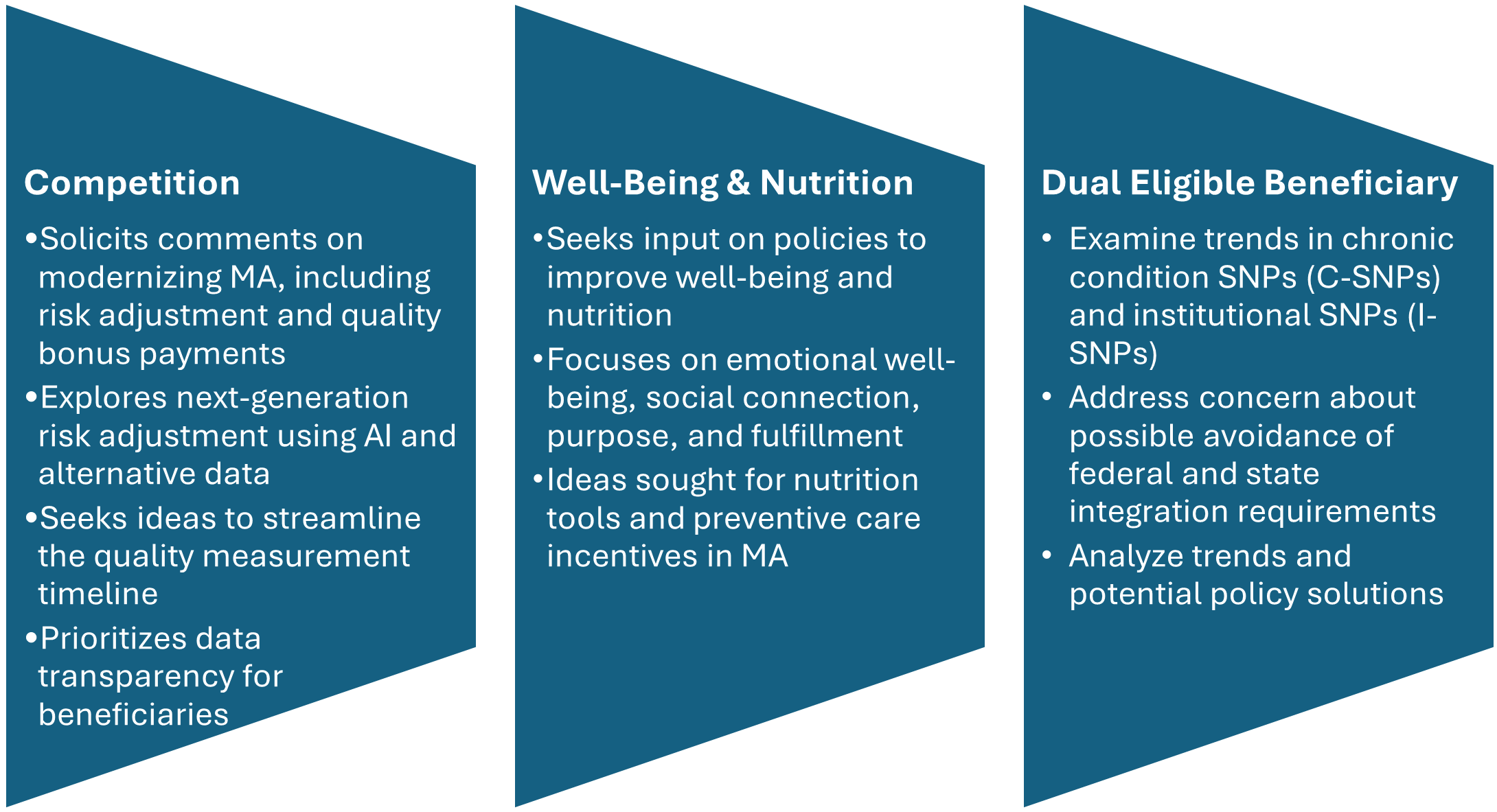
CMS includes three significant requests for information (RFIs) and highlights additional opportunities to provide input on approaches to reduce administrative burden throughout the program. CMS’s modernization RFI focuses on financing and other strategies to support beneficiaries with plan selection. In addition, CMS seeks input on emerging trends in MA special needs plans (SNPs), citing concerns about rapid growth and potential program integrity issues. Consistent with the departmentwide priorities, the RFI also delves into potential strategies for plans to address nutrition and wellness benefits for MA enrollees. 

Figure 1. RFIs Signaling New Policy Directions 

Star Ratings Overhaul: Refocusing on Outcomes and Experience

CMS proposes significant changes to the Star Ratings system, which influences plan bonuses and consumer choice. The changes increase the focus on clinical care, outcomes, and patient experience of care measures where performance is not topped out and align with universal foundation of measures. 

  • Health Equity Index Rollback: Rather than implement the previously planned Excellent Health Outcomes for All reward (formerly Health Equity Index) for 2027, the agency will continue using the historical reward factor that incentivizes consistently high performance across all measures. 
  • Measure Streamlining: Twelve process-heavy or administrative measures will be removed. 
  • Behavioral Health: A new measure for depression screening and follow-up will be introduced for the 2027 measurement year, with integration into Star Ratings by 2029.  

Why It Matters: Removing these measures continues the shift away from administrative compliance, easing burden while strengthening quality incentives. 

Medicare and Medicaid Dual Eligible SNPs and Integration 

CMS is proposing several changes to improve how Medicare Advantage plans serve people who qualify for both Medicare and Medicaid (dual-eligible beneficiaries): 

  • Starting in calendar year (CY) 2027, CMS proposes to allow D-SNPs and I-SNPs two opportunities to change to their model of care (MOC)—the framework for how they coordinate care. These windows would be January 1 through March 31 and October 1 through December 31. 
  • When beneficiaries are automatically moved (i.e., passively enrolled) from one integrated D-SNP to another, CMS will no longer require the new plan’s provider network to closely match the old plan’s network. Instead, the new plan must ensure that all incoming members receive uninterrupted care for at least 120 days (up from 90 days), helping prevent gaps in treatment. 
  • In states where dually eligible individuals are explicitly carved out from or not required to enroll in Medicaid managed care, CMS proposes to let highly integrated dual eligible special needs plan (HIDE SNP) continue to enroll full-benefit, dual-eligible (FBDE) individuals in the same service area, even if those individuals are in Medicaid fee-for-service. This change is intended to maintain coverage and simplify enrollment for these beneficiaries. 

Why It Matters: While the proposed changes revise broader policies, the updates could have significant effects on D-SNP and MA integration. These changes also could shape states’ decisions regarding their integration policies. Plans should continue to monitor these developments. 

Other Notable Changes  

CMS proposes a new special enrollment period (SEP) for beneficiaries when their providers leave a plan’s network, eliminating the requirement that CMS deem the change “significant.” The intent of this change is to preserve continuity of care and ease the burden of beneficiaries switching plans. In addition, CMS plans to codify SEP policies for greater consistency. 

The proposed rule also calls for the following: 

  • Codifying multiyear changes stemming from the Inflation Reduction Act, including elimination of the coverage gap phase 
  • Lowering annual out-of-pocket thresholds and removal of cost sharing in catastrophic coverage 
  • Transitioning to the Manufacturer Discount Program and updating true out-of-pocket (TrOOP) calculations 
  • Clarifying specialty-tier drugs and subsidy structures 

As a result, plans will have updated financial responsibilities. 

Connect With Us 

As CMS sets a new course for Medicare Advantage and Part D, organizations face both opportunities and challenges in adapting to these changes. HMA brings deep expertise in Medicare policy, actuarial modeling, and operational strategy. Our team—including experts from Wakely and Leavitt Partners—can help plans, providers, and stakeholders interpret the proposed rule, assess its impact, and develop actionable strategies for compliance and competitive positioning. 

Whether you need data-driven analysis, scenario modeling, or hands-on support preparing for implementation, HMA is ready to partner with you to navigate the evolving Medicare landscape and achieve your goals. Contact our experts below to discuss your questions and how HMA can help.

Where Duals Integration Is Headed: State-by-State Intelligence

Dually eligible individuals are those who qualify for both Medicare and Medicaid. This population accounts for a disproportionately small share of the total Medicaid or Medicare population, but they account for a disproportionately large share of spending across both programs.

Medicare Advantage Dual Eligible Special Needs Plans Play a Key Role

Over the last several decades, federal and state policymakers have developed and implemented a range of programs, demonstrations, and approaches to improve care for this population and strengthen alignment between Medicare and Medicaid, improve outcomes, and manage costs. Medicare Advantage (MA) Dual Eligible Special Needs Plans (D-SNPs) are a key vehicle to accomplish federal and state goals.

What to Expect in Medicare Advantage Contract Year 2026

In 2026 and beyond, we can expect significant state and local shifts in plan enrollment, due to new federal requirements and state demonstration program transitions. We will see states focused on advancing aligned plan enrollment and setting higher expectations for Medicare-Medicaid integrated programs.

A New Inventory to Stay on Top of State Markets

Health Management Associates (HMA) has published the Duals Integration Environmental Inventory, a state-by-state view of state Medicaid program structures and regulations shaping integration and D-SNP markets. This resource is designed to help state policymakers, insurers, and healthcare organizations track trends, identify opportunities, and inform strategic planning in an evolving policy landscape.

Looking Ahead at the Changes in 2026 and Beyond

Federal rules for the Medicare Advantage 2026 contract year—and state Medicaid contractual agreements with plans—strengthen D-SNP integration standards and coordination between states and plans. Examples include:

  • D-SNP Look-Alike Plans: In 2026, the threshold for identifying MA plans as D-SNP look-alikes will decrease from 70 percent to 60 percent. This 10-percentage point drop marks the second of two planned phasedowns in the threshold percentage. Look-alike plans are MA plans that are marketed to dually eligible individuals, but they are not required to comply with D-SNP integration requirements. Stronger federal standards will require MA look-alike plans with high dual enrollment to convert or exit the market, which is expected to lead to shifts in dually eligible enrollment into D-SNPs and other integrated products.
  • Financial Alignment Initiative Demonstration Transitions: The Centers for Medicare & Medicaid Services (CMS) has worked with several states operating capitated Financial Alignment Initiative (FAI) demonstrations to transition Medicare-Medicaid Plans (MMPs) to integrated D-SNPs by January 1, 2026. These states include Illinois, Massachusetts, Michigan, Ohio, Rhode Island, South Carolina, and Texas will end their FAI demonstrations on December 31, 2025.
  • 2027 D-SNP Rules: Beginning in 2027, D-SNPs affiliated with Medicaid managed care organizations (MCOs) must restrict enrollment to Medicaid MCO enrollees. In addition, federal rules will limit the number of D-SNP plan benefit packages, which will require additional coordination with Medicaid affiliates and planning in designing benefit packages and network.

State Medicaid Program Adjustments

States are working to align new federal D-SNP requirements with existing Medicaid managed care contracts, long-term services and supports carve-in strategies, and service-area mappings. Because State Medicaid Agency Contracts (SMACs) must be updated annually, all SMACs will need to incorporate the new D-SNP provisions as the new requirements take effect. This effort will require close coordination among state agencies, plans, and CMS to manage enrollee transitions, data-sharing, and communications.

Data-Informed Integration Insights

HMA’s Duals Integration Environmental Inventory is a single hub for insights into requirements, approaches to scope of integration programs, and enrollment data. The inventory will help plans and other types of organizations such as providers and community-based organizations to prepare for future contracting, compliance, and operational transitions.

This inventory is designed to answer the four major questions top of mind:

  • What is the state’s integration model and D-SNP type. The inventory identifies each state’s approach to integrating care for dually eligible populations, including states with Fully Integrated Dual Eligible Special Needs Plans (FIDE-SNPs), Highly Integrated D-SNPs (HIDE-SNPs), coordination-only models, and Exclusively Aligned Enrollment (EAE) initiatives or comparable rules
  • Does the state’s program integrate LTSS and/or Behavioral Health? The inventory details whether long-term services and supports and behavioral health are carved into or out of managed care and how those benefits interact with Medicare coverage within D-SNP structures
  • What is the state’s enrollment policy? The inventory captures enrollment in HIDE/FIDE products, identifies Applicable Integrated Plan (AIP) states, and gauges overall alignment maturity
  • What is the state’s procurement and contract timeline? The inventory also tracks state procurement timelines, upcoming RFPs, and effective contract dates

Connect with Us

HMA experts are tracking state integration strategies, procurement timelines, and future state planning activities. Beyond the tracker, HMA colleagues provide tailored analysis and planning for state-specific initiatives. Our team can help health plans prepare for enrollment shifts, compliance requirements, and integration opportunities in 2026 and beyond. For information about subscription access to the HMA Information Services (HMAIS) inventory and to connect with HMA consultants who can address your integration questions, contact our experts below.

CY 2026 Physician Fee Schedule Tackles Site Neutrality, Cost-Drivers, and Alternative Payment Models

On October 31, 2025, the Centers for Medicare & Medicaid Services (CMS) announced the final rule for the calendar year (CY) 2026 Medicare Physician Fee Schedule (PFS), which finalizes payment policies proposed earlier this year. The rule continues the administration’s focus on developing value-based payment strategies, enhancing care management, and developing innovative payment models. It emphasizes a shift from historical processes and methods of reimbursing clinician services, while also introducing payment policies that include a shift toward site neutrality and cost containment.

The final CY 2026 rule implements immediate policy changes and signals several areas on which CMS might focus its attention in future rulemaking. Through its responses to public comments and the rationale provided for finalized policies, CMS highlights potential shifts in priorities and emerging directions for Medicare payment policy, reflecting the views of the Trump Administration moving forward. Stakeholders should be attentive to these signals, as they provide valuable insights into where CMS could direct further reforms and adjustments in the coming years.

Health Management Associates (HMA) Medicare experts are reviewing the finalized policies and have identified the highlights outlined in this article. Stakeholders should consider the effect on payment in 2026 as well as the longer-term practice reforms, investments, and analysis that may be required to deliver high-quality services and remain sustainable.

Enhanced Care and Chronic Disease Management

CMS finalized new billing codes to support behavioral health integration and the Psychiatric Collaborative Care Model (CoCM) services delivered to patients who also receive Advanced Primary Care Management (APCM) benefits, along with an add-on code for in-home primary care to reflect added complexity. CMS also retains and repurposes the social determinants of health (SDOH) risk assessments billing code to align with the administration’s focus on addressing the root causes of chronic illness.

Takeaway: These changes are designed to support better care coordination, integration of physical and mental health services, and proactive management of patient risk factors. They indicate CMS’s intent to expand care management strategies beyond traditional settings and into future payment methodologies.

Establishing Specialty Care Models

The rule finalizes the mandatory Ambulatory Specialty Model (ASM) to test value-based payments for specialists who focus on heart failure and lower back pain. ASM adopts a framework similar to the Merit-based Incentive Payment System Value Pathways (MVP) and shares certain quality and cost measures with existing MVPs for heart disease and musculoskeletal care.

The model applies performance-based payment adjustments of up to 12 percent, covering 25 percent of Core-Based Statistical Areas (CBSAs) and metropolitan divisions, and is projected to save $177 million over its test period. ASM will run from 2027-2031, with payment adjustments applied during payment years from 2029-2033.

TakeawayStakeholders should plan for CMS’s continued interest in developing mandatory models and opportunities for specialists to participate in Innovation Center efforts.

Emphasis on Rebalancing the Payment System and Site Neutrality

Efficiency Adjustment

Citing the need to account for efficiencies gained in non-time-based services such as procedures, radiology services, and diagnostic tests, CMS finalized a 2.5 percent efficiency adjustment to work Relative Value Units (RVUs) for certain services and procedures, applied every three years. The agency notes it will monitor the three-year cadence and may refine the frequency in future rulemaking.

In response to public comments, CMS added several services to the exemption list in this final rule, including codes that introduced to the fee schedule in 2026, certain time-based services in physical medicine and rehabilitation, remote therapeutic monitoring (RTM), and drug administration, as well as time-based services on the CMS telehealth list.

Takeaway: The move signals a notable shift from the agency’s historical reliance on survey data provided by the American Medical Association (AMA)/Specialty Society Relative Value Scale (RVS) Update Committee (RUC) to establish practitioner time in PFS rate setting. Stakeholders should consider how CMS could build on this new approach in future rulemaking.

Site Neutrality

Site neutral policies will now use hospital outpatient data to set payment rates for certain services, including radiation oncology treatment delivery and some remote monitoring. In addition, the rule establishes the same payment rate in both physician office and hospital outpatient settings for certain supplies, including skin substitute products, and by implementing changes in the physician practice expense methodology.

By tackling practice expense reimbursement, CMS intends to recognize higher costs incurred by physicians who operate a freestanding office than by physicians who furnish care in the facility setting (i.e., indirect practice expenses). This methodology lowers practice expense payments to hospital-based physicians, resulting in double-digit cuts for many specialists in facility settings, while independent and group practice physicians generally will see increases.

Takeaway: The site neutrality changes underscore a broader long-term strategy advanced across multiple administrations to reduce payment disparities and discourage shifting care to higher-cost settings. While some providers will see payment increases and others will experience cuts, these adjustments are part of CMS’s effort to rebalance incentives and move toward value-based models. Stakeholders should recognize that this is not an isolated change, but a signal of continued policy evolution designed to align payment with efficiency and quality.

Strategies to Update PFS Practice Expense Payments

Although CMS implemented major methodology changes to allocate more indirect practice expense (PE) costs to services performed in physician offices and less to those in facility settings, the agency finalized a “status quo” approach. Specifically, the agency will continue using the existing practice expense per hour (PE/HR) values and cost share weights, despite being almost two decades out of date.

Takeaway: CMS indicates interest in revisiting practice expense data in future cycles, which may effect payment.

Positive PFS Conversion Factor Update

All providers and suppliers paid for services under the PFS will benefit from a positive update to the conversion factor, with Advanced Alternative Payment Model (APM) participants receiving a higher increase and one-time incentive payment. Specifically, under the final rule, two conversion factors will be available in CY 2026.

  • CMS will pay for services furnished by providers who participate in APMs using a conversion factor of $33.5675—a 3.77 percent increase (or $1.221) from the 2025 amount of $32.3465.
  • CMS will compensate providers who do not participate in a qualifying APM using conversion factor of $33.4009—a 3.26 percent ($1.0544) from CY 2025.

Both conversion factors reflect the 2.50 percent overall update required by statute, a 0.49 percent budget neutrality adjustment to account for RVU changes, and an updated factor of 0.75 percent for qualified APMs or 0.25 percent for non-qualifying APMs. CY 2026 is the final year in which eligible clinicians can receive an additional APM incentive. Qualifying clinicians will receive a one-time payment of 1.88 percent of their paid claims for covered professional services based on their performance two years earlier.

Takeaway: These updates provide short-term financial relief. The higher increase and bonus for APM participants signal CMS’s continued push toward alternative payment models, even as the incentive sunsets. Stakeholders should plan for a future in which APM participation remains a key strategy for maintaining revenue stability.

Telehealth-Related Flexibilities

CMS will implement several policy changes that will collectively extend the footprint of telehealth services in Medicare and expand access for Medicare beneficiaries. These changes directly impact Traditional Medicare beneficiaries, physicians’ offices, hospitals, and Federally Qualified Health Centers (FQHC) and Rural Health Clinics (RHC).

  • All services on CMS’s Medicare telehealth coverage list are now permanently covered if they are separately payable and can be delivered via two-way audio-video.
  • CMS permanently removed frequency limitations on certain telehealth services, including follow-up inpatient and nursing facility services.
  • FQHCs and RHCs can serve as distant site telehealth providers for all services—not just mental health services—through December 31, 2026.
  • Virtual supervision is permanently allowed for nonsurgical services conducted in real time via two-way audio-video. This policy will apply across all settings, including FQHCs and RHCs requiring an on-site supervising physician.
  • Teaching physicians can be virtually present for resident services delivered in all training settings when care is provided via telehealth.
  • New services added to the Medicare telehealth coverage list, including certain psychological rehabilitation services, caregiver training services, and risk assessment services.

Takeaway: These changes solidify that telehealth has become an integral part of Medicare service delivery. By eliminating the distinction between temporary and permanent coverage, removing frequency limits, and allowing virtual supervision and teaching physician presence, CMS advances telehealth as a core component of its long-term strategy to improve access, care coordination, and efficiency. In addition, the change aligns with CMS’s commitment to modernizing payment policies to support virtual care models. Stakeholders should plan for continued growth and innovation in this space in future rulemaking cycles.

Other Final Policies

  • Addressing Rising Expenditures for Skin Substitutes: CMS addresses rising expenditures for skin substitute products, which are being adopted and used at a rapid rate. Specifically, the agency reclassifies most of these products as supplies billed incident-to physician services, paid at a uniform rate in both office and hospital outpatient settings rather than as Part B drugs. CMS projects that this change will save Medicare $19.6 billion in 2026 and standardize payment to providers who use these products. The policy takes effect on January 1, 2026. Accompanying these changes is the launch of a new model to test clinical review for certain services, including skin substitutes, in fee-for-service Medicare.
  • Medicare Shared Savings Program: CMS finalizes its proposal to limit the amount of time an accountable care organization (ACO) can participate in an upside-only risk track, provide more flexibility on the number of beneficiaries assigned to an ACO in its early year of operation, and refine quality measures and improve beneficiary attribution to better reflect care standards.
  • Drugs and Biological Products Incident-to Physician ServicesThe final rule addresses reimbursement for drugs paid incident-to a physician’s service, including policies related to the Inflation Reduction Act provisions, continued implementation of discarded units refund requirements, changes and clarifications to average sales price (ASP) reporting, and payment for procedures required to manufacture cell-based gene therapies.
  • Coding and Payment for Technology-Based Services: CMS pays for digital mental health treatment (DMHT) devices that have Food and Drug Administration (FDA) clearance or authorization and are furnished in conjunction with professional services, including initial education and onboarding. CMS expands these payment policies for DMHT used to treat of attention deficit hyperactivity disorder when providers adhere to established billing requirements. The agency recognizes that behavioral health conditions are common chronic diseases and that the field of digital therapeutics is evolving.

Contact an HMA Medicare Expert Today

HMA policy and rate setting experts are analyzing the details and impacts of the proposed rule and will provide additional updates on key Medicare policies as they become available. Our team can support stakeholder development of policy and data-oriented comments pertaining to this rule and on any other Medicare topic of interest. Contact our experts below to discuss your priorities and approach.

The Future of Integrated Care Programs for Dually Eligible Individuals in Massachusetts: Key Takeaways from the Fall 2025 MAHP/HMA Policy Forum

Health Management Associates (HMA) recently co-hosted a policy forum with the Massachusetts Association of Health Plans (MAHP), entitled Advancing Better Outcomes: How the One Care and SCO Programs Improve Health for Older Adults and People with Disabilities on Medicare and Medicaid. More than 100 key decision makers from MassHealth (Medicaid), health plans, providers, community-based organizations, and advocacy organizations attended the conference, elevating the value of the MassHealth One Care and Senior Care Options (SCO) programs to dually eligible individuals. The policy forum also provided an important opportunity for state legislators and their staff to learn about these complex programs.

MassHealth One Care and SCO Programs

Massachusetts’ One Care and the SCO programs currently serve more than 125,000 individuals covered under MassHealth and Medicare, also known as dually eligible individuals. One Care is a population-specific program for dually eligible adults 21-64 years of age. SCO is a population-specific program for dually eligible older adults 65 and older, tailored to the needs of older adults. The One Care and SCO programs serve individuals with complex chronic conditions and disabilities, including mental health and substance use disorder needs, and high home-and-community-based service (HCBS) needs. The One Care and SCO programs advance independent living, recovery, and community living goals. Approximately 99 percent of One Care enrollees, and 95 percent of SCO enrollees, live in the community.

The One Care program is currently authorized as a Financial Alignment Initiative (FAI) demonstration program. The FAI demonstration ends December 31, 2025. MassHealth will continue the One Care program as a Fully Integrated Dual Eligible Special Needs Plan (FIDE SNP) model. This transition from the FAI to a FIDE SNP model introduces changes to the program. A FIDE SNP model is a type of Medicare Advantage (MA) Dual Eligible Special Needs Plan (D-SNP).

HMA’s Role: Bringing National and State Expertise

In addition to creating the forum in partnership with MAHP, HMA shared its national and state policy expertise and local market insights with attendees during a series of presentations. HMA outlined ways in which the One Care and SCO programs offer more value to dually eligible individuals than the state’s fee-for-service (FFS) system.

The event focused on three key topics:

  • The national landscape for Medicare-Medicaid integrated care programs.
  • The value of the One Care and SCO programs and the role that health plans play in improving outcomes for adults who are eligible for both Medicare and Medicaid (“dually eligible”), and
  • The upcoming changes to the One Care and SCO programs, as reflected in the 2026 state Medicaid agency contracts (SMACs) with MassHealth.

Key Takeaways from the MAHP-HMA Conference

Key Takeaway #1. Nationwide trends suggest that Medicare-Medicaid integrated care programs will face competition and financial pressures.

Forum attendees were very interested in the national trends. At the national level, D-SNPs have bipartisan support. At the same time, D-SNPs should expect competition from Chronic Condition Special Needs Plans (C-SNPs) and innovation models developed by the Centers for Medicare and Medicaid Innovation (CMMI). CMMI models such as the Guiding an Improved Dementia Experience (GUIDE) Model and Accountable Care Organizations (ACO) Realizing Equity, Access, and Community Health (REACH) Model will compete with D-SNP models in some markets. Finally, presenters and panelists alike raised concerns about the financial risks that D-SNPs will face due to rising pharmacy costs and changes in Medicare payment methodologies.

Key Takeaway #2. The Massachusetts One Care and SCO programs provide significant value to dually eligible individuals in Massachusetts.

The One Care and SCO programs provide significant value to enrollees. As compared to FFS, Medicaid-Medicaid integrated care programs like One Care and SCO provide care coordination, a personal care plan, bundling prescriptions through a single provider, and other services.

Many forum attendees pointed out that the One Care program is one of the most advanced integrated care programs in the nation. One Care’s success is tied in part to the active and critical role that the One Care Implementation Council plays in shaping program policy. For more than a decade, the One Care Implementation Council and MassHealth have worked in partnership to improve the program. As shared by the Massachusetts Medicaid Policy Institute (MMPI): “The Commonwealth intends to preserve the Implementation Council’s role in the next phase of One Care, and to continue engaging the council as an essential partner in policy and program change, monitoring, and oversight.”

Key Takeaway #3. Over the last two decades, SCO and One Care plans have established many innovations.

The forum highlighted many innovations in these programs, from primary and urgent home care to place-based supports. It also provided an opportunity to talk about the important role and commitment that the plans have in emergency situations to ensure that members are safe in the face of a community crisis.

Panelists see many opportunities for plans to continue to evolve and improve outcomes and equity. For example, the One Care program has significant opportunities to address the behavioral health needs of dually eligible adults. Dually eligible adults with mental health and/or substance use disorder diagnoses are at higher risk of an emergency department visit and inpatient stay than other enrollees. Health plan per member per month (PMPM) spending on inpatient services for those with a behavioral health condition is much higher as a share of the total PMPM than other populations. The HMA data pointed to a need for further innovation in the mental health arena to advance better outcomes of quality of life and costs.

Key Takeaway #4. Conference attendees focused on the importance of addressing enrollees’ social determinants of health needs.

Throughout the day, the importance of community and addressing the social determinants of health (SDOH) was a common theme. Aging and disability leaders spoke about the importance of community organizations such as Aging Services Access Points (ASAPs), independent living centers (ILCs), recovery learning communities (RLCs) including peer support since most  One Care and SCO individuals live in the community.

Many One Care and SCO eligible individuals are often just one unmet health related social need away from the risk of hospitalization or institutionalization. Other attendees underscored the risk that enrollee living situations and recovery can become instantly unstable due to the death of an important family member. One aging leader described her role as “triaging risk.” Other leaders from the disability community urged plans to use z codes to improve plan and provider attention to identify and address the SDOH needs.

Looking Ahead

As Massachusetts prepares for the 2026 One Care and SCO contract year, the forum underscored the progress made over the past decade and the opportunities ahead to improve care coordination, collect z codes, and invest in outcomes-driven partnerships. Massachusetts is well-positioned to continue leading the nation in designing integrated care programs that improve health and support community living for older adults and people with disabilities.

HMA looks forward to supporting all organizations including state Medicaid programs and health plan and provider associations as they convene stakeholders to improve their integrated care programs. Our expertise includes program planning, strategy and implementation, technical support and evaluation, and state-specific knowledge to make projects successful. Please contact Ellen Breslin, Rob Buchanan, and Julie Faulhaber for more information on how HMA can help your organization.

Summary Facts About the One Care and SCO Programs
The One Care and SCO programs are population-specific programs, serving more than 125,000 individuals with MassHealth plus Medicare coverage.   MassHealth designed the One Care and SCO programs around the specific needs, preferences and goals of adults and older adults.The One Care program enrolls dually eligible adults with disabilities, ages 21-64 at the time of enrollment, covered under MassHealth Standard or CommonHealth and Medicare (Parts A and B, and eligible for Part D). Enrollees in One Care have multiple chronic conditions and disabilities including significant mental health and substance use disorder needs. The SCO program enrolls dually eligible adults ages 65 and older, covered under MassHealth Standard and Medicare (Parts A and B, and eligible for Part D). SCO enrollees have significant chronic conditions, many of which are associated with aging.
MassHealth launched the SCO program in 2004 and One Care in 2013.   The One Care program currently operates as a Financial Alignment Initiative (FAI) demonstration. The One Care and the SCO programs combine MassHealth & Medicare benefits into a single plan with one card and one care team. One Care covers medical, mental health, and prescription medications, plus support for daily tasks and independent living and recovery. Care coordinators help members stay healthy and get the services they need.
The One Care and SCO Programs Continue to Evolve. The FAI demonstration authority ends in 2025. Massachusetts will shift from the demonstration to a Fully Integrated Dual Eligible Special Needs Plan (FIDE-SNP) structure. The SCO program currently operates as a FIDE SNP model. The state reprocured the One Care and SCO plan network. The state selected five One Care plans and six SCO plans. New contracts for One Care and SCO plans start January 1, 2026.The new contracts create several changes including changes in eligibility for the program and enrollment processes, benefits, and financial payment provisions.

On the Horizon: Contract Year 2027 Proposed Rule Will Provide Trump Administration First Opportunity to Reshape Medicare Advantage Program

The Centers for Medicare & Medicaid Services (CMS) is preparing to release the proposed Contract Year 2027 Policy and Technical Changes to Medicare Advantage, Medicare Prescription Drug Benefit, Medicare Cost Plan, and Programs of All-Inclusive Care for the Elderly Programs. Rather than incremental tweaks, this rulemaking cycle offers CMS officials the first full opportunity to advance the Trump Administration’s policy priorities. With sweeping reforms on the horizon, Medicare Advantage (MA) plans that begin aligning their operations now will be positioned to thrive in the new environment.

These reforms arrive at a pivotal juncture for MA. Enrollment, which has climbed steadily over the past decade, is projected to decline from 34.9 million in 2025 to 34 million in 2026 as financial and regulatory pressures prompt some issuers to narrow or exit select markets. Although CMS anticipates stable average premiums and benefits next year, beneficiaries in areas with reduced competition may face fewer plan choices and marginally higher cost sharing. These market shifts are likely to influence the 2027 contract year rule.

In this article, Health Management Associates, Inc. (HMA), Medicare experts delve into the key policy areas CMS is poised to address—prior authorization reforms, coding and risk adjustment oversight, Star Ratings realignment, and expanded program integrity efforts.

Prior Authorization and Utilization Management Reforms

CMS, across multiple administrations, has viewed prior authorization (PA) as both a cost-control lever and a potential barrier to care. In the contract year 2027 policy and technical rule, CMS officials will have their first unencumbered chance to cement electronic PA standards, enforce strict turnaround timelines, and limit plan’s use of internal coverage criteria. By mandating consistent rules across the MA landscape, CMS seeks to minimize provider frustration without sacrificing utilization management.

Risk Adjustment and Coding Oversight

MA coding practices leading to elevated MA risk scores have been the subject of bipartisan concern and heightened scrutiny as these have been found to inappropriately increase federal government payments to plans. In response, the 2027 rulemaking cycle provides an opportunity for CMS officials to develop more far-reaching reforms to the MA risk adjustment model and potentially explore more transformative models that move away from reliance on Medicare fee-for-service (FFS) data. Encounter-based risk adjustment or an “inferred” CMS-driven scoring approach could narrow payment gaps and deter upcoding.

Next Phase of Star Ratings

Star Ratings will likely see the most pronounced reset under CMS’s proposed changes. Moving away from purely process measures, CMS intends to elevate health outcomes—such as fewer hospital admissions and improved functional status—and sharpen its focus on “exceptional care for all enrollees” through the Excellent Health Outcomes for All (EHO4all) reward. This framework, announced under the calendar year 2026 rate notice, revised the Health Equity Index reward. In the 2027 proposed rule, CMS could call for retiring outdated measures in favor of streamlined reporting via health IT and patient-reported outcomes. CMS has also indicated it would consider other factors for this reward program.

Oversight and Program Integrity

This rulemaking cycle affords CMS officials an opportunity to expand the agency’s oversight toolkit. Advanced analytics and AI-driven audit selection will underpin fraud, waste, and abuse detection at greater scale. Potential areas of focus include enhancing efforts to promote accuracy in MA plan payments, addressing concerns with MA coding practices, and harnessing new technology to assist CMS in its oversight and auditing functions.

Charting the Path Forward

The contract year 2027 proposed rule represents the Trump administration’s first full-cycle effort to align Medicare Advantage with its priorities. By initiating PA automation, rigorous coding compliance, outcome-driven quality enhancements, and next-generation audit preparedness now, MA plans can turn regulatory challenges into competitive advantage. Stakeholders should monitor the Office of Management and Budget’s review timetable, submit focused comments during the rulemaking window, and leverage specialized modeling support to quantify impacts. The program’s future is outcome-centered and accountability-driven. Plans that embrace this vision today will lead the market tomorrow.

Preparing for the 2027 Contract Year for Medicare Part C and D

In addition to advancing the Trump Administration’s healthcare policy priorities, market shifts are likely to influence provisions included in the 2027 contract year proposed rule.

HMA experts advise that issuers and other interested healthcare organizations consider the following potential proposals as well as the changes to help organizations prepare:

  • CMS might propose to tighten standards around minimum plan offerings per county, bolster network adequacy requirements, and enhance provider directory. transparency to safeguard beneficiary access as the program evolves.
  • Plans that accelerate PA digitization, embed real-time clinical decision support, and train providers on uniform criteria today will smooth their path when CMS announces the contract year 2027 final rule.
  • To stay ahead, plans should launch internal coding audits, fortify provider documentation support, and pilot encounter-level data collection now.
  • MA organizations must recalibrate quality programs toward these high-impact metrics, invest in digital platforms for real-time patient feedback, and forge care-management strategies that demonstrably lower acute events.

Connect with Us

HMA is closely monitoring the federal review timetable for this proposed rule. Our Medicare experts are working with healthcare organizations to prepare to submit targeted comments during the comment window, including applying specialized modeling support to quantify impacts.

The future of MA is outcome‐centered and accountability‐driven; plans that embrace this vision today will lead the market tomorrow. For details about the MA and Part D regulatory and market landscapes and approaches to position your organization for success, contact our featured experts below.

Wakely’s New Star Ratings Analysis: What’s Changing and What’s Holding Steady

As Medicare Advantage and Part D plans prepare for the 2026 contract year, Wakely, an HMA Company, has published two white papers that offer critical insights into the latest developments in the Centers for Medicare & Medicaid Services’ (CMS) Star Ratings program. These analyses follow CMS’s release of the final 2026 Star Ratings, which play a pivotal role in plan performance, member retention, and bonus payments.

Why It Matters

Star Ratings reflect plan quality, member experience, and regulatory compliance. With CMS continuing to refine its methodology and cut points, understanding the nuances of these changes is essential for plans looking to maintain or improve their ratings. Wakely’s white papers provide a clear, data-driven lens into what’s new, what’s stable, and what it means for the industry.

No Major Shifts in 2026 Ratings

In the paper, Steady as They Glow: 2026 Star Ratings Show No Major Shifts, Wakely experts report that the 2026 Star Ratings show no major systemic shifts in overall scores. Wakely’s analysis finds that:

  • Most plans maintained their previous ratings, with only modest movement across the board.
  • CMS’s methodology updates had minimal impact on overall scores, suggesting a period of relative stability.
  • The distribution of scores across contracts remains consistent with prior years, offering plans a chance to focus on incremental improvements rather than major overhauls.

A companion white paper, Pointing the Way: Summary of 2026 Star Rating Cut Points, explains the cut point adjustments that define how performance translates into Star Ratings. The analysis finds that several measures saw tightening of cut points, especially in areas like medication adherence and member experience. In addition, the paper indicates that early signals of quality improvement are emerging in certain domains, suggesting that plans are responding to CMS’s evolving expectations.

The paper offers guidance on how plans can strategically target measures most likely to influence future ratings.

Read the full papers.

Navigating the Government Shutdown: Safeguarding the RHT and “Make Rural America Healthy Again” Initiatives

As of October 1, 2025, federal budget negotiations have led to a temporary government shutdown, prompting healthcare leaders to monitor potential impacts on programs administered by the Centers for Medicare & Medicaid Services (CMS). While federal agencies have contingency plans in place, to date CMS has not announced any potential impacts, including to the timelines for the application and award dates for the Rural Health Transformation (RHT) Program.

State governments and healthcare leaders should continue to develop and prepare to submit their applications for the RHT program, which provides a significant opportunity to revitalize rural healthcare infrastructure through strategic investments in access, workforce, innovation, and technology.

Strategies for States to Efficiently Develop Winning Applications

To maintain momentum and optimize their resources during this period of uncertainty in federal government funding and operations:

1. Strengthen Internal Coordination

  • Establish cross-agency working groups to manage RHT program planning and execution
  • Use internal policy experts to interpret the Notice of Funding Opportunity (NOFO) guidance and align initiatives with CMS priorities

2. Leverage Existing Data and Evidence

  • Use state-level health data to identify high-impact areas for investment
  • Prioritize initiatives that align with the RHT program’s five strategic goals:
    • Prevention and chronic disease management
    • Sustainable access
    • Workforce development
    • Innovative care models
    • Technology innovation

3. Utilize Project Management Tools

To support strategic planning and initiative tracking, Health Management Associates (HMA) is offering a free RHT Project Management Tool. This resource helps states:

  • Organize and manage initiative development
  • Cross-reference projects with NOFO categories
  • Track progress and performance metrics
  • Facilitate collaboration across stakeholders

Access the RHT Project Management Tool from HMA:

Complete the form to download
the RHT Project Management Tool

Engage with CMS Resources Proactively

States and their partners can continue to refer to key CMS resources:

States can also submit questions to [email protected].

Final Thoughts

While the government shutdown presents challenges for many federal programs, it remains unclear whether there will be any direct impact on CMS’s engagement with states regarding the Rural Health Transformation Program. Regardless of federal circumstances, this moment highlights the value of state-level leadership and innovation. By leveraging tools like HMA’s project management platform and aligning with CMS’s strategic goals, states can continue advancing rural health transformation and position themselves for success, even in uncertain times.

Building Bridges: Key Insights from the 2025 HCBS Conference and What They Mean for Your Organization

This week, our In Focus features insights from the team of Health Management Associates (HMA) experts who attended the 2025 Home and Community-Based Services (HCBS) Conference. Over a handful of days, aging and disability leaders, state officials, health plans, providers, and advocates gathered to explore strategies to transform long-term services and supports. The event celebrated advances in cross-sector collaborations, evidence of program value, seamless access to care for older adults and people with disabilities, member engagement, and integrated care plans for dually eligible individuals.

HMA participants identified seven cross-cutting themes that are reshaping the aging and disability landscape. We examine how these themes connect to ongoing federal policy changes and provide actionable guidance for stakeholders looking to stay ahead of the curve in this evolving field.

Key Cross-Cutting Themes from the Conference                 

Executive Leadership Is Making the Difference

State leaders are developing new partnerships to continue progress toward meeting the needs of people with disabilities and aging adults across the lifespan. The conference showcased the significant progress that states have made by engaging governors and cabinet-level leaders. Pennsylvania’s aging department, for example, though small, leverages lottery funding and executive support to coordinate across departments and various strategic planning initiatives such as their Aging Our Way, PA multisector plan for aging.

North Carolina’s policy leadership in the governor’s office has been instrumental in aligning aging goals across state agencies such as the Department of Commerce on workforce initiatives and Department of Transportation which includes specific older adult needs in its planning.

Tennessee exemplified this approach by merging its Commission on Aging and Disability with the Department of Intellectual and Developmental Disabilities to establish a single cabinet-level Department of Disability and Aging.

This executive engagement enables what Kathy Greenlee, former ACL Administrator, emphasized: building partnerships beyond traditional aging and disability networks including connections with children and families programs that share common goals around caregiver support and prevention.

Technology Is Extending Human Capacity, Not Replacing It

Technology took centerstage as one of the major solutions to providing personalized caregiver supports and extending the capacity of human services. States are embracing AI (artificial intelligence)-powered tools for routine tasks like call transcription and resource database management, while maintaining human oversight for complex client interactions.

The most successful approaches recognize what MIT AgeLab’s Joe Coughlin highlighted, “High tech won’t replace the need for high touch, but high touch is in short supply.” Technology networks can stretch caregiver capacity, but the human element remains essential. The next generation of service professionals must be tech-savvy integrators who combine digital tools with caring relationships. Key technological advances include digital and virtual coaching platforms, AI precision analytics for risk identification, and “home intelligence” systems that support aging in place. Success, however, depends on ensuring these tools enhance rather than replace human connection.

Direct Care Workforce Crisis Demands Immediate Action

Leading states are not just attempting to manage workforce shortages; they are working on comprehensive workforce infrastructure solutions. Wisconsin’s Certified Direct Care Professional program enrolled over 3,400 workers in its first year, reduced turnover rates, and created a statewide registry where employers actively recruit graduates. Michigan developed four-level stackable credentials that transform direct care into respected career pathways.

States are deploying integrated workforce platforms that combine multiple solutions, including worker registries that promote workforce access and transparency, learning management systems that strengthen development through credentialing, and job matching that enhances access to quality care, and data insights that support evidence-based decisions.

Missouri demonstrates effective stakeholder engagement through its Direct Support Worker Advisory Panel, where 15 workers provide feedback on rates, documentation, scheduling, and professional development while being compensated in developing the solutions, for example, by including them in official advisory entities.

Forward-thinking organizations are breaking down silos through cross-sector partnerships. Area Agencies on Aging and Centers for Independent Living are cross-training workers to serve both populations, effectively expanding the available workforce capacity. Technology integration scales solutions through online, self-paced training that accommodates work schedules and diverse learning needs, while states use federal funding and Medicaid rate increases to boost wages and implement recognition strategies that elevate professional status.

Evidence-Based Investment Strategies

States shared the power of systematic, data-driven approaches to secure aging and disability investments. Ohio’s disciplined four-step process—identify priorities, determine evidence-based interventions, quantify return on investment, and operationalize results—resulted in $40 million in legislative funding for Healthy Aging Grants.

Under this reframing, aging can now be seen as an opportunity rather than a burden. States are building ecosystems and partnerships to enhance reach and effectiveness. This positions aging investments as competing priorities capable of delivering measurable returns. Wisconsin’s new Certified Direct Care Professional certification with career ladder pathways exemplifies how evidence-based workforce strategies can address critical shortages while improving quality.

The Urban Institute’s research on benefit uptake reveals that nearly 9 million older adults are eligible for programs they don’t receive. Success factors include coordinated state agencies, streamlined applications, community trust-building, and staff training—all areas where evidence-based approaches can guide improvement.

Holistic Support for Caregivers and Care Members

The conference emphasized a fundamental shift from viewing caregivers as invisible helpers to recognizing them as partners who require comprehensive support. Key elements for achieving caregiver-driven outcomes include providing support, guidance, and assistance while measuring burden, resilience, satisfaction, and finally, the intent to remain in home settings. Medicare now covers ADL/IADL supports through new coding structures, reflecting growing recognition of how caregiver skill-building adds value. This holistic approach extends to addressing the question of who replaces the family caregiver, as older adults increasingly live alone. The answers rest with the development of new partnerships with retailers, pharmaceutical companies, and employers, plus technology that enables remote family support.

Cross-Sector Collaborations: Systems Integration as Survival Strategy

Breaking down silos that have historically separated aging, disability, children and families, and health services resonated throughout the conference. Kentucky observed that states struggle with multiple uncoordinated plans, each with different goals and measures.

Several states have demonstrated successful integration strategies, such as aligning funding streams, creating shared governance structures, and using common metrics across traditionally separate systems. North Carolina’s approach of embedding aging considerations in transportation planning and commerce workforce development shows how integration can extend beyond human services.

From a federal perspective, integration has support. As Greenlee noted, the Administration for Children, Families, and Communities includes “communities” in its title as a signal of broader inclusion. States that build partnerships across these traditionally separate areas will be better positioned for future federal funding and policy changes.

MLTSS as a Critical Vehicle for Whole-Person Care

Managed Long-Term Services and Supports (MLTSS) programs are evolving an infrastructure for providing coordinated and integrated care delivery care. As this transformation occurs, states must have adequate oversight capacity to manage MLTSS programs effectively.

Effective MLTSS programs can help people early enough to prevent nursing facility placement by integrating all services including medical, behavioral, and HCBS and social supports through capitation. Plans should allocate resources to support provider technological investments that facilitate improved care coordination. This technological support becomes essential to maintaining the high-touch, personalized services that MLTSS members require while achieving the scale necessary for program sustainability.

Policy Connections: From Conference Themes to Federal Action

These conference themes reflect broader federal policy shifts, including:

  • New funding must be used more strategically. The $10 billion annually for rural health transformation (2026‒2030) can also create opportunities to integrate aging services into the broader health infrastructure.
  • Resource constraints sparks innovation. As the Administration for Community Living faces resource constraints with significant staff reductions, states must be more proactive and resourceful in developing innovative programs.
  • Advocacy must be timed. Upcoming budget cycles require strategic timing for advocacy efforts.

The Road Ahead for Stakeholders

Organizations across the aging and disability ecosystem must prepare for a more integrated, technology-enhanced, and evidence-driven environment. Success will require executive leadership, strategic partnerships, and measurable value.

State Agencies

  • Engage executive orders establishing aging as a priority across all state departments.
  • Developing systematic evidence-based investment strategies that quantify return on investment for aging initiatives, using Ohio’s four-step methodology as a template.
  • Building partnerships beyond traditional aging and disability networks, including with children and family services, workforce development, and transportation agencies.
  • Implementing workforce development strategies that include investing in credentialing and tech-enabled training, and cross-sector partnerships to address to strengthen the direct care workforce.

Health Plans and Payers

  • Implementing holistic caregiver support programs that combine digital tools with human coaching, measuring outcomes like burden reduction and care member satisfaction.
  • Leveraging new Medicare coding opportunities for ADL/IADL supports to pay for evidence-based caregiver training and skill-building programs.
  • Partnering with technology companies to deploy AI-powered risk identification tools while maintaining human oversight for member interactions.
  • Investing in provider technology infrastructure that enables better care coordination and supports MLTSS program effectiveness.

Providers and Community Organizations

  • Developing technology-enhanced service delivery that extends human capacity while preserving personal connection, following the “high tech, high touch” principle.
  • Pursuing evidence-based training and credentialing programs with clear career pathways.
  • Building partnerships with non-traditional allies like retailers, pharmaceutical companies, and employers to expand aging-in-place support networks.
  • Participating in workforce development initiatives that create shared worker pools across aging and disability services.

Technology Vendors

  • Developing AI-powered tools that enhance rather than replace human service delivery, focusing on routine tasks like documentation and risk assessment.
  • Creating integrated platforms that support cross-system coordination between aging, disability, health, and family services.
  • Building home intelligence systems that enable remote family caregiving and professional monitoring while preserving independence and dignity.
  • Designing workforce development platforms that support credentialing, job matching, and career advancement tracking.

Moving Forward Together

The 2025 HCBS Conference revealed a field that is embracing innovation and integration. States leading this transformation share common characteristics: executive leadership, evidence-based investment strategies, technology that enhances human connection, holistic support approaches, and systems that collaborate to break down traditional silos.

The path forward requires strategic planning, rigorous evaluation, cross-sector partnerships, and sustained political will. Organizations that can integrate evidence-based approaches with compassionate care, leverage technology to extend human capacity, build partnerships that transcend traditional boundaries, and develop sustainable workforce solutions, will be best positioned to serve the growing population of older adults and people with disabilities.

Connect with Us

The HCBS Conference highlighted significant momentum toward integrated service delivery, evidence-based investment, and technology-enhanced care. Stakeholders should expect continued federal policy evolution, including new funding opportunities and partnership requirements in the coming years. Organizations that wait will miss critical opportunities. HMA works with state agencies, health plans, providers, and community organizations to design and implement aging and disability initiatives. We help clients engage executive leadership, develop evidence-based business cases, deploy appropriate technology solutions, build cross-sector partnerships, and create sustainable workforce development strategies. To discuss how these trends affect your organization and explore next steps, contact our featured experts below.

60 Years of Medicaid and Medicare Impact: From Milestones to Momentum

This week, the nation celebrates two major milestones: the 60th anniversary of the Medicaid and Medicare programs and 40 years of Health Management Associates’ (HMA’s) commitment to advancing healthcare and improving lives. As we look ahead, HMA is investing in human-centered strategies, digital tools, and analytics to help our clients and partners build a healthier future—all topics that will be discussed at the 2025 HMA National Conference, October 14‒16 in New Orleans, LA.

October 14–16 | New Orleans
Early Bird Registration Ends July 31

The HMA National Conference is a three-day immersive experience designed to equip healthcare leaders with the insights and tools to adapt and lead in a changing landscape.

As new federal priorities unfold, this year’s conference, Adapting for Success in a Changing Healthcare Landscape, will feature insights from healthcare leaders on how organizations can respond to change, align with new expectations, and strengthen their impact. With early‑bird registration ending Thursday, July 31, 2025, here’s our “Weekly Roundup” of what we’ve shared so far—and why you won’t want to miss the HMA National Conference in New Orleans.

HMA’s National Conference offers an immersive, three‑day experience that combines strategic insight, peer collaboration, and interactive learning.

Networking & Community

  • Welcome Reception at a landmark New Orleans venue
  • Facilitated breakfast discussions, coffee conversations, and evening receptions
  • Networking lunch and dedicated breaks to keep ideas flowing

Big Picture Plenary Sessions

  • Opening keynote Asa Hutchinson, Arkansas’ 46th Governor, on policy, politics, and a vision for healthier communities
  • Expert panels unpacking transformative shifts in Medicaid and Medicare, value‑based care, behavioral health innovation, and cross‑sector population health strategies
  • A closing conversation on government’s evolving role in healthcare innovation with nationally recognized leaders Dr. Bechara Choucair, Executive Vice President and Chief Community Health Officer, Kaiser Permanente, and Bruce Greenstein, Secretary, Louisiana Department of Health

Workshops

  1. Policy & Trends: Medicare Advantage reforms, Medicaid work requirements, digital health guardrails, and 988 crisis care expansion
  2. Use Cases & Responses: Operational strategies for payment reform, community resilience investments, digital health success stories, and coordinated care solutions for complex behavioral health needs

Register today

Ready to talk?