Medicare

CMS releases draft benefit and payment parameters for 2026 Marketplace

Our second In Focus article reviews the recently proposed Notice of Benefit and Payment Parameters (NBPP) for 2026. The Centers for Medicare & Medicaid Services (CMS) proposed rule, released October 10, 2024, describes the policy and payment changes that will affect the Affordable Care Act (ACA) markets in 2026. Public comments must be submitted to CMS by November 12, 2024. Key highlights from the proposed rule follow. 

Broker Oversight and Monitoring 

CMS proposes to increase oversight and accountability for brokers and agents that write policies through HealthCare.gov. In response to the discovery earlier this year of fraudulent actors reassigning broker designations and switching consumer enrollments without their permission or knowledge, CMS has already implemented several corrective actions, including the suspension of 850 Healthcare.gov agents and brokers. CMS intends to build on these actions through the following interventions: 

  • Clarify that lead agents, typically an agency owner or executive, are subject to the same rules as individual brokers, agents, and web-brokers and that enforcement action can be taken against the lead agents if they explicitly or implicitly condone misconduct or fraud 
  • Broaden CMS’s authority to suspend broker and agent system access, inclusive of instances of suspected misconduct that affects eligibility determinations, operations, applicants, or systems 
  • Update the model consent form to include documentation of the broker reviewing and confirming the accuracy of submitted application information with the consumer. 

Marketplace User Fees 

CMS proposes to increase the user fee collected to pay for administration of HealthCare.gov as follows: 

  • Between 1.8 percent and 2.5 percent in 2026 for federally facilitated marketplaces (FFM) states, up from 1.5 percent of monthly premiums in 2025 
  • Between 1.4 percent and 2 percent in 2026 for state-based marketplaces on the federal platform (SBM-FPs), up from 1.2 percent in 2025 

The proposed changes are due, in part, to uncertainty caused by the future of the enhanced premium tax credits that are set to expire at the end of 2025. The enhanced premium tax credits are the driving force behind the increase in nationwide marketplace enrollment to more than 21 million people in 2020 from 11.4 million in 2020. If not extended, or if it takes past March 2025 for Congress to act, CMS has indicated the user fees will increase in 2026 to 2.5 percent for FFM states and 2% for SBM-FPs to accommodate expected enrollment declines. Notably, after several years of significant decreases, CMS is proposing to increase the user fees above 2025 levels regardless of the outcome of the enhanced premium tax credits. 

Plan Limits for Non-Standard Plans 

CMS proposes to clarify rules limiting the number of non-standardized plans an issuer can offer through HealthCare.gov (two or less in 2025). The limit is applied per product network type (e.g., HMO, PPO), per metal level, per service area, per inclusion of adult/pediatric dental and/or vision benefits (with additional exceptions, starting in payment year (PY) 2025, for plans with specific design features that would substantially benefit consumers and meet other requirements). To maximize the number of non-standardized plans offered on HealthCare.gov, an issuer could offer up to 16 plans per metal level and network type in a given service area by creating every combination of adult dental, pediatric dental, and adult vision (or even more, if plans meet the exception requirements). 

Though CMS does not limit the number of standardized plan options an issuer offers on HealthCare.gov, they propose reinstating a meaningful difference standard to prevent consumer confusion and unnecessary plan proliferation. The proposed standard is similar to the removed standard from 2019; for plans in the same metal level, product type, and service area, a reasonable consumer needs to be able to identify at least one material difference in benefit coverage, provider networks, and/or formulary. 

New Premium Payment Threshold Options for Issuers 

CMS proposes new options for issuers to avoid triggering late payment grace periods for consumers who make most but not all of their premium payment to minimize termination of coverage for consumers who owe a small amount. The options include: 

  • The current option of a “reasonable” percentage of net premium. CMS proposes codifying 95 percent as the minimum threshold. 
  • New proposals of as low as 99 percent of gross premium and a fixed-dollar threshold of $5 or less. 

CMS is also considering limiting issuers to offering just one payment threshold option—either fixed-dollar or percent of premium—to avoid consumer confusion. 

Increased Transparency for State-Based Marketplaces 

CMS proposes new initiatives to promote transparency into state-based marketplace (SBM) program operations. These initiatives include: 

  • Publishing State Marketplace Annual Report Tool (SMART) submissions, which are used to monitor SBM compliance with select eligibility and enrollment, program integrity, and financial reporting requirements. SBMs must annually participate in independent programmatic and financial audits as part of SMART. CMS proposes to make the 2023 SMART submissions public in spring 2025. 
  • Expanding the disclosure of SBM information to include data collected but not currently published, including details on SBM eligibility, enrollment, and plan certification policies as well as Navigator program spending, call center metrics, and website traffic data. 

SBMs already are required to publish programmatic and financial audit summaries and generally publish robust data and information on their program operations through public reports and meetings; however, this information is neither centrally located nor consistently published across all SBMs. 

Key Considerations 

The proposed 2026 NBPP would build on previous actions that CMS has taken to address fraudulent broker and agent activity and to shore up financial sustainability of Healthcare.gov operations in light of uncertainty about the enhanced premium tax credits. It also seeks to make clear how plan variations adding dental or vision benefits factor into HealthCare.gov plan limits and gives issuers new premium payment threshold options. Lastly, it proposes new transparency requirements for SBMs. Interested stakeholders, including SBMs and issuers, should monitor how these proposed changes will affect consumers, operational processes, product strategy, and financial sustainability. 

Connect With Us 

The Health Management Associates, Inc., team has the depth, experience, and subject matter expertise to assist with tailored analysis and the modeling capabilities to assess the policy impacts to consumers, marketplaces, and issuers. If you have questions or want to discuss the proposed rule, contact our featured experts below.

For additional information on elements of the proposed NBPP not discussed here, Wakely Consulting’s white paper, Summary of Provisions of HHS’ Proposed 2026 Notice of Benefit and Payment Parameters and Other Key Regulations, highlights the proposed changes to the Risk Adjustment program, Medical Loss Ratio, and the Actuarial Value Calculator, among other changes. 

2025 Star rating cut point changes: key updates and their impact

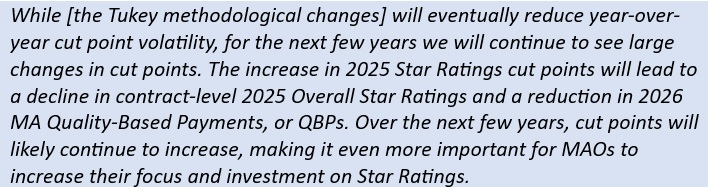
This week’s In Focus highlights a white paper that Wakely, a Health Management Associates, Inc. (HMA), company published in September 2024, titled “A Cut Above the Rest: Summary of 2025 Star Rating Cut Point Changes.” The paper provides an in-depth analysis of the latest cut point changes from the Centers for Medicare & Medicaid Services (CMS) to demonstrate how policies like the Tukey Outer Fence Outlier removal logic (Tukey), guardrails, and changes in overall quality performance have led to the highest Medicare Advantage (MA) Star Rating cut points in the program’s history.

Why Cut Points Matter

MA Star Ratings are a critical measure of the quality and performance of MA plans. The MA Star Ratings cut points are the thresholds CMS has set to evaluate the performance of MA plans. These ratings, ranging from 1 to 5 stars, are based on various quality measures, including clinical outcomes, patient experience, and plan administration. CMS applies methodologies such as Tukey to set the cut points and guardrails to stabilize them over time. MA plans are evaluated and earn a rating that is based on their performance against the cut points. Higher Star Ratings can lead to increased enrollment and higher payments from CMS, making them a key focus for MA organizations.

Key Findings

Wakely used the 2025 Star Rating Technical Notes to analyze measure-level cut point changes. The data summarize how Medicare Advantage organizations (MAOs) performed on various quality measures during the 2023 measurement year. Notably, the Tukey methodology was applied for the first time within the 2024 Star Ratings cut points. Initially, the full impact of this methodology was evident in the initial 2024 Star Ratings, but the updated 2024 Star Ratings restricted use of guardrails and spread the impact of Tukey over a few years.

The analysis reinforces expectations for changes in MA spending in 2026, in part because of changes in Medicare Advantage Prescription Drug Overall Star Ratings.

A Cut Above the Rest: Summary of 2025 Star Rating Cut Point Changes, Wakely

Key Considerations

The Star Ratings have been on a steady decline over the last two years while CMS continues to refine and evolve its Star Ratings methodology and areas of focus. Key issues to consider in this climate include:

  • MAOs are experiencing significant reductions in quality bonus and rebate payments, which potentially affects opportunities to improve member health outcomes.
  • Strategies to enhance Star Ratings and elevate program quality are crucial for performance and meeting the unique needs of MA enrollees.
  • MA plans and other stakeholders also should consider that as plans optimize performance on certain traditional quality measures, CMS is placing increased emphasis on member experience with their health plan and providers during care.
  • The Star Ratings is an important tool CMS uses to redirect plan focus and resources.

CMS is scheduled to release the final scores and Star Ratings for Star Year 2025 in early October 2024. These ratings will be based on the performance data from the 2023 dates of service. This release will provide MAOs with updated quality and performance metrics, which are used to determine CMS Star Ratings and subsequent quality-based payments.

Connect with Us

For further insights into the Star Ratings and more information on the report, contact our featured experts below.

Strategies and actions MAOs implement in 2024 and 2025 will affect their 2026 Star Ratings. For further insights into programmatic strategies, best practices for design of meaningful solutions to implement, and approaches to measure the effectiveness of these solutions, explore The HMA Stars Accelerator Solution.

Illinois D-SNP RFP: Highlights and signals of forthcoming trends

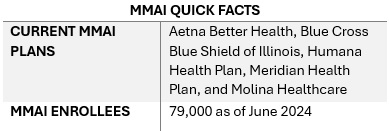
This week, our In Focus section from the HMA Weekly Roundup highlights the Illinois Department of Healthcare and Family Services request for proposals (RFP) for a dual-eligible special needs plan (D-SNP) to replace its current Medicare-Medicaid Alignment Initiative (MMAI) demonstration.

Overview

Illinois is one of the states affected by the Centers for Medicare & Medicaid Services (CMS) decision to end the capitated model in the federal Financial Alignment Initiative (FAI) demonstration. Illinois is among the last states to issue an RFP that will support the transition from the demonstration program. Two states, Texas and South Carolina, have yet to issue RFPs. On September 10, 2024, CMS issued a memo discussing end-of-demonstration enrollment and operational considerations and deadlines by which states should make operational decisions.

The Health Management Associates, Inc., (HMA) In Focus article June 26, 2024, discussed related changes that CMS finalized to the federal policy framework for D-SNPs to enhance care coordination, improve health outcomes, and ensure that dual-eligible beneficiaries receive accurate information about their healthcare while integrating successful features of the FAI demonstration and the Medicare-Medicaid Plan (MMP) program. These decisions are prompting more states to develop new models for integrating Medicare and Medicaid services.

Illinois D-SNP RFP Highlights

This Illinois procurement will transition the state to a fully integrated dual-eligible special needs plan (FIDE-SNP) model, which will include a requirement that plans provide managed long-term services and supports (MLTSS) for both people who are dually eligible and Medicaid-only beneficiaries beginning in 2027.

The RFP is largely focused on quality care provisions and improved care coordination across all services lines, including overall expectations to achieve the following:

  • Improved access and quality of community-based behavioral health services
  • Better quality of care in facilities
  • Fewer program opt-outs
  • A strategy for increasing the use of alternative payment models (APMs) in Medicaid managed care in Illinois, particularly for behavioral health providers

Emerging National Trends

Overall, the Illinois D-SNP procurement reflects broader national trends toward more coordinated, equitable, and outcome-focused healthcare.

Focus on Health Equity. The procurement emphasizes health equity and reducing disparities, including information on innovations that are responsive to health-related social needs (HRSNs) and social determinants of health (SDOH). The state is weighing payers’ experience partnering with non-traditional providers to meet Medicaid customers’ needs, their innovative programs to address customers who are difficult to locate, and their strategies for improving care for adults with complex needs in facility or community-based settings.

In addition, the state will require plans to report outcomes by race, ethnicity, and geography. Given the demographic and health equity reporting requirements, payers should be prepared to speak to their data collection, member engagement strategies, and relationships with community-based organizations. This capability will be an essential component of addressing both population health and health equity activities.

Alternative Payment Models. The RFP also requests detailed information on the payer’s strategy for increasing the use of APMs in Illinois Medicaid managed care, including the models the payer intends to implement. Experience supported by data-driven outcomes and explanations of work with providers or clinics to adopt, manage, and support reporting and analytics for APMs is a key area of interest for the state. Notably, the state seeks information on plans to include behavioral health providers in APMs.

Long-Term Services Related Transitions. The RFP questions also reflect the long-term services and supports that dually eligible beneficiaries need, as well as those of Medicaid-only beneficiaries who are eligible for these services. More specifically, the RFP raises questions to determine how payers will effectively implement nursing home diversion plans, incentivize hospitals to discharge patients to community settings, and approaches to transition members from institutional settings to the home and community, including by connecting members with supports for HRSNs. Payers will be expected to provide specific examples of their experience and outcomes in other states.

Emerging National Trends

The emphasis on health equity in the Illinois RFP reflects a broader national trend. States are increasingly interested in—and in some situations required—addressing SDOH and reduce disparities, especially for the Medicare and Medicaid dual-eligible population. As a result, payers and other healthcare organizations must develop capacity internally and through external collaborations to build their expertise and evidence base for advancing improvements.

The push for APMs in the Illinois procurement aligns with national efforts to move away from fee-for-service models. Illinois’s inclusion of behavioral health providers in APMs and requiring integrated care models highlights the growing recognition of the importance of mental health in overall health outcomes.

Illinois’s RFP also reflects heightened interest in improving care transitions and coordination. The potential for incentive programs related to community placement and increased focus on nursing home diversion will require innovative plans and a long-term commitment to working with all stakeholders to build on the federal FAI experiences.

What We’re Watching

Responses to the Illinois RFP are due October 18, 2024, and awards are expected to be announced in December. The state anticipates making awards to the top four bidders. Contract execution is estimated July 2025, with implementation January 1, 2026.

As the FAI demonstration ends and CMS’s integration requirements take effect over the next several years, there will be a steep learning curve for states, payers, and other key stakeholders adapting to this evolving environment. Compliance with new CMS rules will be crucial, and experiences in Illinois and other FAI demonstration states can provide valuable insights for other states and stakeholders.

Additional growth and program refinements in the federal Medicare Advantage (MA) landscape are expected in the coming years, especially among MA D-SNPs. Those MA D-SNPs that have yet to participate in Medicaid will need to continue make significant business decisions on participation and actively compete to secure state Medicaid contracts, which will have downstream implications for their state and local partners.

Connect with Us

Health Management Associates (HMA) experts continue to review the evolving landscape and federal changes that will affect D-SNPs in 2025 and beyond. Contact our featured experts below for details about the nationwide D-SNP rules and landscape.

Countdown to HMA’s fall 2024 conference: Spotlight on Medicare-Medicaid integration

The upcoming HMA event, Unlocking Solutions in Medicaid, Medicare, and Marketplace, offers extensive opportunities to engage with leaders from various sectors who are designing and implementing Medicare-Medicaid integration initiatives. Join us for main stage panel discussions with distinguished health plan executives from national and local plans and Medicaid directors from Iowa, New Mexico, New York, and Rhode Island.

HMA Principal Holly Michaels Fisher will lead a deeper dive into integration issues during the breakout session, Innovations to Improve Outcomes for Medicare-Medicaid Dually Eligible Individuals, with speakers Michael Carson, President and CEO of WellCare; Dr. Steven R. Counsell, Medical Director for the Division of Aging at Indiana Family and Social Services Administration; Dr. Linda Kurian, Executive Medical Director for the Center of Excellence of Medicare Duals/D-SNP at Aetna; and Juliet Marsala, Deputy Secretary for the Office of Long-term Living in the Pennsylvania Department of Human Services.

During the breakout, Meeting New Expectations for Health Equity and Improved Beneficiary Outcomes in Medicare Advantage, HMA Principal Greg Gierer will facilitate a conversation on the evolving landscape of MA rates and supplemental benefits, with experts Melinda Buntin, Health Economist and Bloomberg Distinguished Professor at the Johns Hopkins Bloomberg School of Public Health and the Johns Hopkins Carey Business School; Mark Fendrick, Director of the University of Michigan’s Center for Value-Based Insurance Design, and Matt Kazan, Vice President of Policy and Government Affairs at the SCAN Group.

Online registration ends October 1st.

Navigating the impact of Medicare drug price negotiations: insights and future considerations

This week’s second In Focus continues the conversation on drug policies and trends, providing updates and insights into the current landscape of Medicare’s drug price negotiations.

The Centers for Medicare & Medicaid Services (CMS) recently released the negotiated prices for the first 10 Medicare Part D drugs under the Inflation Reduction Act’s (IRA’s) negotiation authority. CMS plans to add more drugs to the negotiation list, including 15 additional Part D drugs in 2027 and 15 more products from both Part D (pharmacy benefit drugs) and Part B (mostly physician administered drugs). In 2029 and later years, another 20 drugs from either Part B or Part D will be chosen.

Negotiated Prices for First 10 Drugs Leave Unanswered Questions

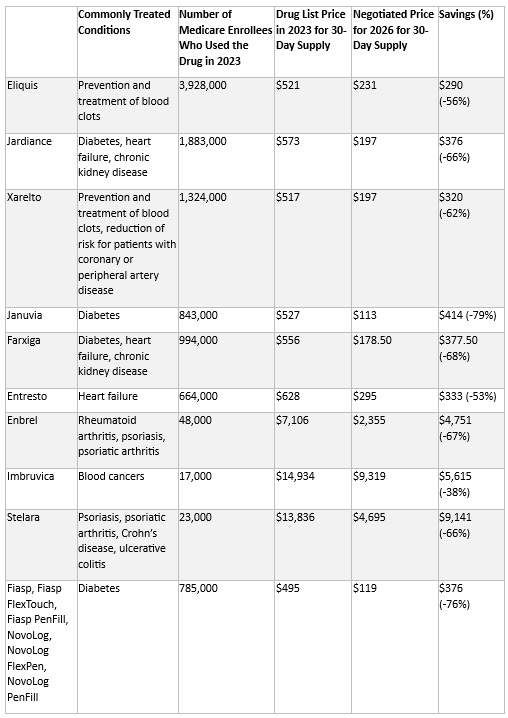
CMS estimates the negotiated prices for 30-day supplies of each medication will result in savings ranging from 38 percent to 79 percent compared with list prices when they take effect in 2026. This comparison, however, does not account for several factors that could affect the actual savings for the Medicare program and beneficiaries, including:

  • Current negotiated discounts available to Medicare Part D plans
  • Changes in tier placement for the negotiated drugs and their impact on patient cost sharing
  • The exemption for manufacturers from the 10 percent discount during the initial coverage phase and the 20 percent discount thereafter once negotiated prices take effect in 2026
  • The effect of Medicare’s negotiations on prices paid by other payers
  • The impact of the IRA program on prices for other products and manufacturer investments in research and development of new products

CMS is required to provide a detailed explanation of how negotiated prices were determined by March 1. The price comparisons with privately negotiated prices, however, will remain unclear and the effects on other payers and longer-term investments in new products may not be fully understood for some time. The table below lists the negotiated discounts for the first 10 drugs, which CMS selected from the top 50 Part D drugs by spending, which lacked generic or biosimilar alternatives and met other IRA criteria.

Negotiated Drug Prices Applicable in 2026

A table titled "Negotiated Drug Prices Applicable in 2026"
Source: CMS – Medicare Drug Price Negotiation Program: Negotiated Prices for Initial Price Applicability Year 2026. August 2024.

Looking Ahead

Age of Products and Role of Generic and Biosimilar Competition: Drugs eligible for negotiation are typically the highest expenditure drugs that have been on the market for at least seven years or 11 years in the case of biologics. Importantly, products with generic or biosimilar competition are exempt from negotiation. This exemption may increase the speed at which biosimilar or generic competition comes to market, as the IRA requires competitors to engage in bona fide marketing to exempt an innovator from negotiation. Despite approval, biosimilars for some of the drugs will remain subject to negotiated prices until their marketing efforts begin.1

Impact on Medicaid and Other Payers: The IRA’s negotiated discounts are not required to be available outside of the Medicare program. It remains uncertain whether other payers will use Medicare-negotiated prices as leverage in their own negotiations. For Medicaid, the direct impact of negotiations themselves is expected to be negligible; however, the IRA’s inflation penalties could encourage more manufacturers to moderate price increases over time, potentially leading to reduced inflation penalty rebates to state Medicaid programs.

Connect with Us

To explore these topics further, join Health Management Associates at the upcoming event, Unlocking Solutions in Medicaid, Medicare, and Marketplace. Engage with our Medicare experts below who will lead a small group discussion on trends in prescription drug policies during the pre-conference workshop.

For details on IRA pricing issues or other Medicare health policy developments, contact our featured experts below. HMA’s Wakely Actuaries also are available to discuss the IRA’s role in Medicare Part D.
HMA conference keynote speaker discusses innovation in Medicaid, Medicare, and Marketplaces

Given that 50 percent of Americans have publicly funded health insurance—including Medicare, Medicaid, or Affordable Care Act Marketplace plans in which many premiums are subsidized—the need is growing for innovations that will yield better quality at lower total cost. The Health Management Associates (HMA) Fall Conference, Unlocking Solutions in Medicaid, Medicare, and Marketplace, offers an agenda that dives deeply into the latest innovations and opportunities in these critical programs. Focused on improving collaboration and information sharing, the event will explore strategies and practical solutions to reduce health disparities and enhance outcomes for aging, disabled, and chronically ill people.

The federal government recently created the Advanced Research Projects Agency for Health (ARPA-Health), which is charged with supporting the development of high-impact solutions to improve health outcomes. We are fortunate to have as our keynote speaker Dr. Darshak Sanghavi from ARPA-H. We have asked him to share his thoughts on why innovation in the public healthcare space is critical.

Dr. Sanghavi will kick off the HMA conference with a discussion on how ARPA-H initiatives are intended to support new solutions to modernize today’s healthcare landscape—not only with technology, but also through changes in our approaches to healthcare delivery and payment.

Only a month before the November elections, the HMA conference presents a valuable opportunity to engage with healthcare leaders across the public and private sectors to hear how they are thinking about potential policy and regulatory changes that could affect publicly funded programs and supplemental coverage. Attendees will take home insights and actionable ideas to drive improvements in health and well-being. Join us to shape the solutions that will impact the future of healthcare!

FY 2025 Medicare hospital inpatient final rule to affect hospital margins and administrative procedures

This week, our In Focus section reviews the policy changes that the Centers for Medicare & Medicaid Services (CMS) finalized on August 1, 2024, in the fiscal year (FY) 2025 Medicare Hospital Inpatient Prospective Payment System (IPPS) and Long-Term Acute Care Hospital (LTCH) Final Rule (CMS-1808-F). This year’s IPPS final rule will impact hospital margins and administrative processes beginning October 1, 2024. 

The remainder of our article delves into five of the key policy changes included in the final rule. 

Key provisions in the FY 2025 Hospital IPPS and LTCH Final Rule 

For FY 2025, CMS will modify several hospital inpatient payment policies. We highlight five of these policies because they will have the most significant impact on Medicare beneficiaries, hospitals and health systems, payors, and manufacturers:  

  1. The annual inpatient market basket update and changes to the standardized payment amount  
  2. New technology add-on payment (NTAP) policy changes 
  3. Implementation of the Transforming Episode Accountability Model (TEAM) bundled payment model in 2026 
  4. Hospital wage index changes and labor market adjustments 
  5. Severity of illness increase for housing insecurity social determinants of health (SDOH) codes  

Several of these and other policy changes for FY 2025 will become effective October 1, 2024.  

Market basket update 

Final rule: Overall CMS’s Medicare 2025 Hospital IPPS Rule will increase hospital inpatient payments to acute care hospitals by 2.9 percent from 2024 to 2025, an estimated increase of approximately $2.9 billion after other policy changes are included.  

Health Management Associates (HMA) analysis: CMS’s 2.9 percent increase is largely based on an estimate of the rate of increase in the cost of a standard basket of hospital goods—the hospital market basket. For beneficiaries, this payment rate increase will lead to a higher standard Medicare inpatient deductible and increase out-of-pocket costs. The finalized payment increase (2.9 percent) is larger than the increase included in CMS’s IPPS Proposed Rule (2.6 percent) but continues to fall below economy-wide inflation over the past year (3.5 percent).1,2 Importantly, after accounting for the various policy changes made within the final rule (e.g., wage index reclassifications) we anticipate individual cases will experience an average payment increase of 1.7 percent.  

Transforming Episode Accountability Model 

Final rule: CMS finalized the creation of a new mandatory episode-based CMS Innovation Center methodology—TEAM. Under TEAM, selected acute care hospitals will coordinate care for people with traditional Medicare who undergo one of the following surgical procedures: 

  • Lower extremity joint replacement 
  • Surgical hip femur fracture treatment 
  • Spinal fusion 
  • Coronary artery bypass graft 
  • Major bowel procedure 

Hospitals in the model will assume responsibility for the cost and quality of surgical care through the first 30 days after a Medicare beneficiary leaves the hospital. Hospitals also must refer patients to primary care services to support optimal long-term health outcomes. Hospitals will be assigned to different risk tracks to allow a graduated path to ease in to full-risk participation.  

HMA analysisThe mandatory nature of this model requires hospitals in the selected geographic areas to begin to prepare for implementation of the model requirements in 2026. TEAM builds on and combines previous models such as the bundled payment for care improvement (BPCI) and the comprehensive care for joint replacement (CJR) models. Hospitals in roughly 23 percent (188 of 925) of the nation’s core-based statistical areas (CBSAs) are required to participate in this advanced payment model, with some exceptions, such as hospitals in Maryland and Sole Community Hospitals. Participating hospitals will be required to report various quality measures, and payment will be based on spending targets and include retroactive reconciliation. Reimbursement under the model will follow four different tracks, which vary by the level of upside and downside risk that the hospital accepts and with a specific track for safety net hospitals. 

Hospital Wage Index Adjustments and Labor Market Changes  

Final rule: CMS finalized two wage index policies for FY 2025. First, CMS extended the temporary policy finalized in the FY 2020 IPPS/LTCH PPS final rule for three additional years to address wage index disparities affecting low wage index hospitals, which includes many rural hospitals. Second, as required by law, CMS revised the labor market areas used for the wage index based on the most recent CBSA delineations issued by the OMB based on 2020 Census data. 

HMA analysis: The two wage index policy changes for FY 2025 will have important positive and potentially negative consequences on hospital payment. The policy to extend the low wage index policy for three more years will allow many hospitals with low wage indexes to increase their wage index and their payment rates across all Medicare severity diagnosis-related groups (MS-DRGs). 

Specifically, the roughly 800 hospitals with wage indexes below 0.9007 (the 25th percentile across all hospitals) will automatically receive an increase in their wage index and payment rates for all inpatient cases. This policy will bring additional millions of dollars to individual rural hospitals in FY 2025. The second policy is a statutorily required update to the labor markets used to establish CMS’s hospital wage indexes. To implement this policy, CMS will use US Census Bureau data to redefine urban and rural markets. As a result, CMS will redefine 53 urban counties as rural and will newly redefine 42 rural counties containing a hospital as urban. These changes will disrupt various hospital payment policies for hospitals in these counties. The overall impact of both geographic policy changes for FY 2025 will be to increase inpatient payment rates to rural hospitals.  

Revision to Social Determinants of Health Housing Insecurity Diagnosis Coding 

Final rule: CMS finalized a change in the severity designation of the seven ICD-10-CM diagnosis codes that describe inadequate housing and housing instability. Under the final rule, these codes are changing from non-complication or comorbidity (non-CC) to complication or comorbidity (CC) based on the higher average resource costs of cases compared with similar cases without these codes.  

HMA analysis: This new policy will enable hospitals to receive higher inpatient payment rates when they provide care for patients with inadequate housing or housing instability are served. Specifically, this policy change will result in assigning cases involving patients with one of these codes to a higher-level MS-DRG. Hospital staff will want to ask patients about their housing upon admission and discharge to accurately document this critical SDOH characteristic.  

New technology add-on payments 

Final rule: CMS finalized three changes to the NTAP program and approved several products for NTAPs in FY 2025.  

HMA analysisCMS seems willing to increase NTAP payments in certain limited situations to boost selected policy goals but rejects comments seeking to increase the percentage for sickle cell products or expand the higher payments to other medical conditions. In addition, portions of the final rule indicate that CMS is applying some of the criteria for NTAPs more strictly than in recent years. If this trend continues, it may be more difficult for future new technologies to be approved for NTAPs. 

Connect with Us

HMA’s Medicare Practice Group works to monitor legislative and regulatory developments in the inpatient hospital space and assess the impact of inpatient payment, quality, and policy changes on the hospital sector. We will continue to follow these and other changes happening to hospitals and are available to provide additional detail on these or other policies in the final rule. If you have any questions, please contact our featured experts below.

HMA celebrates 59th anniversary of Medicaid and Medicare

This week, Health Management Associates (HMA) shifts In Focus from a newsworthy development to commemorate a seminal event in the expansion and strengthening of healthcare access in the United States. On July 30, 1965, Medicaid and Medicare were signed into law under Title XVIII and Title XIX of the Social Security Act. Today we celebrate the 59th anniversary of this pivotal moment in America’s healthcare journey.

Medicaid: A Critical Safety Net that Remains Strong

All states, the District of Columbia, and the U.S. territories have Medicaid programs designed to provide health insurance coverage for low-income individuals. As of March 20241, 82,751,338 people, including eligible low-income adults, children, pregnant women, older adults, and people with disabilities are covered under their state’s Medicaid program in accordance with federal requirements. The COVID-19 pandemic underscored just how important this safety net program is for American families, as it continued to deliver vital services during unprecedented times.

Beyond its traditional role, Medicaid also drives significant innovations in care for people with complex conditions and challenges. States have implemented various programs and initiatives to improve healthcare quality and outcomes. These include:

  • Managed Care Expansion: Many states have expanded Medicaid managed care programs to enhance care coordination and improve health outcomes.
  • Value-Based Care Models: Innovations in value-based care are being tested, aiming to link reimbursement to quality of care and patient outcomes rather than volume of services.
  • Integration of Behavioral Health: Several states are integrating behavioral health services into Medicaid to address mental health and substance use disorders more effectively.
  • Telehealth: The pandemic accelerated the adoption of telehealth services in Medicaid, expanding access to care and reducing barriers for patients.

Medicare: Leading in Innovation and Coverage

Medicare provides coverage to more than 60 million seniors and people with disabilities. In addition to being a lifeline for so many Americans, Medicare is a force for innovation in health policy, piloting changes to payment and care delivery through the Innovation Center and through Medicare Advantage plan design. Key innovations include:

  • Alternative Payment Models: The Innovation Center has been at the center of piloting various alternative payment models to improve quality and reduce costs.
  • Medicare Advantage Enhancements: Medicare Advantage plans continue to evolve, offering more comprehensive benefits that include mental health and substance use disorder services and integrating additional services such as dental, vision, and wellness programs.
  • Chronic Care Management: Medicare is expanding its focus on chronic care management, providing additional resources and support for individuals with chronic conditions.

HMA’s Commitment to Medicaid and Medicare

Since HMA’s founding, our experts have helped states, plans, providers, and other stakeholders deliver the full spectrum of Medicaid and Children’s Health Insurance Program (CHIP) services. As HMA has evolved, we have built a leading-edge Medicare team that includes former agency officials, plan leaders, policy and data analysts, and actuaries. Healthcare plans, providers, and innovators call upon our colleagues to anticipate policy and regulatory change, develop and support Medicare Advantage business, transform fee-for-service programs, and support access to new technologies and treatments that can both improve quality patient outcomes and reduce costs of care.

Our growing team of includes 10 former state Medicaid directors and many more former state agency leaders, hospital and health plan executives, senior officials from the Centers for Medicare & Medicaid Services (CMS), and public health leaders.

HMA Colleagues Who Are Former Medicaid Directors Looking Ahead

Headshot of Kathy Gifford

Kathy Gifford

Principal

Headshot of Farah Hanley

Farah Hanley

Regional Director

Headshot of Beth Kidder

Beth Kidder

Regional Director

Headshot of Chuck Milligan

Chuck Milligan

Chief Executive Officer

Headshot of Matt Powers

Matt Powers

Senior Advisor

Headshot of Patrick Tigue

Patrick Tigue

Senior Vice President, Practice Groups

Anya Wallack, PhD

Anya Wallack

Principal

HMA’s Top Medicare Experts

Headshot of Amy Bassano

Amy Bassano

Senior Advisor

Headshot of Julie Faulhaber

Julie Faulhaber

Senior Advisor

Headshot of Holly Michaels Fisher

Holly Michaels Fisher

Senior Advisor

Headshot of Zach Gaumer

Zach Gaumer

Regional Director

Headshot of Kevin Kirby

Kevin Kirby

Senior Advisor

Headshot of Rachel Kramer

Rachel Kramer

Senior Principal

Headshot of Wendy Radunz

Wendy Radunz

Managing Principal

Headshot of Kelsey Stevens - Wakely

Kelsey Stevens

Chief Executive Officer

Looking Ahead

As Medicaid and Medicare near their seventh decade, the programs will continue to evolve and change to better support covered individuals and meet the demands of policymakers and taxpayers. HMA experts are committed in service of this important mission, and we are excited about building their future together with our clients to create more innovative, high-quality care that improves health outcomes for all.

  1. April 2024 Medicaid & CHIP Enrollment Data Highlights | Medicaid ↩︎

CMS invites states to apply for transforming maternal health model

This week, our In Focus section reviews the notice of funding opportunity (NOFO) for the Transforming Maternal Health (TMaH) Model, which the Centers for Medicare & Medicaid Services (CMS) Center for Medicaid and Medicare Innovation (the Innovation Center) announced on December 15, 2023. States interested in participating in this model must submit an application to CMS during the competitive application process.  

As described in a December 2023 In Focus, pregnancy-related deaths have more than doubled since 1987 to 17.6 deaths per 100,000 live births, with health disparities only worsening outcomes for different racial and ethnic groups. For example, the pregnancy-related mortality rates for Black and Native American and Alaska Native people are approximately two to three times higher than the rate for White people. In recent years, 38 states have extended postpartum coverage, and 11 states now offer doula coverage for Medicaid enrollees. This initiative accelerates the focus on maternal outcomes and, with Medicaid paying for nearly 43 percent of births, has the potential to affect health across generations. 

This model is designed exclusively to improve maternal healthcare for people enrolled in Medicaid and the Children’s Health Insurance Program (CHIP). The TMaH model takes a whole-person approach to pregnancy, childbirth, and postpartum care, addressing the physical, mental health, and social needs people experience during pregnancy. 

Model Overview 

Up to 15 participating state Medicaid agencies (SMAs) will receive as much as $17 million over the 10-year period to develop a value-based alternative payment model for maternity care services, with the intention of improving quality and health outcomes and promoting the long-term sustainability of services. TMaH will focus on three pillars: 

  • Access to care, infrastructure, and workforce capacity 
  • Quality improvement and safety 
  • Whole-person care delivery  

The TMaH model is designed to support birthing persons along their care journey, expanding continuity, and improving outcomes. 

During the model’s first three years, states will receive targeted technical assistance to achieve pre-implementation milestones. The table below highlights the key activities in the pre-implementation phase. 

Following pre-implementation, participants will enter a seven-year implementation period during which the SMAs will implement the program with partners, such as managed care organizations (MCOs), perinatal quality collaboratives, hospitals, birth centers, health centers and rural health clinics, maternity care providers, and community-based organizations. 

In year four, states will offer partnering providers and care delivery sites upside-only performance payments from state funds (no cooperative funds may be used). In year five, states will transition partner provider and partner care delivery locations to a new value-based payment model. CMS will lead the development of the value-based model, and it will be finalized during the pre-implementation period. 

The model also requires a health equity plan, which has been a consistent requirement across models from the Innovation Center. Awardees must develop a plan that addresses disparities among underserved populations, such as racial and ethnic groups and people living in rural areas, who are at higher risk for poor maternal outcomes. 

State Medicaid Agency Requirements 

For states considering TMaH, the NOFO outlines the requirements for participating SMAs, which include: 

  • States must include CHIP if pregnant people receive services through CHIP 
  • States that have managed care plans must contract with at least MCO for implementation 
  • Collaborate with partner providers (e.g., OBs, midwives, doulas), care delivery location (e.g., hospitals, birth centers, federally qualified health centers), and partner organizations 
  • Collaborate in the process to create cost and quality benchmarks with CMS 
  • Be actively involved in technical assistance activities, including attending regularly scheduled calls, providing input and working on portions of documents as appropriate 
  • Execute the data-sharing agreements necessary to support the exchange of data and information related to the TA activities and completion of milestones 
  • Provide CMS and contractors the necessary information and data to support the development of documents to help reach milestones 
  • States must demonstrate their ability to meet these requirements as part of the NOFO process, and CMS will evaluate their responses as part of the selection process 

TMaH Opportunities and Considerations 

The model offers states resources and technical assistance to develop value-based alternative payment models to support whole-person pregnancy, birth, and postpartum care and improved outcomes. Many SMAs already are working on programs to innovate care and payment, and the TMaH is an opportunity to expand and accelerate those programs. 

The model offers an opportunity for states that have yet to expand postpartum coverage or added doula benefits to adopt these policies with the funding and technical assistance they may need to support their efforts. 

SMAs interested in this opportunity should evaluate their application readiness and pre-plan for the application. 

What’s Next? 

States interested in TMaH should submit a letter of intent by August 8, 2024. Applications are due by September 20, 2024, and the model is expected to start January 2025. 

The Health Management Associates team will continue to evaluate the TMaH model as more information becomes available. For more information, contact our featured experts below.
Zeroing in on Medicare Advantage policies set to transform the SNP landscape beginning in 2025

Regulatory policy changes finalized by CMS aim to increase the percentage of dual-eligible individuals enrolled in integrated plans 

This week, our In Focus section delves into important and complex regulatory policy changes that affect coverage and services for the 12.9 million individuals who are dually enrolled in both Medicare and Medicaid. These policy changes—which were finalized as part of a broader final rule that the Centers for Medicare & Medicaid Services (CMS) released on April 4, 2023—are designed to increase the percentage of dually eligible people who are enrolled in integrated Medicare Advantage (MA) Dual Eligible Special Needs Plans (D-SNPs). The modifications will be phased in gradually, with certain provisions affecting D-SNPs starting in 2025. These adjustments forge a stronger connection between state-level policy and operational decisions, shaping the future landscape of D-SNPs. 

Overview 

Amid rapid growth of D-SNP plan offerings and increased enrollment of dually eligible individuals into D-SNPs, CMS has finalized an interconnected set of regulatory policy changes to increase enrollment in integrated plans while simplifying coverage and plan options for this population.   

By promoting enrollment in integrated plans, CMS seeks to improve the care experience and outcomes for dually eligible individuals, with the ultimate goal of making integrated plan enrollment the standard. Integrated D-SNP plans, which consolidate Medicare and Medicaid services under one managed care organization, offer uniform consumer protections (including unified grievance and appeals process), integrated plan materials, and more coordinated care. 

Key policy changes include:  

  • Replacing the current quarterly special enrollment period (SEP) with a monthly SEP for dually eligible and other low-income subsidy (LIS) individuals to enroll into a standalone prescription drug plan (PDP) 
  • Establishing a new integrated care SEP that will enable dually eligible individuals to choose an integrated D-SNP plan on a monthly basis 
  • Restricting enrollment in certain D-SNPs to individuals also enrolled in an affiliated Medicaid managed care organization (MCO) 
  • Limiting the number of D-SNPs an MA organization can offer in the same service area as an affiliated Medicaid MCO to reduce and simplify plan offerings for dually eligible individuals. 

What Issue is CMS Trying to Solve? 

CMS intends to make it easier for dually eligible people make enrollment decisions. Simplified plan options and more integrated care could prevent beneficiaries from inadvertently selecting plans that fail to provide the comprehensive Medicare and Medicaid benefits they need. 

This shift toward aligned enrollment could improve beneficiary experiences, enhance outcomes, and streamline administrative processes for CMS. The introduction of a monthly SEP specifically for dually eligible individuals enrolled in Medicaid managed care plans underscores CMS’s commitment to facilitating enrollment in affiliated D-SNP plans throughout the year. Health Management Associates (HMA) experts expect these changes to affect the sales cycle for dual eligibles and potentially increase member satisfaction, expand access to care, and improve overall health outcomes for this population. 

Timeline of Regulatory Changes 

Considerations for Health Plans  

The impact on individual health plans hinges on state-specific approaches to dually eligible beneficiaries and D-SNPs, as well as each plan’s strategy for integrating Medicare and Medicaid services.  HMA experts identified the following key factors as essential for understanding and monitoring these interconnected dynamics:  

  • Does the state administer managed Medicaid, and if so, does it include the dually eligible population? 
  • Does the Medicare D-SNP (or an affiliated/ related company) hold a state Medicaid contract that covers dually eligible individuals?  
  • What is the state’s vision regarding duals and D-SNPs? 
  • Does the state require its Medicaid contractors to offer a D-SNP? 
  • Does the state currently or plan to restrict D-SNPs to their Medicaid contractors? 
  • Is the state moving toward an exclusively aligned enrollment model? 

What’s Next  

The changes in D-SNPs present opportunities and risks for beneficiaries, MA and Medicaid health plans, and states. Successful navigation of these changes requires proactive planning and anticipation of forthcoming federal and state regulations. Health plans operating within the D-SNP space must actively engage with state Medicaid agencies to understand and potentially help shape this evolving environment. For example, health plan strategies may include: 

  • Understanding the state’s priorities and its current and planned approach to integrated care for dually eligible individuals 
  • Participating in and/or advocating for stakeholder meetings with the state regarding dually eligible members and D-SNPs to ensure the opportunity to shape regulations 
  • Developing internal integration strategies that align product design, operations, quality, clinical, and member experience capabilities for D-SNPs and Medicaid 
  • Strategically planning actions, such as participating in Medicaid procurements, to achieve the plan’s objectives 

Connect with Us  

These regulatory changes significantly affect dually eligible beneficiaries, states, and both Medicare and Medicaid health plans. Though some changes may disrupt the duals’ market, others align state objectives with plan strategies. Ultimately, dually eligible individuals with full benefits will gain the most, experiencing improved opportunities to choose suitable plans, access necessary care, and achieve optimal health outcomes and well-being.  

For further insights into these upcoming changes, view the D-SNP Growth and Integration: Key Implications of the 2025 CMS Final Rule webinar, featuring our experts below. Join them and other experts at HMA’s Fall Conference to stay informed about the strategic directions plans and states are pursuing.

Ready to talk?