
This week, our In Focus section reviews preliminary 2020 Medicaid spending data collected in the annual CMS-64 Medicaid expenditure report. After submitting a Freedom of Information Act request to the Centers for Medicare & Medicaid Services (CMS), HMA received a draft version of the CMS-64 report that is based on preliminary estimates of Medicaid spending by state for federal fiscal year (FFY) 2020. Based on the preliminary estimates, Medicaid expenditures on medical services across all 50 states and six territories in FFY 2020 exceeded $649.4 billion, with over half of the total now flowing through Medicaid managed care programs. In addition, total Medicaid spending on administrative services was $29.7 billion, bringing total program expenditures to $679.1 billion.
327 Results found.

Medicaid managed care enrollment update – Q4 2020
This week, our In Focus section reviews recent Medicaid enrollment trends in capitated, risk-based managed care in 33 states.[1] Many state Medicaid agencies post monthly enrollment figures by health plan for their Medicaid managed care population to their websites. This data allows for the timeliest analysis of enrollment trends across states and managed care organizations. All 33 states highlighted in this review have released monthly Medicaid managed care enrollment data into the fourth quarter (Q4) of 2020. This report reflects the most recent data posted. HMA has made the following observations related to the enrollment data shown on Table 1 (below):

New report supports state Medicaid programs in advancing health justice
Rates of illness and death due to the COVID-19 pandemic have disproportionally impacted Americans who are Black, African American, Latinx, Native American, Asian, and other people of color as well as people with disabilities and those subsisting on poverty-level income. In response to this, AcademyHealth, in partnership with the Disability Policy Consortium (DPC), a Massachusetts-based cross-disability advocacy and action research organization, released a new report: Advancing Health Justice Using Medicaid Data: Key Lessons from Minnesota for the Nation. This report provides information on the importance of investing in data analysis to advance health justice in Medicaid populations. It further highlights the importance of partnering with communities most impacted by injustices that cause inequities in health outcomes.

MACPAC report examines Medicaid services for ID/DD populations
In a report to the Medicaid and CHIP Payment and Access Commission (MACPAC), HMA consultants Sarah Barth, Sharon Lewis and former research assistant Taylor Simmons, provided insight and review of Medicaid services for people with intellectual or developmental disabilities (ID/DD).

CMS Innovation Center’s Geographic Direct Contracting Model opportunity
This week, our In Focus section reviews a new model – Geographic Direct Contracting – introduced by the Centers for Medicare & Medicaid Services (CMS) Innovation Center. The model will test whether a geographic-based approach to care delivery and value-based care can improve health and reduce costs for Medicare beneficiaries enrolled in the traditional fee-for-service program across an entire region. This model represents one of the most transformational models released by the Innovation Center. During the 6-year Geographic Direct Contracting model performance period the traditional Medicare program will be replaced by the Direct Contracting program in the 10 selected regions.

Health Management Associates Launches Institute on Addiction
Health Management Associates (HMA) announced today creation of the HMA Institute on Addiction (IOA), a division dedicated to supporting the national effort to build an evidence-based, patient-centered, and sustainable addiction treatment ecosystem.

HMA expert provides Medicaid funding insights
HMA Managing Principal Anne Winter joined the “Our American States” podcast, produced by the National Conference of State Legislatures, to discuss emerging gene therapies and the high costs associated with them. The episode, The Fiscal Challenge of Emerging Gene Therapies, originally aired Jan. 11, 2021.

HMA and Wakely Consulting Group collaborate on states, Medicaid, and economic hard times report
In the wake of the COVID-19 pandemic and resulting economic crisis, public health, the economy, health coverage, and state budgets saw major impacts with state Medicaid programs at the intersection of these programs and challenges.

HI, MN Rerelease Medicaid Managed Care RFPs
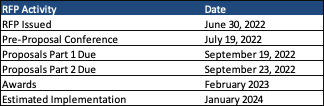
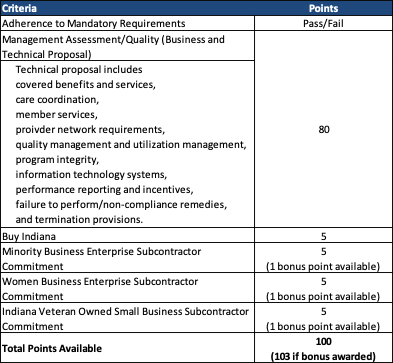
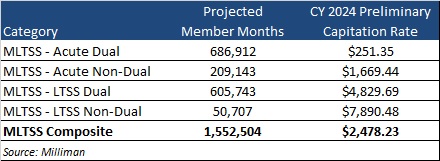
This week, our In Focus section reviews the Hawaii Quest Integration (QI) Medicaid managed care request for proposals (RFP) released on December 8, 2020, and the Minnesota Families and Children Medical Assistance (MA) and MinnesotaCare programs RFP released on January 4, 2021.

2020 Highlights: Key Trends in Medicare-Medicaid Integration
This week, our In Focus section focuses on five critical policy and program trends to provide integrated care to dual-eligible individuals for Medicare and Medicaid. Both federal and state governments continue to look for ways to improve coordination and integration for this population. We anticipate the emphasis on innovative approaches to whole person, person-centered care, care management and coordination, care transitions, and regulatory oversight to persist. 2020 has been an active year of policymaking by the Centers for Medicare & Medicaid Services (CMS) and states. HMA distilled the themes and their strategic implications in this article. We continue to assist clients in tracking new policies and industry trends, developing innovative plans and strategies, and delivering high quality care and services to this population.

The Future of the Affordable Care Act (ACA): Implications of November’s Elections and a Supreme Court Decision
After the November 3 elections, the political landscape will shift as the composition of the next administration, Congress and many state legislatures and governors’ offices begins to take shape. If President Trump is reelected, his administration will position to govern for another four years. If former Vice President Joe Biden is elected, his campaign will accelerate transition planning and prepare actions to implement change immediately upon inauguration. At the same time, on November 10, the Supreme Court is scheduled to hear oral arguments regarding the continued validity of the Affordable Care Act.
The presidential, congressional and state elections, and the Supreme Court’s decision, will drive the future of the ACA and health care coverage in the U.S. While any significant change will take time to implement, uncertainty will require action and planning from all health care stakeholders as they navigate the emerging scenarios and position for future shifts.
During this webinar, HMA and Dentons will discuss the specific pathways that change could take. Specifically:
- What impact could the Supreme Court’s decision have on the ACA, and what is the expected timing of this decision?
- What impact could the November election results have on the Supreme Court’s decision?
- What immediate actions should stakeholders expect for Marketplace and Medicaid coverage as a result of the November elections?
- If Democrats gain control of the White House and Congress, how will Democrats implement campaign pledges, for example to create a public option and expand Medicare to those ages 60 to 65?
- How will the future direction of the ACA impact other health care coverage?
- How would Medicare be affected by the ACA decision and the results of the November elections?
- How should specific health care stakeholder groups (e.g., consumers and patients, health plans, delivery systems, states) respond and prepare for changes?
Speakers
Jonathan (Jon) Blum, MPP, Vice President, Federal Policy and Managing Director, Medicare, HMA
Bruce Merlin Fried, Partner, Dentons’ Health Care Practice
Charles Luband, Partner, Dentons’ Health Care Practice
Kathleen Nolan, Regional Vice President, HMA

North Carolina releases RFA for behavioral health, IDD tailored plans
This week, our In Focus section reviews the statewide North Carolina request for applications (RFA) for Behavioral Health and Intellectual/Developmental Disability (BH IDD) Tailored Plans released by the North Carolina Department of Health and Human Services (DHHS) on November 13, 2020. BH IDD Tailored Plans are part of the statewide effort to transition to Medicaid managed care and are one of the four types of integrated Medicaid managed care plans the state will contract with to serve Medicaid and NC Health Choice beneficiaries. The other three are Standard Plans, the Statewide Specialized Foster Care Plan, and the Eastern Band of Cherokee Indians Tribal Option.