
Insights

HMA Insights: Your source for healthcare news, ideas and analysis.

HMA Insights – including our new podcast – puts the vast depth of HMA’s expertise at your fingertips, helping you stay informed about the latest healthcare trends and topics. Below, you can easily search based on your topic of interest to find useful information from our podcast, blogs, webinars, case studies, reports and more.

Show All | Podcast | Blogs | Webinars | Weekly Roundup | Videos | Case Studies | Reports | News | Spotlight

Filter by topic:

Receive timely expert insights on topics you care about.

Select Topics

1261 Results found.

Blog

CMS AHEAD model offers flexible framework for state-led total cost of care initiatives

Read Blog

This week, our In Focus section reviews the new States Advancing All-Payer Health Equity Approaches and Development (AHEAD) Model, which the Centers for Medicare & Medicaid Services (CMS) Center for Medicaid and Medicare Innovation (the Innovation Center) announced on September 5, 2023. AHEAD is the third major model that the Innovation Center has introduced to its payment portfolio since July, clearly signaling that CMS has transitioned from conducting its internal review to laying the groundwork for action on approaches that will be tested over the next decade.

CMS views this model as the next iteration of earlier total cost of care (TCOC) models that were designed and tested in three states—Maryland, Vermont, and Pennsylvania. The AHEAD model includes several important updates based on its experience with these earlier models. For example, the AHEAD model is designed to be scalable in multiple states. Although it most certainly will be adapted to state-specific markets, landscapes, and provider needs, CMS intends to apply a consistent framework across participating states.

Additionally, though Medicare has been involved in formulating some state-level total cost of care initiatives, the AHEAD model promises specific investments in primary care and enhanced member engagement to support all-payer movement toward patient-centered care.

AHEAD Model Parameters

The goal of the AHEAD Model is to improve population health and health equity in states that apply and that CMS selects for participation. CMS plans to select up to eight pilot states, each eligible to receive up to $12 million to support statewide implementation over a six-year period. States will be accountable for constraining overall growth in healthcare expenditures. Requirements centered on health equity mirror other CMS policies and are integrated throughout the model.

The model focuses heavily on strengthening primary care. The primary care AHEAD component includes Medicare reimbursement for care management, a commitment to align with ongoing Medicaid transformation efforts, and expectations for primary care practices to achieve certain goals on quality measures.

The investments in primary care are paired with global budgets for hospitals. Participating hospitals will receive a fixed payment that will include both Medicare fee-for-service and Medicaid. States will need to ensure participation among other payers, including at least the state employee health plan, Marketplace Qualified Health Plans, or other commercial payers in the state or sub-state region. Other payers will have the option to pay participating hospitals based on a global budget.

All-Payer Health Equity Approaches and Developments (AHEAD)

Source: https://www.cms.gov/files/document/ahead-infographic.pdf

The model will be in operation 2024−2034, and three cohorts will be to accommodate variation in readiness among participating states and providers. The first cohort pre-implementation period is scheduled to begin in summer 2024, and the performance period is scheduled to begin as soon as January 2026. CMS expects to release additional details in fall 2023.

AHEAD Opportunities and Considerations

The AHEAD Model will need significant gubernatorial leadership and possibly from state legislators, depending upon the particular state’s related healthcare laws, and the model does provide flexibility for interested states and relevant stakeholders to develop programs that are adaptable to their needs.

Health Management Associates (HMA) experts have identified the following list of policies and considerations that states; hospitals, health systems, and provider organizations; other payers, including employers; and other stakeholders will need to bear in mind when determining whether to participate in the program.

  • States will need to describe their partners and provide an assessment of their readiness to implement the AHEAD model. CMS will expect states to address whether they have legislation in place related to primary care investment and/or cost growth. Potential participating states should be able to describe their vision for population health improvement and primary care transformation, a proposed strategy for hospital and primary care provider recruitment, a plan for Medicaid and multi-payer alignment, and their current population health and health equity activities. Interested states will need early input from hospitals and health systems, providers, and other payers to define, develop, and implement a model that accommodates their healthcare landscape.
  • States will develop a Medicaid hospital global budget methodology that must have CMS approval. Medicaid hospital global budgets must be implemented in the first performance year. CMS will develop a standardized Medicare fee-for-service (FFS) hospital global budget methodology, that also accommodates critical access hospitals (CAHs).
  • CMS will set the parameters for quality measurement, but states will have significant flexibility to establish the metrics that will be applied for accountability and bonus purposes. CMS will use the current CMS hospital quality programs as the basis for determining eligibility for a health equity improvement bonus. CAHs will have a similar opportunity. States will work with CMS to set quality measures for participating primary care practices.
  • The model requires a statewide health equity plan. Additionally, participating hospitals will need to create their own health equity plans in alignment with statewide priorities and activities.
  • Participating states will need to generate savings. CMS will identify state-specific factors to determine the level of expected savings. All-payer cost growth targets include Medicare FFS, Medicare Advantage, Medicaid, commercial, state employee health plans, and marketplace-qualified health plans. States will also be responsible for performance on all-payer and Medicare FFS primary care investment targets.

The HMA team will continue to evaluate the AHEAD model as more information becomes available. We also can answer questions about the Innovation Center’s other recently announced models and the linkages with new Medicare and Medicaid regulations. For more information, contact our experts below.


Webinar

Webinar replay: Opportunities for state payers to improve & align incentives for treatment of substance use disorder

Watch Now

This webinar was held on June 6, 2023. 

Health Management Associates (HMA) is proud to offer a 3-part series of webinars looking at the effect of proposed regulations on delivery of opioid treatment services to the population facing addiction issues. In this second webinar, HMA consultants highlighted opportunities for state payers to improve & align incentives so that providers can expand access to treatment enabled by new federal regulations that encourage patient-centered care.

Patients seeking SUD treatment stand to truly benefit from the changes presented in the forthcoming SAMHSA regulations. However, payers need to restructure the reimbursement model to incentivize person-centered care and allow opioid treatment providers to remain fiscally viable without putting undue burden on patients.  The change in regulations present a unique opportunity to advance value-based payment models in the SUD treatment system and expand access to treatment that meets patients where they are.

Learning Objectives:

  • How Payers Can Benefit – Understanding the opportunity for payers to close important gaps in current approaches to SUD treatment.
  • Innovation Inspiration – Learning from other programs to better deliver whole person care.
  • Tackling Challenges – Identifying the likely obstacles and how they can be overcome.

Speaker:

  • Chris Regal, Director, Clinical Innovation, America’s Health Insurance Plans​

Watch the replay of Part 1 of our Opioid Treatment Providers webinar series.

Stayed tuned for information on part 3 of our Opioid Treatment Providers series: Opportunities for State Regulators to Shape Policy and Regulation of Treatment for Substance Use Disorder

Brief & Report

HMA publishes white paper, “Implementing the National Diabetes Prevention Program Lifestyle Change Program in Correctional Settings”

Download

Correctional facilities can decrease the number of individuals with prediabetes who progress to type 2 diabetes by offering the National Diabetes Prevention Program (National DPP) lifestyle change program. HMA has published a white paper describing (1) the financial and individual impact of type 2 diabetes, (2) the prevalence of type 2 diabetes risk factors in correctional settings, and (3) how the National DPP lifestyle change program, which was created by the Centers for Disease Control and Prevention (CDC), can be used to achieve cost savings and better health for people at risk of developing type 2 diabetes in correctional settings.

This white paper also features a program spotlight from the Wisconsin Department of Corrections (DOC), where the National DPP lifestyle change program has successfully been implemented in three state correctional facilities. Wisconsin’s DOC is currently the only correctional system in the United States providing this program that has been awarded full-recognition status as a supplier of the National DPP lifestyle change program by CDC. A total of 131 individuals have participated in the program, and people who completed the program in 2018-2019 lost an average of 8.3 percent of their body weight.

Administrators of correctional settings, where the length of stay is a year or longer, might consider implementing the National DPP lifestyle change program in their facilities. A cogent argument can be made that type 2 diabetes prevention provides a good return on investment in downstream costs. Offering the program would also be an important step in promoting health equity within correctional settings.

For help starting the National DPP lifestyle change program in a correctional facility, contact the white paper’s authors below.                 

Blog

Crisis and Managed Care 

Read Blog

Managed Care Organizations (MCOs) are key partners in ensuring members have access to integrated physical and behavioral health care, which includes a robust, coordinated crisis care continuum. MCOs can also manage early intervention and help prevent crises and high-cost utilization through care coordination. 

CRISIS SYSTEM AND SERVICES 

Mental health and substance use distress has increased nationally and has been exacerbated by COVID-19. The Federal government in partnership with States and localities around the country are working to expand access to effective crisis interventions. The creation of the national 988 suicide and crisis hotline combined with new funding and guidance on mobile crisis services are critical to preventing and responding to behavioral health crises.

Health Management Associates (HMA) consultants have deep experience and expertise designing, operating, and overseeing crisis services. This includes a broad portfolio of current projects, working with a range of state and local policymakers, payers, providers, first responders, and communities to implement robust crisis continuums. 

Opportunities for MCOs 

MCOs can play an important role in informing how crisis services meet the needs of their members, and reduce high cost utilization of emergency departments and inpatient care. HMA can help you identify innovative ways to collaborate with States and community-based organizations to drive real access to crisis prevention and intervention services for individuals and families. This work includes building robust crisis continuum networks that include the full array of options, and best practices in crisis response including diversion from and alternatives to expensive emergency department and hospital visits.

This presents an opportunity for MCOs to play a pivotal role in driving better population health outcomes, expanded health equity, improved member experience, and to ultimately reduce the total cost of care.

Our Expertise and Capabilities: 

Evidence-based and leading edge clinical and operational practices

Cross-sector partnerships with law enforcement, emergency service providers and community partners

System change by connecting policy to practice

Defining and measuring key performance indicators and outcomes

Developing sustainable financing models (e.g., rate setting, reimbursement strategies)

Identifying effective workforce strategies including training and maximizing of multi-disciplinary teams (e.g., peers, behavioral health providers, nurses, licensed health care providers)

Maximizing virtual and technology interventions

988 state planning and implementation support

Designing and implementing crisis receiving and stabilization facilities

Conducting certified community behavioral health clinic (CCBHC) readiness and implementation support

Cross-sector crisis collaboration and partnerships, including emergency management services (EMS) and law enforcement

Crisis call hotline and 911 centers collaboration

Individuals with Medicaid and justice system involvement (e.g., 1115 waivers, reentry, and care coordination during transition from jail/prison into the community)

Approaches, programs, and strategies for individuals with complex care needs and high utilizers

Identifying cross-sector technology and information sharing solutions and best practices

Crisis transportation services and financing models, including least restrictive alternatives to law enforcement transport

How HMA can assist MCOs:

Strategic
Planning

Understanding emerging trends and federal and state policies that impact managed care plans, including maximizing funding streams at state and county levels, 1115 justice waivers and school-based mental health, and including key stakeholders in the planning process.

Design and Implementation

Adopting state Medicaid criminal justice reforms (e.g., in reach, care coordination, Medicaid eligibility); engaging local and county stakeholders in building partnerships with health plans; designing and developing requests for proposals (RFPs), procurement support and readiness reviews; and developing utilization management programs and care coordination strategies.

Training
and Support

Assessing benefit design, and developing standards for network development, management, and adequacy; identifying quality, key performance indicators, monitoring and compliance strategies; identification and implementation of evidence-based practices across the age continuum; and developing training standards and oversight. 

HMA Crisis Portfolio Clients:

Health plans

Federal, state & local governments

Health and behavioral health care providers

Hospitals & health systems

Educational settings and academic institutions

Coalitions and advocates

Associations and foundations

Investors

Criminal justice stakeholders and facilities

Law enforcement

Emergency management services (EMS)

Public health departments

Contact our experts:

Headshot of John Volpe

John Volpe

Principal

John Volpe is an experienced senior health official with a demonstrated record of success at the intersection of health, social … Read more
Blog

Supporting state and local public health collaborative efforts with communities to improve birth outcomes and end racial disparities

Read Blog

HMA has valued recent opportunities to support public health departments to collaborate with communities working to identify and address root causes and ultimately reduce maternal and infant mortality and racial disparities in birth outcomes in Delaware and Maryland.

In partnership with the Delaware Department of Health and Social Services’ Division of Public Health, HMA is in its fourth year of administering a mini-grant program and providing backbone services to community-based organizations. These entities provide wraparound services and a variety of other supports to pregnant and parenting people and their families, with the goal of improving maternal and infant health and reducing racial disparities. We also lead a collective impact evaluation of the programs, working closely with the participating organizations to help them build their capacity to collect and analyze data, developing interim and annual reports, and providing frequent updates to the Division of Public Health and other stakeholders in the state that are collaborating to improve health and wellbeing. HMA provides fiscal and administrative oversight, coaching and evaluation, and convenes the participating organizations for quarterly learning collaboratives, which have contributed to stronger relationships and collaboration among the mini-grantees. In addition, we are implementing and evaluating a guaranteed basic income program as part of the Social Determinants of Health committee of the Delaware Healthy Maternal Infant Consortium (DHMIC). This project is a long-term commitment to collaborating with community-based organizations to build their capacity to address racial disparities and support their work, which is driven by the needs of the people they serve and know best. Grantees are selected through a streamlined process with low administrative burden, prioritizing community input on needed services. Through a collective impact evaluation, the participating organizations are finding positive effects on the self-reported health and wellbeing of program participants.

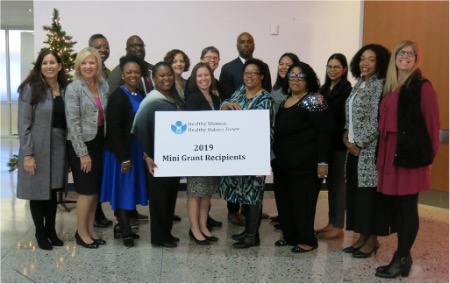
Launch of the first cohort of Healthy Women Healthy Babies Zones Mini-grantees in 2019. Photo Credit: Division of Public Health – Delaware Health and Social Services

With the Frederick County, Maryland Health Department, HMA conducted a study in 2022 using a community-based participatory research (CBPR) approach to understand and articulate drivers of maternal and infant health disparities experienced by Black women in Frederick County. In collaboration with the health department and newly formed Community Advisory Board (CAB), we facilitated a series of in-person retreats to: collect, analyze, and share quantitative and qualitative data regarding disparities and the drivers of those disparities with stakeholders; understand the data and the story behind the health disparity numbers; and develop and deploy additional research methods, such as surveys, key informant interviews, and focus groups, to further explore the lived experience of Black Frederick County mothers. This iterative approach to conducting mixed-methods research uses the CBPR framework to ensure sustained and meaningful community engagement from project start to end. HMA also developed a driver diagram to illustrate how the root cause, systemic racism, directly influences other drivers of Black maternal health disparities such as historic disinvestment in Black maternal health, historical trauma navigating healthcare, low social capital, health insurance availability, and a perceived lack of emotional and physical safety in clinical settings. The diagram will be shared with relevant stakeholders and inform next steps.

In our reproductive health-related work, HMA has guided groups through decision-making processes, with transparency and without bias, and we understand the importance of group dynamics. Bringing decades of real-world public policy and community and key stakeholder facilitation experience, HMA collaborates with a variety of stakeholders and community members to develop and implement public policy at the local and state levels, as well as to evaluate these efforts. Our experience ranges from national, state, and county agencies, to private sector and community-based organizations that partner with governments to implement policy. Our team has extensive experience working with and within organizations to facilitate discussions, listen to and build consensus across sectors, develop strategic plans, and bring diverse perspectives together to promote health and wellness for communities.

See below for the HMA colleagues participating in these projects.

As part of recognizing Women’s History Month, HMA colleagues reflected on recent work to support maternal and infant health and reduce racial disparities in birth outcomes in collaboration with health departments and communities in Delaware and Maryland. More information on our recent projects supporting reproductive health can be found here.

Blog

Value-Based Payment (VBP) – Is your organization ready?

Read Blog

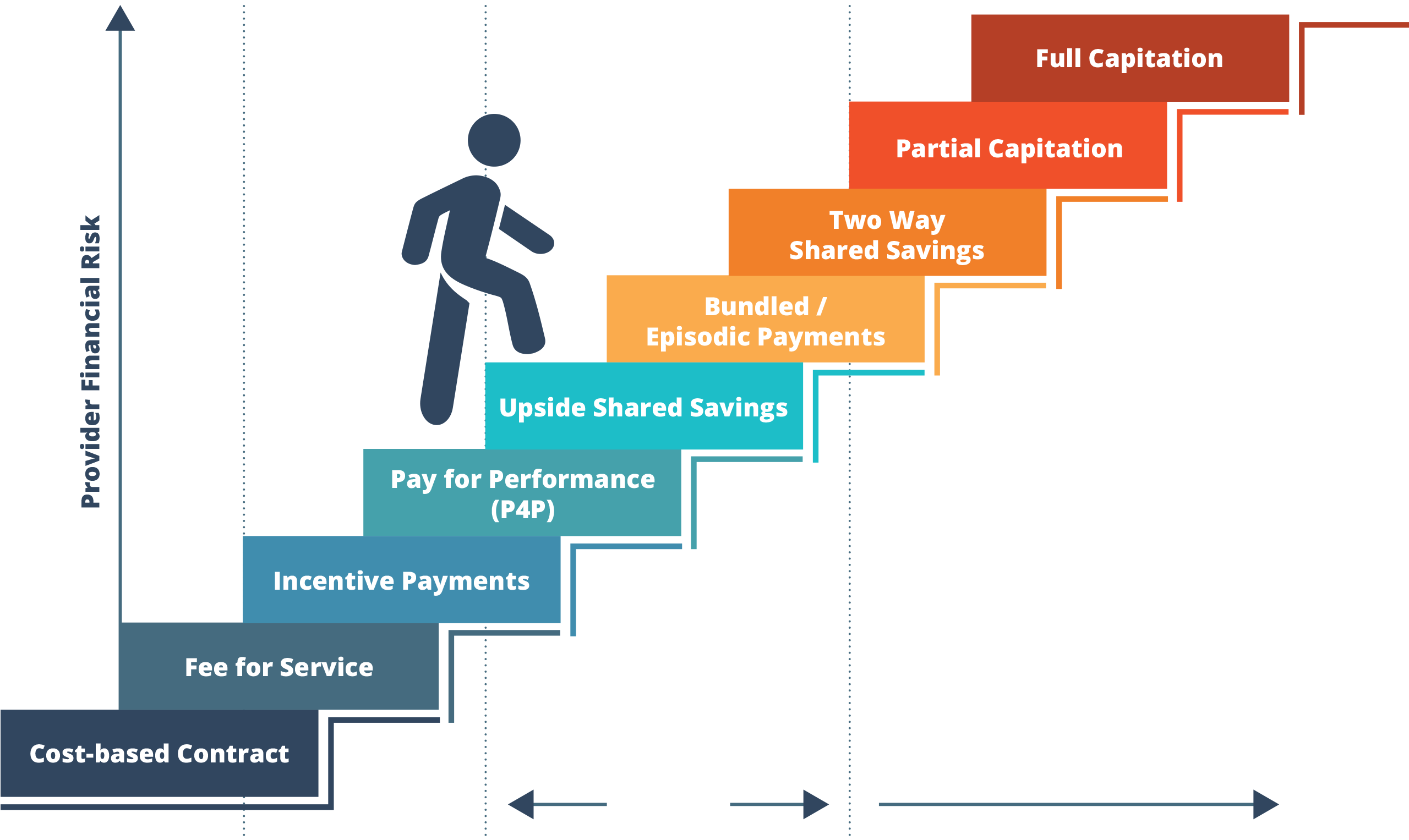
Utilization of value-based payment (VBP) strategies continues to expand, with states and health plans recognizing the benefits of rewarding outcomes over volume. This includes population based VBP initiatives intended to address disparities. Health Management Associates (HMA) is at the center of these initiatives, supporting payers with development and implementation, as well as supporting providers through the transition from a traditional FFS model to maximizing reimbursement through effective care delivery, supported by the necessary administrative infrastructure and resources. As our clients in health care communities move forward with alternative payment models, we have developed tools and strategies to achieve the essential milestones to successful implementation.

Milestone 1: Provider Readiness Assessment

Successful planning for the transition to VBP begins with an understanding of where your organization is starting from, informing the targeted milestones associated with each providers’ unique strengths and challenges.

Understanding that success under VBP models requires adjustment of both clinical and administrative practices, HMA has created an assessment tool that considers the programmatic, financial, and technology resources necessary for VBP implementation. In addition to the ability to leverage these resources, organizations must have the capacity for VBP components such as cost reporting, revenue cycle management, and real time risk monitoring through the collection and analysis of data.  

With VBP on the horizon for our organization, HMA helped us to determine our readiness and to devise a strategy to remediate gaps in operations in order to be successful with the new payment model.

– Tamara Player, CEO; Polara Health, AZ

Milestone 2: Strategy Development and Change Management

A change in reimbursement methodology requires organizational realignment of administrative and programmatic approaches. Assessing and supporting staff through these changes is a key milestone for success. Activities in which HMA have supported our clients include:

Creating leadership and governance buy-in

Preparing the Board and Staff for VBP

Aligning mission and vision with payment models and accountability metrics

Project Management, including development and monitoring of implementation plans

Cross functional team support

Milestone 3: Data Collection and Reporting Capabilities

The ability to collect and report meaningful outcomes is at the core of successful engagement in VBP. Following an assessment of current capabilities, HMA has supported provider organizations in maximizing electronic health record and other data system capabilities to capture data essential for reimbursement, as well as increasing analytic capabilities that are essential for monitoring outcomes to ensure programs can pivot when data indicates outcome achievement may be at risk. Activities include:

Technology and Data Enterprise configuration to support analytics and reporting

Creating real-time access to data

Benchmarking current outcomes against proposed VBP metrics

Alignment of current framework to payer metrics

Creation of internal clinical leadership infrastructure to support proactive monitoring and action in response to data

Milestone 4: Business Office and Finance

All aspects of an organization’s financing can be impacted by transitions in payment methodology, including cash flow, impacting cash on hand for capital and other expenses. Anticipating these changes and adjusting accordingly are key to readiness for VBP and importantly, mitigating risk during the transition. HMA can assist with:

Assessing organizational ability to accept risk

Developing a risk corridor based on organizational readiness

Negotiating alternative payment arrangements with payers

Milestone 5: Clinical Programmatic Approaches under VBP

VBP arrangements provide opportunities for organizations to move closer to the goal of achieving outcomes for their clients, rather than productivity targets and units of service. This includes incorporating approaches that could not receive reimbursement under an FFS model. With this flexibility comes the opportunity to review and adapt clinical approaches and programming, including population specific strategies. HMA is ready to support these efforts through:

Workforce analysis

Re/design of clinical workflows  

Implementation of measurement-based care

Optimization of clinical templates within the EHR to support data collection and reporting

Understanding the opportunities of value-based payment across the continuum of payment models

While these activities may seem overwhelming, HMA is ready to support your organization to receive reimbursement based on meaningful improvement for your clients through technical assistance and training on each of the core elements outlined above.

Brief & Report

HMA publishes white paper “Restoring Capitation’s Incentives to Advance State Goals Post-Public Health Emergency (PHE)”

Download

HMA has published a white paper examining the use of risk mitigation strategies among state Medicaid programs and assessing their limiting impact on capitation’s incentives for managed care organizations (MCOs). This paper seeks to assist policymakers in designing future Medicaid program payment policies that advance state financial and programmatic goals. This paper offers a timely examination of this topic as state Medicaid programs emerge from the COVID-19 public health emergency (PHE) and navigate the unwinding of Medicaid continuous coverage. This paper also builds upon the Health Management Associates May 2021 white paper, Moving Beyond COVID-19 Public Health Emergency Risk Corridors, which more narrowly focused on appropriate and inappropriate use of risk corridors.

Blog

Health Management Associates selected as CalAIM Technical Assistance vendor

Read Blog

One of only two firms selected in all seven domains out of 46 vendors.

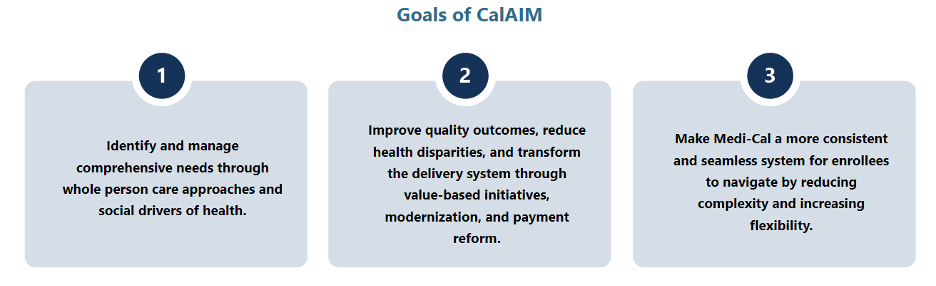
The California Department of Health Care Services (DHCS) has developed a multi-year initiative whose goal is to improve health outcomes and health care quality through broad delivery, payment, and program reforms known as California Advancing and Innovating Medi-Cal (CalAIM). This includes the introduction of new programs and changes to existing programs that will occur over the span of five years. CalAIM further expands upon prior initiatives, such as Whole Person Care, the Health Homes Program, and the Coordinated Care Initiative, and strives to integrate California’s delivery systems to better facilitate the overall Medi-Cal program.

Image source

With the rollout of these programs and the vast requirements associated with them, DHCS and California’s Medi-Cal managed care health plans are now tasked with the challenge of implementing CalAIM and enabling the participation of community providers and partners in these opportunities. To support these partners, DHCS developed a funding initiative, known as Providing Access and Transforming Health (PATH) to aid in strengthening capacity and infrastructure of Community Based Organizations, public hospitals, county agencies, and others to stand up CalAIM. This five-year, $1.85 billion initiative includes the creation of a virtual Technical Assistance (TA) Vendor Marketplace that organizations can use to request resources and support from approved vendors through services that are fully paid for by the State.

Health Management Associates (HMA) is recognized as a valued partner to Payers, Community Based Organizations, public hospitals, and county agencies and has deep expertise in CalAIM policy, operations and implementation. Recognized for our extensive capabilities in the field, HMA is one of only two firms out of 46 vendors that received State approval to serve as a technical assistance vendor on the PATH Technical Assistance (TA) Marketplace for all seven domains:

  • Domain 1: Building Data Capacity: Data Collection, Management, Sharing, and Use
  • Domain 2: Community Supports: Strengthening Services that Address the Social Drivers of Health
  • Domain 3: Engaging in CalAIM Through Medi-Cal Managed Care
  • Domain 4: Enhanced Care Management (ECM): Strengthening Care for ECM Population of Focus
  • Domain 5: Promoting Health Equity
  • Domain 6: Supporting Cross-Sector Partnerships
  • Domain 7: Workforce

HMA also has expertise in and hands-on experience with addressing the unique challenges experienced by providers and partner agencies serving rural communities. Please visit the PATH Technical Assistance (TA) Marketplace to access TA resources that can help strengthen capacity to provide high quality Enhanced Care Management (ECM) and Community Supports services for Medi-Cal members.

Blog

New Hampshire releases Medicaid managed care RFP

Read Blog

This week, our In Focus section reviews the New Hampshire Medicaid Care Management (MCM) request for proposals (RFP), which the state’s Department of Health and Human Services released on September 8, 2023. The new contracts will be worth approximately $1.1 billion and will provide full-risk, fully capitated Medicaid managed care services to approximately 190,000 beneficiaries. Implementation will begin September 2024.

MCM Program

The MCM program covers traditional Medicaid, the Children’s Health Insurance Program (CHIP), and the state’s adult Medicaid expansion Granite Advantage Health Care Program. MCM provides integrated acute care, behavioral health, and pharmacy services. Managed long-term services and supports are not included in the program.

Incumbents are AmeriHealth Caritas, Boston Medical Center/WellSense, and Centene/New Hampshire Healthy Families.

RFP

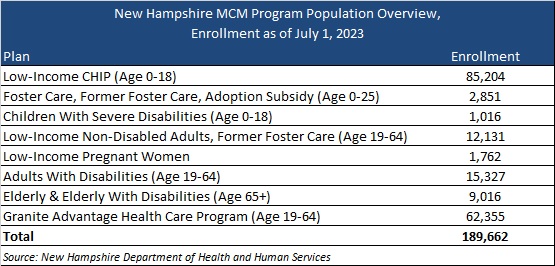
New Hampshire will award contracts to three Medicaid managed care organizations (MCOs). MCOs will cover the populations outlined in Table 1.

Table 1. New Hampshire MCM Program Enrollment as of July 1

The state outlines several key areas of focus within the RFP, including introducing a primary care and preventive services model of care—an approach centered on patient-provider relationships and provider-delivered care coordination. The RFP also will have a greater emphasis on priority populations, such as individuals with inpatient admissions for behavioral health diagnoses; children in the child welfare system; babies with low weight or neonatal abstinence syndrome; and people who are incarcerated and eligible for the Community Reentry demonstration program, pending approval from the Centers for Medicare & Medicaid Services.

Timeline

Mandatory letters of intent are due September 18, 2023, and a mandatory conference will take place September 21. Proposals are due October 30, 2023. An award date has yet to be announced, but the state contract discussions with selected MCOs will occur November 20−December 11, 2023. Contracts will run from September 1, 2024, through August 31, 2029.

Evaluation

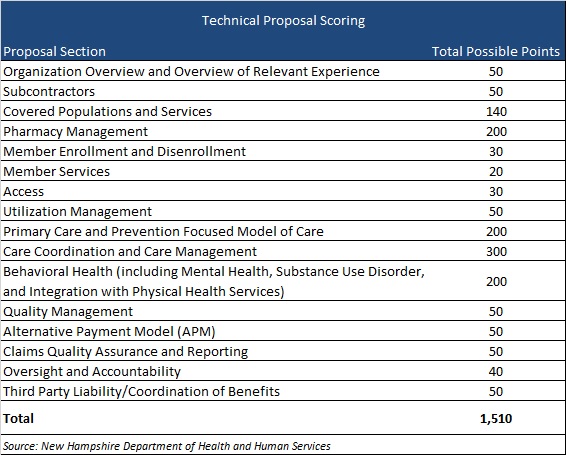
MCOs will be scored on their ability to meet a possible 2,160 points. The technical proposal comprises a possible 1,510 points, as shown in Table 2.

Table 2. Technical Proposal Scoring

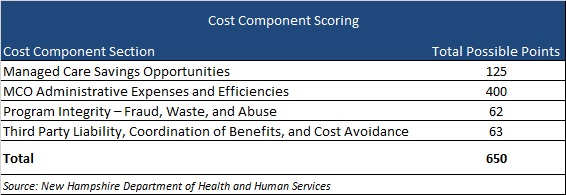
The cost component sections will make up 650 points, as shown in Table 3.

Table 3. Cost Component Scoring

Link to RFP

Blog

Virginia releases Cardinal Care Medicaid managed care RFP

Read Blog

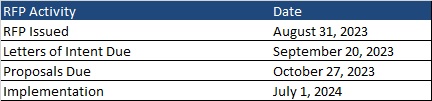
This week, our In Focus section reviews the request for proposals (RFP) for the Virginia Cardinal Care Medicaid managed care program, released by the Department of Medical Assistance Services (DMAS) on August 31, 2023. The RFP includes a new foster care specialty plan. Implementation is scheduled to begin July 1, 2024.

Cardinal Care

Cardinal Care launched in January 2023 as a rebranding of the state’s Medicaid program and Children’s Health Insurance Program—Family Access to Medical Insurance Security Plan (FAMIS). Cardinal Care Managed Care (CCMC) will combine the state’s existing Medallion 4.0 managed care program for traditional Medicaid and the Commonwealth Coordinated Care Plus (CCC Plus) managed long-term services and supports (MLTSS) program to serve 1.9 million Medicaid managed care members.

RFP

The state will award statewide fully capitated, risk-based contracts to a maximum of five health plans. A separate foster care specialty plan contract will also be awarded to one of the winners. If none of the plans win the separate foster care specialty program, all plans awarded a CCMC contract will be required to cover all services.

Selected plans will provide acute care, behavioral health, and MLTSS services to all Virginians who are eligible for Medicaid, including children, adults, and pregnant women in low-income households; children and adults with disabilities; low-income older adults; and individuals receiving LTSS, including dual-eligible populations. The foster care plan will cover children in foster care, individuals younger than 26 years old who were formerly in foster care, and children eligible for adoption assistance.

The RFP contains several targeted focus areas and changes to the managed care program. For example, it emphasizes improvements to the state’s behavioral health care system and improved health outcomes through a focus on health-related social needs such as housing stability and food insecurity for CCMC members.

Contracted plans will be required to operate a dual-eligible special needs plan (DSNP) in Virginia.

Market

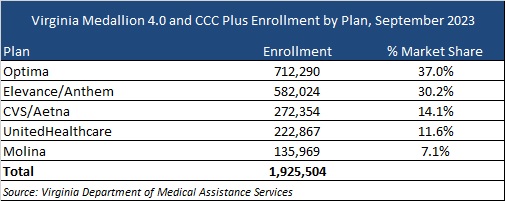
CVS/Aetna, Elevance/Anthem, Sentara/Optima Health, Molina, and UnitedHealthcare are the current incumbents. Effective with the new RFP, DMAS intends to reassign most CCMC members as part of an enrollment process. At present, Optima holds the largest market share of enrollment at 37 percent, followed by Anthem at 30 percent.

Timeline

Letters of intent are due by September 20 and proposals are due on October 27. As previously mentioned, new contracts will begin July 1, 2024. Contracts will have a six-year initial term, with two two-year renewal options. Award dates have not been announced.

Evaluation

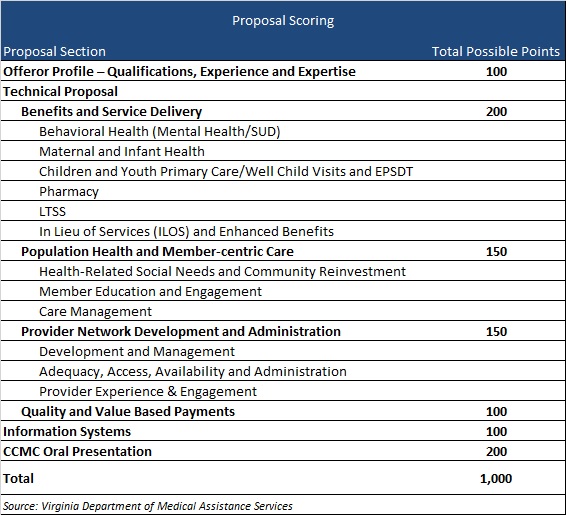
Plans will be awarded up to 1,000 points during the evaluation process based on the categories shown below.

Link to RFP

Ready to talk?