Information Technology Advisory Services

Connecting the Dots: Updates on Federal Funding for Rural Communities through the Rural Health Transformation Program (RHTP)

The Long View  

On December 29, 2025, The Centers for Medicare & Medicaid Services (CMS) announced the highly anticipated funding awards to states for the Rural Health Transformation Program (RHTP)—a five-year, $50 billion federal initiative designed to stabilize and transform rural health systems across the country. This new federal investment marks a pivotal moment for states and their partners to address long-standing challenges in rural healthcare while laying the foundation for broader transformation. It provides an opportunity to reimagine care delivery, strengthen infrastructure, and build sustainable models that address entrenched gaps in rural health. 

Directing Resources to Rural Communities 

RHTP is designed with a focus on rural communities, where residents face persistent challenges such as provider shortages, hospital closures, and limited access to care. RHTP investments will support infrastructure development, IT system implementations and trainings, workforce recruitment and retention, and innovative care models tailored to rural community needs. The long-term goal is to create lasting capacity and resilience in rural health systems and promote better health outcomes for residents. 

But the vision doesn’t stop there. 

Catalyzing Statewide Transformation 

While rural communities are the primary beneficiaries, we believe the impact of the RHTP will extend beyond rural borders. The program’s design encourages states to develop initiatives that can serve as pilots and start-ups, creating scalable solutions that can be adopted statewide. Workforce development programs, for example, may begin by focusing on rural providers and community health workers (CHWs) and training these individuals but, over time, strengthen the healthcare workforce across entire states and regions. 

Much of the federal funding will enable states and their partners to invest in technology modernization, telehealth expansion, and integrated care models. These improvements assuredly will enhance access and quality for rural residents. And these same technologies can be deployed to enhance efficiency and coordination across entire health systems, laying the groundwork for broader system transformation and health improvement. The focus on chronic care management and innovative care arrangements has the potential to improve outcomes for all populations. 

Collaborative Pathways for States and Partners 

States and their partners—including health systems, community-based organizations, and technology innovators—have a valuable opportunity to collaborate on initiatives. In our review of state applications and the initial wave of state driven funding solicitations, we identified efforts to tackle long-standing system challenges, including: 

  • Data Sharing and Interoperability. States responded to the federal application with extensive technology and data interoperability related investments that have statewide benefits. Several states include information system initiatives that can scale care coordination statewide, including initiatives to build dedicated teams for analytics, data integration, and evaluation and tracking outcomes across initiatives. They have an opportunity to create the statewide backbone—starting with rural hubs and then expanding interfaces systemwide. States also will be advancing consumer-facing technology for preventive and chronic care, grounded in statewide health information exchange (HIE) and data strategy, again testing first in rural settings and accelerating statewide adoption of effective approaches. 
  • Maternal Health & Perinatal Care. Several states proposed embedding family medicine with obstetrics fellowships, expanding doula/midwife pathways, and deploying remote prenatal monitoring with support from nursing teams. These rural pilots could help standardize practice, improve outcomes, and scale across the state. Many other state proposals explicitly include initiatives to strengthen access to maternity care, linked to broader workforce and technology investments that can be adopted in urban settings. 
  • EMS Modernization. States also plan to develop and strengthen emergency medical services (EMS)-led preventive and complex care support in rural areas. One application, for example, formalizes such EMS-led support in rural areas, with protocols and training designed to scale broadly. Another state references mobile health and EMS integration, creating rural pilots to improve response, navigation, and handoffs that can be standardized across the emergency care system. 

Looking Ahead 

RHTP is more than a funding stream. It is a catalyst for innovation and collaboration, providing an important avenue to address the chronic inequities in quality, access, and outcomes that people living in our nation’s rural communities often experience. But it also could foster improvement statewide. Program evaluation and performance monitoring of the small, community-based programs and the large-scale, multi-site, multi-year initiatives will provide insights that inform strategic decision-making at the local, state and federal levels. By scaling effective rural health-focused initiatives and investing in new and feasible tools, strategies, and programs, states can create models that improve care delivery for all their residents in the future. This is a moment for states, providers, and partners to think big and design programs that deliver lasting impact. 

Health Management Associates (HMA) offers support to state agencies, health systems, and community partners shaping rural-first pilots that are designed for scalability—from maternal and perinatal care networks, EMS community care models, caregiver and CHW pipelines, to telehealth modernization and behavioral health integration. Our rural expertise and our unique ability to combine expertise in clinical, operational, policy, and data reforms for care improvement are well-suited to the goals of RHTP. 

With the RHTP funding advancing to state partners early in 2026 and annual recalculations of state awards tied to performance, the time to design rural pilots that become statewide programs is now. 

For questions about the RHTP opportunities for your organization and the solutions HMA can tailor to meet the needs of your state, contact Kathleen Nolan and Andrea Maresca

Connecting the Dots: A new blog series for 2026 

Connecting the Dots is a monthly HMA blog series that brings together insights from our experts to examine the major policy, program, and market forces shaping healthcare coverage, delivery systems, and financing in 2026. The posts look beyond individual changes, instead connect emerging developments across programs and markets to help leaders understand what’s changing, why it matters, and how their decisions shape the path ahead. 

CMS Innovation Center’s ACCESS Model: What Medicare Organizations Need to Know

On December 1, 2025, the Centers for Medicare & Medicaid Services (CMS) Innovation Center announced its latest model—ACCESS (Advancing Chronic Care with Effective, Scalable Solutions). A national, voluntary 10-year model designed to test outcomes-focused payment for technology-enabled care used in managing chronic conditions common among Original Medicare (fee-for-service) beneficiaries, ACCESS addresses the long-standing gap between Medicare’s payment system and technology’s capacity to improve healthcare delivery. 

The digital health technology and provider communities have expressed considerable interest in ACCESS. The US Department of Health and Human Services (HHS) and CMS highlighted the model at the December 4, 2025, Modernizing America’s Care for the Better event (recording here), noting over 250 organizations have already expressed interest in the model. Nonetheless, many details need clarification before the program launches.  

Health Management Associates (HMA) has reviewed the ACCESS model and is engaging with those agencies and organizations working on design and implementation. In this article, we share early insights and considerations for Medicare organizations and technology manufacturers interested in participating, as well as potential implications for the broader market. 

Model Overview 

ACCESS aligns with the administration’s strategic priorities for the Innovation Center, including: 

  • Incentivize greater use of technology in chronic disease prevention and management 
  • Increase access to tech-enabled care by overcoming payment barriers, while ensuring care is clinician-guided, coordinated, and accountable 
  • Expand clinicians’ ability to offer innovative care through a straightforward payment pathway 
  • Promote competition by publishing risk-adjusted performance results 
  • Reduce overall Medicare costs 

Core Requirements for ACCESS Participants 

Participants in the model (ACCESS care organizations) must be Medicare Part B participating providers or suppliers, exclusive of durable medical equipment, prosthetics, orthotics, and laboratory suppliers. Notably, these organizations must designate a Medicare-enrolled medical director to oversee care quality and compliance. These organizations will collaborate with primary care providers and other referring clinicians to offer tech-enabled services that complement traditional care, including: 

  • Telehealth software 
  • Wearable devices for continuous monitoring (e.g., sleep, heart rate, movement, glucose, etc.) 
  • Apps to track and coach lifestyle changes 

Care may be delivered in person, virtually, asynchronously, or through other clinically appropriate tech-enabled methods. 

While CMS has yet to release full details on covered digital health solutions, ACCESS care organizations are expected to offer integrated, technology-supported care, which may include: 

  • Clinician consultations 
  • Lifestyle and behavioral support (e.g., nutrition, exercise, smoking cessation) 
  • Therapy and counseling 
  • Patient education 
  • Care coordination 
  • Medication management 
  • Ordering and interpreting diagnostic tests and imaging 
  • Use or monitoring of Food and Drug Administration (FDA)-authorized devices 

ACCESS is intended to be a supplemental approach to traditional care. Primary care physicians and specialists will be able to refer patients to ACCESS organizations and will receive regular electronic updates on patient progress. 

New Options for Beneficiaries 

Unlike most other Innovation Center models, beneficiaries will be able to voluntarily sign up directly with an ACCESS organization or receive a referral from a physician. CMS will maintain a public directory of ACCESS participants, including the conditions they treat and their risk-adjusted outcomes, to help providers and beneficiaries make informed choices based on their needs. 

 Chronic Condition Focused Clinical Tracks 

ACCESS will launch with four clinical tracks, grouping related conditions with similar care approaches. Although CMS may add additional tracks and conditions in the future, the first four tracks address common chronic conditions among Medicare beneficiaries (affecting over two-thirds of Medicare beneficiaries). 

  1. Early Cardio-Kidney-Metabolic (eCKM): Hypertension, dyslipidemia, obesity, prediabetes
    Outcome measures: Control of or improvement in blood pressure (BP), lipids, weight, HbA1c 
  2. Cardio-Kidney-Metabolic (CKM): Diabetes, chronic kidney disease (CKD), atherosclerotic cardiovascular disease (ASCVD) 
  3. Outcome measures: Control or improvement in BP, lipids, weight, HbA1c; CKD/diabetes require eGFR (estimated glomerular filtration rate) and UACR (urine albumin-to-creatinine ratio) data submission 
  4. Musculoskeletal (MSK): Chronic pain
    Outcome measures: Improvement in pain intensity, interference, function (via validated patient-reported outcome measures [PROMs]) 
  5. Behavioral Health: Depression and/or anxiety
    Outcome measures: Improvement in symptoms (Patient Health Questionnaire-9 [PHQ-9], Generalized Anxiety Disorder-7 [GAD-7]); submission of World Health Organization Disability Assessment Schedule 2.0 (WHODAS 2.0) for overall function 

Participant organizations must manage all qualifying conditions within their chosen track. 

Payments 

CMS will release more details in the forthcoming request for applications (RFA). The model will use two payment approaches: 

  • Outcomes-Aligned Payments (OAPs): Paid to ACCESS organizations that achieve desired clinical outcomes, support technology-enabled interventions, and net savings for Medicare. OAPs are expected to be recurring (likely monthly) payments
  • Co-management Payments: Referring clinicians will receive approximately $30 per service, plus a one-time $10 bonus, for onboarding beneficiaries

To promote access in underserved areas, CMS will apply a fixed adjustment to OAPs for rural patients in qualifying tracks. 

FDA’s Complementary TEMPO Pilot 

The FDA’s Technology-Enabled Meaningful Patient Outcomes (TEMPO) pilot will work collaboratively with the ACCESS model. Manufacturers of digital health devices that have yet to receive FDA authorization can apply to TEMPO for enforcement discretion, allowing their devices to be used by ACCESS participants for covered care. The FDA is seeking statements of interest for participation in the TEMPO pilot beginning in January 2026. The agency plans to select up to 10 manufacturers in each of four specific clinical use areas to participate in the pilot. 

Next Steps 

Interested applicants should begin exploring participation as a Medicare Part B-enrolled provider if they have yet to enroll. Other key considerations for Medicare organizations include: 

  • Submit a nonbinding letter of interest to the Innovation Center 
  • Evaluate readiness to deliver technology-enabled, outcomes-focused care 
  • Assess capacity to manage qualifying conditions across clinical tracks 
  • Plan for data collection, reporting, and performance measurement 
  • Consider partnerships with technology vendors and referring clinicians 
  • Monitor regulatory developments and payment methodology updates 

How HMA Can Help 

HMA can help organizations navigate the application process, develop implementation strategies, and position your organization for success in the evolving Medicare landscape. If your organization is considering participation in ACCESS or wants to understand how this model could affect your market, contact our experts below.

Health Tech Ecosystem Leaders to Speak at HMA’s National Conference

The Trump Administration’s new Health Tech Ecosystem initiative is reshaping how patients and providers access health data, with the bold Kill the Clipboard road map offering a federal blueprint for modernization. At its National Conference being held October 14–16 in New Orleans, Health Management Associates (HMA) is bringing together healthcare leaders to explore how federal policy and industry innovation are driving smarter, more connected care. 

About the Sessions  

  • Driving Digital Health Forward: Federal and Industry Enablers of Smarter, Connected Care 
  • The Digital Health “State of the Art”: Success Stories, Trends and Opportunities 
  • Seizing Disruption to Make a Lasting Impact in Healthcare 

These and other sessions reflect the federal government’s evolving priorities around digital transformation, interoperability, and patient empowerment. The Health Tech Ecosystem initiative and CMS’s Interoperability Framework are setting new expectations for how healthcare organizations manage data, engage patients, and collaborate across sectors 

Featured Digital Healthcare and Innovation Leaders Speaking at the HMA Conference  

Our speakers will unpack the far-reaching impact of these advancements, spotlighting opportunities for smarter data exchange and care coordination in a connected ecosystem. In addition, experts from across the healthcare industry will share practical strategies for advancing digital maturity and overcoming operational challenges, with a focus on improving patient care and organizational efficiency. 

  • Secretary Bruce Greenstein, Louisiana Department of Health  
  • Jaime Bland, DNP, RN, Chief Executive Officer, CyncHealth 
  • Ryan Howells, Principal, Leavitt Partners (an HMA Company) and co-author of Kill the Clipboard 
  • Thomas Keane, MD, MBA, Assistant Secretary for Technology Policy and National Coordinator for Health IT, US Department of Health and Human Services  
  • Martin Lupinetti, President & Chief Executive Officer, HealthShare Exchange 
  • Juan Montanez, MBA, Managing Director, IT Advisory Services, HMA 
  • Curt Schatz, Vice President, Enterprise Clinical Enablement, Optum 
  • Chris Walker, Associate Vice President of Enterprise Transformation-Interoperability, Humana 

Healthcare organizations need to prepare for a future regulatory environment that is significantly more digital, interoperable, and chronic disease–focused. From health plan executives and state Medicaid directors and policy teams, to provider organizations and health IT and digital health innovators, our speakers will discuss what changes are coming  in the digital health space and how you can get your organization ready. Register for the conference today with the code HOTTOPIC25 to receive 20% off the standard conference rate through August. 

Streamlining Healthcare with AI: The Administration’s Plan and What Comes Next

On July 23, 2025, the Trump Administration released Winning the Race: America’s AI Action Plan, a comprehensive federal strategy designed to position the United States as the global leader in artificial intelligence (AI). The plan, developed in accordance with Executive Order 14179, outlines over 90 policy initiatives across three strategic pillars: Accelerating Innovation, Building AI Infrastructure, and Leading International AI Diplomacy.

Healthcare and Medicaid Impacts

CMS AI-Enabled Prior Authorization Pilot
The AI Action Plan explains the Centers for Medicare & Medicaid Services (CMS) plan to launch a six-year pilot to improve, streamline, and where possible, automate prior authorizations using AI. Consistent with the AI Action Plan, CMS on June 27, 2025, announced a new Innovation Center model, the Wasteful and Inappropriate Service Reduction (WISeR) Model. WISeR will test ways to improve the prior authorization process relative to Original Medicare’s existing processes. This initiative is expected to dramatically reduce approval times—from days to, potentially, minutes in some cases — while easing administrative burdens for providers and improving access to timely care for beneficiaries. CMS will evaluate the pilot using metrics such as efficiency gains, cost savings, satisfaction levels, and decision accuracy.

Enhanced Fraud Detection and Program Integrity
CMS will also expand its use of AI to detect and prevent fraud, waste, and abuse (FWA) in Medicaid and Medicare. By leveraging predictive analytics and real-time data, the agency aims to identify anomalies and improper payments before they occur—enhancing program integrity and public trust.  CMS is also encouraging state Medicaid agencies to bolster its investments in FWA systems, and enhanced federal funding continues to be available for such investments.

Regulatory Streamlining and Innovation Incentives
The plan calls for removing outdated regulatory barriers to AI adoption in healthcare. Proposed measures include revising compliance requirements and offering financial incentives or preferential funding access to states that foster innovation-friendly environments. While specifics are pending, states are encouraged to modernize regulations to support AI adoption.

Key Differences from Prior Administration’s AI Policy

The following table outlines key differences between the Biden and Trump administrations’ approaches to AI policy:

Considerations for Healthcare Organizations and Partners

Medicaid agencies, healthcare providers, and industry stakeholders should track the next wave of federal actions to implement the AI Action Plan and the healthcare sector’s response. Data from pilot initiatives will inform future federal policy decisions on broader AI deployments within Medicaid administration. In addition, healthcare organizations will need to remain nimble as variability may emerge in how states pursue regulatory changes to align with federal incentives under the Action Plan.

Sector specific considerations include:

Health Plans:  Plans should proactively pursue initiatives such as AI-driven prior authorization, claims adjudication, fraud detection, and member engagement to improve their operations, their position in the markets in which they operate, and ideally, their performance. This effort will require significant investments in information technology, new workflows, and continuous quality improvement initiatives, staff training, enhanced compliance protocols, and a culture that embraces AI. In addition, plans must implement robust AI oversight mechanisms that incorporate the necessary level of transparency, avoid bias, and are appropriate across all functions that use AI, including population health analytics, member engagement, care management, prior authorization management, claims processing, and fraud detection.

State Government: States will face pressure to modernize health and human services regulatory frameworks to align with federal requirements and access federal incentives. Moreover, states should proactively pursue initiatives that improve the operations of health and human services agencies with a particular focus on improving program design, oversight, and evaluation functions. In addition, agencies should assess current rules regarding AI and consider how to support AI adoption while safeguarding desired outcomes and accountability.

Health Systems and Providers: Providers can benefit from reduced administrative overhead, improved care delivery, and the use of AI to augment the ability of providers to diagnose and treat patients. Providers will have to adapt to new workflows that incorporate use of AI, ensure data quality, and monitor data for unintended consequences such as unintended bias. In addition, providers must incorporate AI literacy training to align with federal expectations and remain competitive in a deregulated, innovation-driven landscape. Providers will also have to implement robust compliance protocols.

Looking Ahead

The AI Action Plan signals a substantial shift toward streamlined regulatory approaches and expanded AI deployment in Medicaid and broader healthcare administration. Stakeholders should anticipate federal guidance updates, pilot program evaluations, and further clarifications regarding state incentives in the months ahead.

To discuss the implications of the AI Action Plan or for further policy analysis, contact Health Management Associates experts below.

Don’t just grab the shiny new thing: integrating IT and business strategies to optimize technology ROI

The emergence of generative artificial intelligence (Gen AI) and large language models, like OpenAI’s ChatGPT or Google Gemini, has spurred a renewed focus on the use of cutting-edge technology in healthcare. Healthcare payers, providers, and state Medicaid agencies are racing to deploy Gen AI and other technologies to improve patient outcomes, reduce costs, improve patient engagement, streamline administrative operations, and simplify compliance. While Gen AI holds tremendous potential to improve healthcare, we should heed the lessons learned by recent waves of technology: deploying technology—including Gen AI—in isolation of a broader business strategy is a recipe for underperformance. Optimizing the return on technology investment requires taking a structured approach to integrate technology strategy with business strategy.

Investing in health IT is essential to meet innovation challenges. Technology can enable the scale, reach, speed, and the consistency needed to thrive in today’s fast-changing landscape. Moreover, as workforce shortages persist, technology must become a “force multiplier,” allowing healthcare practitioners and other healthcare staff to focus on what they do best. In today’s changing business and social environment, there is no choice but to embrace health IT.

Investments in health technology, however, have often fallen short of expectations. For years, CEOs and chief information officers (CIOs) have lamented the poor return on substantial investments in health IT. For example, in a recent EY study, 70% of hospital executives report they have not seen an ROI from investments in digital health. A few years ago, only 10% of health professionals surveyed by Health Catalyst assessed the ROI on Electronic Health Records (EHR) investments as positive or better. Mis-investing in technology has long-term implications for any organization. Over-investment in technology reduces ROI and diverts resources from more productive uses. Under-investment in technology can undermine effectiveness, reduce productivity, and weaken patient engagement. So, optimizing technology ROI is essential to driving effective outcomes.

One challenge with IT investment is that measuring ROI in healthcare is an inherently difficult calculation. In addition to financial returns, the hoped-for return on technology investments is an improvement in patient outcomes, which may not translate into immediate financial benefits. Another challenge is that fragmented healthcare systems make it difficult for any single organization to gain system-wide efficiencies that drive a positive ROI.

However, an often-overlooked challenge to optimizing IT investment is thinking of IT strategy as something separate from, rather than integrated with, the business strategy. In healthcare, executing nearly every business strategy requires leveraging IT. To optimize the ROI in health tech investments, organizations must align and integrate their health IT strategy with their business strategy.

Organizations often take one of two different approaches to technology. In some cases, they cede responsibility for the IT strategy to the CIO, perhaps because technology can seem imposing, and the CIO speaks the language of IT. In these cases, the IT strategy may reflect imperatives important to the IT shop—for example, consolidating on a common tech stack or replacing a software component—that do not support or advance the business strategy.

In other cases, organizations develop a business strategy in isolation of a technology strategy—they define their business strategy, then look for technology to support it. This approach leads to a business strategy that either cannot be realistically supported by available technology or does not exploit technology effectively. Under either approach the result is the same: Failing to integrate and align your tech strategy with your business strategy will undermine the value of your technology investments.

To optimize the return on their technology investments, healthcare organizations should take a structured approach to aligning their technology strategy with their business strategy. HMA works with health care organizations to:

  • develop or refine their business strategy,
  • develop an integrated technology strategy fully aligned with that business strategy,
  • assess their existing technology,
  • develop a strategic roadmap to modernize technology,
  • support technology procurements, and
  • support technology implementations.

HMA will be at MESC 2024 August 12-15, and if interested in learning more about this approach, come see us at Booth 450. Or for more hands-on exploring of how this can work for an organization, join us at these two pre-conference sessions at HMA’s Fall Conference on Unlocking Solutions in Medicaid, Medicare, and Marketplace, October 7-9 in Chicago. The session on Navigating the Medicaid 1115 Demonstration Processes will give nuanced understanding of CMS’ criteria concerning budgeting, implementation, evaluation frameworks and administrative supports, along with strategies to effectively navigate through the approval process. Another session on A Framework for Thinking About – and Using – AI Effectively will share real-world examples of successful AI implementation, their impact on business outcomes, and lessons learned. Both will examine how HMA works with clients to integrate their technology strategy into the overall company strategy.

For more information, contact our IT experts below.

Policy and operational implications of the Change Healthcare cyberattack

This week, our second In Focus explores a new Issue Brief published by Leavitt Partners, a Health Management Associates, Inc. (HMA) Company, which addresses the February 21, 2024, cyberattack on Change Healthcare. The cyberattack is one of the most significant on the healthcare industry and has had short-term effects on the entire healthcare sector, with potential for longer-term impacts across the industry.  

Because of the ransomware attack, more than 100 applications were taken offline, preventing medical professionals from conducting out many patient-facing activities, including filling prescriptions, managing care plans, and performing prior authorization checks. Six weeks after the crippling cyberattack on Change Healthcare, some systems are still only partially operational and many claims remain unpaid. This situation has disrupted patient access to care and placed significant financial strain on providers. 

Change Healthcare is maintaining a daily status report on operations on their website. In addition, the Department of Health and Human Services (HHS) provided the following resource to the healthcare provider community to work with payers directly

With billions of dollars in loans and advance payments already disbursed and ongoing investigations into Health Insurance Portability and Accountability Act (HIPAA) violations, the healthcare industry is bracing for long-term impact, while the Administration and Congress are just beginning to act. Leavitt Partners experts, an HMA Company, is monitoring and analyzing the impacts on payers and providers, as well as current and future policy implications.  

For more information and to obtain in-depth issue briefs, including “Cyberattacks: Health Care Industry Impacts and the Federal Response,” contact our featured experts.

HMA experts in data integrity and governance to present at NATCON24 in St. Louis, April 15-17

At the upcoming NATCON24 convention, HMA principals Robin Trush and Jodi Pekkala will present “Achieving Data Integrity and Staff Satisfaction through Technology Data Governance.” Health equity, alternative payments, and social determinants of health are all healthcare “North Stars” in healthcare grounded in data collection. To achieve standard metrics and address patient care coordination, EHRs, population-health platforms and other technology innovations must be used accurately, consistently and be configured properly. Cross-department database governance is grounded in standards to ensure data integrity. Too often, organizations have been unable to successfully stand-up technology and maintain consistent use over time, resulting in staff dissatisfaction and turnover.

This presentation will provide an overview of proven methods for bringing technology governance and leadership into clinical planning and operations, resulting in staff satisfaction, and putting your organization on the path toward those North Stars. Presenters will share lessons in how to bring technology management into clinical planning and operation. This enhanced organizational integration model will drive better outcomes and support the staff experience.     

Learning Objectives:

  • Describe current industry initiatives with technology infrastructure requirements.
  • Define and address common technology pain points for organizations and staff.
  • Define guidance for data governance, data integrity, and staff satisfaction.
  • Provide tools to take an organizational “pulse” and create a path to improvement.

Please join this workshop at NATCON24 on Monday, April 15, 2024 from 4:15 – 5:15 PM CT Location: 100/101, Level 1, ACCC

As longtime leaders in health and human services, HMA’s behavioral health, IT and data experts bring front line and leadership experience to their work supporting Health and Human Services IT projects. Combine this with the broad programmatic and operations expertise of the HMA team—which includes former clinicians, Medicaid directors, and leaders of provider and payer organizations—and we are able to deliver targeted, relevant, actionable advice to our clients. We aim to advance equity and improve quality in state, county, and local program development. Contact us to learn more.

HMA 2024 Spring Workshop summary and key takeaways

On March 6, HMA convened a spring workshop of 100 healthcare stakeholders interested in making value-based care delivery and payment work better. This event was designed for those engaging in value-based care and payment transformation, but who are looking to learn from peers to overcome challenges; participants included insurers, health systems, data and tech innovators, service providers, and trade associations.

The event’s name implored people to “Get Real” about the challenges we all face, while reminding ourselves of the imperative of making this transition to ensure the sustainability of our uniquely American healthcare system. In between plenary panels, participants were engaged in cohort discussions exploring the opportunities for progress in areas critical to making value-based care work.  While a summary cannot recreate the real-time discussions and simulations from the event, our discussions delivered insights on several critical themes that we believe are important to track. 

EMPLOYERS ARE LEANING IN: For all employers pay, they are getting less value over the past decade; the changes made to ERISA that hold the C-suite accountable for paying fair prices for healthcare benefits is a seismic shift in making healthcare purchasing a more strategic priority for employers.

  • Elizabeth Mitchell of the Purchaser Business Group on Health illustrated the shift in employers’ awareness – due to data transparency rules – that they aren’t getting the quality they thought they were getting for all that they pay. Transparency, plus a recent change to the Employee Retirement Income Security Act of 1974 (ERISA), is bringing employers back to the table with very specific requests for better outcomes, which they are increasingly pursuing through direct contracting and specific quality frameworks for primary care, maternal care, and behavioral health. Participants continued to reflect on this dynamic in all subsequent discussions, underscoring that this could be a really big deal.
  • Cheryl Larson of the Midwestern Business Group on Health talked about the cost pressure on her members leading them to partner in new and different ways, expressing optimism about all payer solutions and other innovative approaches to leverage the cost data that are now available. In her closing plenary session, she said “this issue of accountability on employers…I am excited and optimistic that there are things we can do to get there faster now.”

Data & Technology HAVE TO IMPACT DECISION MAKING: Patients are using the system the way it is designed today, so we can’t just blame them for poor outcomes…we have to actually stop doing things that don’t work and start measuring things the right way.

  • Dr. Katie Kaney opened with a dinner keynote discussing her efforts to create metrics that give purchasers a better measurement of whole person care, including clinical, genetic, behavioral, and social factors. Audience members remarked that this was a novel approach to quantify what has become accepted correlation in adverse health outcomes.
  • Ryan Howells, Dave Lee, and Stuart Venzke led discussions on Data & Technology, diving into updated federal regulations that present both opportunities and challenges for stakeholders, as well as ways to create corporate strategies that include data and technology, as these issues are no longer optional for anyone in this business. The breakout discussions talked about where we are today vs where we need to be – bridging the gap between data and decision making.

Payment & Risk TOOLS ARE ALIGNING INFORMATION TO ACTION:  Achieving meaningful risk-based contracts is possible but the details matter…mismatched data and information leads to unequal buying power, which cannot be the case in value-based care.

  • Kelsey Stevens, Scott Malan, Hunter Schouweiler, and Kate de Lisle led discussions on Payment & Risk, including an exciting hands-on simulation exercise that helped participants understand ways to increase premium scores by implementing risk-based payment approaches within the care delivery system; this session provided very concrete takeaways for those who attended by combining a simulation with a discussion on measures of success to improve risk-based contracting strategies.
  • Amy Bassano and Kate de Lisle discussed their recent publication on the expanded ecosystem of value-based care entities, looking at the “enablers” who are working with providers and payers to manage risk. This groundbreaking landscape of this market segment highlighted a set of Guiding Principles to ensure these entities are aligned with CMS, provider, and patient goals. Participants had lots of questions for the presenters and were anxious to read the HMA full report.

CARE DELIVERY MEASURES MUST BE TANGIBLE TO PROVIDERS AND PATIENTS: Value-based care requires aligning the right metrics with the right incentives, ensuring providers understand not only WHY but HOW they help improve patient outcomes.

  • Rachel Bembas, Dr. Jean Glossa, and Dr. Elizabeth Wolff led discussions on Care Delivery Measures, underscoring the importance of involving clinicians in the establishment of outcomes measures, as well as ensuring that the diversity of patient experiences are included. Participants remarked that we have a lot of “messy” data today, so we now have to ask the next set of questions on how we best use the messy data to make an impact?
  • Former Congresswoman Allyson Schwartz talked about the continuing promise of Medicare Advantage, and the opportunity to convene a new alliance around Medicare quality metrics as well as the increasing pressure to align these metrics across payers. In the closing plenary, she said “We need to define what we want healthcare in America to look like and then go out and get it…. We have to align the measurements and the standards we use so that providers understand what’s needed and it benefits government, taxpayers, and beneficiaries…we should require plans to have risk-based contracting with providers.”

Policy & Strategy HAVE TO STAY THE COURSE TO ALIGN INCENTIVES: Policymakers can help or hinder movement forward to ensure success…value-based care has to be more than a section in an RFP, but part of the entire scope of paying for outcomes-based care delivery.

  • Governor and former HHS Secretary Mike Leavitt reminded us of the political and policy journey that got value to where it is today, and the unique moment we are in right now that gives us hope as we enter this post-pandemic phase of healthcare spending and policy. He reflected, “We are beginning to see regulations and mechanisms to hold people accountable for healthcare costs…we have to integrate value and caregiving or we will never get to value.”
  • Theresa Eagelson, former Illinois Director of Healthcare and Family Services, talked about the opportunity for states to expand value-based care by setting strong expectations through contracting and by thinking differently about policy choices. She reflected on the role of state administrators, “When we sit here and talk about value-based care, do we know what our north star is? Have we mastered what we want to see in RFPs (for Medicaid)?  We’re working on a good FQHC model in Illinois, but should it be just for FQHCs? We need to spend more time together, across payers, across plans and providers and consumers to figure out what success looks like.”
  • Caprice Knapp and Teresa Garate led a discussion on state and local Policy & Strategy to support integrated care and services that are required to achieve better outcomes. There is a need for services to better coordinate and manage care across social and health services, bringing contracting and payment expertise to more efficiently serve patients. The highly anticipated Medicaid managed care rule can help guide states in updating their approach. Federal analysis of Medicaid data is needed to set benchmarks before we can get to total cost of care approaches.
  • Amy Bassano and Anne Marie Lauterbach led a discussion on federal policy alignment of Medicare FFS and Medicare Advantage, particularly looking at drug spending and the very real burden of medical debt as a driver of policy change. Participants reflected that half the country is indirectly covered through some public insurance. It’s just being done hyper-inefficiently.

HMA is leading the way on value-based care and is committed to continuing these dialogues to drive local, state, and national change. HMA’s value-based care expertise draws from our acquisition of Leavitt Partners and Wakely Consulting Group, two firms with deep ties and expertise on policy, strategy and risk-based pricing strategies, as well as recruitment of clinicians and operational experts who have led organizations through this transition. We will continue to advance the dialogue – and the work – to drive value as a critical way to ensure that our systems of health and healthcare are more affordable, equitable, and sustainable.

Let’s keep the conversation going! Learn more about how HMA can help you succeed with value-based payments and check out the newly released value-based payment readiness assessment tool for behavioral health providers.

HMA keynote speakers preview themes and imperatives for March 5-6 value-based care workshop

HMA’s Spring Workshop on Value-Based Care, March 5-6 in Chicago, is just a few weeks away. Listen to why our speakers are so excited to engage with attendees on value-based care.

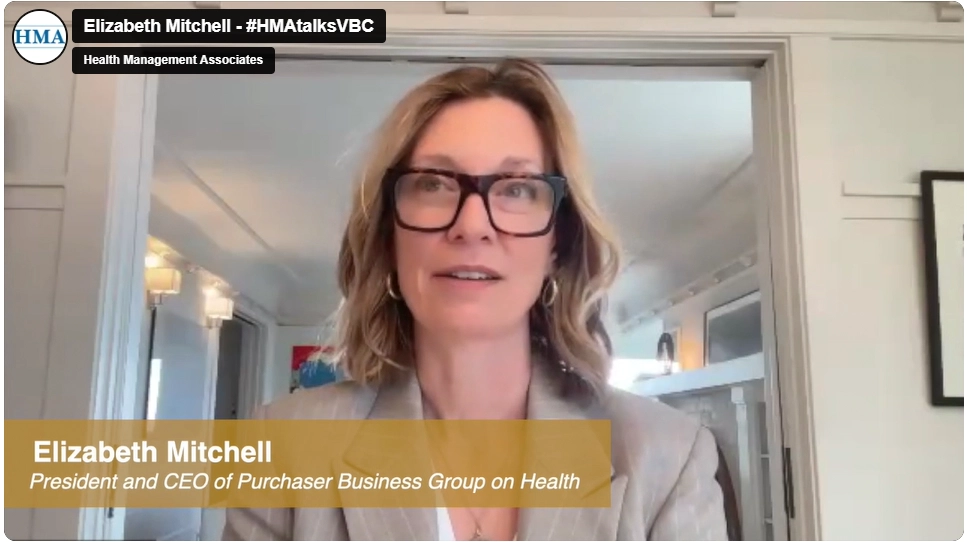
Elizabeth Mitchell, CEO, Purchaser Business Group on Health will deliver the keynote speech on “The Purchaser’s Dilemma: Why Employers Should Demand Value (and Why They Don’t).”

Our March 5 dinner headliner Katie Kaney, CEO of LovEvolve will discuss her “Whole Person Index” and how we can collaborate in new ways to transform the healthcare system to deliver better health at a lower cost for all.

Katie Kaney video
Elizabeth Mitchell video

Hurry – online registration ends February 28!

Driving change in healthcare delivery: HMA Spring Workshop on value-based care examines advancements in data analytics and technology

In the constantly changing healthcare environment, data analytics and technology are key tools to assist in controlling the burden of increased costs and identifying gaps in quality. As digital health tools and technology advance to include wearable devices, mobile health apps, telemedicine platforms, and other innovations, this enables the integration of digital solutions and real-time patient data. Artificial intelligence, still largely untapped, may have a significant impact as well.

Ideally better data will result in higher quality, better health outcomes, and an increase in provided value. To achieve this, effective health information technology platforms need to be interoperable and truly facilitate the exchange of patient information among providers and care coordinators. Data analytics tools and technology also must be consumer focused and focus on collecting and sharing data that is analyzable. These tools are a vital component of establishing new payment structures, allowing plans and providers to share some of the risk and the cost savings from producing better health outcomes. Identifying a core set of metrics that are patient-focused, measurable, and actionable along with optimizing data analytics tools can provide more efficient pathways to providing healthcare. Any company working in healthcare must elevate data and technology as a fundamental part of corporate strategy across all objectives.

You can explore best practices and emerging opportunities for data and technology at HMA’s 2024 Spring workshop on value-based care (VBC) March 5-6, in Chicago. Breakout discussions offer a unique forum for payers, government officials, community organizations, vendors, and providers to have an unvarnished conversation about the challenges, lessons, and opportunities in implementing value-based care. You will engage with HMA experts and peers in an intimate setting and come away with new ideas and new allies.

The Data and Technology cohort will include two small group discussions facilitated by HMA leaders Ryan Howells, Stuart Venzke, and David Lee, as well as former US Chief Technology Officer Aneesh Chopra. The sessions are designed to arrive at specific recommendations as to how stakeholders can advance their own data and technology capabilities and jointly address systemic barriers to better meet the needs of those taking risk for outcomes:

  • Making Data More Patient Centric: Opportunities in Trusted Exchange Framework and Common Agreement (TEFCA) implementation in producing and supporting FHIR APIs to create a more patient-centered data ecosystem that achieves a tangible return on investment.
  • Making Data Central to Strategy: Developing a strategic organizational technology roadmap that will support both current and future data and technology priorities

Other cohort discussions will delve into approaches to develop and manage risk-based contracting across sectors, establish effective partnerships with safety net providers and community-based organizations, and navigating changes in local market and policy conditions that are shaping value-based care adoption and innovation.

To learn more, go to HMA’s 2024 Spring Workshop page.

Ready to talk?