Insights

HMA Insights: Your source for healthcare news, ideas and analysis.

HMA Insights—including briefs, webinars, and our podcast—gives you easy access to HMA’s deep expertise, helping you stay current on the latest healthcare trends and topics. Search for a topic of interest or browse the latest insights below.

or
or
Receive timely expert insights on topics you care about.

355 Results found.

Value-Based Payment (VBP) – Is your organization ready?

Read Blog

Utilization of value-based payment (VBP) strategies continues to expand, with states and health plans recognizing the benefits of rewarding outcomes over volume. This includes population based VBP initiatives intended to address disparities. Health Management Associates (HMA) is at the center of these initiatives, supporting payers with development and implementation, as well as supporting providers through the transition from a traditional FFS model to maximizing reimbursement through effective care delivery, supported by the necessary administrative infrastructure and resources. As our clients in health care communities move forward with alternative payment models, we have developed tools and strategies to achieve the essential milestones to successful implementation.

Milestone 1: Provider Readiness Assessment

Successful planning for the transition to VBP begins with an understanding of where your organization is starting from, informing the targeted milestones associated with each providers’ unique strengths and challenges.

Understanding that success under VBP models requires adjustment of both clinical and administrative practices, HMA has created an assessment tool that considers the programmatic, financial, and technology resources necessary for VBP implementation. In addition to the ability to leverage these resources, organizations must have the capacity for VBP components such as cost reporting, revenue cycle management, and real time risk monitoring through the collection and analysis of data.  

“With VBP on the horizon for our organization, HMA helped us to determine our readiness and to devise a strategy to remediate gaps in operations in order to be successful with the new payment model.”

– Tamara Player, CEO; Polara Health, AZ

Milestone 2: Strategy Development and Change Management

A change in reimbursement methodology requires organizational realignment of administrative and programmatic approaches. Assessing and supporting staff through these changes is a key milestone for success. Activities in which HMA have supported our clients include:

Creating leadership and governance buy-in

Preparing the Board and Staff for VBP

Aligning mission and vision with payment models and accountability metrics

Project Management, including development and monitoring of implementation plans

Cross functional team support

Milestone 3: Data Collection and Reporting Capabilities

The ability to collect and report meaningful outcomes is at the core of successful engagement in VBP. Following an assessment of current capabilities, HMA has supported provider organizations in maximizing electronic health record and other data system capabilities to capture data essential for reimbursement, as well as increasing analytic capabilities that are essential for monitoring outcomes to ensure programs can pivot when data indicates outcome achievement may be at risk. Activities include:

Technology and Data Enterprise configuration to support analytics and reporting

Creating real-time access to data

Benchmarking current outcomes against proposed VBP metrics

Alignment of current framework to payer metrics

Creation of internal clinical leadership infrastructure to support proactive monitoring and action in response to data

Milestone 4: Business Office and Finance

All aspects of an organization’s financing can be impacted by transitions in payment methodology, including cash flow, impacting cash on hand for capital and other expenses. Anticipating these changes and adjusting accordingly are key to readiness for VBP and importantly, mitigating risk during the transition. HMA can assist with:

Assessing organizational ability to accept risk

Developing a risk corridor based on organizational readiness

Negotiating alternative payment arrangements with payers

Milestone 5: Clinical Programmatic Approaches under VBP

VBP arrangements provide opportunities for organizations to move closer to the goal of achieving outcomes for their clients, rather than productivity targets and units of service. This includes incorporating approaches that could not receive reimbursement under an FFS model. With this flexibility comes the opportunity to review and adapt clinical approaches and programming, including population specific strategies. HMA is ready to support these efforts through:

Workforce analysis

Re/design of clinical workflows  

Implementation of measurement-based care

Optimization of clinical templates within the EHR to support data collection and reporting

Understanding the opportunities of value-based payment across the continuum of payment models
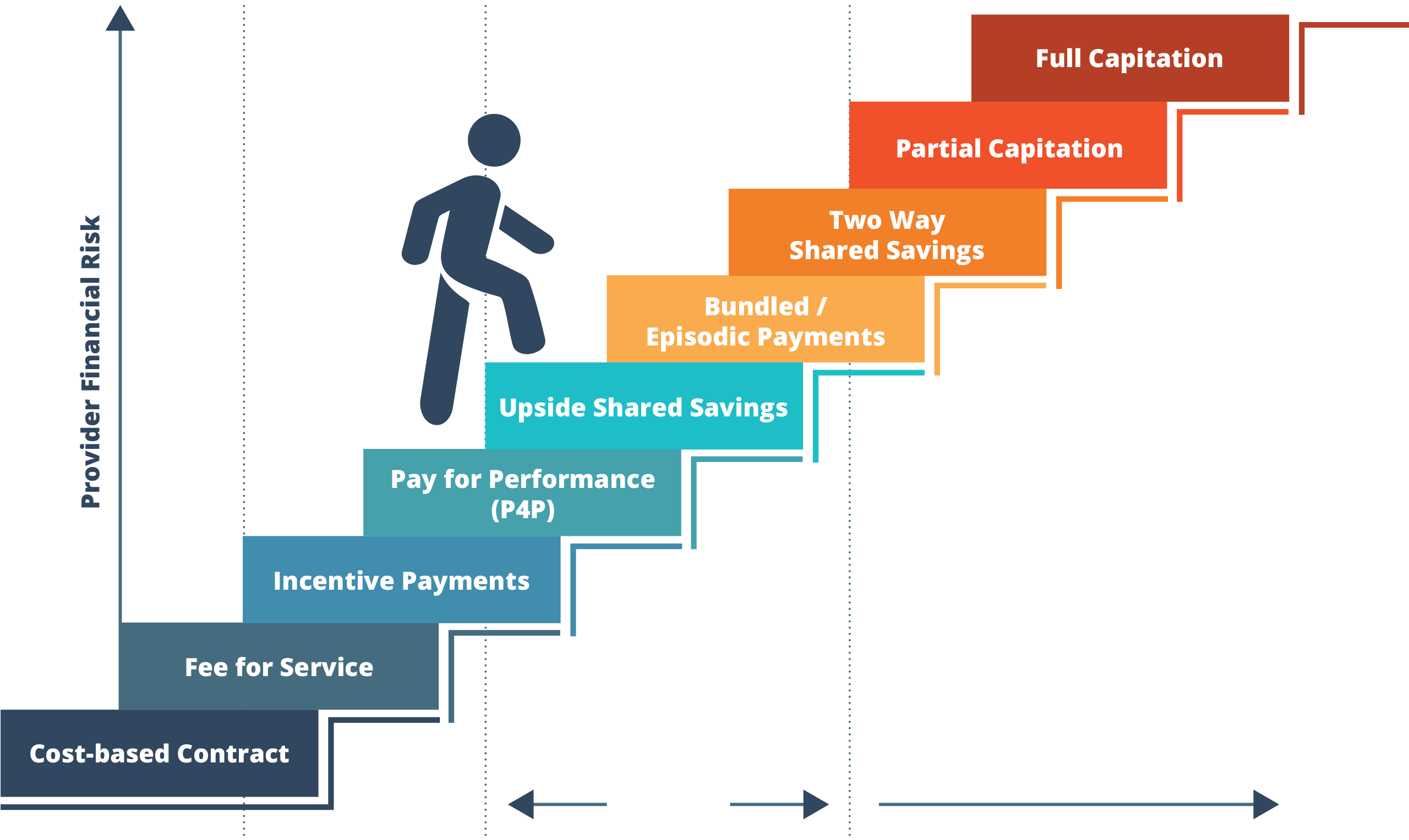
While these activities may seem overwhelming, HMA is ready to support your organization to receive reimbursement based on meaningful improvement for your clients through technical assistance and training on each of the core elements outlined above.

HMA publishes white paper “Restoring Capitation’s Incentives to Advance State Goals Post-Public Health Emergency (PHE)”

Download

HMA has published a white paper examining the use of risk mitigation strategies among state Medicaid programs and assessing their limiting impact on capitation’s incentives for managed care organizations (MCOs). This paper seeks to assist policymakers in designing future Medicaid program payment policies that advance state financial and programmatic goals. This paper offers a timely examination of this topic as state Medicaid programs emerge from the COVID-19 public health emergency (PHE) and navigate the unwinding of Medicaid continuous coverage. This paper also builds upon the Health Management Associates May 2021 white paper, Moving Beyond COVID-19 Public Health Emergency Risk Corridors, which more narrowly focused on appropriate and inappropriate use of risk corridors.

Health Management Associates selected as CalAIM Technical Assistance vendor

Read Blog

One of only two firms selected in all seven domains out of 46 vendors.

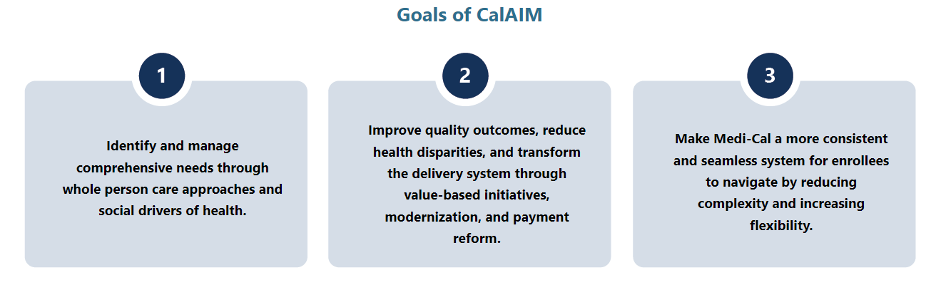
The California Department of Health Care Services (DHCS) has developed a multi-year initiative whose goal is to improve health outcomes and health care quality through broad delivery, payment, and program reforms known as California Advancing and Innovating Medi-Cal (CalAIM). This includes the introduction of new programs and changes to existing programs that will occur over the span of five years. CalAIM further expands upon prior initiatives, such as Whole Person Care, the Health Homes Program, and the Coordinated Care Initiative, and strives to integrate California’s delivery systems to better facilitate the overall Medi-Cal program.

Image source

With the rollout of these programs and the vast requirements associated with them, DHCS and California’s Medi-Cal managed care health plans are now tasked with the challenge of implementing CalAIM and enabling the participation of community providers and partners in these opportunities. To support these partners, DHCS developed a funding initiative, known as Providing Access and Transforming Health (PATH) to aid in strengthening capacity and infrastructure of Community Based Organizations, public hospitals, county agencies, and others to stand up CalAIM. This five-year, $1.85 billion initiative includes the creation of a virtual Technical Assistance (TA) Vendor Marketplace that organizations can use to request resources and support from approved vendors through services that are fully paid for by the State.

Health Management Associates (HMA) is recognized as a valued partner to Payers, Community Based Organizations, public hospitals, and county agencies and has deep expertise in CalAIM policy, operations and implementation. Recognized for our extensive capabilities in the field, HMA is one of only two firms out of 46 vendors that received State approval to serve as a technical assistance vendor on the PATH Technical Assistance (TA) Marketplace for all seven domains:

  • Domain 1: Building Data Capacity: Data Collection, Management, Sharing, and Use
  • Domain 2: Community Supports: Strengthening Services that Address the Social Drivers of Health
  • Domain 3: Engaging in CalAIM Through Medi-Cal Managed Care
  • Domain 4: Enhanced Care Management (ECM): Strengthening Care for ECM Population of Focus
  • Domain 5: Promoting Health Equity
  • Domain 6: Supporting Cross-Sector Partnerships
  • Domain 7: Workforce

HMA also has expertise in and hands-on experience with addressing the unique challenges experienced by providers and partner agencies serving rural communities. Please visit the PATH Technical Assistance (TA) Marketplace to access TA resources that can help strengthen capacity to provide high quality Enhanced Care Management (ECM) and Community Supports services for Medi-Cal members.

New Hampshire releases Medicaid managed care RFP

Read Blog

This week, our In Focus section reviews the New Hampshire Medicaid Care Management (MCM) request for proposals (RFP), which the state’s Department of Health and Human Services released on September 8, 2023. The new contracts will be worth approximately $1.1 billion and will provide full-risk, fully capitated Medicaid managed care services to approximately 190,000 beneficiaries. Implementation will begin September 2024.

MCM Program

The MCM program covers traditional Medicaid, the Children’s Health Insurance Program (CHIP), and the state’s adult Medicaid expansion Granite Advantage Health Care Program. MCM provides integrated acute care, behavioral health, and pharmacy services. Managed long-term services and supports are not included in the program.

Incumbents are AmeriHealth Caritas, Boston Medical Center/WellSense, and Centene/New Hampshire Healthy Families.

RFP

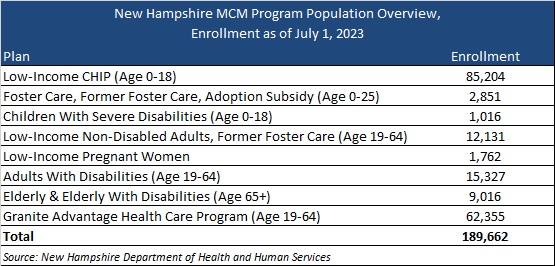
New Hampshire will award contracts to three Medicaid managed care organizations (MCOs). MCOs will cover the populations outlined in Table 1.

Table 1. New Hampshire MCM Program Enrollment as of July 1

The state outlines several key areas of focus within the RFP, including introducing a primary care and preventive services model of care—an approach centered on patient-provider relationships and provider-delivered care coordination. The RFP also will have a greater emphasis on priority populations, such as individuals with inpatient admissions for behavioral health diagnoses; children in the child welfare system; babies with low weight or neonatal abstinence syndrome; and people who are incarcerated and eligible for the Community Reentry demonstration program, pending approval from the Centers for Medicare & Medicaid Services.

Timeline

Mandatory letters of intent are due September 18, 2023, and a mandatory conference will take place September 21. Proposals are due October 30, 2023. An award date has yet to be announced, but the state contract discussions with selected MCOs will occur November 20−December 11, 2023. Contracts will run from September 1, 2024, through August 31, 2029.

Evaluation

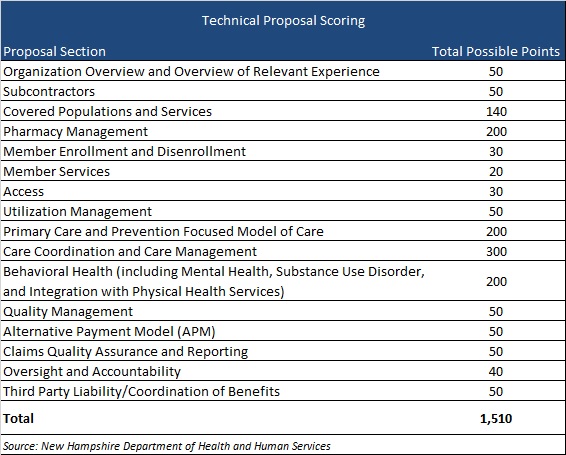
MCOs will be scored on their ability to meet a possible 2,160 points. The technical proposal comprises a possible 1,510 points, as shown in Table 2.

Table 2. Technical Proposal Scoring

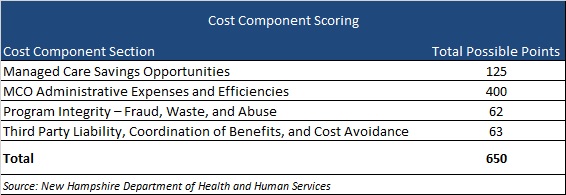
The cost component sections will make up 650 points, as shown in Table 3.

Table 3. Cost Component Scoring

Link to RFP

Virginia releases Cardinal Care Medicaid managed care RFP

Read Blog

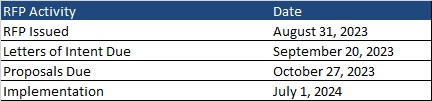
This week, our In Focus section reviews the request for proposals (RFP) for the Virginia Cardinal Care Medicaid managed care program, released by the Department of Medical Assistance Services (DMAS) on August 31, 2023. The RFP includes a new foster care specialty plan. Implementation is scheduled to begin July 1, 2024.

Cardinal Care

Cardinal Care launched in January 2023 as a rebranding of the state’s Medicaid program and Children’s Health Insurance Program—Family Access to Medical Insurance Security Plan (FAMIS). Cardinal Care Managed Care (CCMC) will combine the state’s existing Medallion 4.0 managed care program for traditional Medicaid and the Commonwealth Coordinated Care Plus (CCC Plus) managed long-term services and supports (MLTSS) program to serve 1.9 million Medicaid managed care members.

RFP

The state will award statewide fully capitated, risk-based contracts to a maximum of five health plans. A separate foster care specialty plan contract will also be awarded to one of the winners. If none of the plans win the separate foster care specialty program, all plans awarded a CCMC contract will be required to cover all services.

Selected plans will provide acute care, behavioral health, and MLTSS services to all Virginians who are eligible for Medicaid, including children, adults, and pregnant women in low-income households; children and adults with disabilities; low-income older adults; and individuals receiving LTSS, including dual-eligible populations. The foster care plan will cover children in foster care, individuals younger than 26 years old who were formerly in foster care, and children eligible for adoption assistance.

The RFP contains several targeted focus areas and changes to the managed care program. For example, it emphasizes improvements to the state’s behavioral health care system and improved health outcomes through a focus on health-related social needs such as housing stability and food insecurity for CCMC members.

Contracted plans will be required to operate a dual-eligible special needs plan (DSNP) in Virginia.

Market

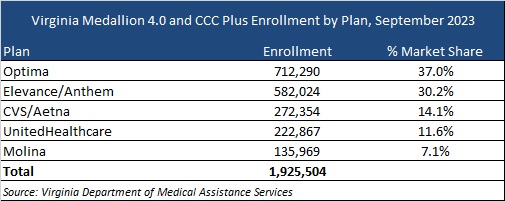
CVS/Aetna, Elevance/Anthem, Sentara/Optima Health, Molina, and UnitedHealthcare are the current incumbents. Effective with the new RFP, DMAS intends to reassign most CCMC members as part of an enrollment process. At present, Optima holds the largest market share of enrollment at 37 percent, followed by Anthem at 30 percent.

Timeline

Letters of intent are due by September 20 and proposals are due on October 27. As previously mentioned, new contracts will begin July 1, 2024. Contracts will have a six-year initial term, with two two-year renewal options. Award dates have not been announced.

Evaluation

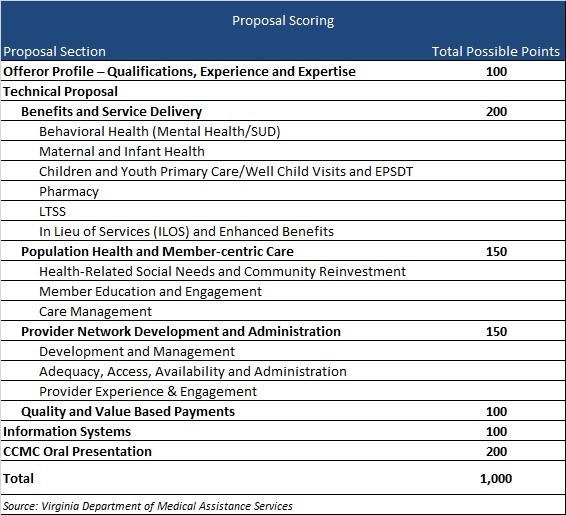
Plans will be awarded up to 1,000 points during the evaluation process based on the categories shown below.

Link to RFP

Leading ideas and solutions for long-term services and supports

Read More

Dedicated to supporting the effectiveness of publicly financed healthcare programs, Health Management Associates (HMA) is committed to promoting the design, financing and operation of effective models of person-centered long-term services and supports (LTSS) which:

Support an individual’s ability to receive services in the most integrated setting

Promote successful community living

Improve integration of LTSS with quality physical and behavioral healthcare

Support Medicare and Medicaid integration and coordination

Address the social determinants of health for people with support needs

Support direct care workforce initiatives for states, managed care organizations and long-term care providers

Support strategic planning focused on long-term care

Support managed care readiness initiatives

What we offer

With deep expertise in the field, our colleagues and the work we do help to shape current system trends. In addition, we support improved outcomes for beneficiaries and successful participation for the wide range of LTSS providers including managed care organizations, states offering critical services, and purchasers through:

LTSS Models of Care

Developing and promoting person-centered integrated, and holistic LTSS models of care

LTSS Quality Standards

Supporting the development of LTSS quality standards and metrics, including technical assistance for NCQA and other accreditation and credentialing

LTSS Regulatory Compliance

Facilitating readiness and compliance with federal and state regulations, including home and community-based settings of care, Medicaid managed care, the Fair Labor Standards Act, and the Americans with Disabilities Act

LTSS Integration

Implementing care management and service delivery models that promote integration of services across physical, behavioral, and LTSS providers and between Medicare and Medicaid including those developed under PACE, managed LTSS, and managed fee-for-service

LTSS Stakeholder Engagement

Supporting effective community engagement by public policy makers, and empowering advocacy organizations and other stakeholders in understanding, shaping, and responding to change

LTSS Delivery and Payment Models

Assisting organizations and providers to prepare and respond to payment and structural changes in LTSS (e.g., managed care, accountable care, value-based purchasing)

LTSS and Social Determinants Design

Designing innovative approaches to addressing the social determinants of health, including improved strategies for affordable and accessible housing, competitive employment for persons with disabilities, access to technology, and social equity-based care delivery models

LTSS Market Analysis

Providing expert market analysis for investors relating to LTSS providers, managed care organizations, service vendors, or emerging trends in the LTSS landscape

LTSS Research and Evaluation

Enabling the use of data to uncover opportunities for improvement and to demonstrate value to ACOs, hospital systems, payers, and funders

Our wide-ranging expertise includes:

Medicaid LTSS waiver and state plan authority options

Operation and oversight of managed LTSS

Public procurements

LTSS provider operations

Federal and state compliance

Care management and care coordination

Workforce development

Strategic planning and practice redesign

LTSS policy analysis

Value-based purchasing

Quality monitoring, evaluation and research

Community capacity and network adequacy

Readiness reviews

Our Clients Include:

Federal, state and local governments

For-profit, not-for-profit and public health plans

Institutional and home and community-based services providers and their associations

National, state and local advocacy organizations

National and regional foundations

Direct care workforce representatives

Investment services entities

Contact our experts:

Headshot of Susan McGeehan

Susan McGeehan

Associate Principal

Susan McGeehan is a multi-faceted healthcare leader with extensive experience in dual eligible programs, long-term services and supports (LTSS), Medicaid … Read more

Arizona releases Medicaid ALTCS-EPD Program RFP

Read Blog

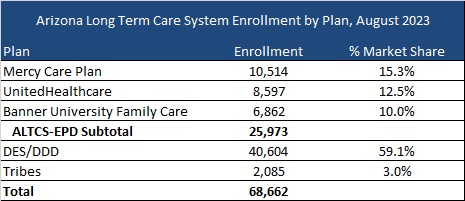
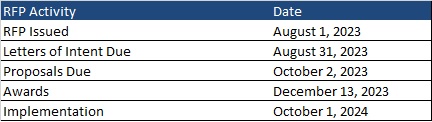
This week, our In Focus section reviews the Arizona Long Term Care System (ALTCS) Elderly and Physically Disabled (EPD) Program request for proposals (RFP), which the Arizona Health Care Cost Containment System (AHCCCS) released on August 1, 2023. The ALTCS-EPD program covers 26,000 individuals, representing approximately 38 percent of the ALTCS managed care population. The remaining ALTCS members are covered under a state-run model through the Department of Economic Security, Division of Developmental Disabilities (DES/DDD) health plans, which provide long-term care (LTC) to individuals with intellectual/developmental disabilities. Contracts for ALTCS-EPD are worth approximately $1.6 billion and will take effect October 1, 2024.

Background

ALTCS is one of the oldest Medicaid managed long-term services and supports (MLTSS) programs in the country, providing integrated physical health, behavioral health, and LTSS to individuals who are 65 years of age or older or who have a disability and require nursing facility level care. Beneficiaries may live in assisted living facilities or receive in-home services. The ALTCS-EPD program covers nearly all Arizonans who are dually eligible for Medicaid and Medicare statewide. Winning managed care organizations (MCOs) also will be required to implement companion Medicare Advantage Fully Integrated D-SNPs (FIDE SNPs) effective January 1, 2025.

Market

Members receive coverage through Banner-University Family Care, Mercy Care Plan, and UnitedHealthcare, depending on their geographic service area (GSA). MCOs will bid on all three GSAs and indicate their order of preference to be awarded. AHCCCS will not award the South GSA only or the North GSA only. At present, in the South region, Mercy Care Plan serves Pima County only. Under the new RFP, AHCCCS will not make an award specific to Pima County; rather the MCO will serve all seven counties within the South GSA.

Together, the plans cover 25,973 individuals (see below).

(United and Mercy administer DDD plans.)

Timeline

Intent to bid forms are due by August 31. Proposals are due October 2, and awards are expected to be announced December 13. As noted previously, implementation is scheduled to begin October 1, 2024.

RFP Link

Webinar replay: Medicaid 1115 justice waivers and special populations: meeting the needs of justice-involved youth

Watch Now

This webinar was held on August 17, 2023. 

HMA’s webinar series, 1115 Medicaid Justice Demonstration Waivers: Bridging Healthcare, focused on helping stakeholders optimize care for persons in carceral settings and during their transition back to the community.

Youth in juvenile correctional settings often have complex medical, behavioral health, developmental, social, and legal needs. Many youth have been exposed to adverse childhood experiences, unsupervised home environments and have lacked access to behavioral health services. Transitioning youth from correctional facilities require high quality transition planning services for successful reentry into the community.  Part 5 of this webinar series delved into the types of care and services needed for youth, so that a whole-person approach can be applied to facilitate successful reentry to the community.

Learning objectives:

  • Understand the unique needs of juveniles in correctional settings
  • Discuss opportunities under CMS State Medicaid Director Level 1115 guidance to support reentry for justice involved youth
  • Discuss effective state models for justice-involved youth
  • Learn how to create a whole-person approach to health needs of juveniles in the justice setting

Other webinars in this series:

CMS releases report on nonemergency medical transportation in Medicaid

Read Blog

This week, our In Focus section reviews the Centers for Medicare & Medicaid Services (CMS) report to Congress on Non-emergency Medical Transportation (NEMT) in Medicaid, released June 20, 2023. CMS found that approximately 3 million to 4 million Medicaid beneficiaries used NEMT services annually between 2018 and 2021 and made recommendations related to Medicaid coverage of NEMT for medically necessary services.

Background

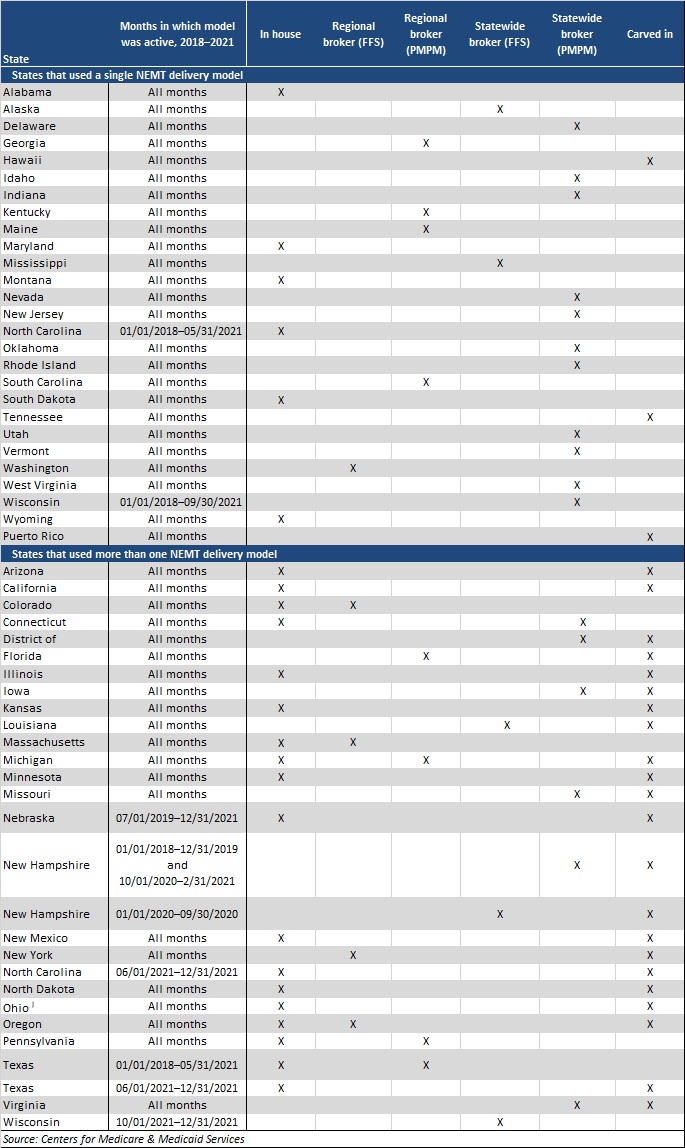
NEMT includes transportation services not limited to public transport, taxis, personal vehicle transport, non-emergency ambulances, air transport, and transportation network companies. Medicaid, unlike private insurers and Medicare, covers NEMT for any covered medical service for beneficiaries with an unmet transportation need. NEMT program administration varies from state to state and can be on a fee-for-service basis, carved out with third-party transportation brokers, or carved into the Medicaid risk-based managed care contracts. Under the Consolidated Appropriations Act, 2021, which made NEMT a statutory requirement, HHS must conduct and submit an analysis of nationwide Medicaid NEMT services to Congress. An initial report was submitted in June 2022.

Table 1. NEMT Service Delivery Models by State, 2018−2021

CMS conducted the analysis using Transformed Medicaid Statistical Information System (T-MSIS) data for calendar years 2018−2021. The analysis covered the number and percentage of Medicaid beneficiaries using NEMT, the average number of NEMT ride days, the types of medical services beneficiaries accessed when using NEMT, monthly trends in use of NEMT versus telehealth services before and during the COVID-19 public health emergency (PHE), and a comparison of the volume of NEMT services used by delivery model and state.

The T-MSIS data has some limitations and may not capture all Medicaid NEMT provided to beneficiaries due to differences in billing practices across states and providers. For example, if states claim certain medical service expenditures as administrative expenditures, T-MSIS will not capture it. Further, the number of ride days undercounts the total number of NEMT rides, as beneficiaries may receive multiple NEMT rides in a day. Because of these and other limitations, the data represents a subset of the NEMT that the Medicaid program covers.

Findings

Approximately 3−4 million Medicaid beneficiaries used NEMT annually in 2018−2021, representing 4−5 percent of Medicaid beneficiaries. Alaska, Minnesota, Arizona, Maine, and Wisconsin had the highest percentage of Medicaid beneficiaries who used NEMT, with up to nearly 11 percent in Alaska in 2021.

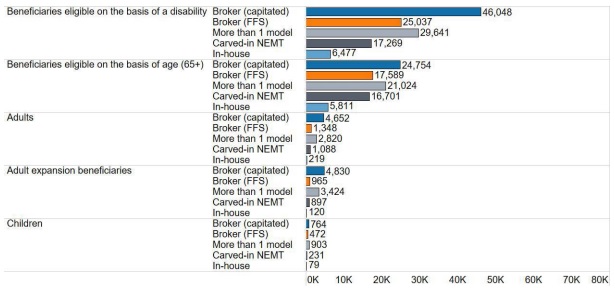
States that used a capitated broker model to deliver NEMT saw the highest use of these services. However, on average, states that used in-house NEMT delivery model claimed a relatively high percentage of NEMT expenditures as administrative expenditures, and NEMT administrative expenditures generally are not captured in the T-MSIS data.

Figure 1. Number of NEMT Ride Days per 10,000 Beneficiaries, by Delivery Model and Beneficiary Subgroup, 2021

Source: The Centers for Medicare & Medicaid Services

Medicaid enrollees with the highest NEMT usage rates included individuals in Money Follows the Person, receiving Section 1915c home- and community-based services, dually eligible for Medicare and Medicaid, and aging adults and people with disabilities. In addition, Medicaid members with certain physical and mental health conditions and those with a substance use disorder had higher rates of usage compared with the average Medicaid members. Medicaid enrollees in remote areas also used NEMT at the highest rates.

During the COVID-19 PHE, rates of NEMT dropped from 3.9 million beneficiaries, or 5 percent of all Medicaid members in 2019, to 3.5 million (4 percent) in 2020 and 3.3 million (4 percent) in 2021. In 2019−2020, the total number of annual NEMT ride days dropped by 37 percent, from 81.3 million to 53.1 million, but increased by more than 4 percent (to 55.5 million) in 2021. On average, the monthly number of NEMT ride days in 2021 remained about 30 percent below pre-PHE levels, and the number of beneficiaries using NEMT remained 23 percent below pre-PHE levels. The COVID-19 PHE caused telehealth to sharply increase. Throughout the PHE, telehealth was used more frequently than NEMT to access certain services.

Recommendations

CMS found that public transit was rarely used for NEMT, even though more than one-third of beneficiaries live in large, urban areas. In the report, CMS recommends that states should find opportunities to improve operations between NEMT and public transit networks to better coordinate services for beneficiaries.

CMS also recommends that states further examine the role of NEMT in improving the use of timely preventive care. Beneficiaries used NEMT to access preventive services at the highest rate of all service types examined. The analysis found some evidence that use of NEMT increases access to preventive services and is cost-effective, implying that increasing the uptake of NEMT may confer cost savings to states and the federal government.

Finally, CMS recommends that states increase awareness of the NEMT benefit. Medicaid beneficiaries’ knowledge of the benefit is low. CMS urges states to work with health plans and providers to share information with beneficiaries about the availability of NEMT.

Link to report

Webinar replay: Medicaid 1115 justice waiver opportunities- medication assisted treatment for substance use disorder in carceral settings

Watch Now

This webinar was held on July 13, 2023.

HMA’s webinar series, 1115 Medicaid Justice Demonstration Waivers: Bridging Healthcare, focuses on helping stakeholders optimize care for persons in carceral settings and during their transition back to the community.

Part 4 focused on access to medication assisted treatment (MAT) for substance use disorder (SUD) during and after transition from a carceral setting into the community, to ensure continuity of care for those leaving incarceration to reduce overdose and recidivism.

Learning Objectives:

  • MAT Trends: Understand benefits of MAT for incarcerated individuals and related risk management for correctional facilities, providers, counties, and health plans.
  • Building Connections to Community-Based SUD Care: Discover approaches to release planning for successful community re-entry for those on MAT to support recovery and reduce recidivism.
  • Integrated and Coordinated Care: Understand the role of community-based and health plan care managers and persons with lived experience in supporting access to MAT and successful community re-entry.

Other webinars in this series:

Watch a replay of Part 1: Medicaid Authority and Opportunity to Build New Programs for Justice-Involved Individuals

Watch a replay of Part 2: 1115 Justice Waivers to Improve Carceral Healthcare Delivery Information

Watch a replay of Part 3: 1115 Justice Waivers: Connecting Community Partners to Improve Transitions of Care

Save the Date – Thursday August 17, 2023, 2 p.m. ET: Part 5: 1115 Justice Waivers and Special Populations: Meeting the Needs of Justice-Impacted Youth

CMS releases national healthcare expenditure and enrollment projections through 2031

Read Blog

This week, our In Focus section reviews the projected healthcare expenditure and enrollment data from the Centers for Medicare & Medicaid Services (CMS) Office of the Actuary, published June 14, 2023. The Office of the Actuary provides annual updates to historical and projected National Health Expenditure data on Medicare, Medicaid, CHIP, and other public insurance programs, as well as commercial healthcare insurance.

CMS projects that the average annual growth for national healthcare spending from now through 2031 will be 5.4 percent. CMS estimated that the number of insured individuals in the United States was projected to reach a high of 92.3 percent in 2022 and would decrease to 90.5 percent by 2031. CMS projects 93.6 million Medicaid and CHIP members will account for more than $1.2 trillion in annual spending in 2031 and that 76.4 million Medicare beneficiaries will account for more than $1.8 trillion in expenditures that year.  A summary of other key takeaways from the actuarial report follows.

Enrollment Projections

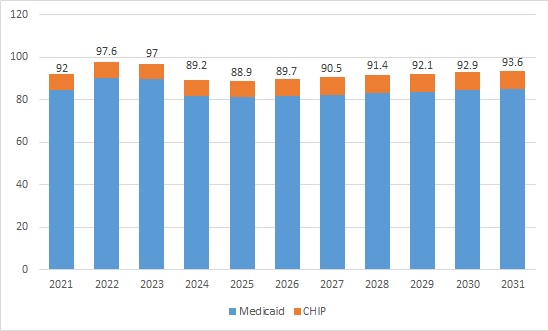
Approximately 92 million people were enrolled in Medicaid and CHIP programs in 2021. Enrollment is projected to have reached a high of 97.6 million in 2022 and is expected to fall between 2023 and 2026 because of Medicaid redeterminations. CMS projects the largest loss in 2024, with 8 million people leaving Medicaid and CHIP that year alone. By 2026, enrollment is projected to hit a low of 89.7 million and start to rise back up in the subsequent years until reaching 93.6 million enrollees in 2031.

Table 1. Historical and Projected Medicaid/CHIP Enrollment (in Millions)

Figure 1. Historical and Projected Medicaid/CHIP Enrollment (in Millions)

Medicare enrollment is projected to continue growing steadily. CMS estimates that Medicare beneficiaries totaled 63.6 million in 2022. By 2031, Medicare enrollment is expected to climb to 76.4 million.

Expenditure Projections

Medicaid expenditures are expected to grow by 5 percent on average in 2022−2031. In 2022, the Medicaid annual growth rate was projected to be −2.1 percent. Following the public health emergency unwinding, average expenditure growth would pick up to 5.6 percent in 2025−2031.

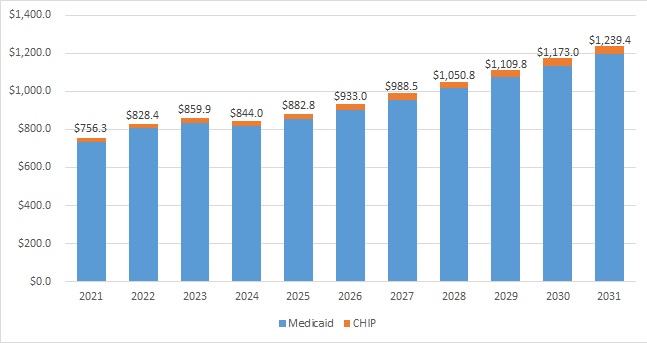
CMS estimated that total Medicaid and CHIP annual spending in 2022 was $828.4 million; by 2031, it is projected to hit $1.2 trillion. For context, private health insurance is projected to reach nearly $2.1 trillion in 2031.

Table 2. Historical and Projected Medicaid/CHIP Expenditures (in Billions)

Figure 2. Historical and Projected Medicaid/CHIP Expenditures (in Billions)

Medicare spending is projected to grow to more than $1.8 trillion in 2031 from $944.2 million in 2022. During this time, average annual expenditure growth is projected to be 7.5 percent. In 2022, spending growth dropped to 4.8 percent compared with 8.4 percent in 2021 because fee-for-service beneficiaries were using fewer emergency department services and as a result of reinstated payment rate cuts associated with the Medicare Sequester Relief Act of 2022.

Medicaid Expenditure Projections by Category

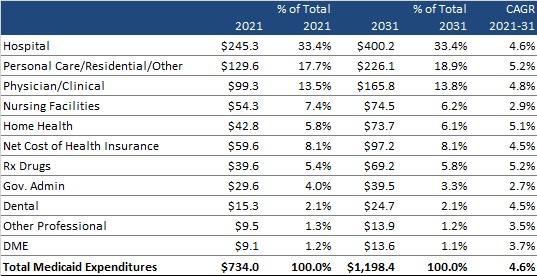
CMS provides a historical and projected breakdown of expenditures by category for Medicaid only (CHIP is bundled with Department of Defense and other public spending). Table 3 summarizes the projected change in annual expenditures for several categories of services and other expenditures. It also shows each category’s percentage contribution to total Medicaid expenditures and the compounded annual growth rate (CAGR) in 2021−2031 for each category of spending. Hospital spending, personal care/residential/other, and physician/clinical expenditures are projected to continue to be the largest contributors to overall Medicaid expenditures, together equaling approximately 65 percent of total expenditures in 2021 and a projected 66 percent in 2031.

Table 3. Historical and Projected Medicaid-Only Expenditures by Category, 2021-2031 (in Billions)

Link to National Health Expenditure Data

Takeaways from the early Medicaid unwinding actions

Read Blog

This week, our In Focus checks in on the Medicaid unwinding work and key issues HMA experts are watching as more states resume their normal policies and processes for determining eligibility. A total of 19 states started disenrollments effective for April or May coverage, and 22 additional states plan to start ending coverage this month. States are scheduled to submit the next monthly report by June 8, 2023.

Background

As explained in earlier In Focus articles, (January 12, 2023; November 12, 2022; and April 6, 2022) federal COVID-19 relief laws allowed states to receive higher federal funding for Medicaid as long as the state did not terminate Medicaid coverage for anyone enrolled in Medicaid during the public health emergency (PHE). One result of the continuous coverage policy was sustained growth in Medicaid enrollment; more than 21 million additional individuals were continuously enrolled in Medicaid for up to three years between February 2020 and March 2023. In December 2022, Congress ended the Medicaid continuous coverage policy after March 31, 2023. States were allowed to begin processing redeterminations as early as February 2023 and start disenrolling ineligible individuals as early as April 2023.

Preparations for the Medicaid unwinding have been under way for well over two years. The Centers for Medicare & Medicaid Services (CMS), states, Medicaid health plans, providers, beneficiary advocates, and other interested stakeholders have been working to ensure that the policies, outreach, and assistance are in place to support this massive eligibility renewal and redetermination initiative.

What Do We Know… Or Not Know?

Most of the available forecasts project between 10-15 million enrollees will lose Medicaid coverage. The Health Management Associates (HMA) insurance mix model projects that more than 10 million of the approximately 90 million Medicaid enrollees are at risk for disenrollment. HMA’s model illustrates the variety in state approaches to managing the resumption of eligibility redeterminations as well as key insights related to the differential impact by Medicaid eligibility categories.

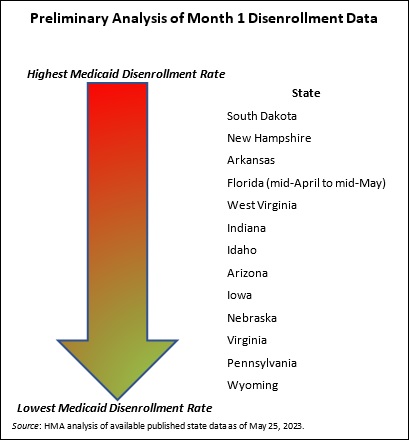
  • Based on published information, the number of individuals who were disenrolled from Medicaid in April through May is likely to approach 500,000. In these early days of the unwinding period, HMA experts are closely reviewing the reports and engaging with key stakeholders in individual states. Several issues already are garnering more attention, such as the impact on child enrollment, churn and experiences in states using the extended reconsideration period flexibility, among others. Stakeholders will want to monitor how these and other program nuances evolve over the next year.
  • We do not yet have robust or consistent data from the states that have resumed their normal processes for determining eligibility. States must submit disenrollment reports to CMS each month, and CMS must publish this information. The states are not, however, required to publish this information on their website. While some states have chosen to publish the data or plan to do so, there is no consistent approach to the specific data states post. For example, while most states publishing a state data dashboard are sharing the number of renewals they are processing each month, only slightly more than half also are sharing the number of renewals resulting in coverage terminations.
    CMS is not expected to publish the state data before the end of June. Once this information is available, the state unwinding reports may provide a more comprehensive and consistent picture of enrollment over the next year.

In addition, the total number of “procedural terminations” currently is difficult to determine. Lack of consistent public reporting creates gaps in the data about the number of individuals disenrolled because they did not provide a timely response to the state’s request for more information (or for other procedural reasons). As Medicaid stakeholders know, the procedural disenrollment number is critical because these individuals could still be eligible for the program.

  • Early disenrollment numbers should be analyzed carefully and in the context of the state. As noted earlier, the full eligibility renewal and disenrollment reports are unavailable at this time. We do know, however, that the available data is best analyzed in the context of the state’s unwinding plan (e.g., how the state is sequencing its eligibility reviews). The sequencing, pace, staffing, messaging consistency, partner outreach and assistance, and other factors will result in variation in state experiences. States are actively analyzing the data as the information is released and considering course corrections that may be needed, which could affect enrollment.
  • Ongoing federal and state collaboration is improving preparations and allowing partners to address concerns as they arise. CMS and states have been transparent about the magnitude of the Medicaid unwinding and the fact that challenges will be inevitable throughout this process. The experiences reported by the first tranche of states to begin their unwinding period reinforce those points. They also provide important lessons for states that are or will shortly resume normal eligibility operations.

What to Watch

HMA’s experts are working with states, Medicaid health plans and their partners, providers, and advocacy organizations to identify and implement solutions to some of the known challenges. We also are looking ahead to forthcoming data, qualitative input, and other important developments that may inform federal and state policies and operations beyond the unwinding period.

  • Unwinding trends. Though it is too early to definitively identify trends, HMA experts are monitoring the early state data, and we are prepared to analyze the CMS reports once they are published. We anticipate the CMS published data could be more instructive regarding the impact of the unwinding on enrollment, including states or regions that could benefit from additional outreach and assistance strategies, disproportionate impacts on certain demographic groups, new flexibilities that states may want to consider, and steps that health plans, hospitals and health systems, providers, and other partners could advance.
  • State operational plans. As of late May, CMS officials reported they have not asked any state Medicaid agency to develop a corrective action plan related to the unwinding; however, this does not mean that federal officials do not have concerns about the experiences and data being reported out of certain states. States, their business partners, and advocates will all benefit from monitoring shifts in state plans, potential future CMS resources and direction to states such as additional reporting or modifying eligibility processes.
  • Coverage Program Transitions. Significant attention has been appropriately placed on the Medicaid disenrollment numbers. HMA experts also are closely watching for new data on the number of individuals who successfully transition and enroll in qualified health plans offered in the Health Insurance Marketplaces. In the short term, the Medicaid unwinding could have a notable impact on total enrollment in Marketplace plans as well as provider payer mix. This could affect longer-term policy, strategy, and operational decisions for officials at the federal and state levels, managed care organizations, providers, and other stakeholders. For example:
    • Health insurers should assess the opportunity to participate in the Marketplace program. Other insurers may need to develop new strategies to remain competitive in the Marketplace.
    • Providers have similar assessments to conduct related to changes in the number of uninsured people to whom they deliver care, as well as their payer mix and the Marketplace plan networks in which they participate.
    • Policymakers may revisit Marketplace regulations and standards in response to enrollment growth, enrollee demographics, and acuity of enrollees in Marketplace plans.

Medicaid agencies, health plans, all types of Medicaid providers, and advocacy organizations should continue to analyze their immediate needs during the Medicaid unwinding. They should also be planning to identify and incorporate lessons from this transition period, as well as preparing for policy and operations changes in the post-unwinding environment.

HMA: What We’re Watching

On June 8, 2023, the Health Care Payment Learning & Action Network (LAN) will hold a virtual meeting focused on accountable primary care. The LAN — an initiative supported by the Centers for Medicare & Medicaid Services (CMS) Innovation Center — is a group of public and private health care leaders that provide thought leadership, strategic direction, and ongoing support to accelerate our care system’s adoption of alternative payment models (APMs). During the session, CMS Administrator Chiquita Brooks-LaSure and the Innovation Center’s Deputy Administrator and Director Liz Fowler will share their vision for accountable primary care.

Over the past several months CMS leaders have discussed their intent to accelerate the transition to value-based care and more accountable primary care. They have identified key principals and hinted at certain components of a potential new primary care model. Additionally, the Innovation Centers’ earlier strategy documents have highlighted the imperative to include payers beyond Medicare, importantly Medicaid and commercial insurers, in models to achieve person-centered accountable and equitable care.

This meeting is notable because the Innovation Center’s models can drive transformational shifts in health care delivery and payment across public and private payers at the system and practice levels. Providers, health systems, insurers, and other interested stakeholders will want to closely monitor the LAN discussion for more information about CMS’ evolving thinking and future opportunities related to a potential model for accountable primary care. HMA experts are available to work with health care organizations and stakeholders to interpret and respond to developments flowing from the LAN session.

Read more about LAN meeting registration and information.

If you have any questions, contact our experts below.

Ready to talk?