
Insights

HMA Insights: Your source for healthcare news, ideas and analysis.

HMA Insights – including our new podcast – puts the vast depth of HMA’s expertise at your fingertips, helping you stay informed about the latest healthcare trends and topics. Below, you can easily search based on your topic of interest to find useful information from our podcast, blogs, webinars, case studies, reports and more.

Show All | Podcast | Blogs | Webinars | Weekly Roundup | Videos | Case Studies | Reports | News | Spotlight

Filter by topic:

Receive timely expert insights on topics you care about.

Select Topics

88 Results found.

Blog

Driving change in healthcare delivery: HMA Spring Workshop shapes policy and strategy frameworks for value-based care implementation

Read Blog

Federal policy frameworks establishing alternative payment models in Medicare and Medicaid have been the kick-starter of value-based care (VBC) innovation in healthcare delivery. However, employers provide health insurance to most Americans, and very few employers – with the exception of jumbo, self-insured employers  – have leaned heavily into VBC. Small- and medium-sized firms rely on brokers to find an affordable health insurance plan, and often lack the resources required to negotiate more. Though the tide has been changing, our fragmented payment system has yielded only a subset voluntarily taking substantial risk for patient outcomes.

It has been said that to truly transform our American healthcare system to pay for value – improved outcomes for lower cost – it would require better alignment across public and commercial payers to support care providers in shifting their business models to take risk.

Quality and cost information are critical to implement VBC payment and delivery systems. Federal initiatives in Medicare and Medicaid have opened the door for providers, payers, and innovators  to use health information to improve outcomes, with patients more engaged and more in control; the “Universal Foundation” announced by the Centers for Medicare and Medicaid Services (CMS) in 2023 seeks to align quality measures across the more than 20 CMS quality initiatives; and policies included in the 21st Century Cures Act and CMS Interoperability and Patient Access rule are creating more transparency on price and quality.

By enabling an infrastructure to measure, digitize, and share cost and quality information, federal and state governments have set the stage for greater collaboration among all purchasers – including employers – and the healthcare delivery system to redesign care that addresses health related social needs and behavioral health, ensuring that healthcare is provided equitably and sustainably. As the care delivery system is better able to deliver high value care, more employers will demand this for their workforce to provide a better benefit to their workers.

These issues, and more, will be a part of the expert-led conversation on VBC at HMA’s 2024 Spring Workshop March 5-6, in Chicago. This workshop offers a unique opportunity for payers, government officials, community organizations, vendors, and providers to have an unvarnished conversation about the challenges, lessons, and opportunities in implementing VBC. The meeting is designed to share insights, change-oriented strategies and actions that advance VBC from top industry experts, health plan executives, state and federal leaders, and policy experts. 

Our working sessions will feature solutions-focused conversations among peers:

  • Care delivery measures that drive outcomes, equity, population health
  • Payment & risk management models for payment, pricing, attribution
  • Data that is interoperable, consumer focused, deploying technology that is aligned to deliver on strategic objectives
  • Policy & Strategy Frameworks at federal, state, and local levels that incentivize VBC

The closing panel will look at ways to take action through policy and collaboration to move our industry toward more sustainable approaches to healthcare payment and delivery.

To learn more and register for this unique event, please visit HMA’s 2024 Spring Workshop page. Act fast – online registration ends Wednesday, February 28!

Blog

Driving change in healthcare delivery: HMA Spring Workshop dives into metrics, coordination, and partnerships for value-based care

Read Blog

Within the healthcare sector, there is an imperative for a comprehensive understanding of the care delivery framework that will positively impact outcomes, equity, and the overall health of communities. Among the drivers for this imperative is renewed focus among Medicare officials and interest from states and employers to transition to alternative payment methods that focus on value for payers and patients. A variety of care delivery structures and metrics can be used, and all have a role in driving value-based care (VBC).

One critical element of VBC hinges on whether and how healthcare organizations focus their care delivery structures on patients. VBC also incorporates metrics that further validate the ability of the system to positively impact patient outcomes, reduce health disparities, and improve population health. Emphasizing technology, interdisciplinary collaboration, and streamlined communication can revolutionize the care delivery model.

The HMA workshop-style spring conference on March 5 and 6, is designed to delve deeply into the intricacies of these care delivery frameworks and metrics within the context of VBC. This unique workshop will challenge attendees to roll up their sleeves and actively engage to become part of the solution through an interactive conversation, allowing participants to discuss real-world scenarios, analyze data and metrics and, using small-group breakout sessions, engage in focused and in-depth knowledge sharing.

Break-out sessions facilitated and led by subject matter experts will challenge attendees to identify new solutions around care delivery structures and contractual metrics that improve outcomes, that may include:

  • Engaging providers around consistent approaches to enhance patient outcomes, optimize treatment plans, and ensure the delivery of evidence-based, high-quality care.
  • Developing approaches for patient engagement that improve care delivery and foster active involvement and collaboration between patients and healthcare providers.
  • Crafting strategies for seamless coordination among healthcare providers, spanning sectors, and involving non-traditional providers and community organizations.
  • Understanding components of effective provider network agreements and how they contribute to achieving healthcare goals through strong partnerships and collaborations.

The workshop promises to be a dynamic platform for professionals in the healthcare sector, offering valuable insights, practical strategies, and collaborative opportunities to secure a place for high-quality value-based care. By focusing on care delivery structures, patient engagement, care coordination services, and provider network agreements, attendees will be well-equipped to navigate the complexities of healthcare and contribute to a healthier, more equitable future.

To learn more about the HMA 2024 Spring Conference Workshop and to register, visit the conference website.

Blog

Devising a framework for non-profit fundraising

Read Blog

Money is always “top-of-mind” among non-profit leaders, from CEO’s at Federally Qualified Health Centers (FQHCs) to Executive Directors at Community-based Organizations. To supplement projects and retain the ability to further their missions, non-profit organizations (NPOs) need funding. When non-profits and funding sources are not well aligned, programs are cut, curtailed, or never launched. Assisting clients in pursuing alternative funding sources requires a creative yet methodical approach to promote success and boost organizational sustainability.

Devising a framework for non-profit funding presents challenges. Funding models/strategies cannot be too general nor too specific. There is not a single approach, a one size fits all model or sourcing strategy for non-profits to pursue. Instead, non-profit leaders must clearly articulate the funding model or strategy that best supports the growth of their organization and use that insight to examine the potential funding opportunities preeminently associated with organization-specific success. For example, a community health center serving patients covered by Medicaid and a non-profit organization doing development work in housing for the homeless are both funded by the federal government, yet the type of funding each receives and the decision makers controlling that funding are very different. Utilizing the same funding methodology for the two would not be productive. Fortunately, there are multiple methods and strategies to acquire funds. Non-profits should be strategic in seeking approaches suitable to their needs and capabilities and be creative in pursuing more than one model to acquire supplemental funds.

The core success of NPOs is based on a range of funding options, private grants and government grants, corporate sponsorships, private funding, endowments, and community fundraising. There is also a considerable amount of money available from the public sector, businesses, charitable trusts, foundations, in-kind donations, and local and state legislative bodies. The goal of any successful fundraising campaign is to convey fully what the money is or will be supporting and clearly articulate the projected positive outcomes that will be derived from the funding. Once the project is fully clarified, the next step is research. Many funding avenues exist. The NPO must decide which funding sources are best suited for each project and pursue those options.

When choosing potential funding sources, NPOs must consider the size of their organization, their mission, and various other defining characteristics. Once this internal due diligence is completed, revenue needs should be clarified, and a tactical fundraising strategy outlined. Creating a “ratio” with the end-result in mind allows for revenue diversification and avoids the too heavy reliance on one income source. For example, an NPO might project obtaining 50% of needed revenues from grants, 20% from a corporate sponsorship, and the remaining 30% from a foundation. Once the funding sources have been identified, the types of decision makers and the motivations of these decision makers must be evaluated. Then, a tactical roadmap designed to obtain the needed funding should be implemented. 

As society looks to the non-profit sector to solve important problems, a realistic understanding of funding models is increasingly important to realizing these aspirations. As consultants whose mission is to turn challenges into triumph for our clients, championing efficacious, high-yielding funding models ensures long-term viability for the organizations we serve.

Success relies on planning. It is much better to be proactive than reactive. Consider your organization’s funding needs, do your research, and lay the groundwork before diving into any fundraising pursuit. An assessment of your organization’s current funding strategies is essential. What is working; what is not? Is the current funding source reflective of the organization’s mission and values? Use the answers to these questions to make decisions and recommendations on which fundraising strategies to source. Get creative! Brainstorm unconventional ways your organization will stand out to potential funders, but be analytical. Balance creativity with data, keeping in mind which funding strategy reflects the best return. Focus time and energy on the funding model that will be most reliable, profitable, and feasible.

The non-profit world rarely engages in a succinct conversation about an organization’s appropriate long-term funding strategy. That is because the different types of funding that fuel non-profits have never been clearly defined. More than a poverty of language, this represents and results in a poverty of understanding and clear thinking. As consultants, HMA can provide an outside perspective and sort through the minutia presenting a clear, methodical, appropriate path to fundraising success.

Potential links to aid in your fundraising endeavors:

HMA works with a wide variety of healthcare clients, including FQHCs, community-based organizations, hospitals, provider practices, behavioral health, and managed care organizations, and can help with:

  • Grant Writing
  • Technical Assistance
  • Strategic Planning
  • Financial planning, Implementation and Optimization

For more information about how HMA can help your organization’s grant and funding strategies, contact our experts below.

HMA News

Health Management Associates Successfully Completes SOC 2 Type 2 Examination

Read News

Health Management Associates (HMA), a leading independent, national healthcare consulting firm today announced that it has successfully completed a Service Organization Control Type 2 (SOC 2 Type 2) audit.

The SOC 2 Type 2 audit was developed by the American Institute of Certified Public Accountants to evaluate an organization’s information security controls over a period of time​. It assessed both the suitability of HMA’s controls and its operating effectiveness, covering the HMA organization as a whole, service offerings, resources used to deliver client work, and technical (cybersecurity) and non-technical controls (administrative strengths such as excellent training and a culture that promotes anti-fraud and ethical behaviors).

“Increasingly, completing a SOC 2 Type 2 audit is an important distinction for many of our clients and partners,” said Doug Elwell, chief executive officer. “Achieving this with no material findings across the firm is yet another way to meet client needs and further demonstrates our commitment to our core values of accountability, client commitment and integrity.”

Founded in 1985, HMA is an independent, national research and consulting firm specializing in publicly funded healthcare and human services policy, programs, financing, and evaluation. Clients include government, public and private providers, health systems, health plans, community-based organizations, institutional investors, foundations, and associations. With offices in more than 30 locations across the country and over 700 multidisciplinary consultants coast to coast, HMA’s expertise, services, and team are always within client reach. Learn more about HMA at healthmanagement.com, or on LinkedIn and X.

Blog

Driving change in healthcare delivery: payment models and risk management at HMA Spring Workshop on value-based care

Read Blog

Is the concept of value-based care (VBC) still relevant in today’s healthcare landscape or just a buzzword? Some argue that the financial challenges brought about by the pandemic have steered our healthcare delivery systems away from prioritizing value. However, many experts remain optimistic that value-based care is the key to achieving our overarching objectives of a more equitable, sustainable, high-quality healthcare system.

Kelsey Stevens, a principal at Wakely, an HMA Company, led a session on value-based care at the HMA Fall Conference. Her panelists felt strongly that value is critical to a functional and patient-focused healthcare system because the alternative is out of control spending and poor health outcomes. In fact, value-based care is flourishing in new ways as we look to integrate behavioral health and address health related social needs. There are lessons to be learned from early experiments, new models being built, and new models to be designed.  Both public and private payers are pursuing new ways to take financial risk to deliver improved healthcare outcomes, focusing on solutions for higher risk populations or circumstances where quality of outcomes are indefensibly poor (i.e., maternal outcomes).

This enthusiasm felt by the wide variety of executives present at that fall meeting has inspired HMA to focus an entire conference on value. But not just another conference on value. Our internal experts felt strongly about hosting a forum for healthcare organizations to truly tackle the end-to-end challenges of VBC… so we are doing that.

Those who join us March 5-6 in Chicago will experience a workshop designed to “get real” about transforming healthcare quality and value. We are convening participants from all parts of the healthcare industry who have the collective experience to pinpoint common challenges and to build a path forward.

The workshop is organized into four cohorts:

  1. Payment and Risk Management Models,
  2. Policy and Strategy Frameworks,
  3. Data and Technology, and
  4. Care Delivery Frameworks

Each will produce concrete recommendations for action, as well as building new relationships among peers to sustain this change. In the cohort on Payment and Risk management, discussion will be focused on existing and new models for payment, pricing and attribution methodologies, risk mitigation levers along the value continuum, and approaches to engage employees in focusing on patient-centered value in the care they provide.

One of our fall panelists, Eric Mattelson, chief actuary at Zing Health, said “I’m still convinced that value-based care is the future of healthcare and the Sisyphean struggle to get there will ultimately be worthwhile.” We echo this sentiment wholeheartedly, and if you share this conviction, we encourage you to secure your spot today and become a part of this exciting and transformative event.

Our sessions and networking events offer an opportunity to delve into approaches to develop and manage risk-based contracting across sectors, establish effective partnerships with safety net providers and community-based organizations, apply a value lens to deployment of technology and data analytics, and develop health equity plans aligned with value principles and policies.

Future blogs in this series will touch on elements from the other 3 cohorts on VBC that make up the balance of the workshop. To learn more and register go to HMA’s 2024 Spring Workshop page.

Blog

Advancing Life Sciences with expertise across healthcare

Read Blog

Your organization’s success relies on understanding evolving market dynamics and navigating a complex statutory and regulatory environment. Drug, device, and diagnostic firms, from established to start-up, come to HMA when they want experienced partners who can help with regulatory strategy, coding, coverage, and payment solutions, investment strategy, navigating the complexities of federal and state law, or even creating new policy. HMA, working with our partner companies, provides consulting with depth and breadth throughout the life sciences sector and the broader healthcare industry.

We work with drug, device, and diagnostic companies and their trade associations, pharmacies, physician specialty societies, hospitals, health systems, and community health centers, as well as investment firms and their portfolio companies.

Before joining HMA, our team spent years as senior officials in Medicare and Medicaid; cabinet-level health secretaries; and policy advisors to governors and other elected officials. They also served as directors of large nonprofit and social services organizations, top-level advisors, and C-level executives. Our team is expert in federal and state policy, reimbursement, actuarial consulting, medical coding support, public affairs, and corporate development.

Our Life Sciences team, comprised of experts across our firm, can help with:

We help you navigate the complexities of FDA regulation to help with product development and marketing authorization strategies and regulation throughout the product lifecycle. 

Regulatory policy counseling

Product development and target product profile

FDA authorization strategy

Post-approval compliance  

Contact our FDA Experts:

Clay Alspach, Principal, Leavitt Partners
Eric Marshall, Principal, Leavitt Partners

We help your organization understand the commercial market for life sciences products and develop strategies to support patient access, product launches and growth, and value.

Market intelligence, including market, customer, and stakeholder analysis

Strategic planning, considering risk-based contracting, value-based care, and population health

Business development and strategy

Formulary and market access insights

Go-to-market and launch strategies

Contact our Commercial Experts:

David Kulick, Managing Director, HMA
Spencer Morrison, Associate Principal, Leavitt Partners
Rebecca Nielsen, Managing Director, Leavitt Partners
Alex Rich, Managing Director, HMA

Experts in Medicare, Medicaid, and the commercial market, we help you understand and navigate the complexities of coding, coverage, and payment for approved products and develop and execute strategies to support product access and value.

Code assessment and recommendation

Coverage mapping and guidance

Payment strategy across settings

CMS engagement

Emerging technology strategies

Alternative payment model (APM) development

Payment change impact modeling

Contact our Reimbursement Experts:

Amy Bassano, Managing Director, Medicare, HMA
Mark Desmarais, Principal, HMA
Zach Gaumer, Principal, HMA
Kevin Kirby, Managing Director, HMA
Rachel Kramer, Principal, HMA
Clare Mamerow, Principal, HMA

We help you understand how evolving Federal policy impacts your business and develop strategies for creating and advancing Federal policy that advances value and your business.

Congressional and Administration intelligence and strategy

Policy development and strategy

Multi-sector alliances to create and advance new policy

Policy modeling and CBO scoring projections

Contact our Federal Experts:

Clay Alspach, Principal, Leavitt Partners
Amy Bassano, Managing Director, Medicare, HMA
Mark Desmarais, Principal, HMA
Zach Gaumer, Principal, HMA
Kevin Kirby, Managing Director, HMA
Rachel Kramer, Principal, HMA
Clare Mamerow, Principal, HMA
Eric Marshall, Principal, Leavitt Partners
Sara Singleton, Principal, Leavitt Partners
Josh Trent, CEO, Leavitt Partners
Liz Wroe, Principal, Leavitt Partners

We help you understand how evolving State policy impacts your business and develop strategies to support product access and value in Medicaid programs.

State-related access issues

State policy impact modeling

State research support

Contact our State Experts:

Clay Alspach, Principal, Leavitt Partners
Stephen Palmer, Managing Principal, HMA
Matt Powers, Managing Director, HMA
Josh Trent, CEO, Leavitt Partners

We work with investment firms and their portfolio companies to provide insight that helps you invest wisely in the rapidly evolving healthcare marketplace.

Comprehensive due diligence studies

In-depth research projects

Billing and compliance reviews

Identification, analysis, and outlook on federal, state, and local reimbursement/regulatory issues

Contact our Investment Strategy Experts:

David Kulick, Managing Director, HMA
Alex Rich, Managing Director, HMA

Project Spotlight

Pipeline research and policy recommendations to address new innovative therapies

A large national pharmaceutical manufacturer hired HMA, The Moran Company, and Leavitt Partners, both HMA subsidiaries, to assess the current pipeline of innovative therapies, examine current reimbursement policies to assess long-term compatibility with the adoption of innovative therapies and novel delivery mechanisms, and make policy recommendations to address any challenges identified through the process.

READ NOW
Brief & Report

23rd annual Kaiser Family Foundation state Medicaid budget survey released

Download

The 23rd annual Medicaid Budget Survey conducted by The Kaiser Family Foundation (KFF) and Health Management Associates (HMA) was released on November 14, 2023 in the report: Amid Unwinding of Pandemic-Era Policies, Medicaid Programs Continue to Focus on Delivery Systems, Benefits, and Reimbursement Rates”.

Survey results show that states expect a sharp increase in Medicaid spending that is a direct result of lower federal spending as Covid relief and enhanced matching declines. This budget pressure is compounded by increasing provider rates, workforce recruitment and compensation challenges, increased spending on behavioral health and maternity care, and spending on programs that improve health related social needs. These budget pressures will create a very challenging environment for state policy makers in the coming years.

The report was prepared by Kathleen Gifford, Aimee Lashbrook, Caprice Knapp, Beth Kidder from HMA and Leavitt Partner’s Bill Snyder; and by Elizabeth HintonElizabeth WilliamsJada RaphaelAnna MudumalaRobin Rudowitz from the Kaiser Family Foundation. The survey was conducted in collaboration with the National Association of Medicaid Directors (NAMD).

Blog

Health Management Associates selected as CalAIM Technical Assistance vendor

Read Blog

One of only two firms selected in all seven domains out of 46 vendors.

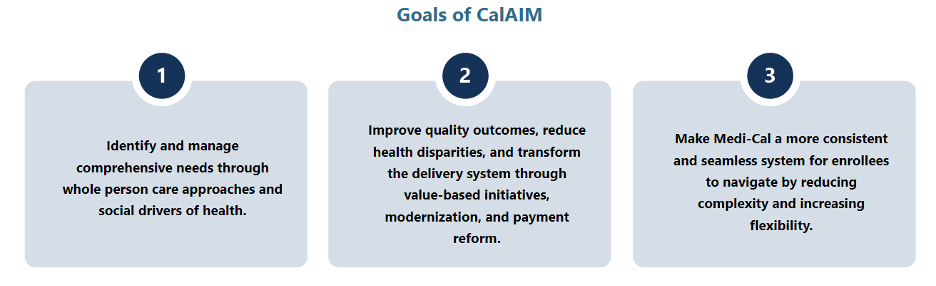
The California Department of Health Care Services (DHCS) has developed a multi-year initiative whose goal is to improve health outcomes and health care quality through broad delivery, payment, and program reforms known as California Advancing and Innovating Medi-Cal (CalAIM). This includes the introduction of new programs and changes to existing programs that will occur over the span of five years. CalAIM further expands upon prior initiatives, such as Whole Person Care, the Health Homes Program, and the Coordinated Care Initiative, and strives to integrate California’s delivery systems to better facilitate the overall Medi-Cal program.

Image source

With the rollout of these programs and the vast requirements associated with them, DHCS and California’s Medi-Cal managed care health plans are now tasked with the challenge of implementing CalAIM and enabling the participation of community providers and partners in these opportunities. To support these partners, DHCS developed a funding initiative, known as Providing Access and Transforming Health (PATH) to aid in strengthening capacity and infrastructure of Community Based Organizations, public hospitals, county agencies, and others to stand up CalAIM. This five-year, $1.85 billion initiative includes the creation of a virtual Technical Assistance (TA) Vendor Marketplace that organizations can use to request resources and support from approved vendors through services that are fully paid for by the State.

Health Management Associates (HMA) is recognized as a valued partner to Payers, Community Based Organizations, public hospitals, and county agencies and has deep expertise in CalAIM policy, operations and implementation. Recognized for our extensive capabilities in the field, HMA is one of only two firms out of 46 vendors that received State approval to serve as a technical assistance vendor on the PATH Technical Assistance (TA) Marketplace for all seven domains:

  • Domain 1: Building Data Capacity: Data Collection, Management, Sharing, and Use
  • Domain 2: Community Supports: Strengthening Services that Address the Social Drivers of Health
  • Domain 3: Engaging in CalAIM Through Medi-Cal Managed Care
  • Domain 4: Enhanced Care Management (ECM): Strengthening Care for ECM Population of Focus
  • Domain 5: Promoting Health Equity
  • Domain 6: Supporting Cross-Sector Partnerships
  • Domain 7: Workforce

HMA also has expertise in and hands-on experience with addressing the unique challenges experienced by providers and partner agencies serving rural communities. Please visit the PATH Technical Assistance (TA) Marketplace to access TA resources that can help strengthen capacity to provide high quality Enhanced Care Management (ECM) and Community Supports services for Medi-Cal members.

Blog

Digital innovation to be a featured topic at 2023 HMA fall conference

Read Blog

Advancements in digital health and data technology have made for rapid and remarkable transformation of the healthcare landscape. From wearable devices to mobile health apps to telemedicine platforms, the integration of digital solutions and patient data is disrupting every facet of healthcare – to say nothing of the AI revolution that has only just begun. While this innovation is exciting and meaningful, it still has runway to truly deliver “better, cheaper, faster” for patients. These innovations and others will be featured at Health Management Associates annual fall conference, being held October 30-31, 2023.

Digital innovation has graduated from its “experimentation/compliance” phase and is now in its “expectation of results” phase. Healthcare payers and providers should incorporate digital into core payment and delivery strategies to deliver better outcomes and a better care experience at a most efficient cost. Health data management is creating more efficient platforms to provide the right care at the right time to the right patient. Federal policy programs like the 21st Century Cures Act, and CMS Interoperability and Patient Access rule have opened the door for providers, payers, and applications to make better use of health information, with patients more in control. 

While this level of innovation is exciting anywhere, it is particularly exciting to see how it is enabling improvements in publicly funded healthcare programs to deliver more effective care. HMA consultants are leading conversations and presentations on how digital innovation is driving change in Medicare, Medicaid, and state marketplaces. 

Key Sessions (full agenda and panelists here)

The Dynamic World of Publicly Sponsored Health Care: Trends and Innovations: Learn about new payment models, quality and equity initiatives, new products and services, workforce, likely policy initiatives, and new ways of reaching and serving members. (Monday 9:15-10:30am plenary session)

Digital Health, Interoperability, and Information Sharing: From Compliance to Innovation: Discover how early adopters will show how they have moved from compliance to innovation by embracing data sharing, FHIR APIs, and third-party applications using real-time data. (Monday 1:30-3:00pm breakout session)

The Pitch: Innovative and Potentially Disruptive Models in Care DeliveryHear the latest innovations in care delivery models and will also gain an understanding of how to best approach managed care partners when considering value-based contracting or other network arrangements. (Monday 3:30-5:00pm breakout session)

Behavioral Health System Redesign: Learn why federal and state governments and the healthcare delivery system must collaborate in new and innovative ways to meet the rapidly growing demand for a more integrated behavioral health system (Sunday preconference, this session and others running 1pm – 5pm)

To learn more about HMA’s work in the digital innovation space or digital health work, please contact our experts below.

Blog

Learning the invaluable lessons of value-based care at 2023 HMA conference

Read Blog

If you search the term “value-based care” on the internet you will find over 2.5 million hits on that term alone. No one would disagree with the need to provide value to patients and purchasers, but how we define value differs based on where we sit. Value is paying for outcomes, not volume of services. Value is ensuring that patients get the right care at the right time. Value is ensuring that purchasers pay a reasonable cost for the highest possible quality. Value is ensuring that healthcare is provided equitably and sustainably. Implementing value is even trickier than defining it, given the complexity of who pays for care and the challenges of measuring the outcomes we seek to reward.  

From the top office of HHS to the back office of a health center and everywhere in between, HMA leaders have been part of our collective journey to value: advancing policy and regulatory change, calculating risk and setting prices, crafting alternative payment models, integrating social services and behavioral health, and coaching industry leaders to make important changes to their business models to adapt to a more sustainable approach to American healthcare. These experiences – both successes and challenges – provide a unique perspective from which to advise clients on transformation of healthcare.  

The HMA 2023 fall conference, scheduled for October 30-31, 2023, has thoughtfully curated several discussions to educate, enlighten and motivate attendees on industry standards and navigating the practicality of providing value in care, coverage, and patient experience in publicly funded healthcare:  

Leading the Charge on Value, Equity and Growth: The Future of Publicly Sponsored Healthcare: Discuss how these public programs came to be the industry standard bearers and what this shift means for outcomes, affordability, policy, and the overall direction of U.S. healthcare.  

Positive Change and the Growing Importance of Managed Care in Publicly Sponsored Healthcare: Discuss the future of publicly sponsored healthcare, outline promising initiatives aimed at improving coverage and care, and address key concerns over funding, policy, equity, and coordination between government, plans, providers, and members.  

The Future of Delivery Systems: Achieving Operational and Financial Sustainability: Discuss a wide range of practical approaches to prepare for the future, including managing cash flow, optimizing the workforce, developing long-term reimbursement plans, improving operational efficiency, and addressing changes in government policy.   

Real Talk from the Trenches of Value-based Payments: Learn about the advantages and pitfalls of value-based payments, with important insights from organizations that have made it work.  

Navigating Change in Medicare Advantage: A Roadmap for Success: Discuss what Medicare Advantage plans must do to meet the demanding, new requirements – all against a backdrop of continued efforts to improve equity, access, outcomes, and cost.   

In addition, a pre-conference workshop on behavioral health will be held the afternoon of October 29th, prior to the official start of the conference. This workshop will highlight the integral role of behavioral healthcare in improving patient outcomes across the continuum of publicly sponsored healthcare programs.  

We are excited to engage with industry experts throughout these discussions about value-based care and forge a better path forward toward a more sustainable and equitable system of care.  

Blog

What does passage of the “debt ceiling” bill mean for the healthcare workforce?

Read Blog

On May 31, the House passed H.R. 3746 – the Fiscal Responsibility Act of 2023, otherwise known as the “debt ceiling” bill, which increased the federal debt limit, established new discretionary spending limits, rescinded unused funds, and expanded work requirements for federal programs. It was passed by the Senate on June 1 and will soon be signed into law.  What does all this have to do with healthcare workforce? Well, part of the rescindment plan comes from $28 billion in unused pandemic funding, with a substantial portion of those funds that were allocated for healthcare workforce efforts. This includes funds set to be used for mental health and substance use disorder training, grants to improve mental health and burnout in the healthcare workforce, and additional educational and training grants for promoting future workforce. Overall, part of $28 billion specifically includes removal of $1.7 billion from the Centers for Disease Control and Prevention (CDC) and $13.4 billion from the Department of Health and Human Services (DHHS), including $10.4 billion from public health and social services emergency funds.

Washington DC Capitol dome detail with waving american flag

So, what does this mean for the healthcare workforce? It means healthcare organizations will need to continue to optimize their current and future workforce plans, without additional funding that could provide some relief.

At Health Management Associates (HMA), our healthcare workforce experts have not only partnered with health system leaders to identify real-world solutions, we have directly experienced the same challenges, because our team includes physicians, nurses, advanced practice providers, and former health system operations and financial executives who share the same lived experiences.

HMA offers a number of workforce solutions to healthcare communities across the spectrum. We cannot fill all your staffing gaps tomorrow; however, we can give you an innovative, model-of-care plan designed to lower costs, increase revenue, and position organizations for long-term financial success and operational sustainability.

With HMA’s Delivery System Optimization Team, organizations will benefit from:

  • An experienced team of health system leaders, bedside clinicians, and workforce subject matter experts with real-world experience and modern health care delivery solutions
  • A thorough quantitative and qualitative assessment including:
    • Workforce capacity, needs, and gap analysis.
    • Leadership and governance structure evaluation.
    • Key regulatory and policy gap analysis.
    • Compensation and benefits review.
    • Clinical and/or non-clinical workflow evaluation.
    • Provider billing practices and quality metric capture.
    • Provider and staff utilization analysis.

What organizations receive is:

  • A customized, comprehensive phased implementation plan that:
    • Improves cash flow and maximizes revenue.
    • Reduces turnover, increases retention, and improves health system culture.
    • Optimizes the ‘Model of Care’ delivery while still maintaining quality and safety.
    • Provides solutions for long-term financial success and operational sustainability.
    • Offers on-going executive and leader coaching services to help provide support through the change management process.

Today’s healthcare workforce challenges are unwavering, especially given the recent passage of the “debt ceiling” bill. From significant workforce shortages, to rising costs and competition, to decreasing employee engagement and burnout, today’s health systems face tremendous challenges. But by understanding workforce and health system needs and identifying gaps and inefficiencies, employers can fully utilize the employees they have to their highest potential and deliver care more effectively and efficiently.  Here at HMA, our delivery system optimization team can help health care communities struggling with workforce challenges do just that.

Contact our healthcare delivery system experts, who can partner with your organization to design a custom workforce solution for you.

Blog

HMA annual conference on innovations in publicly sponsored healthcare

Read Blog

Innovations in Publicly Sponsored Healthcare: How Medicaid, Medicare, and Marketplaces Are Driving Value, Equity, and Growth

Pre-Conference Workshop: October 29, 2023
Conference: October 30−31, 2023
Location: Fairmont Chicago, Millennium Park

Health Management Associates has announced the preliminary lineup of speakers for its sixth annual conference, Innovations in Publicly Sponsored Healthcare: How Medicaid, Medicare, and Marketplaces Are Driving Value, Equity, and Growth.

Hundreds of executives from health plans, providers, state and federal government, investment firms, and community-based organizations will convene to enjoy top-notch content, make new connections, and garner fresh ideas and best practices.

A pre-conference workshop, Behavioral Health at the Intersection of General Health and Human Services, will take place Sunday, October 29.

Confirmed speakers to date include (in alphabetical order):

  • Jacey Cooper, State Medicaid Director, Chief Deputy Director, California Department of Health Care Services
  • Kelly Cunningham, Administrator, Division of Medical Programs, Illinois Department of Healthcare and Family Services
  • Karen Dale, Chief Diversity, Equity, and Inclusion Officer, AmeriHealth Caritas
  • Mitchell Evans, Market Vice-President, Policy & Strategy, Medicaid & Dual Eligibles, Humana
  • Peter Lee, Health Care Policy Catalyst and former Executive Director, Covered California
  • John Lovelace, President, Government Programs, Individual Advantage, UPMC Health Plan
  • Julie Morita, MD, Executive Vice President, Robert Wood Johnson Foundation
  • Anne Rote, President, Medicaid, Health Care Service Corp.
  • Drew Snyder, Executive Director, Mississippi Division of Medicaid
  • Tim Spilker, CEO, UnitedHealthcare Community & State
  • Stacie Weeks, Administrator/Medicaid Director, Division of Health Care Financing and Policy, Nevada Department of Health and Human Services
  • Lisa Wright, President and CEO, Community Health Choice

Publicly sponsored programs like Medicare, Medicaid, and the Marketplaces are leading the charge in driving value, equity, and growth in the U.S. healthcare system. This year’s event will highlight the innovations, initiatives, emerging models, and growth strategies designed to drive improved patient outcomes, increased affordability, and expanded access.

Early bird registration ends July 31. Group rates, government discounts, and sponsorships are available.

Ready to talk?